
Anton de la Fuente- Language Change and Language Shift in Galicia
Anton de la Fuente- Language Change and Language Shift in Galicia

Thanks to support from The Europe Center's Graduate Student Grant Competition, I was able to advance my project on linguistic and ideological change in Galician, a Romance language spoken in the northwestern Iberian peninsula. Due to a long historical process of political domination, heavily exacerbated by the Franco regime from 1939-1975, Galician is increasingly being replaced by Spanish as the language of every day use in the region. Focusing on the city of Santiago de Compostela, the region's capital, this summer I spent three months exploring the effects that this process has had on linguistic variation in Galician. Specifically, my focus is on how people have developed ideological responses to the process, and how these ideologies affect language change. The work I conducted this summer will help me answer the following questions: How do people understand the role of Galician in their every day lives? How do those understandings shape the way they speak?
Through a mix of interviews and participant observation in cultural and social events in Santiago over the summer months I was able to gain a better understanding of how Galician's role in every day life differs across people and generations. I arrived in Santiago in June determined to explore three cultural discourses that are prominent in Galician society: Galicia as a rural society, Standard Galician as a correct way of speaking, and Nationalism as a political and cultural movement supporting Galicianness as an ethnolinguistic identity. By interviewing a set of speakers from a rural part of Santiago and another set from urban center of town I was able to compare their perspectives around each discourse and the differences in their language use.
My summer field work led me to uncover one major demographic change that has had an integral role in shaping each of the three discourses I'm studying. The process of urbanization in Galicia has been significant, but its effects were very clearly observable by comparing the experiences of people from Santiago's urban core as opposed to the more rural periphery. Traditionally, Galician cities are associated with Spanish use, while villages are associated with Galician use. This pattern of diglossia became tied to class distinction: Galician was associated with poorer people and Spanish with the rich. This description certainly applied to Santiago, but the process of urbanization and other political developments have significantly changed the situation. Older people from Santiago reported almost no Galician use in their youth and mostly associated it with people coming from nearby villages for markets and other commercial activities. On the other hand, many young people born and raised in Santiago reported speaking Galician often in their daily lives (though not always in their private life). In the village, however, older participants reported that Galician was used almost exclusively when they were growing up. Spanish was only used by members of the upper class, living mostly in town. Today, children appear to be speaking more and more Spanish and the classed meanings of Galician language use are losing relevance, giving way to meanings related to political alignment and professional life. This data suggests that the nature of rural and urban lifestyles in Galicia has changed significantly over the last 40-odd years, with significant effects on language use and linguistic ideologies.
Rurality
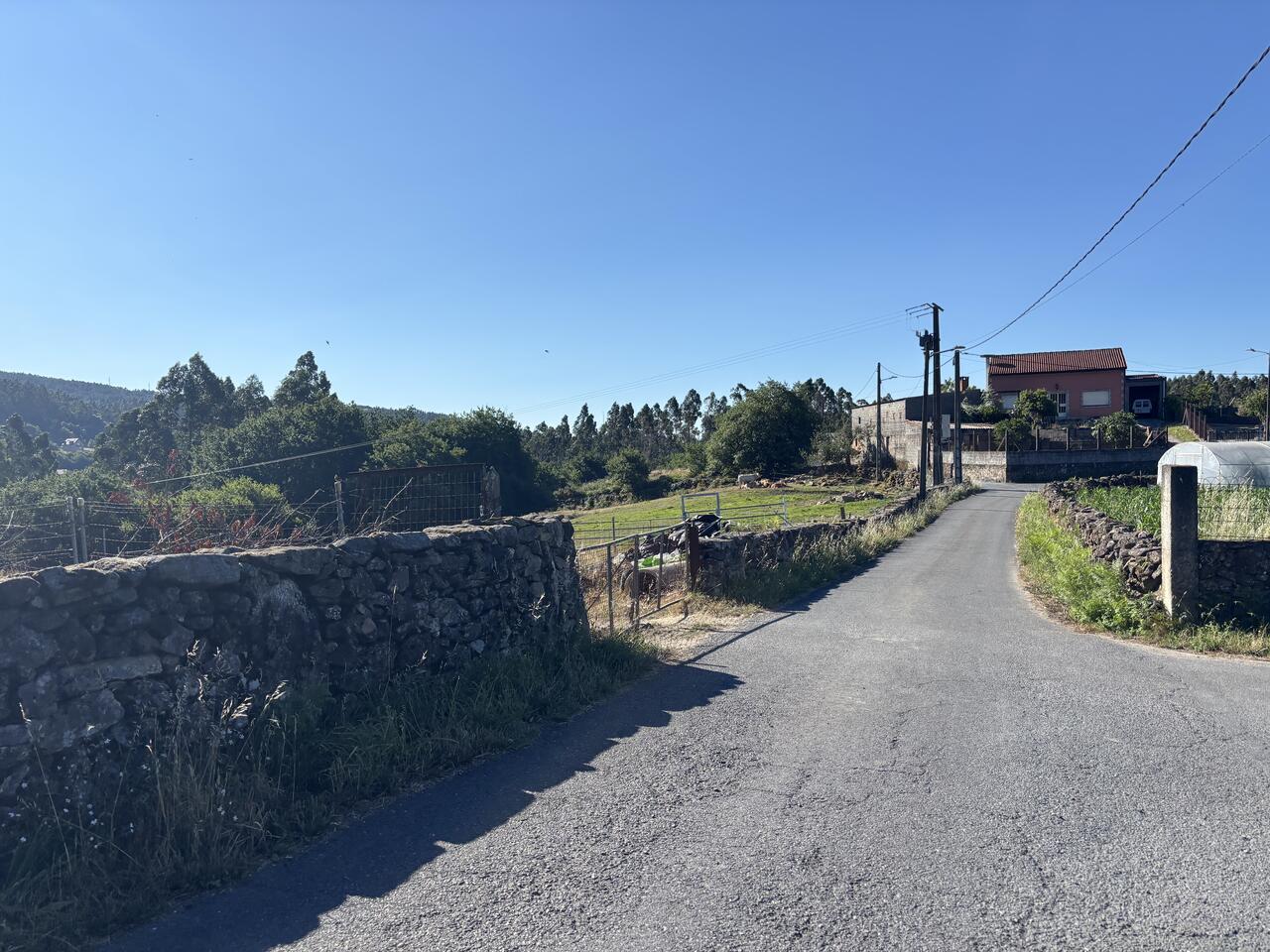
In Galicia, traditional rural lifestyles are disappearing. Widespread economic reforms in Galicia resulting from Spain's transition to membership in the European Union has resulted in the widespread abandonment of small agriculture, disrupting the traditional subsistence economy that many of my participants grew up with. Instead, Santiago's rural periphery has undergone a process of suburbanization. This has attracted middle class inhabitants looking for a less crowded and more relaxed place to live while maintaining their ability to commute to work easily. This process of urban growth has itself been fueled by migration from rural Galicia to Santiago, motivated primarily by social mobility in the form of access to education and improved job prospects. The discourses expressed by my participants around the difference between rural and urban lifestyles changed heavily with age. Older participants detailed their extensive experience in households that relied primarily on their land for subsistence and income, their knowledge of agriculture, raising livestock, and the nature of the village as an isolated face-to-face community. Younger participants, on the other hand, lived a more suburban lifestyle, with mandatory school attendance in Santiago's city center and a more anecdotal relationship with agrarian lifestyles. This goes some way into explaining how the pattern of language shift is spreading towards smaller villages while some maintenance of Galician in the urban center is driven by increased migration from rural Galicia. This demographic change has had a clear effect on the relationship of Galicians to rurality, but two other discourses buttress people's understanding of the role the language plays in their daily lives.
Institutional Standards
Given the advent of Spain's transition to democracy, Santiago has become a major center of regional administration. The regional government, Galician television, and the University are all major employers whose workers must be able to speak Galician in their professional lives as required by law. This has attracted a middle class of educated workers who must command the use of Galician as sanctioned by the regional government. Though attitudes and ideologies around Galician vary amongst these workers, they represent a class of people whose relationship to Galician is professional in nature, an unprecedented development in modern Galician history. In some cases, like that of three of my interviewees, the participant's relationship to the language is entirely professional, with little to no private or childhood use of the language. This means that Santiago came to be populated, since the early 80s, by a class of workers who have a legal obligation to abide by standard language norms in their professional lives. This process is significant enough that one of my participants referred to this variety as Xunteiro (translated as Xunta speech, the Xunta being the regional government), and another participant saying that people who speak Galician are often seen as being from the village, Xunta workers, or Nationalists. This brings me to my last discourse, nationalism, which provides the final cultural buttress of Galician language use in Santiago.
Nationalism
Galician nationalism can refer to a range of cultural, political, and social ideologies surrounding the idea that Galicia is a region of Spain with a distinct identity. Nationalism has a long history in Galicia with roots in the mid-19th century, but it was violently repressed by the Franco regime. As a result, modern Galician nationalism is most closely associated with its most politically militant versions, which arose during the Spanish transition to democracy. I was able to explore nationalist sentiment in Santiago by attending a set of demonstrations and events held by the Bloque Nacionalista Galego (BNG, Galician Nationalist Block), a regional party primarily associated with left-wing nationalist ideologies, as well as some events organized by a local nationalist cultural organization. The highlight here were the events scheduled around the 25th of July, the day of Santiago, a day also recognized as the day of Galicia and celebrated as such by nationalists. Most of these events, which included memorials of great Galician figures of the past, political demonstrations, concerts by Galician speaking artists, and open air markets, are organized by and around BNG militancy. Related events are organized by a myriad of local cultural organizations of variable political commitments, but who share a commitment to the promotion of Galician language use in the cultural life of Santiago. Apart from its political aims, these events provide a motivation for Galician language use in public social settings. Together with the presence of Galician in institutional contexts, nationalist sentiment in Santiago is one of the explanations for the maintenance of language use in the city.
Next Steps
The findings above validated my hypothesis that Galician language use is motivated primarily by associations with the three discourses detailed above. However, the results about linguistic variation are much less clear cut. Though each of the three discourses are associated with stereotypical ways of speaking, the reality of howe each individual in my sample speaks is also heavily influenced by their own linguistic biography. People who have spoken Galician since childhood and who were exposed to more traditional varieties of the language speak significantly differently from those whose exposure and motivation for speaking Galician has more to do with political ideology and professional life. This latter group, often referred to as Neofalantes (new speakers), generally shows more influence of Spanish phonology and phonetics in their speech, whereas people with more traditional exposure to Galician preserve more distinctive Galician features. Age is also a factor here, with younger participants also exhibiting more influence of Spanish on their Galician. Despite this, speakers make efforts to stylize their speech in such ways that it expresses important factors of their identity. This can be their commitment to Galician because of their nationalist ideology, their professionalism, or their relationship with traditional Galician ways of life. My next step is to analyze the speech I recorded in my interviews to understand how each of these factors affect each individual's effort to produce certain types of Galician speech, with the aim of improving our understanding of how the process of language shift and its counter-discourses affect language change across generations.