
AyoOluwateso Coker (Soil and Environmental Biogeochemistry) | An Examination of Ecosystem Vulnerabilities and Ecosystem Services with Extreme Events (UNU)
AyoOluwateso Coker (Soil and Environmental Biogeochemistry) | An Examination of Ecosystem Vulnerabilities and Ecosystem Services with Extreme Events (UNU)
Bonn Voyage
A report on GRIP internship Summer 2026
Wie gehts dier? Alles ist gut!
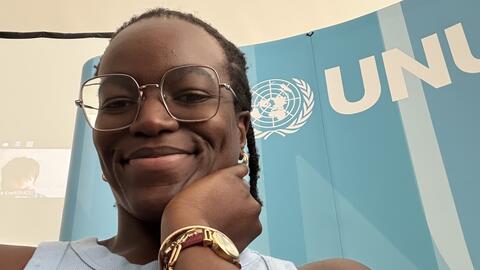
I glanced at the elderly man that settled himself into the seat next to me as it struck me perhaps for the first time that I was in a foreign country. Now keep in mind this was not the first time I travelled outside the US, but it was the first time I would be venturing on my own for this long and being independent. This may seem like a straightforward task, but I had perused every available resource that was at my disposal to try and prepare for the best and the worst case scenarios. The transportation was a refreshing reprieve from the usual cars that were driven in the US. I found that I enjoyed hopping on and off the UBahn once I knew which direction I wanted to travel.
There were different elements of Bonn that truly made it the quintessential city for me to do the summer internship. For starters the group I would be working under worked on topics that were so aligned with my own that we agreed on collaborating and writing a case study paper together. This was epic and a great way for me to dip my toe into science policy. Working with a UN University was also a wonderful way to merge science with policy that was being conducted. Bonn is a quaint city that has the same appeal of a well-loved sweater. It is comfy a little worn around the edges but once you familiarize yourself with it the city is so endearing.
The Rhein river became my reprieve during my lunch breaks. Seeing the cranes, seagulls and ducks on the riverbank. Pigeons dive bombing from the trees without a care in the world. The ships passing and bridges growing misty when the fog and humidity was high. There is a serenity about Bonn that feels ingrained not only in the city but in the citizens there as well. It is a very international location. As you walk down the street you could easily pass 5 different groups of people and 5 different languages could be spoken. The city was bustling lively and had one of my favorite traits…surface water.
It did not come without it’s cons though. There were times when I would stand in the grocery store overwhelmed not by the sheer number of options, but how not knowing a language can alter your brain chemistry. There were times when I would be learning a new route inly to find out. Homesickness, Imposter Syndrome and Footer 1the headache of neuroplasticity as my brain tried to make sense of this nee environment, new culture, AND work at my internship. This was mentally and physically taxing and I often tell myself that I am fine being alone and independent.
But my best experiences were with other people. I was able to make friends with colleagues at work and beyond colleagues at work. they taught me a lot about myself. It was interesting cause learning new things in a new environment was hard. But that is the beauty of travel, you can learn so much from those around you about yourself and your likes and dislikes. It’s almost as if in the wanderlust there is some type of substance some magic that just tears your worries and doubts asunder, and let’s your truest and best self shine through. When the mind shift occurred and I trained myself not put so much pressure on myself. Yes, I want to execute and perform, but I am going to have fun while I do. The experience of stepping outside of my comfort zone truly unlocked potential in me that I’m not even sure that I knew was within me. I have always had these traits of discipline and earnest. But for me the trip taught me one thing “Structure”. By the end of the internship I had created a schedule that left me do that tasks I set out to do but in a fun and safe way. The way the configuration was such that I often found myself locked.
The best thing about doing an internship is that it teaches you from the experience, and it allows you to venture into the world while still having the safety net of your student status. This allows you to explore while still maintaining your identity as a student. This offers a very powerful opportunity for us. The thing with being a student is that when you are researching a topic this offers you the golden ticket to just about anything to do with that topic. It offers you an opportunity to learn about what it means to do what you do beyond the walls of academia.
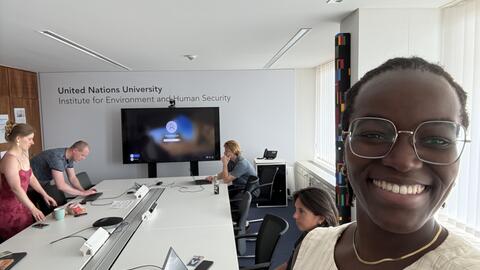
Now you may be like me and ask yourself When will I ever have time to fit an internship into my PhD? Well, there is no time like the present in my opinion. But make sure to be transparent with your advisor so you are both on the same page. This was an invaluable experience, but I also made sure to keep my advisor appraised of what I planned to do from the jump.
There were many cultural differences and similarities that I found with UNU and with Stanford. Both are institutions that people look up to and have a lot of opinions. That being said I did receive a lot of commentary when I told people where I was completing my internship. There were a lot of opinions, but I think that spoke to how much the work that I was doing mattered. Suddenly, it was as if my status as a Visiting Scientist had led me to be somewhat of an ambassador for the organization. In some ways I did feel like an ambassador, but an ambassador for Stanford. It was wonderful to tell my colleagues about experiences on campus and for us to compare notes on how our organizations were managed It was experiences like this that made me realize that I was more trained than I had initially thought.
This growth did not happen overnight however. There were certainly days when I found the simplest task such as printing a document difficult, because I wasn’t sure how it was done. But this led me to learn rather quickly that I could lean on my colleagues for help. I didn’t need to know how everything worked or operated, I was there to learn. The experience with the UNU showed me that to ask for help is not a weakness but rather a sign of strength.
I think the most notable thing I learned during the internship however was work culture and work life balance. When you are a PhD candidate it can feel a bit all consuming. Research is always demanding something and there are times when this leads to burnout. But the workplace has systems in place that truly make it so that peak productivity is achieved. I found I was most productive when I would get to work in the morning and go about my tasks and take breaks and long walks along the Rhein. I found comfort in feeling the rays from the sun as I toured the city. The best lunch breaks were when I would hop on the train to venture into the city and come back with a new location that I had to check out later on.
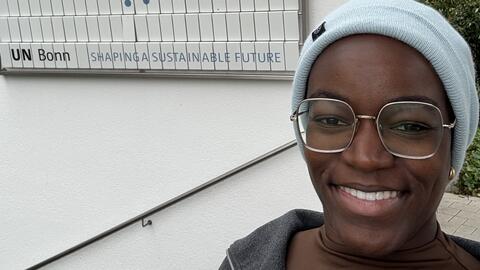
The language was difficult but with time there were bits and pieces that were being revealed to me as I started to get into a routine. The next train would arrive in eine minute or the naechste halte would appear. There were times when even though I didn’t have a full grasp on the language, there were certain signs or hints within the written words that would point me in the correct direction.
Would I recommend that PhD students do internships? Absolutely, it gives students the opportunity to spread their wings and see how they can use the tools that were acquired in their PhD and how they align with the corporation. I once received advise from one of my mentors. She said “The most valuable thing to do is an internship.” At first, I wondered when I would have time to fit that into my PhD. But as pieces fell into place and by God’s grace and mercy, I had the opportunity to be a part of a team that left a lasting impression. It gave me an opportunity to step into the working world and see the parts that I enjoyed from it. This experience helped my PhD as well as my career trajectory. It offered me a precious opportunity to take the skills and knowledge that I had accrued over time and apply it in a real-world setting. It felt a bit like an audition for what could potentially take place after my PhD. It reinvigorated me and came at a time when I think I truly needed it the most. If I was asked to offer anyone advise on whether to apply to the program I would tell them, “It takes a leap of faith.”.