
Caleb Hammond- Cross-Cultural Interaction in Domestic Contexts at Ancient Segesta, Sicily
Caleb Hammond- Cross-Cultural Interaction in Domestic Contexts at Ancient Segesta, Sicily
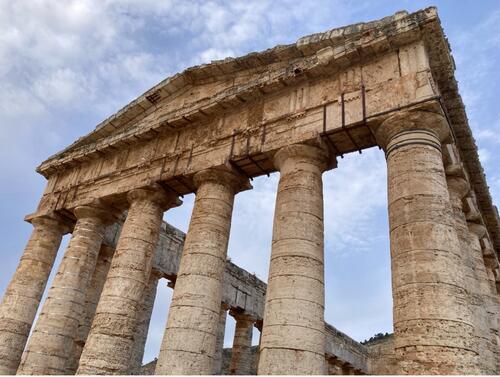
Thanks to The Europe Center's generous financial support, I had the opportunity to participate in another season of archaeological excavation at Segesta in western Sicily. This fieldwork supported my research on cross-cultural interaction between Greek colonists and the peoples living in the territories where they established their overseas settlements. My contributions to the project included excavation, mapping, and teaching field methods to new students. The field season also afforded visits to important nearby sites, including Segesta's sometime rival, the Greek colony of Selinus, as well as Favignana, one of the Egadi Islands, the location of the decisive battle at the Frist Punic War in 241 BC, after which Rome seized control over Sicily.
From June 6th to July 5th, I joined the Arizona Sicily Project's archaeological excavation at the ancient city of Segesta, a key site for the study of indigenous-Greek interaction. Although Segesta is best known for its well-preserved Greek temple and theater, the city was inhabited by the Elymians- a native Sicilian people whose relationship with Greek culture remains understudied. In an effort to win a powerful ally in their conflict with the Greek colony of Selinus, the Segestans are blamed in ancient Greek accounts (e.g. Thucydiddes) for allegedly luring the Athenians into launching the disastrous Sicilian expedition with false displays of wealth, contributing to Athens' eventual defeat in the Peloponnesian War in 404 BC.
Greek influence at Segesta is evident in the city's public monuments, but far less is known about how ordinary Segestans engaged with the material culture of their Greek neighbors. Working in the site's residential quarter, this project investigates daily life, household activities, and cultural exchange in domestic contexts, where the archaeological record can shed light on private, non-elite engagement with Greek material culture.
Stanford conducted its own excavations of a neighboring Elymian site, Monte Polizzo, in the early 2000s. The team led by Professor Ian Morris of Stanford's Department of Classics proposed that the widespread abandonment of Elymian settlements like Monte Polizzo in the late sixth and first half of the fifth centuries BC may have reflected a process of consolidation into a few major centers, such as Segesta. This process may be comparable to the population movements of the Sicels (another native Sicilian group), an effort by their leader Ducetius to compete with the powerful Greek colonies on the island. Morris and his team noted that the hypothesis could be tested by uncovering archaeological evidence for population change at Segesta.
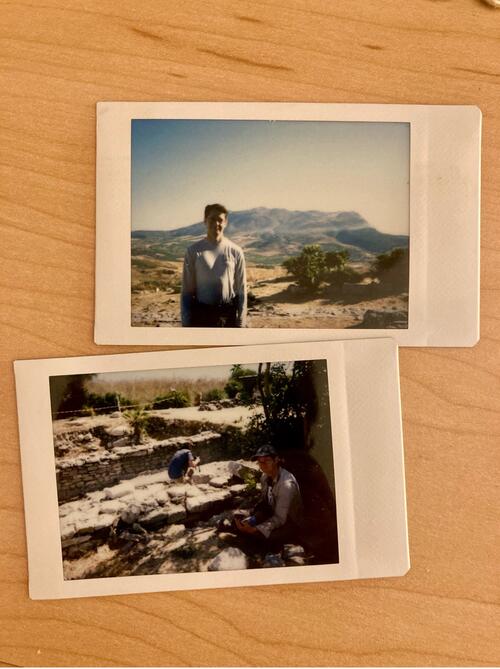
The Arizona Sicily Project's excavations in the residential area could begin to answer this question. However, the slope of Monte Barbaro, where Segesta's inhabitants lived, has buried the ancient city beneath more than three meters of earth and rock. These conditions alone make the investigation of Segesta's domestic space a long-term project. At the same time, excavation has revealed multiple medieval structures built above the ancient houses. Segesta provided a home not only to the ancient peoples of Greek and Roman times but also to Muslims, Normans, and Swabians in the twelfth and thirteenth centuries AD. Recent genetic evidence suggests that Segesta's Muslim and Christian communities coexisted for some period of time. As such, Segesta reflects a long history of cross-cultural interaction, which manifested diversely as negotiation, coexistence, and violence among the Elymians, Greeks, Phoenicians, Carthaginians, Romans, Muslims, Normans, and Swabians.