
Featured Faculty Research: Joan Ramon Resina
Featured Faculty Research: Joan Ramon Resina
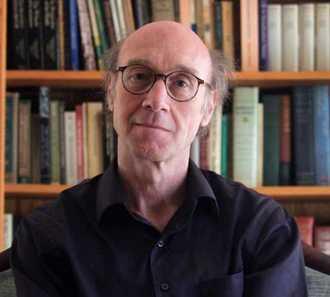
Although as a comparatist my work has a strong concentration in literature, with several books on various subjects and periods, over the years I have worked on a broad range of cultural issues, from urban studies and cinema to history and political science. Since moving to Stanford, I have published Barcelona’s Vocation of Modernity: Rise and Decline of an Urban Image (Stanford University Press, 2008), a cultural history of the city of Barcelona from the late 19th to the first decade of the 21st century. This book traces the rise of Barcelona as Spain’s showcase city during the Universal Exposition of 1888 and the Universal Exhibition of 1929, through the bleakness of the post-civil war years and the long dictatorship to the cultural renaissance of the 1970s and 80s and the Summer Olympics of 1992, to the fizzling of the city’s creative force in the 2000s through an overexploitation of image politics and the tourist industry. My next book, Del Hispanismo a los Estudios Ibéricos (Biblioteca Nueva 2009), was a metadisciplinary reflection on the limitations of institutionalized “Spanish studies.” It argues that this discipline has long served the nationalizing agenda of the Spanish state, creating an academic habitus (Pierre Bourdieu’s term) with little epistemic relation to the cultural complexity of the Iberian Peninsula. The book makes a case for the replacement of Hispanism with a new discipline of Iberian Studies that embraces the cultural and linguistic plurality of the Iberian peninsula, emphasizing a relational approach to its distinct cultures. This approach differs from the traditional understanding of “Iberian” as the juxtaposition of the cultural and political histories of two nation states, Spain and Portugal (and their former colonies). I claim that the exclusion of the cultural production of the other Iberian nationalities has led to a lopsided understanding of the whole.
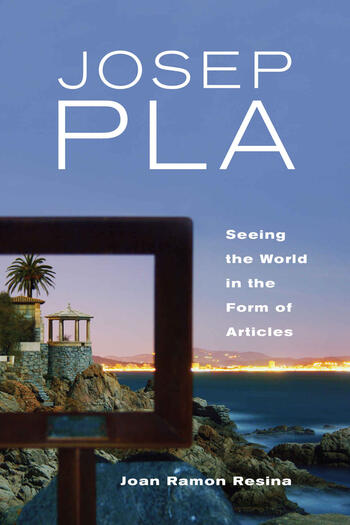
Perhaps it is most striking for the finesse of the descriptions of landscape and local life. Pla also wrote vivid fictional stories on themes ranging from the years of hyperinflation in the Weimar republic to tales of shipwreck and smugglers in Catalonia’s Costa Brava. He was a master of language, whose work is still unaccountably absent from American literary consciousness. With this book I intended to begin to remedy this absence by calling attention to the wealth of subjects and high quality of his writing.
Fo

In this book I also explore the roots of the violence unleashed by the Spanish civil war. Against most accounts of the war, I propose that the fascist coup leading to the war was to a great degree a reaction against the Republican establishment of an autonomous government in Catalonia. In different chapters I describe the experience of the large contingent of Catalan exiles in French concentration camps and as refugees in other countries. Other chapters are devoted to salient aspects of the war: the significance of the carpet bombing of Guernica by the Condor Legion in the context of aerial bombing in WWII, literary accounts of the Nazi death camps by Mercè Rodoreda and Jorge Semprún, whose autobiographical fiction I study from the viewpoint of testimony. But the book is also concerned with contemporary issues like the excavation of mass graves at the turn of the millennium, the concept of latency as a theoretical tool to explain the pervasiveness of “sociological Francoism” in present-day Spanish society, the emergence of the documentary on historical memory as a TV-specific genre, the ethical dissolution of a society that denies its atrocities, and finally, the consequences for the exhaustion of the transition pact of the tension between denial and awareness of an unhealed past.
More recently, I have edited volumes on the concept of repetition in various spheres of human experience (art, ritual, religion, education, literature, music, dance, etc.) and on the relation between forms of self-inscription, such as autobiography, and the awareness (or development) of identity. My next project is a book on the German trilogy of Italian film director Luchino Visconti. Although I would like to think that it will be completed in the foreseeable future, my interest in and anxiety about political developments in Europe and in the Iberian Peninsula is taking a great deal of my time and energy at present.
At Stanford, Joan Ramon's courses include ILAC 130: Introduction to Iberia: Cultural Perspctives; ILAC 193: The Cinema of Pedro Almodovar; COMPLIT 123/DLCL 143: The Novel and the World; and COMPLIT 366/ILAC 366: The Yellow-Brick Road to the Spanish Nation-State.