
Featured Faculty Research: Paul Sniderman
Featured Faculty Research: Paul Sniderman
Still, it did not escape our attention that our venture had the benefit of vagueness. A claim that majority citizens are open to inclusion is welcomly open to interpretation. The most profitable came at the start. The question, we reasoned, is not whether native citizens perceive inclusion of Muslims to be desirable. It is whether there are terms on which it is acceptable. What are majority citizens willing to ask of themselves? Where do they draw the line? And why do they draw it there and not elsewhere?
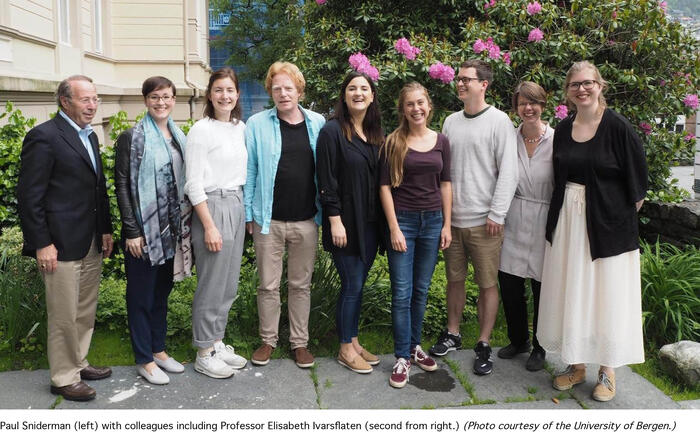
My partner in this project, Professor Elisabeth Ivarsflaten of the University of Bergen, and I have spent the last three years attempting to bring into view specific conditions under which majority citizens are open to inclusion. Thanks to the support of The Europe Center at FSI, we have been able to complete three major lines of investigation: on what terms – specifically, with what verb tenses -- native citizens are willing to authorize the use of textbooks to incorporate diversity as a feature of the national identity; some conditions under which the leadership of Muslim communities can be freed from allegations of disloyalty; and where should the larger society draw a line on recognition of the culture and traditions of Muslim communities.
An example: The starting point for a line of experiments is a conjecture. Majorities are markedly more willing to agree that textbooks should be “written” to reflect the new diversity of their country than that they should be “rewritten” to do so. Exactly the same act of inclusion, only the difference of a two-letter prefix, yet a dramatic difference in the responses of native citizens. Why? There is more than one candidate explanation. Hence a progression of experiments, testing a new plausible candidate at each step – and, simultaneously, exactly testing again the results of the previous step. The methodological innovation: a repeatable template. When we think of the replication crisis in the social sciences, we can see how subsequent studies may benefit.
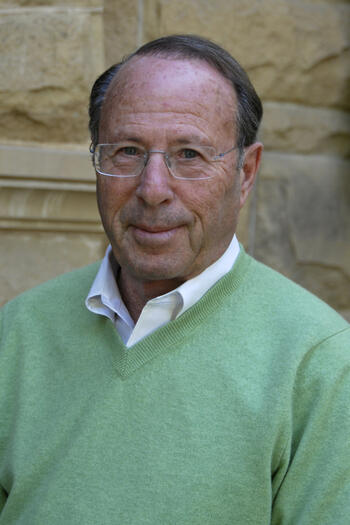
At Stanford, Paul Sniderman is Fairleigh S. Dickinson, Jr. Professor in Public Policy and Professor of Political Science. His classes include POLISCI 223A: Public Opinion and American Democracy and POLISCI 423A: The Laboratory of the Study of American Values.