Kent Hippler (Management Science and Engineering) | Subject-Specific vs Atlas-Based Masks for Dopamine Transporter Binding Ratio Quantification (German Center for Neurodegenerative Diseases (DZNE)
Kent Hippler (Management Science and Engineering) | Subject-Specific vs Atlas-Based Masks for Dopamine Transporter Binding Ratio Quantification (German Center for Neurodegenerative Diseases (DZNE))

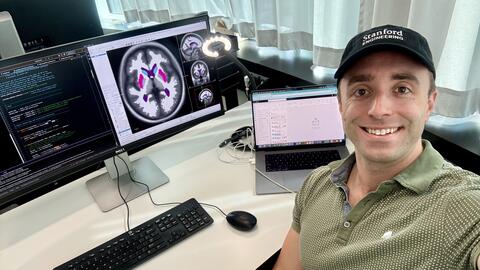
My name is Kent Hippler. I am a 2nd Year PhD Student in Management Science and Engineering, concentrating in Decision and Risk Analysis. During the Summer of 2026, I had the pleasure to have a funded research stay at the German Center for Neurodegenerative Diseases (DZNE) in Bonn through the Graduate Research & Internship Program in Ger- many. I spent 8 weeks with the Artificial Intelligence in Medical Imaging Lab at the DZNE working under Prof. Dr. Martin Reuter. His lab builds tools that use AI to analyze brain scans, including one called FastSurfer that maps out brain structures from MRI images. This summer, I used FastSurfer to map individual patients’ brains using real patient data, then compared how well these personalized brain maps worked against generic, one-size-fits-all brain templates for measuring dopamine levels. The project is still running after my de- parture, and the personalized approach could ultimately give doctors a more precise way to track how Parkinson’s disease progresses in their patients.
Parkinson’s Disease (PD) is a neurodegenerative disorder characterized by bradykinesia (gen- eral slowing of movement) and either resting tremor or rigidity, with additional symptoms including loss of smell, sleep dysfunction, constipation, and mood disorders. Uncertainty in disease progression and variable treatment response or side effects have led to no cur- rent consensus on the combination of drugs and dosages that optimize patient outcomes or the optimal stage of disease progression for introducing advanced therapies. Clinician’s use Dopamine Transporter SPECT (DAT-SPECT) images to measure dopamine transporter pro- tein density in the striatum as a method to diagnose and understand the severity of Parkin- son’s Disease in patients today. The common measurement for this is the Specific Binding Ratio (SBR) which measures uptake of Dopamine in the striatum normalized to a reference region. Current population studies use a

generic Atlas-Based mask to measure SBRs in imag- ing datasets. Over the course of the summer, I processed ̃1600 T1 MRI and DAT-SPECT images for longitudinal Parkinson’s Disease patients from the PPMI dataset. I then used the lab’s image processing software (FastSurfer) to map individual patients’ brains using real patient data, then compared how well these personalized brain maps worked against generic, one-size-fits-all brain templates for measuring dopamine striatal binding ratios.
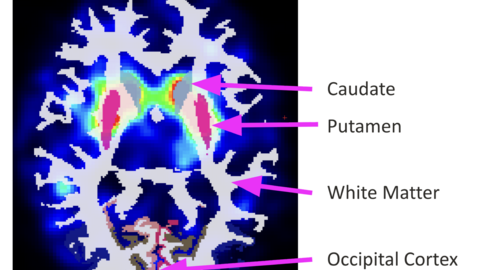
Initial results suggest individualized mappings perform comparably to the atlas-based method, and that the atlas-based method results in different dopamine striatal binding ratios for many
patients—particularly those with larger ventricles that displace the striatum from its nomi- nal position. Now that I have returned to Stanford, my work will continue on this research question, as well as building these processed images into my thesis work. The priority moving forward is to understand the underlying story for why the two methods disagree, including when they agree, and to determine which method is more accurate rather than simply doc- umenting that they differ. Longer term, this comparison motivates a health systems and policy question: when is the additional cost of subject-specific parcellation worthwhile for health systems decision makers, and is subject-specific segmentation better suited than a fixed atlas for tracking an individual patient’s disease progression over time?
I really enjoyed living in Bonn this summer and exploring Germany. I connected with several of the other Summer 2026 GRIP interns and we went on adventures throughout Germany. After my research experience concluded, my brother also joined me in Germany and we connected with our extended family who live in a small town in Bavaria. It has been over 20 years since I saw them last. I was thrilled to reunite with them, practice speaking German, and enjoy some Spalter beer: Prost! (properly, with eye contact, as German tradition demands).