
Lena Mikacich: Rare Disease Care at Great Ormond Street Hospital
Lena Mikacich: Rare Disease Care at Great Ormond Street Hospital
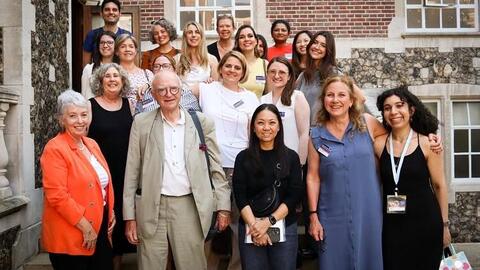
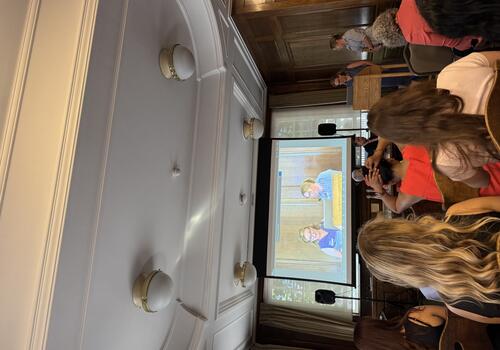
This summer I had the honor and privilege of working with Congenital Hyperinsulinism International (CHI) in London to map out their patient referral networks at one of their Centers of Excellence, Great Ormond Street Hospital (GOSH). This experience was only made possible through a Fellowship for Undergraduate Travel and Research grant from the Stanford Europe Center. To kickstart my research I attended a medical conference at Goodenough College where we explored the nuances of hyperinsulinism, a rare genetic disease characterized by excessively high insulin levels that cause low blood glucose. There, healthcare professionals gathered from across Europe to learn more about this life-altering disease that can lead to strokes, blindness, paralyzation, comas, and death if undiscovered at birth. In fact the conference began with a tragic story depicting a baby boy on the screen: if Peter's blood glucose had been checked after his birth, he would not have had a cardiac arrest that led to cerebral palsy, liver failure, and serious brain damage. Like Peter, I was a hyperinsulinism (HI) baby. Unlike Peter, my blood sugar was checked on my second day of life during my stay in the NICU, after a traumatic birth. Because of initial sheer luck, followed by a childhood of medically managing the condition until I was cured, I no longer suffer from complications.
As the conference stretched on, every minute had me hooked. We dived into the history of hyperinsulinism on a deep biological and hormone-level, then endeavored through the timeline of how treatments, research, surgical interventions, genetics, and other advancements for HI have progressed over time. We also discussed CHI's new Center of Excellence designations, and how Great Ormond Street Hospital sat as a leader in this network, as the best children's hospital in Europe. It was the perfect introduction to my internship in London, where I would be working with the very staff that presented at the conference as HI experts.
The following week, after receiving my Observership Badge, I sat in on medical rounds, Endocrinology team discussions, private surgical conversations with parents, and outpatient phone calls to deeply understand the UK healthcare system and how GOSH leads research collaborations, disseminates information, and delivers highly specialized care to HI patients across the world. Witnessing how holistically and compassionately hyperinsulinism was treated at GOSH warmed my heart, as I watched healthcare professionals support the children with HI and their families through medical, psychological, and lifestyle aspects of the condition. Consistently, teams of physicians, clinical nurse specialists, dietitians, social workers, school nurses, and surgeons put their heads together to understand difficult hyperinsulinism cases and advance care in the field. Watching parents decide whether or not to surgically remove their 6-week-old baby's pancreas was heartbreaking as I reflected on what it might have been like for my parents to undergo those difficult decisions themselves, but I admired the empathy, time, and space physicians provided the families. I later interviewed physicians like Dr. Antonia Dastamani, a pediatric endocrinologist who leads the Congenital Hyperinsulinism NHS Highly Specialized Service, in order to gather more insights and expert opinions about GOSH's role as a newly designated Center of Excellence. The conversations were enlightening. I also contributed to hospital research alongside Dr. Buddhi Gunasekara, who helped mo explore how Electronic Health Records could provide insights into associations between HI and deep vein thrombosis, and lead to prevention or early detection of the clotting.
As my work with CHI continues, I hope to soon interview physicians at the seven other hyperinsulinism Cetners of Excellence, which include locations in Germany, Denmark, France, and the U.S. Exploring differences in healthcare systems and evaluating nuances to care through the lens of hyperinsulinism could not be a more passionate journey, and I cannot wait to synthesize my findings through my Capstone Synthesis in the Human Biology department.