
Rochelle Tham (Music, Science, and Technology) | Artist-in-Residence at Zentrum für Kunst and Medien (ZKM)
Rochelle Tham (Music, Science, and Technology) | Artist-in-Residence at Zentrum für Kunst and Medien (ZKM)
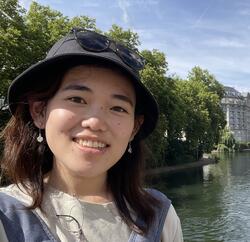
Zentrum für Kunst und Medien (ZKM), or the Center for Art and Media, is a multimedia museum located in Karlsruhe, Germany, where it was founded in 1989. This cultural institution is home to a variety of interdisciplinary curations, performing arts, and collaborative research, including but not limited to: electronic music and art concerts, games, artwork exhibitions, cinema displays, and ecological installations. As I was looking for places to pursue my artist practice in computer music, ZKM stood out to me because it has been and continues to be an international place for works that explore the intersection of the arts and technology as well as its impacts on our society.
At ZKM, I was a guest artist in the Hertz Lab, where I was provided a studio atelier space and developed my own audiovisual installation for Karlsruhe’s annual public museum night, KAMUNA. The Hertzlab is a unique group housed in ZKM where it pursues research in the arts and technology, hosts international guest artists, and organizes various concerts and showcases. The group was founded in 2017, when the Institute for Music and Acoustics and the Institute for Visual Media merged together.
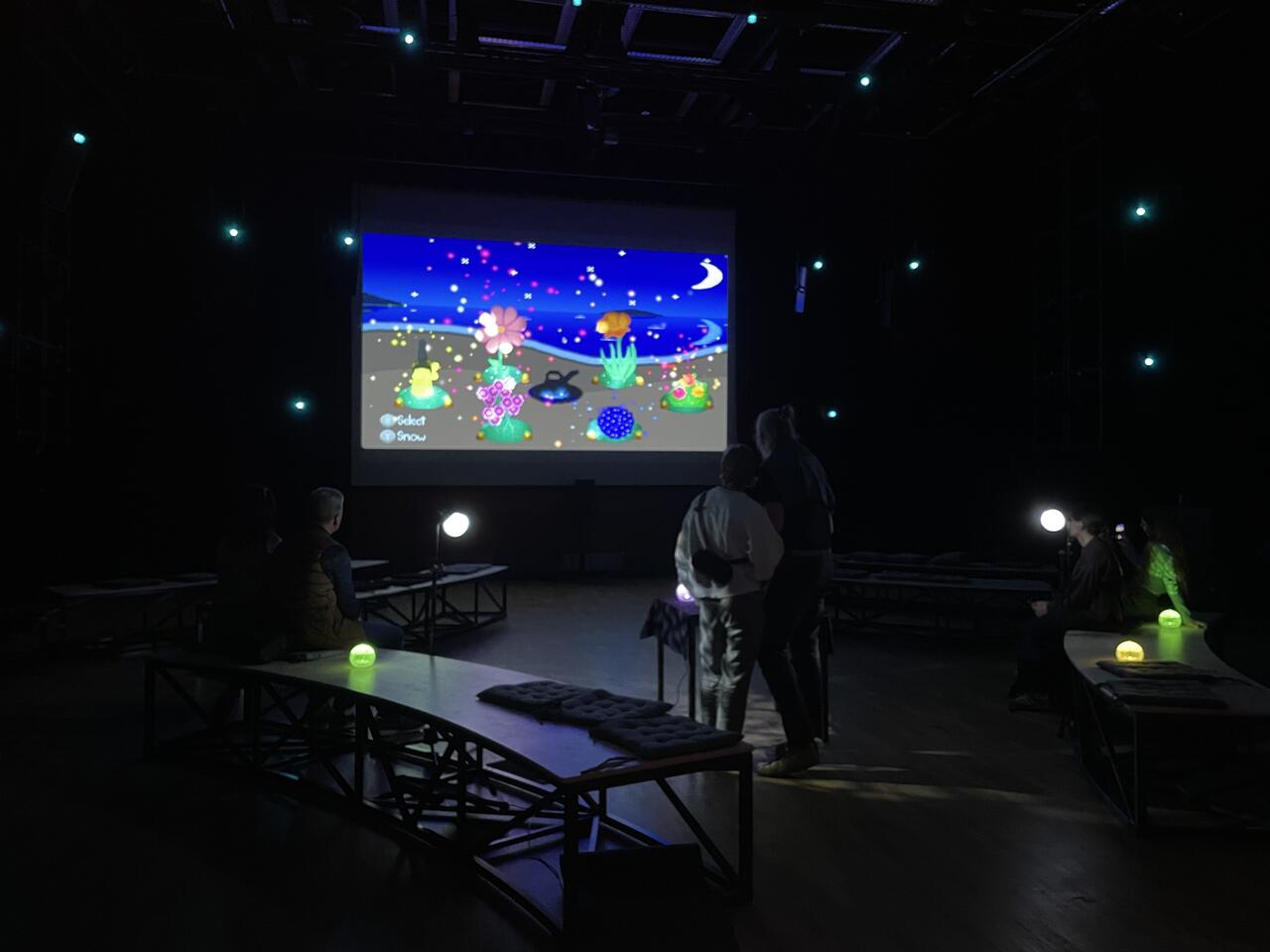
KAMUNA is a yearly city-wide event where many institutions in Karlsruhe participate and dedicate their spaces to diverse programs including tours, concerts, film screenings, and various exhibits. Of course, ZKM also participated in the event, and I was fortunate enough to exhibit my installation in ZKM’s Kubus (or Cube in English). The Kubus is a concert space featuring the Klangdom, ZKM’s audio system consisting of 39 loudspeakers hung in a dome-like structure such that artists can spatialize their audio, and additionally, utilize ZKM’s in-house software, Zirkonium, to simulate and sequence sound movement. Since the main theme of the 2025 KAMUNA was well-being, my goal for my installation was to create a serene, fun, and calming experience for the audience. This experience was very new to me because I’ve worked on fixed time pieces and performances but not installations, where the audiences’ interactions could easily vary from under 30 seconds to five to ten minutes. I named the installation: Petal Steps, to capture the fleeting beauty of blooming flowers!
I had one month to work on Petal Steps before exhibiting at KAMUNA. I had just picked up pixel art for it and wrote some instrumental tracks for the audio so it was fast work period for me. The main idea of Petal Steps was for the audience to pick up the game controller at the center of the room and interact with the garden shown on the screen. Upon watering a sprout, the plant would grow and bloom into a small flower, with its voice or instrument spatially added to the overall soundtrack mix. Each flower was inspired by the many pictures I took of flowers while walking around on Stanford’s campus during Spring quarter. There were a total of six flowers included, so there were six corresponding music parts in total. I kept rewriting the music for Petal Steps because I was worried about the repetitiveness, but I settled with about 10 minutes of music, which turned out to be a sweet spot for the installation.
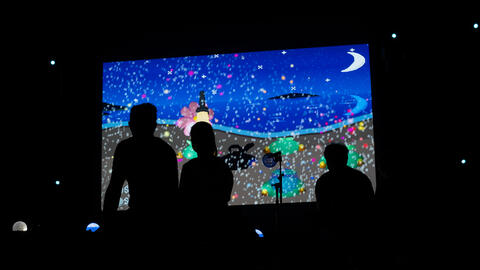
When it was finally time to exhibit my installation at KAMUNA, I sat in the back of the Kubus while monitoring the system and observing the audience. Some attendees liked to just sit and enjoy the space as others fiddled with the game controller and played with the flower space. Some people were eager to water all the flowers while others would water one flower after another. Interestingly, there were a few people who would water a sprout one at a time, go back to sit, listen, and then water another sprout across the room. I noticed that the older adults seemed a little hesitant or shy to try out the controller so sometimes I’d pretend I’m part of the audience and play with the controller myself to demonstrate subtly. Afterwards, they’d also give the installation a try. Some kind and curious attendees asked a few questions about my experience, which I happily talked about. Overall, my installation created the playful and restful atmosphere that was I aiming for. Fortunately, I also had the chance to explore the other interesting exhibits at ZKM, including the Hertz Lab’s Mars installations.
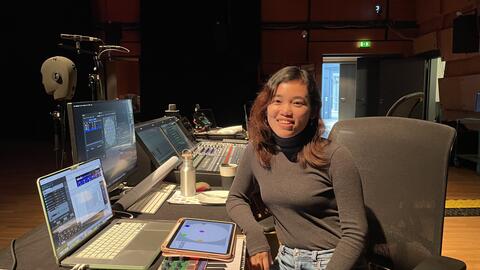
In July, I had the opportunity to work on the live audio effects and spatialization in the TURNS Concert: Uncensored Clinic, performed by Danielle Brathwaite-Shirley and Florentin Tudora. This was a very great learning experience for me – in addition to collaborating with another artist – I had glimpses of the overall planning process, the concert set up, and watching how the artist improvised and engaged with the audience throughout the performance. I feel pretty lucky to have had this experience!
In addition to my time at ZKM, I explored Karlsruhe as well as the neighboring towns during the weekends! I luckily was able to attend some seminars and concerts at Hochschule für Musik Karlsruhe, as well as meet other computer music students and artists. After work, I’d also make plans with new friends (or sometimes by myself!) to visit cities like Heidelberg and Freiburg. Since Karlsruhe is in the southwestern part of Germany, it’s also not that long of a trip to travel to the borders and visit places like Strasbourg, France. My flatmate and I also hiked at local lakes and trails in Schwarzwald (the Black Forest)!
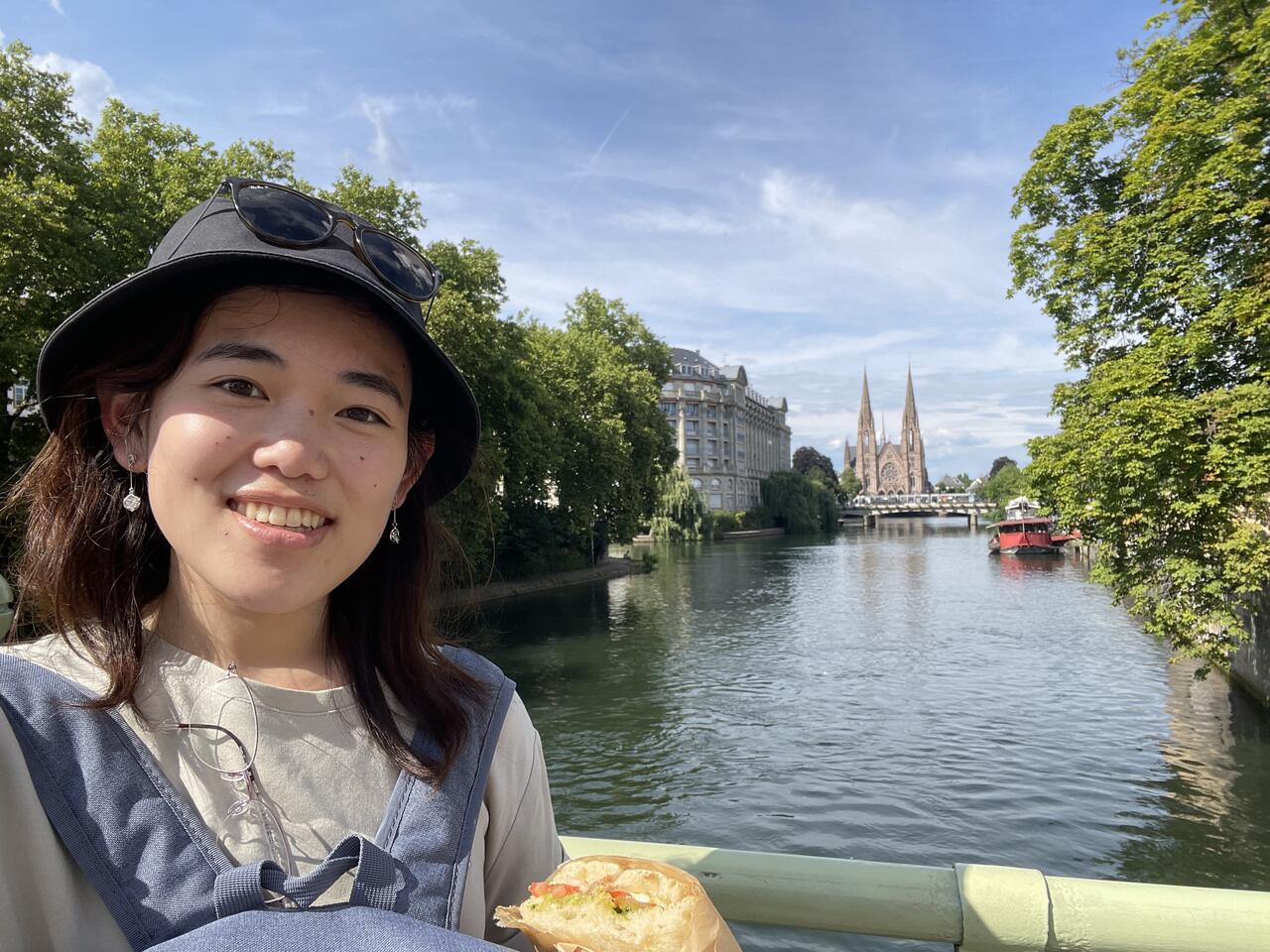
My time at ZKM was very memorable for me in that it was my first time working on a public installation and also a time where I had the space to develop what I’d call my artist practice and research focus. Meeting other international artists and seeing their works also inspired me for different directions I could consider as I continue to move forward in my career. In the future, I hope to continue developing engaging and thoughtful artistic works like those I saw at ZKM.