
Shirin Kashani- Urban Design, Immigrant Segregation, and the Politics of Local Service Provision
Shirin Kashani- Urban Design, Immigrant Segregation, and the Politics of Local Service Provision

This summer, my project on Urban Design, Immigrant Segregation, and the Politics of Local Service Provision took an unexpected but rewarding turn. While I had initially planned to conduct field research in Germany, Denmark, and the Netherlands, travel restrictions made international travel impossible. Instead, I remaind at Stanford and shifted my focus toward developing the data and measurement foundations of the project remotely.
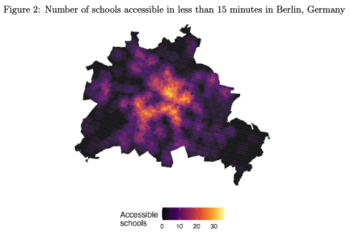
With remote access to administrative micro-data from the German census and high-resolution census grids provided by the Bundesagentur für Arbeit (Federal Employment Agency), I built a spatial database that captures local variation in population, migration, and public-service infrastructure across German cities. This dataset became the empirical basis for a new paper measuring spatial inequality at the 100-by-100 meter level- a scale that reveals how even within the same city, some areas are much better served than others.
Working from Stanford allowed me to devote substantial time to the conceptual side of the project as well. I began developing a theoretical framework linking educational segregation to patterns of bureaucratic resource allocation, arguing that the clustering of social groups within cities shapes how technocratic planners distribute school, transit, and other services geographically. This combination of quantitative data work and theoretical development has set the stage for future field research in Germany, where I will examine how these patterns emerge through local planning decisions.
Although my summer plans changed, the GSGC support was instrumental in allowing me to make measurable progress on the project's foundation. It provided the time and flexibility to transform an unanticipated challenge into an opportunity for deeper methodological and theoretical advancement.