
Charlotte Courtois: Investigating Islamic Public Policy in Contemporary Political Frameworks
Charlotte Courtois: Investigating Islamic Public Policy in Contemporary Political Frameworks
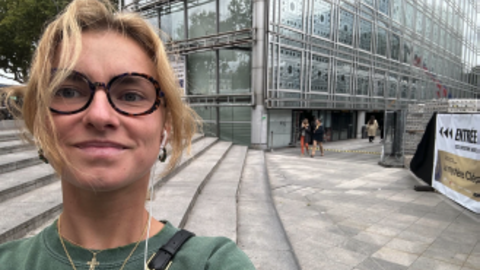
After taking History 181 B "Making the Modern Middle East" with Professor Barakat last winter, I felt like my inquiry into Islam, its representations and political applications was only beginning. Writing my final paper about the Syrian National Congress of 1919 confirmed my interest in investigating the (mis)representations of Muslim communities in the West.
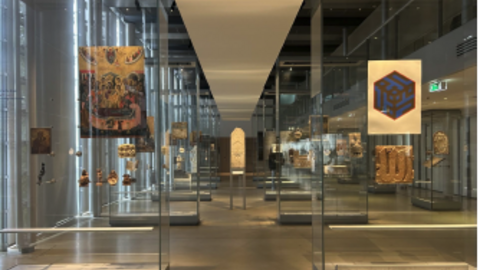
This summer, I was blessed with that chance. For starters, I was able to visit the Arab World Institute of Paris, an establishment that celebrates the diversity and richness of the Arab World in a one-of-a-kind building. The visionary architecture of the institute pays tribute to this space where centuries of culture meet in a flourishing dialogue. This provided the perfect ground to, first, interrogate how cultural representations have shaped perceptions of Islam in the West, and second, identify the discrepancies between political narratives that reflect state priorities.
Muslim communities are indeed currently facing challenges from different sources and of various dimensions. Some are being instrumentalized as objects of media campaigns and/or are victirms of social discrimination. In societies where Muslims represent a fairly low percentage of the total population, the media bears significant responsibility in the portrayal of Islam. This allows for the gross misrepresentation of Islam in the hearts and minds of numerous non-Muslims.
From the International Conference on Sociology, Islam and Civil Islam, which took place on September 18-19, 2025 in Zurich, Switzerland, two selected papers caught my attention. The first was "Islamic Public Policy", written by Shehar Bano, a Ph.D. Scholar at the Universitas Islam Internasional (Indonesia). She argued that a universal framework of Islamic public policy that is grounded in Islamic values (social justice, economic equity and general well-being of the people) could be constructed, even in the face of the new challenges of the 21st century. Other notable authors were Muhammed Mujitaba Muhammed and O. Khuzaima from the Ahmadu Bello University (Nigeria), whose paper "21st Century Islam" emphasized those challenges.
A non-exhaustive list includes Islam being misconstrued as a religion that tolerates terror and brutality, the persistence of sectarianism, and the inability of Muslim countries to assist each other in a climate where religious sects take precedence over the umbrella identity of Islam. The lack of Muslim scholars who have a strong command of English was also one of the main concerns, as currently "More than two-thirds of contemporary Muslims do not speak Arabic and in lands where Arabic is still the language of daily use, its classical heritage has become inaccessible to a large majority." This strong paragraph about the Arabic tradition, language and colonization made me realize to what extent the disappearance of this lingua franca deprives a new generation of Muslims of access to the amount of scholarship produced before colonization.
It is Shehar Bano's understanding that a more liberal use of ijtihad could lead to the design of public policies that translate Islamic legalism into the current state of governance. This would require further analysis to determine the exact circumstances under which Islamic policies are Shariah-compliant but also feasibile in a Western context.
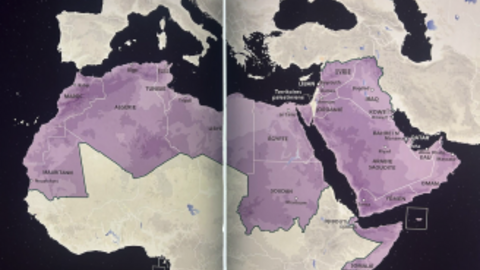
This fall I will be studying at Oxford. In the form of a tutorial, I will be addressing one theme per week within Middle Eastern Politics. I cannot wait to keep exploring, learning, and to deepen my understanding of those issues. I thank The Europe Center for this awesome opportunity and I advise anyone to pursue their interests through this wonderful program!