
Laise Milena Barbosa (Law and Technology) | Comparing Platform Governance in the EU, US, Brazil (HIIG and Leibniz Institute for Media Research)
Laise Milena Barbosa (Law and Technology) | Comparing Platform Governance in the EU, US, Brazil (HIIG and Leibniz Institute for Media Research)

During my GRIP-funded research stay, I joined Prof. Matthias Kettemann and his team at the Alexander von Humboldt Institute for Internet and Society (HIIG) in Berlin, and later spent time as a guest researcher at the Leibniz Institute for Media Research (HBI) in Hamburg, working with Tobias Mast's research group. Both institutes supported the comparative, empirical dimension of my JSD research, which examines how EU regulatory concepts, such as the Digital Services Act's (DSA) "duty of care," are implemented differently across the EU, the US, and Brazil.
At HIIG, one of the most valuable parts of my stay was getting to know the ongoing projects within the DSA Research Network. Through this connection, I was invited to be a speaker in the Network's "Learning Call" series, an online event format where experts discuss specific DSA-related topics (see an example here: The DSA as a Tool for Tackling Gender-Based Violence). My session, scheduled for this October, will focus on how Brazil's digital legislation is adapting the DSA, covering the current status of social media regulation in Brazil and its connections to the European framework.
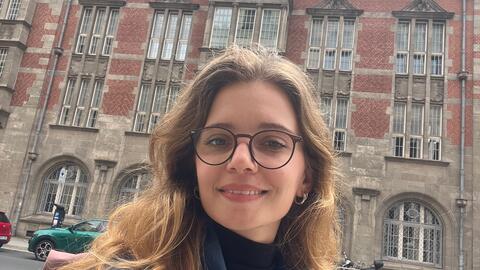
I also took part in HIIG's Democratic Sprint, a dedicated one-week sprint closely linked to the institute's new focus area, Democratic Change and Knowledge. Together with three other researchers, I was asked to explain how my work relates to this focus area and how my own perspective contributes to the broader discourse. The week included coffee conversations with different professors, as well as a small group discussion on how research like mine can generate impact at a societal level, covering topics such as how to communicate research effectively, how to think about target audiences, and creative-writing exercises aimed at making academic work more accessible. This experience pushed me to think beyond the doctrinal framing of my research and consider its broader societal relevance, while also expanding my network with other researchers and fellows in the program.
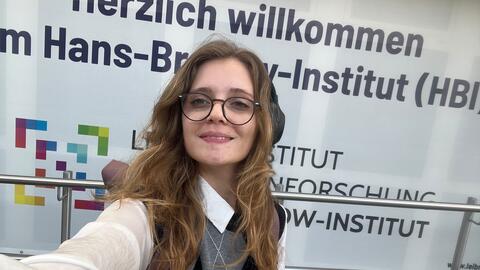
At HBI, I especially valued the informal moments of exchange, including lunch conversations with fellows and professors, which often sparked some of the most useful research discussions of my stay. I had access to HBI's private library, with its focused collection on media and platform governance, and had the chance to meet researchers from different departments within the center, including the Research Methods Lab, which broadened my understanding of the empirical tools available for studying platform regulation. I documented parts of this experience through this LinkedIn post reflecting on my time at the center (post 1).
Across both institutions, I was struck by the quality of the office environments and how both centers are structured to encourage interdisciplinary contact, open spaces and a culture that actively invites conversation across research groups. This made it much easier, as a visiting researcher with a limited amount of time, to integrate into the community and make the most of the experience.
I plan to incorporate the insights gathered during this stay into one of the papers in my dissertation, comparing platform accountability frameworks across the EU, US, and Brazil. I will also continue my connection to HIIG through my upcoming talk in the DSA Research Network's Learning Call series this October, and I hope to keep building on the relationships formed at both HIIG and HBI as my research develops further.