
Fadie Arabo: Cultural Influences on Pediatric Health Literacy in the United Kingdom
Fadie Arabo: Cultural Influences on Pediatric Health Literacy in the United Kingdom
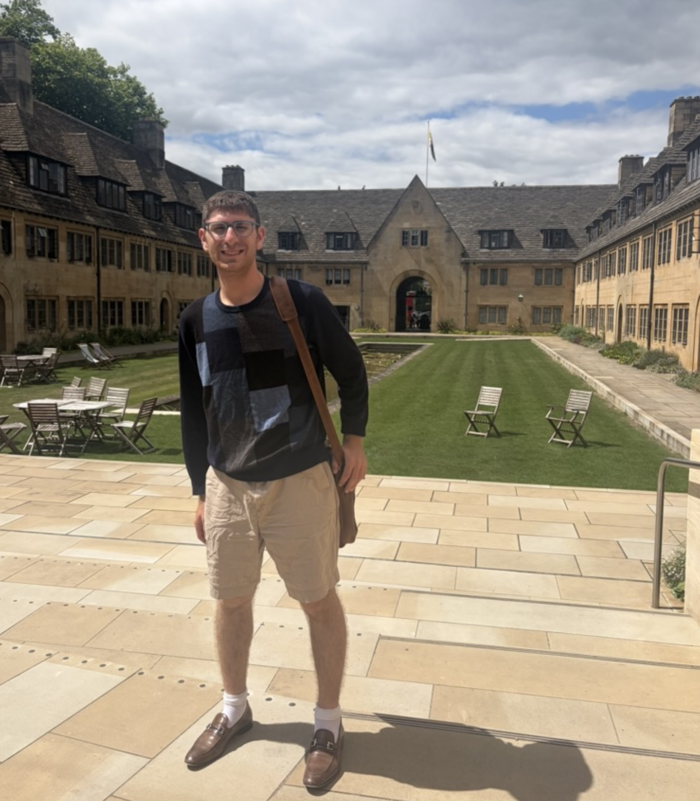
From June 28 to July 3, 2026, I traveled to London and Oxford to explore how immigrant experiences and cultural backgrounds shape the ways children and families understand diagnoses, treatment instructions, and medical care. This research was made possible by a $2,500 Fellowship for Undergraduate Travel and Research grant from The Europe Center at Stanford University. During the trip, I visited the University of Oxford and interviewed three researchers and healthcare professionals about health literacy, medical jargon, and culturally responsive communication within the United Kingdom.
My interest in health literacy stems from my experience growing up in an Iraqi Chaldean immigrant family in Metro Detroit. I have seen how unfamiliar terminology can make healthcare difficult to navigate, even when patients and families genuinely want to follow a clinician's recommendations. A physician might tell a patient that they have hypertension, for example, without explaining that the term means high blood pressure. A patient unfamiliar with the word may associate "hyper" with being overly energetic and leave without fully understanding the diagnosis. These gaps are especially consequential when parents must interpret medical information and make decisions on behalf of their children.
Throughout my interviews, I asked how healthcare professionals can address limited health literacy, avoid "medicalese", and better prepare clinicians to communicate with patients from different cultural and linguistic backgrounds. A recurring lesson was that effective communication requires more than simply presenting accurate information. Clinicians must translate that information into plain, accessible language and confirm that patients understand how it applies to their daily lives. Medical education can support this goal by training future physicians to explain complex concepts clearly. Clinical exercises such as Objective Structured Clinical Examinations, or OSCEs, can help students practice communicating with patients rather than relying solely on technical vocabulary.
One of my most memorable conversations was with Dr. Calisha Allen, a public health registrar and National Institute for Health and Care Research Doctoral Fellow at University College London's Institute of Health Informatics. Her research examines communication between hospitals and social-care settings. While spending time inside a care home alongside residents and staff, Dr. Allen observed how unclear language in discharge summaries and medical notes could cause confusion, missed information, and preventable harm.
Dr. Allen shared the story of a patient with celiac disease who continued eating foods such as spaghetti and bread. Although the patient had been told that she could not consume gluten, she did not understand what gluten was or which foods contained it. The instructions may have appeared medically sufficient, but they were not practically useful to the person expected to follow them. This example stayed with me because it demonstrated that health literacy is not an abstract concern. A single unexplained word can determine whether a patient can safely manage a condition.
The conversation also caused me to think more deeply about pediatric healthcare. Children depend on parents and caregivers to interpret medical information, recognize symptoms, administer treatments, and make decisions. When those caregivers are navigating an unfamiliar healthcare system or communicating in a language other than their first language, medical jargon creates an additional barrier. Culturally responsive communication must therefore consider not only what information is provided, but also how families understand illness, whom they trust, and whether the guidance is realistic within their everyday circumstances.
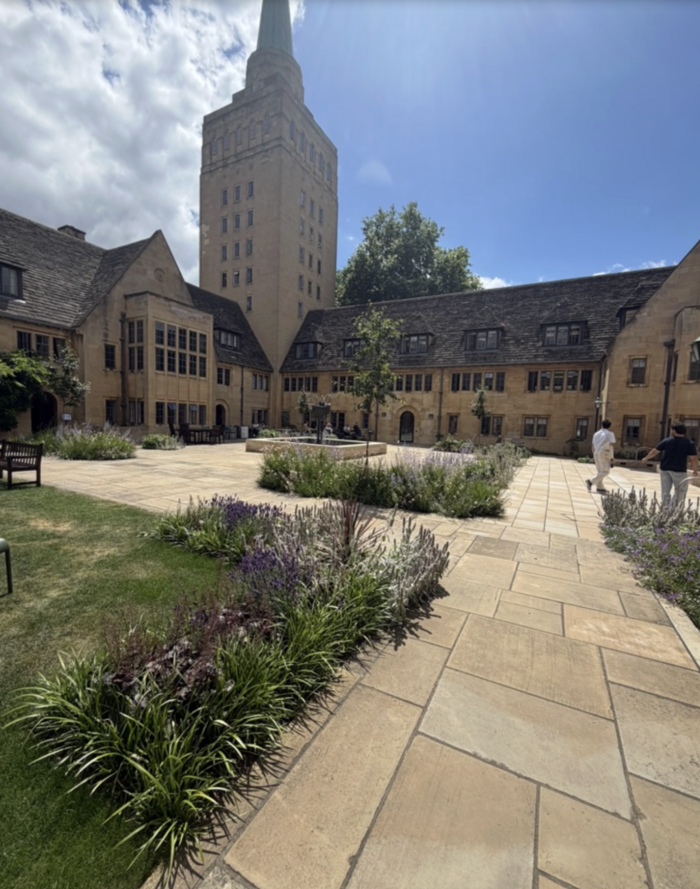
My experiences in London and Oxford will directly inform my work with Tiny Tots Health Initiative, the nonprofit organization I founded to improve pediatric health literacy. As we develop educational cards, games, Healthy Boxes, and a future digital platform, I want our materials to explain health concepts using child-friendly language, visuals, familiar examples, and translations into families' native languages. Dr. Allen's story reinforced the importance of testing whether community members can actually use the information we provide rather than assuming that distributing it is enough.
This experience deepened my commitment to becoming a physician who treats communication as an essential component of care. It also showed me how insights from the United Kingdom can strengthen community-based health-literacy efforts in the United States. I am grateful to The Europe Center for making it possible for me to travel, learn directly from experts, and connect international research with the immigrant communities that first inspired my work. I returned with a clearer understanding of the problem and a stronger responsibility to ensure that medical knowledge is not merely available, but genuinely understandable.