Divya Rajasekharan (Mechanical Engineering) | Physics-Driven Modeling for Clinical Applications of Transcranial Magnetic Stimulation (MPI for Human Cognitive and Brain Sciences)
Divya Rajasekharan (Mechanical Engineering) | Physics-Driven Modeling for Clinical Applications of Transcranial Magnetic Stimulation (MPI for Human Cognitive and Brain Sciences)
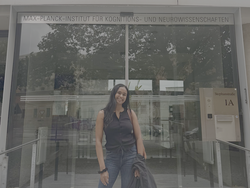
This summer, I had the privilege of completing a research internship in the Max Planck Institute for Human Cognitive and Brain Sciences (MPI-CBS) in Leipzig, Germany. My research was conducted as part of the Brain Networks Group, where I was supervised by supervised by Professors Thomas Knösche and Konstantin Weise. Under their direction, I developed modeling methods and analytical tools to investigate mechanisms of transcranial magnetic stimulation (TMS), a non-invasive brain stimulation technique that is commonly used to treat psychiatric and neurological disorders.
My mentors at MPI-CBS specialize in the technical aspects of TMS, from hardware design to advanced computational modeling. As a PhD student, I partner with Stanford hospital to improve the clinical application of this technology. By facilitating a collaboration with MPI, GRIP provided a unique opportunity to bridge the technological developments occurring in Germany with clinical data from the United States to advance our understanding of therapeutic mechanisms underlying TMS and to improve real-world treatment.
At Stanford, I help to organize a large-scale, multi-site clinical trial of TMS for treatment-resistant depression in U.S. veterans (the B-SMART-fMRI trial). For over 100 participants, we administered TMS treatment and collected symptom, behavioral, and functional MRI data. As an engineering student, my goal has been to apply physical principles to understand and optimize this promising therapeutic. Before GRIP, I used MRI images to generate high-fidelity, three-dimensional models of patient anatomy. Pairing these models with established simulation techniques, I developed a pipeline for modeling the electric field generated by TMS in individual anatomies and under different stimulation conditions. Through this work, we identified important parameters in treatment delivery that shape clinical outcomes.
At MPI-CBS, my first project tackled the question of ‘dosing’ in TMS. In other words, how much energy do we need to deliver, and to which parts of the brain, in order to achieve therapeutic effects? In twelve weeks, we designed and executed an in silico experiment, using natural variability in the electric fields delivered across patients in the B-SMART-fMRI trial to assess patterns related to symptom responses. We demonstrated that higher electric fields in brain regions corresponding to executive control networks were associated with greater symptom reduction, while higher electric fields in brain regions associated with default mode and limbic networks impeded efficacy. These findings have important implications for the design of future TMS hardware and protocols. We prepared our results as a manuscript, with co-authors across Stanford and MPI-CBS, which is currently undergoing peer review. We also submitted an abstract based on this work to the Brain Stimulation Conference in Lyon, France in February 2027.
My second project at MPI-CBS sought to increase the complexity of our models beyond prior art. While the electric field simulation pipeline I developed at Stanford allows us to characterize how much energy TMS produces and where, it does not explain how neurons respond to this stimulation. We hypothesize that clinical improvement following TMS is related to long-term changes in neural activity and connectivity. Modeling this aspect of neuronal response—from the scale of individual neurons to cortex-wide brain networks—is subtle and complex. By leveraging Prof. Thomas Knösche’s expertise in a technique known as neural mass modeling (NMM), we tackled this problem.
Using the NMM framework, we mathematically represent the activity in different brain regions, and the transmission of activity between brain regions, using coupled systems of differential equations. Each brain region is modeled as a Jansen-Rit circuit, an established model of local cortical activity. We inferred the strength of connectivity between brain regions using diffusion-weighted MRI, which quantifies the white matter tracts connecting distal structures. We then introduced TMS as an external, localized perturbation to the stimulated brain area and simulated the propagation of brain activity throughout the cortical network. Using this framework, we were able to robustly detect activation of established brain networks, providing a closer link between external stimulation and underlying neural responses.
The second project I started at MPI-CBS is actively ongoing. I meet weekly with my two project mentors to continue its development. This project represents an important final stage for my PhD, as the culmination of my thesis work bridging physics and engineering, computational neuroscience, and clinical TMS. More importantly, this research reflects what I believe to be the most novel work completed during my PhD, which is directly the result of interdisciplinary collaboration facilitated by GRIP.
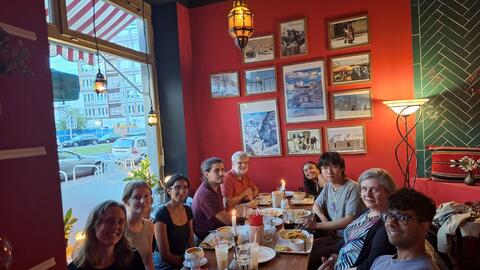
I learned a great deal from my colleagues and mentors at MPI-CBS. I received one-on-one instruction in numerical simulation techniques, including neural mass modeling and optimization methods. I observed the next frontier of TMS technology through my colleagues’ research projects, including automated TMS target identification and coil placement. In return, I had the opportunity to share insights from TMS clinics in real-world settings, including how practical considerations limit adoption of certain research procedures. I trained lab personnel on TMS protocols, including motor threshold determination, as well as basic MRI data analysis. My experience showcased how much approaches to the same research area can differ: these differences increase research productivity, while also widening the gap between researchers who must communicate across different environments, levels of expertise, and technical backgrounds.
There is no doubt that life and research in Germany is different than in the United States. For me, the most noticeable difference was the pace. In addition to the often-discussed differences in work-life balance, I found that research progressed at a more deliberate pace in Germany. At Stanford, nestled within the startup culture of the Silicon Valley, there is a push to develop technologies and generate novel results as quickly as possible. The motto is to “fail fast,” with the idea that future iterations will refine the final product. At MPI-CBS, I was often encouraged to slow down. To plan the next step carefully and to discuss the potential ramifications of any approach before implementation. It was difficult to curtail my instinct towards rapid progress, but finding the middle ground allowed me to design experiments and obtain results that were ultimately more robust. This is a lesson that I will take home and into the future.
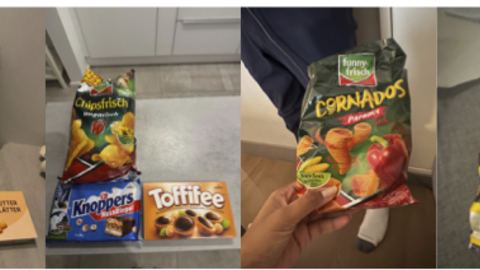
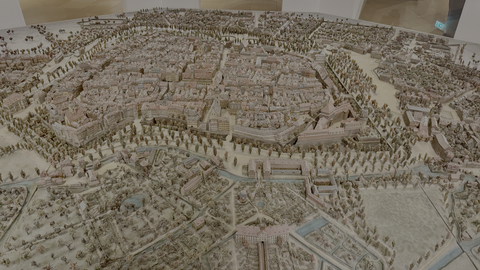
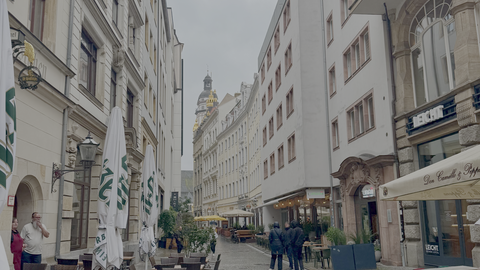
Outside of research, I had the opportunity to immerse myself in life in Leipzig. Through almost daily trips to regional grocery stores (Konsum, REWE, ALDI, EDEKA, LIDL, etc.— consult me for a definitive ranking), the bakeries on every corner, and my local gym, I grew to feel at home in Leipzig these past three months. I spent many evenings and weekends wandering the beautiful downtown area, stopping for coffee and cake, and taking the tram to explore different neighborhoods (except when the tracks melted during one of several heat waves). With Europe’s well-connected rail system, I was also able to visit other German cities (Berlin, Frankfurt, and Dresden), as well as the neighboring cities of Vienna and Prague. Despite the well-known Deutsche Bahn disruptions, I grew to love the public transit system and walkable communities. I also became obsessed with sampling German snacks and sweets, for which I solicited many recommendations from my colleagues. My favorites included Knoppers, chocolate-coated Leibniz cookies, the ketchup flavor of Pom-Bar, and any and all paprika-flavored chips.
Leipzig will always represent an incredibly special time and place in my life. I hope to be back someday.