
Michelle Heeman- An Archaeological Survey of Mediterranean Migration Coastal Landing Sites in Southwestern Sicily
Michelle Heeman- An Archaeological Survey of Mediterranean Migration Coastal Landing Sites in Southwestern Sicily
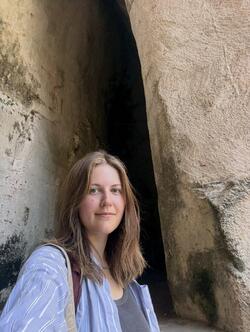
Thanks to the generous support of the Stanford Europe Center, I traveled to southwestern Sicily this summer and successfully completed field research investigating the material remains of Mediterranean migration coastal landing sites. This project represents a continuation of research on the materiality of modern Mediterranean migration that I have been involved in for the past several years, as well as research for my dissertation, which studies the long-term dynamics of human mobility, including how movement has been mediated by the state in the Mediterranean world from antiquity to the present.
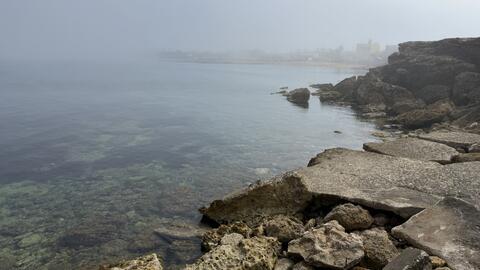
Since 2024, I have worked as a member of the Marzamemi Maritime Heritage Project (MMHP) under the direction of Professors Elizabeth Greene (Brock University) and Justin Leidwanger (Stanford University) studying the physical remains of sailboats that brought displaced people to the island, including along the so-caled "Calabrian Route", an emerging migration passage between Türkiye and southern Italy that has witnessed increased traffic since 2019. This work approaches modern migration 'sites' (e.g. migrant vessels, coastal landing sites, pre-departure camps) as archaeological assemblages. In Marzamemi, we record and quantify objects found in association with these sites, their spatial distributions, and their functional natures (e.g., whether an object was part of the boat's equipment, a discarded personal belonging, supplies like food or water, etc.) and we evaluate what information these objects can tell us about how passengers prepared for the voyage, who was on board, and in what spaces they dwelled. Combining this information with existing first-hand accounts of crossings, policy studies, and humanitarian or news reports informs our reconstruction of the journey and the experiences of those onboard.
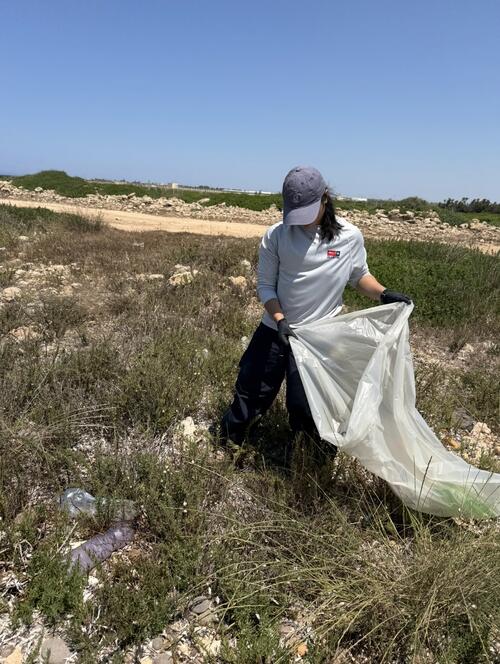
This summer, I expanded this research to include the other side of Sicily by undertaking a survey of coastal sites in the area between Marsala and Tre Fontane, with the aim of assessing what opportunities exist for studying assemblages related to migration along a different route: the Central Mediterranean Route between North Africa and Sicily, a migration passage which has received much media attention over the past decade and a half. I conducted this survey with the assistance of Sophia Wu (Stanford '26), a fellow member of the MMHP team who has also assisted with the documentation of impounded vessels in Marzamemi. Small assemblages in this corner of the island had previously been documented by the Arizona Sicily Project (ASP) during their multi-period investigations of connectivity between Tunisia and Sicily in the Capo Feto environs (see Blake and Schon's 2019 report, "The Archaeology of Contemporary Migrant Journeys in Western Sicily"). Our survey work revisited this area, to evaluate changes to the modern migration material landscape since the ASP's documentation efforts over half a decade ago. We identified several sites of interest, including an abandoned fishing boat on the public beach in Tre Fontane, which local townspeople told us was 'from North Africa' and had washed ashore during a winter storm; several small assemblages in the environs of Capo Feto, located in the same survey area investigated by the ASP; and a large spread of densely concentrated materials such as food packaging and plastic water bottles produced in North Africa, discarded clothing and shoes, boat equipment, and the occasional life jacket.
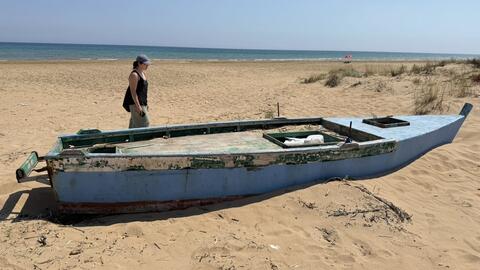
We approached these 'sites' as archaeological assemblages, using the same documentation methods we apply to the study of fishing vessels and sailboats in Marzamemi. We carefully photographed and recorded individual items, including details such as their country of production, expiration and production dates on all food and water packaging, and mapped the location of these items within the site.
I am currently working on the analysis of the materials we documented during this summer. The material signature at the largest coastal site, however, resembles the migration assemblages we have studied in Marzamemi. This, along with the expiration and production dates on food and water packaging, lead me to preliminarily interpret this as a coastal landing site that has witnessed successful landings over the past several years. Our identification of several small assemblages and a large coastal landing site offer new directions for our research on the material landscape of modern migration focusing on the Central Mediterranean Route, and we plan to continue these investigations in future field seasons.
Research on the materiality of contemporary displacement reflects efforts to contribute to a holistic study of this significant yet ephemeral moment in Mediterranean history. This research is also concerned with how archaeology can contribute to social justice and activist initiatives, so as to be a field not only concerned with the past, but also how archaeologists might contribute to the making of a better future. As an activist archaeological practice, the documentation of the materiality of contemporary migration in the Mediterranean supports the voices of the displaced by complementing and materially substantiating anecdotes about their experiences through the recording of physical evidence.
The research I conducted this summer has opened up new avenues for my research on the materiality of migration in Sicily, and it has helped advance the development of my dissertation project, and for that I must thank again The Europe Center for its support, which made this project possible.