
Gillian Smith- The Royal Hospitals: Innovative Public Welfare Institutions in Sixteenth-Century London
Gillian Smith- The Royal Hospitals: Innovative Public Welfare Institutions in Sixteenth-Century London

I am immensely grateful to the Stanford Europe Center for generously supporting my six-week research trip to London in the summer of 2026. While in England, I sought archival material which would enable me to shape my dissertation, in which I will study the relationship between London's royal hospital system, its population (especially its lower classes), and its government in the sixteenth century.
I also hoped to answer lingering questions which I had raised during my first- and second-year research projects with the Stanford History Department. Why had Bridewell Hospital been essentially privatized in 1602, an urban government experiment which had disastrous consequences for many Londoners? And how did the hospitals, and the vulnerable populations they served, bear the effects of the crisis conditions- plague, dearth, war, and depression- which the city faced during the 1590s?
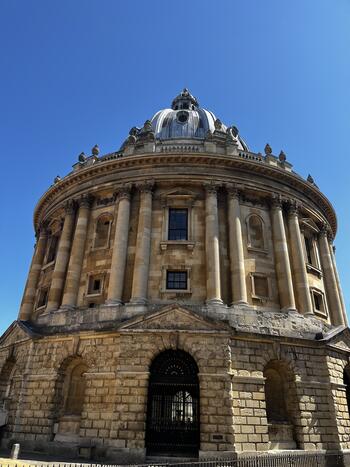
My research was fruitful from the start; in just two weeks spent in the London Archives and the libraries of St. Bartholomew's Hospital, I discovered the answer to both of these questions after going through court minutes and treasury records from each hospital: debt! The pressures of the 1590s exerted such strain on the hospitals that each became increasingly mired in debt throughout the decade. Bridewell's treasuries suffered most of all, and the institutions' dire financial position explains the gamble the City took when it ceded the hospital's management in 1602.
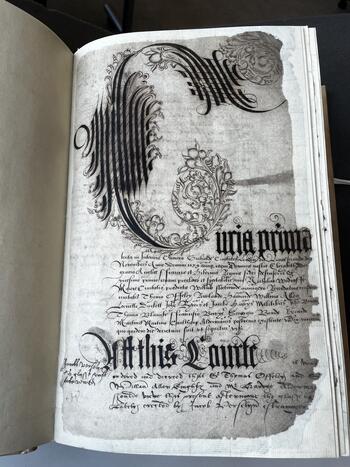
With the remainder of my time in England, I built slowly but steadily towards my dissertation. I was able to view materials from Bethlem Museum of the Mind, the Bodleian Library (Oxford), the Guildhall Library, and the National Archives in Kew. I became certain enough of my project that I was able to apply for yearlong grants in August, and now I am working on the first draft of my dissertation prospectus. Perhaps the most exciting thing to come from this trip is an affiliation with the London Archives; when I next return to England, I will partner with expert archivists to prepare research guides, give guest lectures, and write for museums. The GSGC grant has thus enriched my scholarship in the future as well as the present!