Conflict
News Type
Q&As
Date
Paragraphs

On December 9, 1948, the United Nations General Assembly unanimously adopted the Convention on the Prevention and Punishment of the Crime of Genocide. The convention was among the first UN conventions to address humanitarian issues, and made genocide a crime under international law.

Image
Image of Norman Naimark
Sixty-eight years later, acts of genocide still occur, despite international efforts to prevent them. Stanford Professor of History and former Stanford Global Studies Director Norman Naimark, author of the newly published Genocide: A World History (Oxford University Press), answers questions about his new book, which examines the main cases in the history of genocide from ancient times to the present.

The Convention on Genocide defined the term as a variety of “acts against committed with the intent to destroy, in whole or in part a national, ethnical, racial, or religious group, as such.” Can you take us back to this moment in history—what was the context surrounding the convention and the origin of the term?

On the one hand, the convention reflected the intense lobbying, fervent commitment, and long-time interest of the Polish-Jewish international legal scholar, Raphael Lemkin, who coined the term “genocide” in 1944, after having escaped the Nazi takeover of Poland. On the other, it spoke to the needs of “international society” to outlaw the kinds of crimes committed by the Nazis against national and ethnic groups. In many ways, it was a backward looking document. It took a very long time for it to be ratified by the UN member nations (the U.S. ratified it only in 1988) and to become a part of international law in the way we think about it today. In fact, the convention was mostly forgotten and shelved until the 1990s with the war in Bosnia and the Rwandan Genocide.

What sparked your interest in this topic and inspired you to write this book?

I first began thinking seriously about questions related to genocide during the Balkan Wars of the early and mid-1990s. The murderous events in Bosnia, in particular, really shook me up, since I had spent quite a bit of time in the region as a graduate student and did not expect in the least the severe ethnic tensions that fueled war and genocide.

I tried to think comparatively about the historical phenomenon of genocide, and that led to a series of books about genocide in the twentieth century: Fires of Hatred; Stalin’s Genocides; and A Question of Genocide. After engaging the questions of students and scholarly audiences, I realized that genocide did not belong just to the twentieth century or just to Europe, but rather was the product of the enduring character of human societies. As a result, I started teaching a frosh seminar on “The World History of Genocide,” which, in turn, became the basis for this new book.

This book is really driven by student questions, discussions, and papers from that class. I dedicated the book to my students, many of whom have gone on to study human rights and international affairs at Stanford and beyond. The students really dug into the material and helped me understand how relevant it was to their own lives and their future.

In the book, you explore different cases of genocide throughout history. How has genocide changed over time? In what ways has it stayed the same?

From the beginning of human history, genocide has involved a political entity targeting a specifically designated group of people, sometimes within one’s territory and/or in another territory, and seeking their physical elimination. The motives for killing off a group, in the UN definition “in whole or in part” are less important in this view than the crucial question of intent.

There are several important “moments” in the history of genocide. One might be considered the Spanish conquest of the Americas in the sixteenth century, where the beginnings of “racial” thinking influenced the conquistadores’ massacres of indigenous peoples; another might be considered the development of the modern state following the French Revolution. The state, even in its democratic forms, can give rise to genocide.

The ideologies of communism and fascism in the mid-twentieth centuries played crucial roles in the development of genocide, and the interconnected complex of colonialism and post-colonialism also were important to the development of modern genocide. What scholars classify as “settler genocide” – when thinking about North America, the Antipodes, and Africa – was intimately linked to colonialism.

[[{"fid":"224942","view_mode":"crop_870xauto","fields":{"format":"crop_870xauto","field_file_image_description[und][0][value]":"Book cover for \"Genocide: A World History\"","field_file_image_alt_text[und][0][value]":"Book cover for \"Genocide: A World History\"","field_file_image_title_text[und][0][value]":"Book cover for \"Genocide: A World History\"","field_credit[und][0][value]":"","field_caption[und][0][value]":"","field_related_image_aspect[und][0][value]":"","thumbnails":"crop_870xauto"},"type":"media","attributes":{"alt":"Book cover for \\\"Genocide: A World History"","title":"Book cover for \\\"Genocide: A World History"","style":"width: 200px; height: 289px; margin-top: 8px; margin-right: 15px; float: left;","class":"media-element file-crop-870xauto"}}]]What are some of the challenges you’ve observed of reconciliation and forgiveness in societies that have experienced genocide?

Some scholars suggest that the history of genocide is best “forgotten,” as a way to help societies rebuild from the fierce blood-letting that genocide always involves. Revenge for past genocides sometimes provokes new conflicts. Most observers believe, however, that truth telling of one form or another—in courts, in local institutions, in cultural expression, and in historical and public discourse—is the best way to allow societies to recover.

Denial is almost always a part of genocide and its memory, which in turn makes reconciliation and forgiveness extraordinarily difficult. The involvement of international courts in convicting perpetrators of genocide has been, on balance, a positive development during the past quarter century. But the courts are frequently accused by the perpetrator populations of reflecting “victors’ justice” and political one-sidedness, which also impedes reconciliation.

Does your research shed any light on why such horrific events continue to take place, despite efforts to prevent them? Any silver linings or hope for the future?

There has been some empirical work on the incidence of violence and genocide over human history that demonstrates an overall downward trend in the percentage of people who die from violence and mass killing. The argument is that changing international norms about genocide have served to impede political leaders from turning to mass murder as a weapon of dealing with subject groups.

There are warning signs for genocide that range from increasing racism and xenophobia among societies and their political leaders to the ever-present threat of authoritarianism and the construction of police states, which make carrying out mass killing easier than in decentralized and democratic states.

The bottom line is that international institutions, laws, and norms do help impede the eruption of genocidal situations, but there are few guarantees and the international system works very slowly – think about the mass murder of the Yazidi Kurds or the bombardment of Aleppo now – when there is little agreement about how to intercede.

What additional questions did your research raise?

There is a deep gender component to genocide that needs to be explored further. Perpetrators do not treat women and men the same. There are important issues of rape and sexual exploitation involved in genocide, and, especially in the early history of genocide, women are more often than not captured and enslaved, rather than eliminated. The perpetrators themselves are almost always men – though there are frequently also women involved.

There are other dynamics of genocide that need to be studied more carefully. For example, genocide is a process, usually unleashed by war, not a distinct “event” with a beginning and an end. It tends to accelerate to a crescendo and then slows down. It frequently spreads from one targeted people or group to another, with methods that evolve and change over time. The perpetrators “learn” in the process of genocide, which ends up causing much more damage to societies than might be anticipated. These are all very good reasons for interdiction, that is, stopping genocide before it accelerates and spreads.

How do you hope this book will inform discourse or perceptions about the subject?

I define genocide rather more broadly than most scholars, including social and political groups into a concept of genocide that was initially articulated by Raphael Lemkin, but deleted, primarily for political reasons, from the 1948 Genocide Convention itself. This allows us to look at communist genocides (in the Soviet Union, China, and Cambodia), as well as anti-communist ones (in Indonesia, East Timor, and Guatemala.) Approaching genocide in this way also helps us think about genocide as a historical and potential threat to groups within societies that are frequently subjected to stereotypes, de-humanization and “othering,” and sometimes to state discrimination and even mass killing, like homosexuals and the disabled during Nazi Germany.

In the end, I believe that improving our understanding of these processes can help identify warning signs of genocide and deter, if not always prevent, attacks on minority populations of various origins.


This article was originally published in Stanford Global Studies online news on December 8, 2016 and also appears on the Stanford Global Studies Medium page

For more information about the book, visit the Oxford University Press website.

Norman Naimark quoted in USA Today News on Aleppo.


Hero Image
Book cover for "Genocide: A World History"
All News button
1
Paragraphs

Genocide occurs in every time period and on every continent. Using the 1948 U.N. definition of genocide as its departure point, this book examines the main episodes in the history of genocide from the beginning of human history to the present. Norman M. Naimark lucidly shows that genocide both changes over time, depending on the character of major historical periods, and remains the same in many of its murderous dynamics. He examines cases of genocide as distinct episodes of mass violence, but also in historical connection with earlier episodes.

Unlike much of the literature in genocide studies, Naimark argues that genocide can also involve the elimination of targeted social and political groups, providing an insightful analysis of communist and anti-communist genocide. He pays special attention to settler (sometimes colonial) genocide as a subject of major concern, illuminating how deeply the elimination of indigenous peoples, especially in Africa, South America, and North America, influenced recent historical developments. At the same time, the "classic" cases of genocide in the twentieth Century - the Armenian Genocide, the Holocaust, Rwanda, and Bosnia -- are discussed, together with recent episodes in Darfur and Congo.

All Publications button
1
Publication Type
Books
Publication Date
Journal Publisher
Oxford University Press
Authors
Norman M. Naimark
-

The people of Nagorno-Karabakh have long strived for the recognition of their right to self-determination. Azerbaijan reacted by unleashing a large scale military offensive that led to war, which ended in May 1994 with the signing of the cease-fire agreement by Azerbaijan, Nagorno-Karabakh, and Armenia. The negotiation process is mediated by the Co-Chairs of the Minsk Group – the USA, France and Russia. Though the parties were close to a solution on several occasions, the negotiations have not yielded a durable settlement. In April 2016 the conflict once again erupted with violence leaving hundreds killed and maimed. Since then, two summits have been convened to create conducive conditions for the advancement of the peace process.

 
Minister Edward Nalbandian has been the Foreign Affairs Minister of Armenia since 2008. He studied at the Moscow State Institute of International Relations and received his PhD (in political science) from the Institute of Oriental Studies at the National Academy of Sciences. Minister Nalbandian began working at the Soviet Ministry of Foreign Affairs in the late 1970s. After Armenia's independence he was invited to work for the Armenian diplomatic service. He has been Armenia's Ambassador to Egypt, Morocco, Oman, France, as well as Israel, the Vatican and Andorra. He has also been Special Representative of the President of Armenia in different international organizations. Minister Nalbandian has published several works on international relations. He is the recipient of several awards, including the Armenian Medal of Mkhitar Gosh and the second-grade and first-grade Medals of Services to the Motherland, Commandeur and Grand Officier de la Légion D'honneur of France, Saint Gregory's Grand Cross Order of the Holy See (Vatican), the USSR order of Friendship of Nations, and others. He is married and has a daughter. 
 
Edward Nalbandian, Foreign Affairs Minister of Armenia Foreign Affairs Minister of Armenia Speaker
Seminars
Paragraphs

After the attacks in Paris, TEC faculty affiliate Russell A. Berman argues that "ISIS is hardly the only challenge to American power and the international order" and that "strategic thinking has to consider long term issues and not merely react to immediate events or even the most terrible headlines." Instead, he encourages the U.S. to strengthen alliances with the Europeans and the Sunnis in the December 1, 2015 edition of The Caravan.

All Publications button
1
Publication Type
Commentary
Publication Date
Journal Publisher
The Caravan
Authors
Russell A. Berman
Paragraphs

"Ethnicity, Insurgency, and Civil War" is chapter 25 of the book The Contemporary Conflict Resolution Reader, edited by Hugh Miall, Tom Woodhouse, Oliver Ramsbotham, and Christopher Mitchell and published by Polity.

Armed conflict may appear to be in long term decline, but the intractability and destructiveness of contemporary conflicts make conflict resolution as urgent and necessary as ever. The Contemporary Conflict Resolution Reader is the first comprehensive survey of the field as it has evolved over the last fifty years, bringing together the seminal writings of its founders with the cutting-edge interventions of today’s leading exponents and practitioners.

All Publications button
1
Publication Type
Books
Publication Date
Journal Publisher
The Contemporary Conflict Resolution Reader, edited by Hugh Miall, Tom Woodhouse, Oliver Ramsbotham, and Christopher Mitchell
Authors
David Laitin
Number
978-0745686769
News Type
News
Date
Paragraphs

The recent discovery of at least 50 dead migrants aboard a boat off the shores of Libya sparked a discussion on KQED Radio’s “forum with Michael Krasny" about the escalating crisis (Thurs., Aug. 27, 2015). Cécile Alduy, Stanford associate professor of French literature and affiliated faculty at The Europe Center was one of those asked to weigh in on Europe’s migration policy struggle.

Also joining the discussion was Gregory Maniatis, senior European Policy Fellow at the Migration Policy Institute and Tom Nuttall, Charlemagne columnist for The Economist.

Visit KQED Radio's Forum web article “More Migrants Found Dead as Hundreds of Thousands Flee to Europe” to download a recording of this interview.


Hero Image
Shutterstock photo of immigrants at the border between Greece and Macedonia.
Idomeni, Greece - August 19 , 2015: Hundreds of immigrants at the border between Greece and Macedonia.
Ververidis Vasilis / Shutterstock.com
All News button
1
-

Due to the high interest in this event, we have moved it to a larger room.  It is now in the Oksenberg Conference Room, Encina Hall, 3rd floor.


The February Minsk II agreement introduced a fragile ceasefire in eastern Ukraine, following a year of crisis and conflict between Kyiv and Moscow.  Ukrainian President Poroshenko needs to grapple with a daunting list of critical economic and political reforms.  Russian President Putin, however, appears intent on destabilizing the Ukrainian government and has the means, including military force, to do so.  What can we expect next in the Ukraine-Russia stand-off, and how should the West respond?

Image
Steven Pifer


Steven Pifer is a senior fellow at the Brookings Institution, where his work focuses on arms control, Ukraine and Russia. A retired Foreign Service officer, his more than 25 years with the State Department included assignments as deputy assistant secretary of state with responsibilities for Russia and Ukraine (2001-2004), ambassador to Ukraine (1998-2000), and special assistant to the president and senior director for Russia, Ukraine and Eurasia on the National Security Council (1996-1997).


Co-sponsored by the Freeman Spogli Institute for International Studies and The Europe Center.

Steven Pifer Senior Fellow Speaker the Brookings Institution
Lectures
-

At the NATO Summit in Wales in September 2014, NATO leaders were clear about the security challenges on the Alliance’s borders. In the East, Russia’s actions threaten our vision of a Europe that is whole, free and at peace.  On the Alliance’s southeastern border, ISIL’s campaign of terror poses a threat to the stability of the Middle East and beyond.  To the south, across the Mediterranean, Libya is becoming increasingly unstable. As the Alliance continues to confront theses current and emerging threats, one thing is clear as we prepare for the 2016 Summit in Warsaw: NATO will adapt, just as it has throughout its 65-year history.

Image
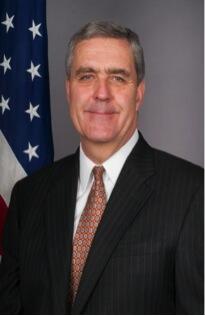
Douglas Lute, Ambassador of the United States to NATO


In August 2013, Douglas E. Lute was sworn-in as the Ambassador of the United States to the North Atlantic Treaty Organization (NATO).  From 2007 to 2013, Lute served at the White House under Presidents Bush and Obama, first as the Assistant to the President and Deputy National Security Advisor for Iraq and Afghanistan, and more recently as the Deputy Assistant to the President focusing on Afghanistan, Pakistan and India.  In 2010, AMB Lute retired from the U.S. Army as a Lieutenant General after 35 years on active duty.  Prior to the White House, he served as the Director of Operations on the Joint Staff, overseeing U.S. military operations worldwide. He served multiple tours in NATO commands including duty in Germany during the Cold War and commanding U.S. forces in Kosovo.  He holds degrees from the United States Military Academy and Harvard University.

A light lunch will be provided.  Please plan to arrive by 11:30am to allow time to check in at the registration desk, pick up your lunch and be seated by 12:00 noon.

Co-sponsored by The Europe Center, the Freeman Spogli Institute for International Studies, the Center for International Security and Cooperation and the Center for Russian, East European and Eurasian Studies.


Douglas Lute United States Ambassador to NATO Speaker
Lectures

On March 29, 1945 the first Soviet troops crossed the Austrian border. On April 13, after fighting involving heavy losses, Vienna was liberated by the Red Army. The efforts of a resistance group within the Wehrmacht to avoid combat and surrender the city were betrayed and failed.

In building up the new, postwar Austria, the provisional Austrian government, installed by the Soviets, faced a dilemma: on the one hand the Moscow Declaration of November 1943 offered the opportunity to avoid the accusation of shared responsibility in Nazi crimes, even though Austria had been an integral part of the German Reich since the “Anschluss” in March 1938. The Moscow Declaration formula that, after the war, Austria would be dealt as the “first victim of Hitlerite aggression” offered a more than welcome way to avoid the threatened punishment. On the other hand, the obvious fact could not be denied that Austrians – as well as other Germans – had served in the Wehrmacht.

The Austrian Declaration of Independence, proclaimed on April 27, 1945, tried to explain this fact in claiming that the Austrians had been forced by Nazi suppression to fight in a war no Austrian had ever wanted, against peoples towards whom no Austrian felt any resentment.

In the immediate postwar period, this interpretation was underlined through several governmental projects, particularly the official Rot-Weiß-Rot-Buch (Red-White-Red-Book, 1946) that aimed to prove the significance of Austrian resistance to the Nazi regime – Wehrmacht soldiers were amongst those honored as patriotic resistance fighters, having been murdered for opposing the regime’s military orders.

But this narrative was to change within a short period in time. The Cold War and the re-integration of former members of the Nazi Party reframed the politics of history. This did not affect the official theory of Austria as the “first victim” but this argument was used mainly for official representations, especially to the “Ausland”. In Austrian internal discourse, clear indicators of a re-definition can be observed as early as 1948 as concerned attitudes to the Wehrmacht soldiers. In war memorials, commemoration ceremonies etc. the fallen soldiers – in 1945 defined as victims of infamous Nazi war policy - were now honored as heroes defending their homeland against the enemies from the “East”.

1945’s victim theory is of course the founding myth (more critically referred to as the foundational “historical lie”) of the Second Republic of Austria. But it is only one part of the specific Austrian postwar myth. Rather, Austrian memory is characterized by the tension between the official victim theory – Austria as the first victim of Nazi Germany in 1938 – and a widespread, populist counter-narrative: Austrians as heroic defenders of Heimat and as military and civilian victims of the Allied war against Nazi Germany. In this populist or popular second victim theory, the darkest moment of Austrian history was not in 1938, but in 1945, when Austria was occupied by the Allies, above all by the “Russian barbarians”. Obviously “Liberation” was not a term appropriate to this perspective.

These contradictory narratives caused several public conflicts, mostly triggered by the erection of new war memorials and commemoration ceremonies for the fallen, especially in the decade after the State Treaty (1955) when it was no longer necessary to take the Allied Military Occupation Forces into consideration.

In the 1980s, with the break with the European postwar myths also came the unmasking of the official victim theory, triggered by the debate on President Kurt Waldheim’s role as a Wehrmacht officer in the Balkan theater of war (1986). The official standpoint, declared by Chancellor Franz Vranitzky in 1991, now acknowledged the “co-responsibility” of the Austrians for the Holocaust and other Nazi crimes.

But surprisingly, the culture of commemoration for the fallen soldiers of the Wehrmacht remained largely untouched, despite the intensity of the "memory wars" at the end of the 20th century. Only in 2012 was Austria at last confronted with its long overlooked blind spot in coming to terms with the Nazi past. Beyond all ethical or moral arguments and the historical fact that the Wehrmacht had participated in War Crimes and played a major role in the Holocaust, honoring Wehrmacht soldiers for defending the “homeland” against the Allied Military Forces, which liberated Austria from the Nazi terror regime, is anachronistic and inappropriate, not at least taking the commitment of the Austrian Bundesheer in European military co-operation into consideration. Ironically, the starting point for the break with this outdated postwar tradition was a hidden Nazi document discovered in 2012 at the very center of official commemoration: the sculpture of the Fallen Soldier in the Austrian national Heroes Monument on Vienna’s Heroes square.

But despite overcoming of the last und today yet hardly comprehensible remains of the postwar strategies of national, social and individual reconstruction, the question still remains: How should Austrian society commemorate its Wehrmacht soldiers – the fallen and the surviving, a generation which is now passing away? As victims? As perpetrators? This affects not only national representation but also family memory. Honoring the millions of soldiers of the Allied Forces who died for the liberation of Europe – and Austria – will be in the focus of this year‘s 70th anniversary of the end of WW II. But how to commemorate the ambivalent role of the Red Army in Austria (and other countries) – commemorating and honoring the death toll of Russian soldiers who died in the Eastern and Central European theaters of war, whilst also remembering the suffering of raped women?

In 2014, the centenary of WW I resulted in an harmonious scene in which a European family of nations had learned their lessons from history. Predictably in the commemoration year 2015, the picture will be far more complex and ambivalent – especially in view of the different experiences of democratic and communist EU countries after 1945, the conflicts with Russia in Ukraine and Crimea and, not least, the role of the Great Patriotic War in today’s Russian nationalist politics of history. The commemoration year 2015 seems to become an exciting event: one can observe how new world orders – and new tensions – will be negotiated in the field of cultural memory.

Image


Heidemarie Uhl is a Fulbright-Botstiber Visiting Professor, a consulting professor at The Europe Center and visiting associate professor with the Department of History.  She is a Senior Researcher at the Austrian Academy of Sciences and teaches at the University of Vienna. Professor Uhl has held guest professorships at Hebrew University Jerusalem (Israel), University of Strasbourg (France) and Andrassy University Budapest (Hungary). She has published books and articles on the memory of the Holocaust in Austria and Europe and is currently co-directing a project on the persecution, expulsion and annihilation of Viennese Jews 1938-1945.

Professor Uhl's recent research interest focuses on the political, social, cultural and intellectual framework in which the Holocaust became the universal watershed event for a common memory of Western civilization at the end of the 20th century. What are the pre-conditions for this change in paradigm? Which transformations in narrative and in representation - from historiography to Memorial Museums and popular movie productions - were necessary for the acknowledgment of the Holocaust as the negative point of reference for the values and norms of western societies? And what are the new challenges Holocaust memory is confronted with in today’s multi-polar post-Cold War era?

Professor Uhl taught the history course "The Holocaust in Recent Memory: Conficts - Commemorations - Challenges" during the fall quarter, 2014.


Co-sponsored by the Department of History.

Lane History Corner, Room 307

Lane History Corner
450 Serra Mall, Bldg. 200

0
Consulting Professor at The Europe Center, 2014-2015
heidemarie20uhl2011.jpg PhD

Heidemarie Uhl is a Fulbright-Botstiber Visiting Professor, a consulting professor at The Europe Center and visiting associate professor with the Department of History.  She is a Senior Researcher at the Austrian Academy of Sciences and teaches at the University of Vienna. Professor Uhl has held guest professorships at Hebrew University Jerusalem (Israel), University of Strasbourg (France) and Andrassy University Budapest (Hungary). She has published books and articles on the memory of the Holocaust in Austria and Europe and is currently co-directing a project on the persecution, expulsion and annihilation of Viennese Jews 1938-1945.

Professor Uhl's recent research interest focuses on the political, social, cultural and intellectual framework in which the Holocaust became the universal watershed event for a common memory of Western civilization at the end of the 20th century. What are the pre-conditions for this change in paradigm? Which transformations in narrative and in representation - from historiography to Memorial Museums and popular movie productions - were necessary for the acknowledgment of the Holocaust as the negative point of reference for the values and norms of western societies? And what are the new challenges Holocaust memory is confronted with in today’s multi-polar post-Cold War era?

Professor Uhl is teaching the history course "The Holocaust in Recent Memory: Conficts - Commemorations - Challenges" this Fall 2014.


Senior Researcher Speaker Austrian Academy of Sciences
Lectures
Subscribe to Conflict