European Union
-

To listen to the audio recording of this talk, please visit our multimedia page.


The European Union (EU) is facing one of the rockiest periods in its existence. Not often in its history has it looked so economically fragile, so unsecure about how to protect its borders, so divided over how to tackle the crisis of legitimacy facing its institutions, and so under assault of Eurosceptic parties. The unprecedented levels of integration in recent decades have led to increased public contestation, yet at the same the EU is more reliant on public support for its continued legitimacy than ever before. Eurosceptic parties are expected to increase their vote share in the upcoming European Parliamentary elections, and the outcome of the Brexit vote provides glimpse of what could happen when Euroscepticism hardens.

In this talk, I discuss the role of public opinion in the European integration process. Based on my 2018 book Euroscepticism and the Future of European Integration, I outline a novel theory of public opinion that stresses the deep interconnectedness between people’s views about European and national politics. It suggests that public opinion cannot simply be characterized as either Eurosceptic or not, but rather consists of different types. This is important because these types coincide with fundamentally different views about the way the EU should be reformed and which policy priorities should be pursued. These types also have very different consequences for behaviour in elections and referenda. Euroscepticism is such a diverse phenomenon because the Eurozone crisis has exacerbated the structural imbalances within the EU. As the economic and political fates of member states diverged, people’s experiences with and evaluations of the EU and national political systems also grew further apart. The heterogeneity in public preferences has implications for the European project, as it makes a one-size-fits-all approach to addressing Euroscepticism unlikely to be successful.
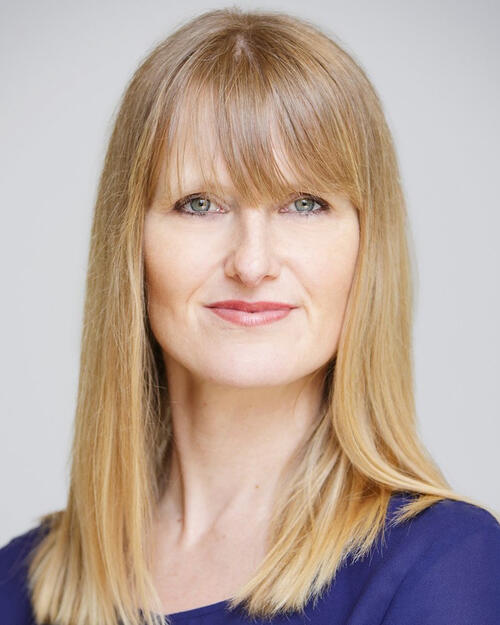


Image
Catherine de Vries photo

Catherine E. De Vries is a Westendijk Chair and Professor of Political Behaviour in Europe at the Vrije Universiteit Amsterdam, where she also acts as the Director of the VU Interdisciplinary Center for European Studies. In addition, she is an Associate Member of Nuffield College, University of Oxford and an affiliated Professor of Political Science at the University of Essex. Finally, she serves a scientific advisor the eupinions project of the Bertelsmann Foundation and as a board member of the European Institute at the London School of Economics and Hertie School of Governance in Berlin.


Co-sponsored by the Hoover Institution


Catherine De Vries Professor of Political Behaviour in Europe, Vrije Universiteit Amsterdam Speaker Vrije Universiteit Amsterdam
Seminars
0
Visiting Scholar at The Europe Center, 2018
Professor of Political Science, Stockholm University
jonas_tallberg_image.jpg

Jonas Tallberg is Professor of Political Science at Stockholm University, where he directs the research group on global and regional governance, selected as a leading area of research at SU. His primary research interests are global governance and European Union politics. His most recent book is the The Opening Up of International Organizations: Transnational Access in Global Governance (Cambridge University Press, 2013), co-authored with Thomas Sommerer, Theresa Squatrito and Christer Jönsson. Earlier books include Leadership and Negotiation in the European Union (Cambridge University Press, 2006). His articles have appeared in journals such as International Organization, International Studies Quarterly, British Journal of Political Science, European Journal of International Relations, Review of International Organizations, and Journal of Common Market Studies.

Tallberg has won numerous awards for his research, including the Forskraft Award for the best Swedish dissertation on international relations, the JCMS Prize for the best article in Journal of Common Market Studies, and the Friedrich Wilhelm Bessel Research Award from the German Humboldt Foundation. He has been awarded research grants from, among others, the European Research Council, Fulbright Commission, Swedish Research Council, Riksbankens Jubileumsfond, and Nordic Research Academy.

Tallberg has been a visiting researcher at, among other institutions, Harvard University, McGill University, WZB Berlin Social Science Center, Ludwig-Maximilians-Universität München, and European Commission. He currently directs the six-year research program “Legitimacy in Global Governance” (statsvet.su.se/leggov) and the four-year research project “The Performance of International Organizations” (statsvet.su.se/forskning/forskningsprojekt/pio).

-

EU legislative politics have changed dramatically during the past decade, and the British government has been a vocal and influential voice in shaping EU policies and processes. Based on an original dataset covering all legislative decisions by the EU governments since the enlargement to Central- and Eastern Europe in 2004, this paper provides detailed analysis to explain and elaborate on the British votes in the EU Council. It shows that the UK has opposed legislation more than other countries, and that this opposition has increased in recent years. However, advanced text analysis of formal policy statements from the Council records shows that the UK government should not be considered a policy outlier: a group of small- and medium-sized countries frequently side with the UK position in the Council records. They will likely miss the British position and outspoken voice as the EU embarks on a new phase in European integration. The results extend our existing knowledge about negotiation dynamics and voting behaviour in the Council, and are relevant to studies of other intergovernmental negotiation forums too.

Image
Sara Hagemann


Sara Hagemann is Associate Professor in European Politics at London School of Economics and Political Science, which she joined in September 2009. In her work, Sara draws on a mix of academic and policy experience as she has held research and policy positions in Brussels, Copenhagen and London. Sara has published extensively on European affairs, in particular on transparency and accountability in political systems, EU policy-making processes, EU treaty matters, the role of national parliaments, and the consequences of EU enlargements.

Before joining LSE, Sara worked as a Policy Analyst at the Brussels-based European Policy Centre (EPC), where she was responsible for its Political Europe programme. She has also held posts at the Centre for European Policy Studies (CEPS), and in the Danish Ministry of Foreign Affairs. She is the Co-Founder and General Editor of the LSE’s popular European Politics blog EUROPP, and Co-Founder and former Managing Director of VoteWatch.eu (www.votewatch.eu), an online initiative that monitors EU decision-makers’ voting records.

Sara has been awarded an ESRC Impact Accelerator Grant (from September 2016- April 2018) through the LSE’s Institute of Public Affairs. She was also an ESRC Senior Fellow as part of the UK in a Changing Europe programme in 2016, where she worked as an independent expert advisor to the UK government, parliament and public in the run-up to and aftermath of the UK’s referendum on EU membership.


William J. Perry Conference Room
Encina Hall, 2nd Floor
616 Serra St, Stanford, CA 94305

Sara Hagemann Associate Professor in European Politics Speaker London School of Economics and Political Science
Lectures

Encina Hall
616 Serra Street
Stanford, CA  94305-6165
 

0
scp_1.25.jpg PhD

Sarah Cormack-Patton is an Honorary Research Fellow at the University of Aberdeen. She is a political scientist whose research examines the politics of globalization, and particularly international migration, in the European Union and the United States. Sarah is interested in the economic and social effects of the cross-border movement of people, goods, and capital; the political coalitions that form over the cross-border movement of people, goods, and capital; the conditions under which states permit or limit the entry or exit of goods, capital, and people; and the efficacy of state policies designed to effect the entry or exit of goods, capital, and people. Her current research projects examine the ways in which varying bundles of migrant rights affect immigration policy preferences, the political coalitions that form over immigration policy, and the types of immigration policies enacted. Sarah earned her Ph.D. in Political Science from the University of Pittsburgh in 2015 and was a Postdoctoral Scholar at Stanford University from September 2015 to September 2017.

Visiting Scholar at The Europe Center, 2017-2018
CV
-

Between 2010 and 2015, EU governments negotiated consecutive reforms to the governance of the eurozone which, taken together, represent perhaps the most significant deepening of European integration in modern times. What factors determined the outcome of these negotiations? Did some countries exert greater influence than others? This paper offers the first systematic assessment of bargaining success in the reform of the eurozone. It evaluates the explanatory power of three potential sources of bargaining success – power, preferences, and coalitions – based on an analysis of new and unique data on the positions of all EU member states on all key reform proposals. Its conclusions carry general importance for our understanding of power and negotiation in Europe.


Image
Jonas Tallberg image


Jonas Tallberg is Professor of Political Science at Stockholm University, where he directs the research group on global and regional governance, selected as a leading area of research at Stockholm University. His primary research interests are global governance and European Union politics. His most recent book is the The Opening Up of International Organizations: Transnational Access in Global Governance (Cambridge University Press, 2013), co-authored with Thomas Sommerer, Theresa Squatrito and Christer Jönsson. Earlier books include Leadership and Negotiation in the European Union (Cambridge University Press, 2006).

Tallberg has won numerous awards for his research, including the Forskraft Award for the best Swedish dissertation on international relations, the JCMS Prize for the best article in Journal of Common Market Studies, and the Friedrich Wilhelm Bessel Research Award from the German Humboldt Foundation. He has been awarded research grants from, among others, the European Research Council, Fulbright Commission, Swedish Research Council, Riksbankens Jubileumsfond, and Nordic Research Academy.

Jonas Tallberg Stockholm University
Lectures
Paragraphs

Some see the popular vote in the UK to withdraw from the European Union as a major blow that diminishes the future of Europe. But Brexit is a distraction from the core threat to Europe: policy driven by business strategy in response to a looming demographic crisis.

All Publications button
1
Publication Type
Commentary
Publication Date
Journal Publisher
Le Monde diplomatique
Authors
Roland Hsu
News Type
News
Date
Paragraphs


Patrick Chamorel, senior resident scholar at the Stanford Center in Washington DC, weighs in on the geopolitical impact of the French and UK elections in a Scholars' Circle interview.  Joining the discussion are Jeroen Dewulf, associate professor of German at UC Berkeley and Mark Amsler, associate professor of European Languages and Literature at the University of Auckland. 

Hear what this panel of experts have to say by visiting FSI's podcast series "World Class".


Hero Image
All EU members flags in front of the European Parliament in Strasbourg, France Adrian Hancu
All News button
1
News Type
News
Date
Paragraphs

Christophe Crombez, Stanford Senior Research Scholar at The Europe Center, talks about the global effects of Brexit on World Affairs

To listen to the conversation in its entirety, please visit the World Affairs' Conversations that Matter  webpage.

To listen to the discussion in its entirety, please visit our
All News button
1
0
Senior Resident Scholar at the Stanford Center in Washington
chamorel_patrick_photo.jpg

Patrick Chamorel conducts research on elections, populism, political movements and cleavages in Western democracies; Comparative US/European politics; Transatlantic relations; European politics; French politics, economic and foreign policy. He was most recently a Research Scholar at the Center for Democracy, Development and the Rule of Law at the Freeman Spogli Institute for International Studies (FSI), Stanford University.

Chamorel teaches comparative American and European politics, public policy and political economy, as well as transatlantic relations both at Stanford in Washington and at FSI’s Ford Dorsey Master in International Policy. He has also taught at the Stanford in Paris campus, the Reims Euro-American campus of Sciences-Po Paris, the University of California (Berkeley and Santa Cruz), George Washington University, and Claremont McKenna College where he was the Crown Visiting professor of Government in 2001-5.

Patrick Chamorel was a Fellow of the Institute for Governmental Studies at UC Berkeley, the Woodrow Wilson Center in Washington DC and the Hoover Institution at Stanford, as well as a Congressional Fellow of the American Political Science Association (Offices of Harry Reid in the U.S. Senate and Norman Mineta in the House of Representatives).

Patrick Chamorel has written and lectured extensively on US and European politics. His research has focused on US and European elections and the rise of populism; US strategic, political and economic relations with Europe; American and European political and business elites; the impact of globalization on government, business and civil society, as well as the rise of Euro-skepticism in America.

He regularly contributes to the media, including the Wall Street Journal, Die Welt, Les Echos, Atlantico.fr, the Canadian Broadcasting Corporation, Al-Jazeera, i24news, RMC, Talk Media News, BFM-TV, Le Figaro TV and CNN International. He is also a regular consultant to the US State Department.

In the 1990s, Patrick Chamorel was a Senior Advisor to the Minister of Industry and in the Policy Planning Office of the Prime Minister in Paris. He is a graduate of Sciences-Po in Paris where he also earned his Ph.D. in Political Science after doing research at UC Berkeley and Stanford University. He holds a Master in Public Law from the University of Paris.

Paragraphs

 Three-quarters of 1 percent: that was the vote tally
 that Jean-Marie Le Pen managed to eke out the first time he ran for the presidency of France in the early 1970s. In the late hours of election night, May 5, 1974, the 45-year-old leader of the far-right National Front downplayed the disappointing results with his usual bravado. Sporting a gangster-like eye patch and a plaid tie (legend has it that he lost his left eye in a political brawl), his black suit bursting at the seams around his massive frame, the former paratrooper boasted: “This political campaign gave us the occasion to rise from oblivion, to get our name out, as well as our ideas, those of the social, popular and national right we represent.”

All Publications button
1
Publication Type
Commentary
Publication Date
Journal Publisher
The Nation
Authors
Cécile Alduy
Subscribe to European Union