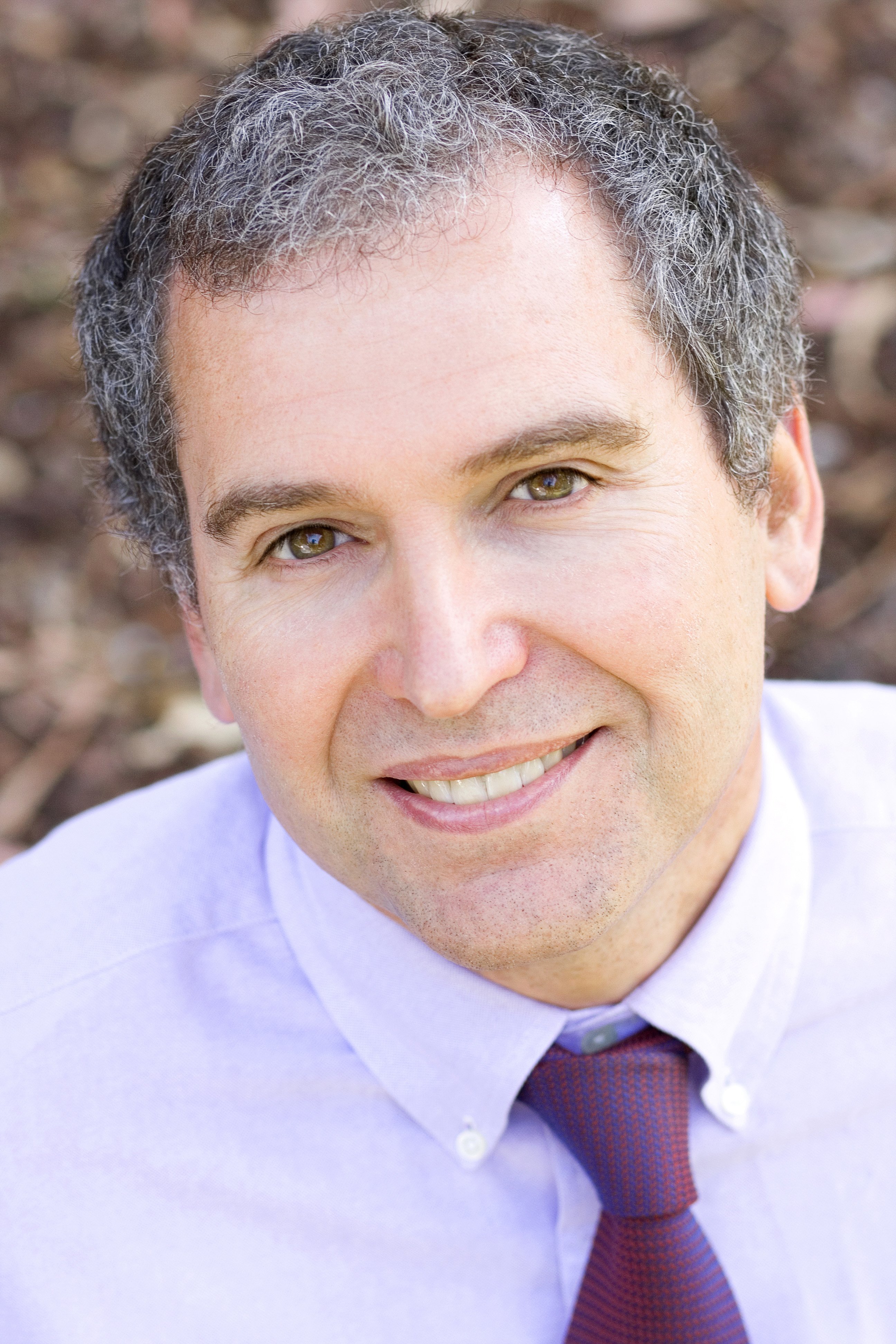
The focus of religion & politics research has been predominantly on the impact of religious actors on democratic and non-democratic political systems and religion-inspired political behavior. But to better understand the political significance of religion, it is necessary to look below this institutional level and adopt a micropolitical perspective which incorporates insights from fields such as behavioral ecology, social psychology or cognitive science to study the internal politics of religious communities.

Why is religion, despite its costly requirements and uncertain rewards, such a potent factor of mobilization? How does it legitimize claims for power and status? Why do religious groups significantly outlast secular ones? To address some of these questions, I examine political systems of communitarian religious groups – including the American Shakers and Russian Skoptsy – through the lenses of costly signaling theory of religion. This evolutionarily-informed theoretical framework contributes to the explanation of seemingly irrational and costly ascetic and ecstatic religious behavior not only as signals of commitment, but also as bids for power and status. The added value of such micropolitical study of religious communities is that it may shed light on the complex relationship between religion and political power in the early stages of human social development. But it also contributes to our understanding of some modern religio-political phenomena, such as various form of political sacrifice, including suicidal terrorism.
 

Image
Maciej Potz

Maciej Potz is a professor of Political Science at the Department of Political Systems, Faculty of International and Political Studies, University of Łódź, Poland. He earned his Ph.D. in 2006 from the Silesian University in Katowice and his post-doctoral degree from the University of Łódź in 2017, both in Political Science. His primary area of interest is religion and politics, with special focus on theocracies (as a Foundation for Polish Science scholar, he studied Shaker and Mormon theocracies in the USA in 2009 and 2012) and political strategies of religious actors in contemporary democracies, especially in Poland and the USA. His other research interests include political theory (especially theory of power and democratic theory), comparative politics and, most recently, evolutionary political science.

Maciej Potz published three monographs: (i) Granice wolności religijnej [The Limits of Religous Liberty] 2008 (2nd ed. 2015), Wrocław: FNP, on religious freedom, church-state relations and confessional politics in the USA; (ii) Amerykańskie teokracje. Źródła i mechanizmy władzy usankcjonowanej religijnie [American Theocracies. The Sources and Mechanisms of Religion-Sanctioned Power] 2016, Łódź: UŁ, theorizing theocracy as a type of a political system and emprically exploring North American theocracies; (iii) Political Science of Religion: Theorizing the Political Role of Religion, 2020, London: Palgrave MacMillan – a theoretical framework for the analysis of religion’s impact on politics. He also authored several journal articles, including in Religion, State and Society, Journal of Political Power, Politics and Religion and Studia Religiologica.

Maciej Potz has taught political science-related courses in the University of Lodz and, as guest lecturer, at other European universities, including University of the West of Scotland in Glasgow, Buskerund College and NTNU (Norway), University of Joensuu (Finland), University of La Laguna (Spain). He participated in a number of international conferences, including “XXI World IAHR Congress in Erfurt (2015), IPSA World Congresses of Political Science in Santiago (2019), Madrid (2012) and Poznań (2016), APSA Annual Meeting (forthcoming in 2021).  

The research project he will be pursuing at Stanford, entitled Costly signaling Under His Eye: explaining the commune longevity puzzle, uses costly signaling theory of religion to explore the determinants of cohesion and longevity of (communitarian) religious groups. It also proposes a novel political interpretation of signaling behavior. Over the next three years, he will head a research team undertaking an empirical study (funded by National Science Centre of Poland) of power and status in Catholic religious orders.


*If you need any disability-related accommodation, please contact: Shannon Johnson (sj1874@stanford.edu) by February 3, 2022.

Maciej Potz Professor of Political Science speaker University of Łódź, Poland
0
Short-Term Research Fellow at the Stanford University Library, 2022
lauri-malksoo-1_-_lauri_malksoo.jpg

Lauri Mälksoo is Professor of International Law at the University of Tartu in Estonia, member of the Institut de Droit International and of the Estonian Academy of Sciences. He has published widely on Russian and Soviet approaches to international law and human rights, including the monograph "Russian Approaches to International Law" (OUP, 2015).

0
Visiting Student Researcher at The Europe Center, 2022
Jonne_Kamphorst.jpg

Jonne Kamphorst was a Fulbright Visiting Scholar at the Europe Center in 2022. He has received his PhD in Political Science at the European University Institute in 2023 and is currently a Scholar at Stanford’s Politics and Social Change Lab and the Human-centered Artificial Intelligence institute. He will start as an Assistant Professor in Political Science and Quantitative Social Science Methods at Sciences Po in Paris in January 2026. Jonne’s work focuses on the politics and societies of advanced democracies and lies at the intersection of comparative politics and political behaviour. Two questions define his research agenda: 1) What are the origins of contemporary political divisions? And 2) how can democracy be strengthened by re-engaging voters and bridging political divides? He explores both these topics leveraging quantitative scientific methods that employ an experimental logic, specifically (field and survey) experiments, methods of causal inference, as well as novel computational methods leveraging large language models. His research has been published at PNAS, the American Political Science Review, and the Journal of Politics, among other outlets.

Date Label

Download Transcript of Talk

The rule in international law which prohibits forcible seizure of territory has lately come under pressure, for example when Russia seized and annexed Crimea in 2014. In the presentation, we will take a look back at the history of this rule, including the Western non-recognition of the Soviet annexation of the Baltic States in 1940-1991, of which Mälksoo has written a leading monograph. Current threats to the rule will be discussed such as the ideas that great powers are entitled to historic justice which may differ from what international law dictates or there is a regional international law dictated by the leading great power in the region. With President Putin's demands to the US and NATO, these international legal questions have again become utterly topical.

Image
Lauri Mälksoo


Lauri Mälksoo is Professor of International Law at the University of Tartu in Estonia, member of the Institut de Droit International and of the Estonian Academy of Sciences. He has published widely on Russian and Soviet approaches to international law and human rights, including the monograph "Russian Approaches to International Law" (OUP, 2015).


*If you need any disability-related accommodation, please contact Shannon Johnson at sj1874@stanford.edu. Requests should be made by January 13, 2022.

Co-sponsored by Stanford University Library.

Transcript of talk
Download pdf
Lauri Mälksoo Professor of International Law speaker University of Tartu in Estonia
 

Image
Register


How do we explain the divergence in the embrace of LGBTQ rights among right-wing European parties? In the 1990s and early 2000s, a few conservative parties started to embrace the gay rights cause, joining earlier adopters among left-wing and liberal Western European parties. Conservative parties in Scandinavia, the Netherlands, and Britain trumpeted their newly found enthusiasm for gay rights as a badge of modernity and political maturity. The embrace was driven by changing social values, the idiosyncratic agency of leadership, and declining religiosity. Today the right-wing lesbian, gay or bisexual parliamentarian is far from an exception. Since 1976, nearly 150 self-identifying LGB parliamentarians from right of center parties have taken office.
 
The position of the radical right is more complex. When it comes to gay and lesbian rights, radical right parties can be divided into two groups. Parties from the Netherlands, Belgium, and northern European countries have invoked the nationalism of gay rights as a club to beat back the Muslim immigrant. Homonationalism has become a successful electoral strategy, which blends support for gay rights with xenophobia and Islamophobia. In contrast, radical right parties in Eastern and Southern Europe have not embraced gay rights. In most of these countries, “homosexuality” is seen as a foreign threat, imposed by Western liberals or alien to Catholic culture and tradition. While the arc of the gay rights movement bends towards freedom, in most countries the T has been jettisoned from the LGB. When the left is slow to adopt, the right sees little gain in moving on the issue, nor is disposed to lead from the front.


Gabriele Magni
Gabriele Magni is Assistant Professor of Political Science and Director of the Global Policy Institute at Loyola Marymount University in Los Angeles. His research examines the factors that shape political inclusion, solidarity and representation in advanced democracies. One stream of his work explores the link between economic inequality, immigration and welfare attitudes. A second stream examines LGBTQ rights and representation, focusing on LGBTQ candidates and politicians. His research has appeared in the American Political Science Review, the American Journal of Political Science, the Journal of Politics, and the British Journal of Political Science, among other outlets. He has also written for The Washington Post, Politico and The New Republic, and provided commentary to The New York Times, The Washington Post, FiveThirtyEight, NBC News and Reuters. Previously, he was a Postdoctoral Fellow at Princeton University’s Niehaus Center for Globalization and Governance.


*If you need any disability-related accommodation, please contact Shannon Johnson (sj1874@stanford.edu) by February 10, 2022.

Co-sponsored by the Clayman Institute for Gender Research.

Gabriele Magni Loyola Marymount University
Lectures

Download Transcript of Talk


Challenger parties are on the rise in Europe. Like disruptive entrepreneurs, these parties offer new policies and defy the dominance of established party brands. In the face of these challenges and a more volatile electorate, mainstream parties are losing their grip on power. Drawing on research from her recent book, Professor Sara Hobolt explores why some challenger parties are so successful and what mainstream parties can do to confront these political entrepreneurs.


Image
Sara Hobolt

Sara B. Hobolt is the Sutherland Chair in European Institutions and a professor at the Department of Government, London School of Economics and Political Science.

She has published five books and over 60 journal articles on European and EU politics and political behaviour.

Her most recent book is Political Entrepreneurs: The Rise of Challenge Parties in Europe (Princeton University Press, 2020, with Catherine De Vries). She is also the Chair of the European Election Studies (EES), a Europe-wide project studying voters, parties, candidates and the media in European Parliamentary elections. Professor Hobolt regularly provides commentary in the media on elections, Brexit, public opinion and European and EU politics.


*If you need any disability-related accommodation, please contact: Shannon Johnson (sj1874@stanford.edu) by January 6, 2022.

Transcript of talk
Download pdf

Online via Zoom

Sara Hobolt Sutherland Chair of European Institutions speaker London School of Economics
Paragraphs
Image
Desire and Imitation in International Politics
Imitating the desire of others is inherent to the struggle for power in international politics. The imitation of desire is a human trait seldom recognized in International Relations studies, let alone conceptualized. The imitation of desire that takes place among entities—as opposed to being intentionally generated by them—challenges the conventional wisdom of International Relations that assumes rational autonomous individuals. This book identifies the root of Realism, pointing out its awareness of the conflicting impact of desire and imitation in a world driven by restless comparison. It subsequently demonstrates the conceptual value of mimetic theory while proposing a template of understanding international polities, starting from assumptions of disorder and violence. This volume not only contributes to the study of conflict based on the imitation of the desire of others among international polities, but also proposes in its conceptualization that it is worth looking at studies of agency and structure, normative change, peace, and reconciliation.
All Publications button
1
Publication Type
Books
Publication Date
Authors
Jodok Troy
Book Publisher
Michigan State University Press
Paragraphs

Image
The International History Review
From the beginnings of the UN Secretariat, its Secretaries-General reached out to a wide audience, considering themselves servants of peace beyond narrow organizational tasks. The article argues that it is the Secretaries-General perception as an international civil servant which led them to endeavour a more expansive role ever since. To unfold this argument, the article, first, traces the international civil servant roots of the Secretary-General. Second, the article illustrates that the themes and rhetorical details of the Secretaries-General inaugural addresses provide a lens to detect and trace the trajectory of the Secretaries-General self-understanding as international civil servants providing the grounds to expand their role. Secretaries-General as international civil servants always embraced the ideal of serving peace, thereby seeking to gain a political role. This international civil servant trajectory illustrates that the role of the UN Secretary-General transcends historical periodization of the UN and sheds light on the evolution of the UN’s global nature and mission.

All Publications button
1
Publication Type
Journal Articles
Publication Date
Journal Publisher
The International History Review
Authors
Jodok Troy
Paragraphs

Journal of International Relations and DevelopmentThere are several considerations of the papacy’s vision of what global politics should be like. There are, however, few mappings of the papacy’s actual concept of global politics, of how it evaluates the current state of global politics, understood as global political, social, and economic trends, patterns, actors and their relationships. This article delineates Pope Francis’ conception of global politics and contextualises it within the papacy’s trajectory of participating in global politics. Attending to a particular concept, of how the pope thinks about global politics, helps to better understand and place the papacy in the study of global politics. The article shows how Francis conceptualises global politics from below, from the periphery of society and politics, which leads him to unmask global inequalities. In particular, the article illustrates that Francis contests widespread assumptions of central hierarchic interstate relations and individualism, dominating the conceptual discourse about global politics.

All Publications button
1
Publication Type
Journal Articles
Publication Date
Journal Publisher
Journal of International Relations and Development
Authors
Jodok Troy
Paragraphs

Image
European Journal of International Relations
Classical Realism represents a science of politics that is distinct from the conventional understanding of science in International Relations. The object of Realist science is the art of politics, which is the development of a sensibility based on practical knowledge to balance values and interests and to make judgments. Realism’s science and its object led to its tagging as “wisdom literature.” This article illustrates that reading Hans Morgenthau’s and Raymond Aron’s work shows how their hermeneutic form of enquiry provides insights into the character of international politics, which conventional understandings do not. Following the example of Morgenthau, the article, first, illustrates how Realism, rather than providing a theory of practice, builds on a science with the purpose to judge knowledge. Realism’s science analyzes the objective conditions of politics, theorizes them, and takes into account the requirements of political practice under contingencies and considerations of morality. The article, second, examines Aron’s take on political practice in the context of the Cold War and politics that built on knowledge without experience to judge knowledge. Morgenthau and Aron’s science helps to capture Realism’s take on politics as an art, how to explicate Realism’s epistemological foundation and value in studying international politics. Doing so, the article, third, contributes to practice theory by clarifying several aspects of Realism’s science. In particular, it shows how Realism captures the art of politics by conceptualizing practice as a form of human conduct thereby offering a more coherent notion of practice than current practice theory.

All Publications button
1
Publication Type
Journal Articles
Publication Date
Journal Publisher
European Journal of International Relations
Authors
Jodok Troy
Subscribe to Europe