Recap: The Europe Center Lectureship on Europe and the World
On April 30, May 1, and May 2, 2014, Adam Tooze, Barton M. Briggs Professor of History at Yale University, delivered in three parts The Europe Center Lectureship on Europe and the World, the first of an annual series.
With the centenary of the outbreak of the First World War as his backdrop, Tooze spoke about the history of the transformation of the global power structure that followed from Germany’s decision to provoke America’s declaration of war in 1917. He advanced a powerful explanation for why the First World War rearranged political and economic structures across Eurasia and the British Empire, sowed the seeds of revolution in Russia and China, and laid the foundations of a new global order that began to revolve around the United States.
The three lectures focused successively on diplomatic, economic, and social aspects of the troubled interwar history of Europe and its relationship with the wider world. Over the course of the lectures, he presented an argument for why the fate of effectively the whole of civilization changed in 1917, and why the First World War’s legacy continues to shape our world even today.
Tooze also participated in a lunchtime question-and-answer roundtable with graduate students from the History department.

Tooze is the author of The Wages of Destruction: The Making and Breaking of the Nazi Economy(2006) and Statistics and the German State 1900-1945: The Making of Modern Economic Knowledge (2001), among numerous other scholarly articles on modern European history. His latest book, The Deluge: The Great War and the Remaking of Global Order 1916-1931, will be released in Summer 2014 in the United Kingdom and in Fall 2014 in the United States.
We welcome you to visit our website for
additional details about this event.
Recap: European Commission President José Barroso Visits Stanford
José Manuel Barroso, President of the European Commission, delivered a lecture entitled, “Global Europe: From the Atlantic to the Pacific,” before an audience at Stanford on May 1, 2014.
Barroso discussed at length the political and economic consequences of the global financial crisis of 2008 for European affairs. He acknowledged that the crisis revealed “serious flaws” in the economic management of some national economies, but stressed that the 28-member union adapted and reformed to handle the fallout from the crisis. For example, he explained how banking supervision is now controlled at the “European level through the European Central Bank,” and that “there are common rules for banks so that we avoid having to use taxpayers' money to rescue them."
Barroso also discussed various political and security aspects related to the ongoing upheaval in Ukraine, and affirmed that Europe “stands ready” to support the country as it comes “closer to the European Union.” He added that Russia’s decision “to interfere, to destabilize, and to occupy part of the territory of a neighboring country” was a “gesture that we hoped was long buried in history books.”

Barroso was named President of the Social Democratic Party (PSD) of Portugal in 1999, following which he was re-elected three times. He was appointed Prime Minister of Portugal in 2002. He remained in office until July 2004 when he was elected by the European Parliament to the post of President of the European Commission. He was re-elected to a second term as President of the European Commission by an absolute majority in the European Parliament in September 2009.
We welcome you to visit our website for additional
details about this event.
Workshop: Comparative Approaches to the Study of Immigration, Ethnicity, and Religion
On May 9, 2014 and May 10, 2014, The Europe Center will host the Fourth Annual Workshop on Comparative Approaches to the Study of Immigration, Ethnicity, and Religion.
Speakers draw from a range of national and international universities and include Jens Hainmueller, Dominik Hangartner, Efrén Pérez, Lauren Prather, Jorge Bravo, Giovanni Facchini, Cecilia Testa, Harris Mylonas, Rahsaan Maxwell, Ali Valenzuela, Mark Helbling, Rob Ford, Matthew Wright, Karen Jusko, Maggie Peters, Justin Gest, Rafaela M. Dancygier, and Yotam Margalit.
The all-day workshop will begin at 8:30 am on Friday and at 9:15 am on Saturday, and will be held in the CISAC Conference Room in Encina Hall. Visitors are cordially invited to attend.
We welcome you to visit our website for additional
details about this event.
Spring 2014 Graduate Student Grant Competition Winners Announced
Please join us in congratulating the winners of The Europe Center Spring 2014 Graduate Student Grant Competition:
Lisa Barge, German Studies, “Beyond Objectivity: Questioning Shifting Scientific Paradigms in Erwin Schrödinger's Thought”
Michela Giorcelli, Economics, “Transfer of Production and Management Model Across National Borders: Evidence from the Technical Assistance and Productivity Program”
Benjamin Hein, Modern European History, “Capitalism Dispersed: Frankfurt and the European Stock Exchanges, 1880-1960”
Michelle Kahn, Modern European History, “Everyday Integration: Turks, Germans, and the Boundaries of Europe”
Friederike Knüpling, German Studies, “Kleist vom Ende lesen”
Orysia Kulick, History, “Politics, Power, and Informal Networks in Soviet Ukraine”
Claire Rydell, U.S. History, “Inventing an American Liberal Tradition: How England's John Locke Became ‘America's Philosopher’, 1700-2000”
Lena Tahmassian, Iberian and Latin American Cultures, “Post-Utopian Visions: Modes of Countercultural Discourse of the Spanish Transition to Democracy”
Donni Wang, Classics, “Illich Seminar”
Lori Weekes, Anthropology & Law, “Nation Building in the Post-Soviet Baltics as a Legal, Institutional, and Ethno-Cultural Project”
The Spring Grant Competition winners will join 16 graduate students who were awarded competitive research grants by the Center in Fall 2013. The Center regularly supports graduate and professional students at Stanford University whose research or work focuses on Europe. Funds are available for Ph.D. candidates across a wide range of disciplines in the humanities and social sciences to prepare for dissertation research and to conduct research on approved dissertation projects. The Center also supports early graduate students who wish to determine the feasibility of a dissertation topic or acquire training relevant for that topic. Additionally, funds are available for professional students whose interests focus on some aspect of European politics, economics, history, or culture; the latter may be used to support an internship or a research project.
We welcome you to visit our website for additional
details about this event.
Meet our Visiting Scholars: Vibeke Kieding Banik
In each newsletter, The Europe Center would like to introduce you to a visiting scholar or collaborator at the Center. We welcome you to visit the Center and get to know our guests.

Vibeke Kieding Banik is currently affiliated as a postdoctoral fellow at the Department of Archaeology, Conservation and History, at the University of Oslo. Her main focus of research is on the history of minorities in Scandinavia, particularly Jews, with an emphasis on migration and integration. Her research interests also include gender history, and her current project investigates whether there was a gendered integration strategy among Scandinavian Jews in the period 1900-1940. Dr. Banik has authored several articles on Jewish life in Norway, Jewish historiography, and on the Norwegian women’s suffragette movement. She has taught extensively on Jewish history and is currently writing a book on the history of the Norwegian Jews, scheduled to be published in 2015.
Workshop Schedules
The Europe Center invites you to attend the talks of speakers in the following workshop series:
Europe and the Global Economy
May 15, 2014
Christina Davis, Professor of Politics and International Affairs, Princeton University
“Membership Conditionality and Institutional Reform: The Case of the OECD”
RSVP by May 12, 2014
European Governance
May 22, 2014
Wolfgang Ischinger, Former German Ambassador to the U.S.; Chairman, Munich Security Conference
“The Future of European Security & Defence”
RSVP by May 19, 2014
May 29, 2014
Simon Hug, Professor of Political Science, University of Geneva
“The European Parliament after Lisbon (and before)”
RSVP by May 26, 2014
The Europe Center Sponsored Events
We invite you to attend the following events sponsored or co-sponsored by The Europe Center:
May 16 and May 17, 2014
“Let There Be Enlightenment: The Religious and Mystical Sources of Rationality”
A Stanford University Conference
Margaret Jacks Hall: Terrace Room
May 29, 2014
Josef Joffe, FSI Senior Fellow, Hoover Institution Research Fellow, and Publisher/Editor of Die Zeit
“The Myth of America's Decline: Politics, Economics, and a Half Century of False Prophecies”
Oksenberg Conference Room
Jun 3, 2014
Tommaso Piffer, Marie Curie Postdoctoral Fellow, Harvard University and University of Cambridge
“The Allies, the European Resistance and the Origins of the Cold War in Europe”
History Corner, Room 307
Other Events
The Europe Center also invites you to attend the following event of interest:
May 12, 2014
Latvian Cultural Evening: Sustaining a Memory of the Future
Cubberley Auditorium
We welcome you to visit our website for additional details.

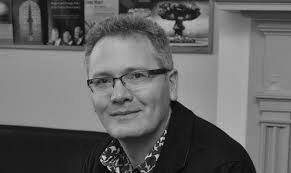
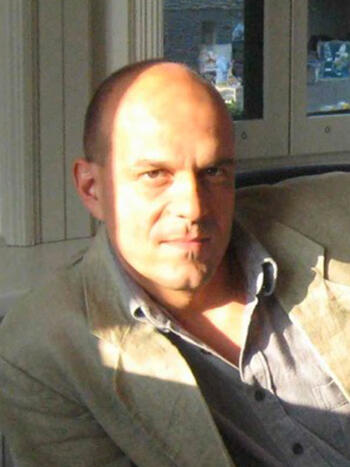

 Jessie Marino, a DMA candidate in Composition at Stanford, recently returned from Copenhagen’s SPOR festival, where she was selected as one of five artists from a field of 140 (representing 34 nationalities) to perform her original work, titled “Heartfelt bird, vivid and great in style.” “I was commissioned by the SPOR Festival to compose a new piece featuring percussionist Serge Vuille and pianist Mark Knoop (photo inset) which was featured in a concert of all world premiere works,” writes Marino. “This event allowed me to meet new musicians, artists, curators, and composers who are working under similar guises and to exchange ideas about how our art can expand and develop in the 21st century.”
  Marino (inset) is also a recipient of a summer travel grant from the Center’s Graduate Student Grant Program. She will be traveling to Germany to attend the 2014 Darmstadt International Summer Course for New Music. Marino writes that the opportunity will give her the chance to “practice and perform my own compositions,” to “work and develop new ideas with composers and academics,” and to “attend lectures on current research, developments and discoveries in sound production and music technology.”
 David Laitin and his co-author Rafaela Dancygier’s article in the Annual Review of Political Science, “Immigration into Europe: Economic Discrimination, Violence, and Public Policy,” investigates and reviews recent research on changing Western European demographic patterns, and its implications for labor-market discrimination, immigrant-state relations, and immigrant-native violence. The authors “discuss some of the methodological challenges that scholars have not fully confronted in trying to identify the causes and consequences of discrimination and violence,” and propose pathways to resolve contradictory results in existing studies regarding the economic consequences of immigration policymaking. Laitin is the James T. Watkins IV and Elise V. Watkins Professor of Political Science at Stanford University.