Authors
News Type
News
Date
Paragraphs

The coordinated suicide bombings that killed more than 30 people and wounded 250 more at an international airport and downtown subway station in Brussels on Tuesday were “shocking but not surprising” and shared many of the hallmarks of previous European terror attacks, according to Stanford terrorism experts.

“My research shows that in general, terrorist plots in Europe involve larger numbers of conspirators than do plots in the United States,” said Martha Crenshaw, a senior fellow at Stanford’s Center for International Security and Cooperation (CISAC).

Belgian authorities said that as many as five people may have been directly involved in the bombings, including two Belgian-born brothers with violent criminal records, and that several suspects were linked to the same terrorist network that carried out the deadly Paris attacks last November.

“It is common for terrorist conspiracies anywhere to be formed from prior social groupings – friends and relatives,” said Crenshaw.

“The bonds that link individuals are not entirely ideological by any means. Criminal backgrounds are also not surprising. Indeed prison radicalization is a well-known phenomenon.”

A Notorious Neighborhood

Many of the suspects in the Brussels bombings had ties to the inner-city neighborhood of Molenbeek, a majority Muslim enclave of mostly Moroccan descent with a long history as a logistical base for jihadists.

[[{"fid":"222520","view_mode":"crop_870xauto","fields":{"format":"crop_870xauto","field_file_image_description[und][0][value]":"Belgian police stand guard in the Molenbeek district in Brussels during an operation to arrest Paris attacks suspect Salah Abdeslam on March 18, 2016.","field_file_image_alt_text[und][0][value]":"Belgian police stand guard in the Molenbeek district in Brussels during an operation to arrest Paris attacks suspect Salah Abdeslam on March 18, 2016.","field_file_image_title_text[und][0][value]":"Belgian police stand guard in the Molenbeek district in Brussels during an operation to arrest Paris attacks suspect Salah Abdeslam on March 18, 2016.","field_credit[und][0][value]":"John Thys/AFP/Getty Images","field_caption[und][0][value]":"Belgian police stand guard in the Molenbeek district in Brussels during an operation to arrest Paris attacks suspect Salah Abdeslam on March 18, 2016.","field_related_image_aspect[und][0][value]":"","thumbnails":"crop_870xauto"},"type":"media","attributes":{"alt":"Belgian police stand guard in the Molenbeek district in Brussels during an operation to arrest Paris attacks suspect Salah Abdeslam on March 18, 2016.","title":"Belgian police stand guard in the Molenbeek district in Brussels during an operation to arrest Paris attacks suspect Salah Abdeslam on March 18, 2016.","width":"870","style":"width: 550px; float: right; height: 366px; margin-left: 15px;","class":"media-element file-crop-870xauto"}}]]French and Belgian police arrested Salah Abdesalam, who had been identified as the last surviving member of the ten-man team responsible for the Paris attacks and an apparent associate of the Brussels bombers, near his family home in Molenbeek just four days before the Brussels attacks.

“Brussels and particularly Molenbeek is one of those places that comes up a lot when you’re talking about counter terrorism,” said Terrence Peterson, a postdoctoral fellow at CISAC.

“You do have terrorism networks that use these areas, in the same way that organized crime does, to thrive…It seems to be the place where all the networks are locating in part because Belgian security hasn’t been very effective in fighting terrorism.”

Foreign Fighters Bring the War Home

Belgium is a small nation, with a population of around 11 million people, but it has the highest per capita percentage of any Western country of foreign fighters who have joined the battle in Iraq and Syria, according to a recent report, which estimated the total number at 440.

“People were even saying it was not a matter of if, but when Belgium was attacked,” said Joe Felter, a CISAC senior research scholar and former Colonel in the U.S. Army Special Forces.

“You’ve got a high concentration of radicalized individuals in that neighborhood of Brussels, so logistically it was easier for them to recruit, plan and coordinate the execution of these attacks. Local residents loading up explosive packed suitcases in a cab and driving across town to the airport exposes them to much less risk of compromise than would a plot requiring cross border preparation and movement by foreign citizens.”

Felter said he was concerned that the Brussels bombings, for which the Islamic State group has claimed responsibility, would inspire copycat attacks in other countries.

“The real risk now is these home-grown, self-directed terrorist attacks,” he said.

“A successful attack like this, with all its media attention and publicity, is only going to inspire and motivate more attempts going forward.”

Former U.S. Secretary of State and presidential candidate Hillary Clinton delivers a foreign policy address at Stanford's Freeman Spogli Institute for International Studies on March 23, 2016. Former U.S. Secretary of State and presidential candidate Hillary Clinton delivers a foreign policy address at Stanford's Freeman Spogli Institute for International Studies on March 23, 2016.
Former U.S. Secretary of State and presidential candidate Hillary Clinton said European nations needed to do a better job of sharing intelligence to track foreign fighters as they returned home, during a foreign policy speech at Stanford’s Freeman Spogli Institute for International Studies on Wednesday.

“The most urgent task is stopping the flow of foreign fighters to and from the Middle East,” Clinton said.

“Thousands of young recruits have flocked to Syria from France, Germany, Belgium and the United Kingdom. Their European passports make it easier for them to cross borders and eventually return home, radicalized and battle-hardened. We need to know the identities of every fighter who makes that trip and start revoking their passports and visas.”

Turkey’s president announced at a press conference on Wednesday that his country had deported one of the suspected Brussels bombers back to the Netherlands last year with a clear warning that he was a jihadi.

Identifying Hot Spots

Clinton said authorities also needed to work to improve social conditions in problem areas such as Molenbeek.

“There…has to be a special emphasis on identifying and investing in the hot spots, the specific neighborhoods, prisons and schools where recruitment happens in clusters as we’ve seen in Brussels,” Clinton said.

Other European countries such as Denmark, which has also been struggling to deal with a high percentage of foreign fighters, are trying to proactively to discourage citizens from travelling to Syria to fight, said Anja Dalgaard-Nielsen, former executive director of the Danish Security and Intelligence Service and a CISAC affiliate.

“Politicians are likely to talk about tougher legislation, but there are also measured voices, calling for a strong, long term preventive effort against radicalization to prevent problems from growing out of hand,” said Dalgaard-Nielsen.
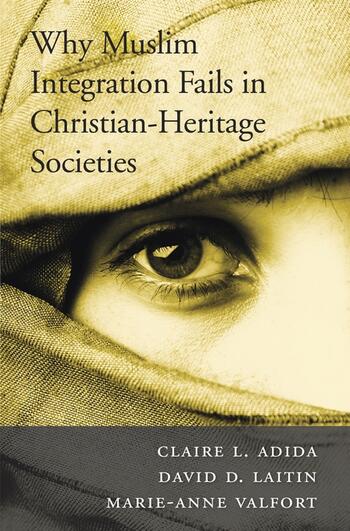
Cover of the book "Why Muslim Integration Fails in Christian-Heritage Societies" co-authored by Stanford Political Science professor David Laitin. Cover of the book "Why Muslim Integration Fails in Christian-Heritage Societies" co-authored by Stanford Political Science professor David Laitin.
“Police need to prioritize community outreach and long term trust building to try to ensure the collaboration of minority groups and socioeconomically disadvantaged communities in the effort against terrorism.”

Stanford political science professor David Laitin, who recently published the book “Why Muslim Integration Fails in Christian-Heritage Societies,” in collaboration with Claire Adida and Marie-Anne Valfort, said his research found that Muslims faced higher discrimination in the economy, in society and in the political process compared to Christians from similar immigrant backgrounds.

“But there is no evidence that higher degrees of discrimination lead Muslims into the unspeakable acts that members of an inhuman cult are performing in the name of Islam,” said Laitin, who is the James T. Watkins IV and Elise V. Watkins professor in the School of Humanities and Sciences.

“From what we have tragically seen, the attractiveness of the present murderous cult does not derive from everyday discrimination," he said. "Research has shown that it is not the poor and downtrodden who are radicalized in this way; but rather reasonably educated second-generation immigrants from largely secular backgrounds.”

Europe Divided

Laitin said he expected to see many European countries tighten their border controls in response to the Brussels attacks, as well as greater support in the United Kingdom for the movement to leave the European Union in the upcoming referendum.

“The biggest short-term effect, in my judgment, will be the erosion of one of the great achievements of European integration, namely Schengen, which promised open borders throughout the continent,” Laitin said.

“I foresee greater security walls that will come to divide European countries.”

Fighting a Hostile Ideology

Felter said that while it was undoubtedly important to improve intelligence sharing and invest in greater security measures as part of concerted efforts to target ISIS and interdict future terrorist plots, the key to undermining support for and defeating ISIS was combating its perverted version of Islam.

And, he said, that effort would have to come largely from within the Islamic community itself.

“The symptoms may be suicide bombers in airports, but the root cause is this hostile ideology that’s being pushed on these at-risk individuals through aggressive radicalization and recruitment efforts carried out largely via the internet that then inspires them to carry out these self-directed, ISIS-inspired attacks,” Felter said.

“There’s got to be a longer-term effort to address the root causes of this, to discredit and delegitimize the appeal of this ideology that they’re promulgating online and through social media that’s inspiring these young men and women to go off and commit these horrible acts in the misguided belief that it is their religious obligation to do so.”


Hero Image
A woman arrives with flowers at a cordoned-off area near Maelbeek subway station in Brussels on March 23, 2016, a day after bomb attacks in the Belgian capital killed about 35 people and left more than 200 people wounded.
Kenzo Tribouillard/AFP/Getty Images
All News button
1
Paragraphs

In the digital world there are no pauses. If one is not constantly involved, he risks becoming disconnected. With that in mind, Hans Ulrich Gumbrecht began blogging for the Frankfurter Allgemeine Zeitung in 2011, where he uses the digital format as a place of contemplation and intellectual debate. The compactness and rhythm of the genre afford him the opportunity to analyze everyday phenomena and philosophical questions. Gumbrecht explores the dissonances in self-understanding that confront his contemporaries on both sides of the Atlantic. In this embracing of complexity and provocation, the blog is like a thorn in the flesh that calls into question the cherished habits and conventional expectations of Western Europeans.

All Publications button
1
Publication Type
Books
Publication Date
Journal Publisher
Dietrich zu Klampen
Authors
Hans Ulrich Gumbrecht
Number
978-3866745001
News Type
News
Date
Paragraphs


One of the key policy debates in Europe centers on how best to integrate immigrants. The issue is particularly salient in Switzerland where immigrants make up almost 25% of the population. New research from scholars at Stanford and the University of Zurich demonstrates that naturalization substantially improves the political integration of immigrants. 

Jens Hainmueller, faculty affiliate of The Europe Center and co-director of the Immigration and Integration Policy Lab, along with his co-authors Dominik Hangartner and Giuseppe Pietrantuono, use an innovative research strategy to show that naturalization serves as a catalyst for integration. 

Between 1970 and 2003 residents decided on naturalization applications in secret ballot referendumsin some Swiss municipalities. The researchers compare immigrants who just barely won a referendum with those that just barely lost, and the resulting natural experiment provides a treatment and control group that are almost identical. 

"In some cases, the difference between them was merely a few votes, which turned 49% into 51%. It was down to luck whether people received Swiss citizenship or not," says Professor Hainmueller. 

And because the researchers were able to survey immigrants 15 years after their naturalization decisions, the study provides one of the first unbiased estimates of the causal impact of naturalization on the long-term integration of immigrants. 

In Switzerland, where immigrants must wait twelve years to apply for citizenship, the study suggests that reducing this waiting period could improve immigrant integration and positively impact Swiss society. 

The full article is located on the Proceedings of the National Academy of Sciences website.

A recent news article on this research can be found in the October 22, 2015 Stanford Report

All News button
1

Encina Hall
616 Serra Street
Stanford, CA  94305
 

0
Post-doctoral Fellow at The Europe Center, 2015-2016
p1020604.jpg

Sarah Cormack-Patton received her Ph.D. in Political Science from the University of Pittsburgh in August 2015. She is a political economist working at the nexus of comparative politics and international relations with a focus on European politics. Sarah is interested in how the cross-border movement of goods, capital, and people impacts the domestic policy-making process, and how domestic politics affect these cross-border flows. In her current research, Sarah examines these questions through the lens of international migration. Sarah's doctoral dissertation examined the ways in which varying bundles of migrant rights affect domestic preferences over immigration, the effect of these rights on the policy-making coalitions that form over immigration, and how these preferences aggregate in various institutional environments. In addition to her Ph.D., Sarah holds a BS in International Affairs and Modern Languages (French) and MS in International Affairs from the Georgia Institute of Technology and a MA in Political Science from the University of Pittsburgh.

 
-

Due to the high interest in this event, we have moved it to a larger room.  It is now in the Oksenberg Conference Room, Encina Hall, 3rd floor.


The February Minsk II agreement introduced a fragile ceasefire in eastern Ukraine, following a year of crisis and conflict between Kyiv and Moscow.  Ukrainian President Poroshenko needs to grapple with a daunting list of critical economic and political reforms.  Russian President Putin, however, appears intent on destabilizing the Ukrainian government and has the means, including military force, to do so.  What can we expect next in the Ukraine-Russia stand-off, and how should the West respond?

Image
Steven Pifer


Steven Pifer is a senior fellow at the Brookings Institution, where his work focuses on arms control, Ukraine and Russia. A retired Foreign Service officer, his more than 25 years with the State Department included assignments as deputy assistant secretary of state with responsibilities for Russia and Ukraine (2001-2004), ambassador to Ukraine (1998-2000), and special assistant to the president and senior director for Russia, Ukraine and Eurasia on the National Security Council (1996-1997).


Co-sponsored by the Freeman Spogli Institute for International Studies and The Europe Center.

Steven Pifer Senior Fellow Speaker the Brookings Institution
Lectures
Paragraphs

The politics of economic crises bring distributive economic conflict to the fore of national political debates. How policy should be used to transfer resources between citizens becomes a central political question and the answers chosen often influence the trajectory of policy for a generation. This context provides an ideal setting for evaluating the importance of self-interest and other-regarding preferences in shaping public opinion about economic policy. This paper investigates whether self-centered inequity aversion along with self-interest influences individual tax policy opinions. We conduct original survey experiments in France and the United States and provide evidence that individuals care both about how policy alternatives affect their own interests and how they influence the welfare of others relative to themselves. Our estimates suggest that in France both disadvantageous inequality aversion---utility losses when others have better economic outcomes---and advantageous inequality aversion---utility losses when others have worse economic outcomes---are important determinants of tax policy preferences. In the United States, we find strong evidence of disadvantageous inequality aversion but not advantageous inequality aversion. The results for both countries suggest that self-interest and other-regarding preferences influence tax policy preferences and the findings in France are strongly consistent with self-centered inequity aversion.

All Publications button
1
Publication Type
Working Papers
Publication Date
Authors
News Type
News
Date
Paragraphs

The Europe Center Graduate Student Grant Competition

Call for Proposals:

The Europe Center is pleased to announce the Fall 2014 Graduate Student Grant Competition for graduate and professional students at Stanford whose research or work focuses on Europe. Funds are available for Ph.D. candidates from across a wide range of disciplines in the humanities and social sciences to prepare for dissertation research and to conduct research on approved dissertation projects. The Europe Center also supports early graduate students who wish to determine the feasibility of a dissertation topic or acquire training relevant for that topic. Moreover, funds are available for professional students whose interests focus on some aspect of European politics, economics, history, or culture; the latter may be used to support an internship or a research project. Grants range from $500 to $5000.

Additional information about the grants, as well as the online application form, can be found here.  The deadline for this Fall’s competition is Friday, October 17th. Recipients will be notified by November 7th. A second competition is scheduled for Spring 2015.
 

Highlights from 2013-2014:

In the 2013-2014 academic year, the Center awarded grants to 26 graduate students in departments ranging from Linguistics to Political Science to Anthropology. We would like to introduce you to some of the students that we support and the projects on which they are working. Our featured students this month are Michela Giorcelli (Economics) and Orysia Kulick (History).

Giorc

Image
elli’s project, “The Effects of Management and Technology on Firms’ Productivity: Lesson from the US Marshall Plan in Italy,” explores the role of productivity in the process of economic growth and development. It is typically difficult to isolate the causal effect of management training programs and technology transfer programs on business productivity because these measures are often endogenous to other unobservable factors. To overcome this concern, Giorcelli employed a unique research design to analyze the effects of the Marshall Plan’s transfer of US management and technology to Italian firms in the aftermath of WWII. 

Image
Image of Archivio
Giorcelli collected and digitized balance sheets data for 6,035 Italian firms eligible to receive the US management and technology support between 1930 to 1970. She then exploited an exogenous change in policy implementation that randomly determined which firms actually received Marshall Plan support. Preliminary results show that all firms that received either support significantly increased their productivity. Moreover, firms that received both sets of support simultaneously showed an additional increase in productivity, suggesting that management and technology are complementary in production. (Inset: The archives where Giorcelli conducted her research)

Image
Kulick’s project, “Regionalism in Ukraine and the Long Collapse of the Soviet Union, 1954--2014,” used original historical evidence collected from Ukrainian archives to study the political nexus between party elites in Kiev and in Moscow. For example, Kulick gleaned insights about the political economy of postwar industrial reconstruction from local archives in Dnipropetrovsk, a metallurgical powerhouse in the region. Previously inaccessible primary sources indicate that as the Soviet economy grew more complex, the state apparatus became more independent. Consequently, managerial specialists needed more autonomy to meet deadlines and quotas, making them--rather than the party--the source of innovation in postwar Ukraine. 

Image
According to Kulick, “my research this summer opened up new ways of thinking about the relationship between the party and the institutions that made up the Soviet state and economy.” Kulick used insights from Soviet-era KGB documents to shed new light on the current propaganda emanating out of the Kremlin. For example, she found that the long-term pull toward greater improvisation has had ongoing consequences. The current conflict is not just about Ukraine’s geopolitical orientation; it is also the byproduct of the dissolution of intransigent and poorly understood late Soviet-era institutions. (Inset: Kulick documents military mobilization during her summer in Ukraine)


Undergraduate Internship Program: Highlights

The Europe Center sponsored four undergraduate student internships with leading think tanks and international organizations in Europe in Summer 2014.  Laura Conigliaro (International Relations, 2015) joined the Centre for European Policy Studies (CEPS), while Elsa Brown (Political Science, 2015), Noah Garcia (BA International Relations and MA Public Policy, 2015), and Jana Persky (Public Policy, 2016) joined Bruegel, a leading European think tank. Our featured student this month is Laura Conigliaro.

Image
During her time at CEPS, Conigliaro worked on a 68-page research paper on genetically modified organisms (GMO) policy in the European Union. In the paper, she traces E.U. legislation and policy development on GMOs from 1990 onward, and also offers conclusions for the future trajectory of the E.U.’s GMO policy. Conigliaro argues that the evolution of the E.U.’s GMO policy is a topic of extreme relevance--and difficulty--because it is the source of high-level trade conflicts between Europe and the United States. Consequently, the study of GMO policymaking can help advance our understanding of E.U. institutions, E.U. “comitology” (policy process), and E.U.-U.S. bilateral relations. 

Image
Image of CEPS signage.
Conigliaro plans to incorporate the summer fellowship experience into her Stanford academic career, for example, by presenting research findings at Stanford’s Symposia of Undergraduate Research and Public Service (SURPS). Looking ahead, she writes: “I hope to use the knowledge and experience gained of the E.U. Institutions and policy process through the lens of the GMO issue to broaden and diversify my potential career opportunities and areas from my traditional area of concentration, East Asia, to also include the European Union.”


Recap:  Panel on Europe-Russia Relations and EU expansion

On September 30, 2014, Miroslav Lajčák, the Deputy Prime Minister and the Minister of Foreign and European Affairs of the Slovak Republic, participated in a panel discussion in which he shared his thoughts and opinions about Europe’s relationship with Russia, and about the E.U.’s management of its future membership and associations. The Minister’s viewpoints were of particular interest, given his role in the E.U. foreign policy establishment, and the Slovak Republic’s role in the E.U. and NATO.

“The fact is that E.U.-Russia relations have worsened dramatically. That cannot be denied. But it’s not E.U. enlargement that played a major role in this.”  According to the Minister, Russia did not view E.U. enlargement with hostility, in part, because enlargement remained a transparent process. “But it all changed when Europe decided to enter into Russia’s immediate neighborhood...the former Soviet Republics. And this was something that

Image
Miroslav Lajčák
was seen by Russia as a hostile activity, and this was what Russia fiercely resisted.” The Minister spoke candidly about the potential conflicts of concepts between the E.U.’s Eastern Partnership policy, Russia’s Near Abroad policy, and the idea of a Eurasian Union. A fundamental and ongoing source of tension pertains to the geopolitical position of Russia’s immediate neighbors: “The fact is that Russia never accepted the full sovereignty of the former Soviet Republics.” Apart from discussing the escalation of tensions between the E.U. and Russia, the Minister spoke about the role of sanctions and reforms as a path for moving forward and achieving lasting peace in Europe.

Minister Lajčák’s brought a variety of experiences to the panel. He served as the European Union Chief Negotiator for the E.U.-Ukraine and E.U.-Moldova Association Agreements, and was the European Union Special Representative for Bosnia and Herzegovina, and Sarajevo. Additionally, he was previously the Ambassador of the Slovak Republic to the Former Republic of Yugoslavia, Albania and the Former Yugoslav Republic of Macedonia. 

After Minister Lajčák spoke, he was followed by comments by Michael McFaul, Professor of Political Science and Senior Fellow, Hoover Institute and Freeman Spogli Institute; Norman Naimark, the Robert and Florence McDonnell Professor in East European Studies in the History Department and The Director of Stanford Global Studies; and Kathryn Stoner, Senior Fellow at the Freeman Spogli Institute and Faculty Director of the Susan Ford Dorsey Program in International Studies.


Introducing “Immigration and Integration in Europe” Policy Lab

The Europe Center would like to introduce a new research project entitled, “Immigration and Integration in Europe:  A Public Policy Perspective,” led by Professors David Laitin and Jens Hainmueller. Duncan Lawrence has recently joined Stanford University to help direct the project. The project is part of the new Policy Implementation Lab at the Freeman Spogli Institute for International Studies.

The social and economic integration of its diverse and ever growing immigrant populations is one of the most fundamental and pressing policy issues European countries face today. Success or failure in integrating immigrants is likely to have a substantial effect on the ability of European countries individually and collectively as members of the European Union to achieve objectives ranging from the profound such as sustaining a robust democratic culture to the necessary such as fostering economic cooperation between countries. Various policies have been devised to address this grave political dilemma, but despite heated public debates we know very little about whether these policies achieve their stated goals and actually foster the integration of immigrants into the host societies. (Inset: David Laitin)

Professor Jens Hainmueller.The goal of this research program is to fill this gap and create a network of leading immigration scholars in the US and Europe to generate rigorous evidence about what works and what does not when it comes to integration policies. The methodological core of the lab’s research program is a focus on systematic impact evaluations that leverage experimental and quasi-experimental methods with common study protocols to quantify the social and economic returns to integration policies across Europe, including polices for public housing, education, citizenship acquisition, and integration contracts for newcomers. This work will add to the quality of informed public debate on a sensitive issue, and create cumulative knowledge about policies that will be broadly relevant. (Inset: Jens Hainmueller)


The Europe Center Sponsored Events

We invite you to attend the following events sponsored or co-sponsored by The Europe Center:

Additional Details on our website
October 8-10, 2014
“War, Revolution and Freedom: the Baltic Countries in the 20th Century”
Stauffer Auditorium, Hoover Institution
9:00 AM onward

Save the Date
April 24-25, 2015
Conference on Human Rights

A collaborative effort between the International Human Rights and Conflict Resolution Clinic at Stanford Law School (IHRCRC), the Research Center for Human Rights at Vienna University (RCHR), and The Europe Center. The conference will focus on the pedagogy and practice of human rights. 

Save the Date
May 20-22, 2015
TEC Lectureship on Europe and the World 
Joel Mokyr
Robert H. Strotz Professor of Arts and Sciences, and Professor of Economics and History, Northwestern University

We welcome you to visit our website for additional details.

All News button
1

Main Quad, Building 50
450 Serra Mall
Stanford University
Stanford, CA 94305-2034


(650) 723-3421
0
Associate Professor of Anthropology
Sykes Family Director of the Emmett Interdisciplinary Program in Environment and Resources (E-IPER)
krish_-_headshot_3_-_krish_seetah.jpg

Krish Seetah's research covers a range of issues relating to colonialism and colonization. Prof. Seetah is the director of Stanford's ‘Mauritian Archaeology and Cultural Heritage’ (MACH) project, which studies European Imperialism and colonial activity. Much of his work uses bioarchaeological materials, with a strong emphasis on human-environmental interactions. He is keen to use the long duree perspective to help contextualize the most recent phase of globalization witnessed in the IOW, and study both the impacts of imperialism on ecology, identity and the development of nationhood following mass diaspora.

His teaching focuses on osteoarchaeology, human-animal relationships, the the Indian Ocean World. Recent publications include a monograph titled ‘Humans, Animals and the Craft of Slaughter in Archaeo-Historic Society (Cambridge University Press), and an edited volume ‘Connecting Continents: Archaeology and History in the Indian Ocean’ (Ohio University Press), which won the 2019 Society for American Archaeology Book Prize in the Scholarly category. Seetah gained his Ph.D. in Archaeology from the University of Cambridge, holds two MSc degrees, the first in Ecology and a second in Osteoarchaeology, with a BA in Biology. He has held visiting fellowships at Cambridge University, UK, the Scientific Research Center, Slovenia, and was an ERC Research Fellow at Reading University, UK.

Affiliated faculty at The Europe Center
CV
News Type
News
Date
Paragraphs

In the late 19th and early 20th centuries, an "open borders" United States absorbed millions of European immigrants in one of the largest mass migrations ever. New research by Stanford economist Ran Abramitzky challenges the perception that immigrants lagged behind native-born Americans in job pay and career growth.
 

BY CLIFTON B. PARKER

European immigrants to America during the country's largest migration wave in the late 19th and early 20th centuries had earnings comparable to native-born Americans, contrary to the popular perception, according to new Stanford research.

"Our paper challenges conventional wisdom and prior research about immigrant assimilation during this period," said Ran Abramitzky, an associate professor of economics at Stanford, faculty affiliate of The Europe Center and author of the research paper in the Journal of Political Economy.

New research challenges conventional wisdom about immigrant assimilation during the bygone era of open borders and mass migration.
Photo Credit: Lewis Hine/Library of Congress

New research challenges conventional wisdom about immigrant assimilation during the bygone era of open borders and mass migration.

Abramitzky and his colleagues found the average immigrant in that period did not face a substantial "earnings penalty" – lower pay than native-born workers – upon their arrival.

"The initial earnings penalty is overstated," said Abramitzky.

He said the conventional view is that the average European immigrants held substantially lower-paying jobs than native-born Americans upon first arrival and caught up with natives' earnings after spending some time in the United States. But that perception does not hold up to the facts, he said.

Abramitzky's co-authors include Leah Platt Boustan from the University of California, Los Angeles, and Katherine Eriksson from California Polytechnic State University.

The researchers examined records on 21,000 natives and immigrants from 16 European countries in U.S. Census Bureau data from 1900 to 1910 to 1920.

"Even when U.S. borders were open, the average immigrant who ended up settling in the United States over the long term held occupations that commanded pay similar to that of U.S. natives upon first arrival," Abramitzky said.

In that bygone era of "open borders," Abramitzky said, native-born Americans were concerned that immigrants were not assimilating properly into society – yet, on the whole, this concern appears to be unfounded. "Such concerns are echoed in today's debate over immigration policy," he added.

At the same time, Abramitzky said that immigrants from poorer countries started out with lower paid occupations relative to natives and did not manage to close this gap over time.

"This pattern casts doubt on the conventional view that, in the past, immigrants who arrived with few skills were able to invest in themselves and succeed in the U.S. economy within a single generation," Abramitzky and his colleagues wrote.

Age of migration

America took in more than 30 million immigrants during the Age of Mass Migration (1850-1913), a period when the country had open borders. By 1910, 22 percent of the U.S. labor force – and 38 percent of workers in non-southern cities – was foreign-born (compared with 17 percent today).

As the research showed, immigrants then were more likely than natives to settle in states with a high-paying mix of occupations. Location choice was an important strategy they used to achieve occupational parity with native-born Americans.

"This Age of Mass Migration not only is of interest in itself, as one of the largest migration waves in modern history, but also is informative about the process of immigrant assimilation in a world without migration restrictions," Abramitzky said.

Over time, many of the immigrants came from the poorer regions of southern and eastern Europe.

Abramitzky pointed out that native-born Americans in the late 19th and early 20th centuries were concerned about poverty in immigrant neighborhoods and low levels of education among children, many of whom left school early to work in industry.

Consequently, American political progressives championed a series of reforms, including U.S. child labor laws and compulsory schooling requirements.

Still, some natives believed that new arrivals would never fit into American society. And so, in 1924, Congress set a strict quota of 150,000 immigrant arrivals per year, with more slots allocated to immigrants from northern and western European countries than those from southern and eastern Europe.

But those early-20th-century fears of unassimilated immigrants were baseless, according to Abramitzky.

"Our results indicate that these concerns were unfounded: The average long-term immigrants in this era arrived with skills similar to those of natives and experienced identical rates of occupational upgrading over their life cycle," he wrote.

How does this lesson apply to today's immigration policy discussion? Should the numbers of immigrants and their countries of origin be limited and those with higher skills be given more entry slots?

Abramitzky said stereotyping immigrants has affected the political nature of the contemporary debate.

"These successful outcomes suggest that migration restrictions are not always necessary to ensure strong migrants' performance in the labor market," he said.

Hero Image
Image of "First sight of New York Bay -- arrival of a European steamer" by James Wells Champney
First sight of New York Bay--arrival of a European steamer.
James Wells Champney/New York Public Library
All News button
1
Date Label
Subscribe to Western Europe