Authors
News Type
News
Date
Paragraphs

The deadly terrorist attacks in Paris last Friday that killed 129 people and wounded around 350 more signaled a significant change in strategy for the Islamic State in Iraq and Syria (ISIS), the radical jihadist organization that has claimed responsibility.

“It underscores that this threat is real and that ISIS is not going to be content to consolidate its power in Iraq and Syria,” said Joe Felter, a former Colonel in the U.S. Army Special Forces and senior research scholar Stanford’s Center for International Security and Cooperation (CISAC).

“They have demonstrated their ability to project power into foreign countries and conduct what I would call an “asymmetric strategic bombing capacity” in the form of these home-grown Western citizens who are willing to strap on suicide vests and blow up targets in support of ISIS directed objectives.

“They’re able to launch attacks with centralized planning and decentralized execution in a way that makes anticipating and interdicting them very difficult.”


French President François Hollande said that the attacks were “planned in Syria, organized in Belgium, perpetrated on our soil with French complicity.”

CISAC senior fellow Martha Crenshaw said the Paris attacks represented “a shift in strategy” for ISIS with the group “taking a more Al Qaeda-like stance and striking Western countries.”

However, she emphasized that the carefully planned nature of the coordinated strikes, where multiple teams carried out simultaneous attacks in three locations across downtown Paris, indicated that this new strategy had been secretly underway for some time.

“These attacks were planned a long time ago,” said Crenshaw, whose Mapping Militants Project includes more information on groups like ISIS.

“You shouldn’t think they’re reacting to very recent circumstances…It’s not like we bombed them one day and the next day they planned these attacks.”

Apocalyptic visions

ISIS has long advocated a plan of provoking the West into a larger confrontation that would lead to an apocalyptic victory for Islam, according to Abbas Milani, director of Iranian studies at Stanford and an affiliate at the Center for Democracy Development and the Rule of Law.

“There’s a lot of method to this madness,” Milani said.

“If you read their literature, they have always talked about creating this sort of mayhem.”

ISIS’s propaganda magazine Dabiq, which is available online in Arabic and English, is named after a village in Syria with important symbolism for jihadists.

“They claim that the prophet has predicted that if you can get the West to come and fight the Muslims at Dabiq, then Islam will conquer the world,” Milani said.

Unlike France’s earlier battles against extremists in Algeria, it cannot rely on a proxy state to take the fight to the terrorists, according to Crenshaw.

“When terrorism in France has its origins in Algeria, France could rely on the Algerian state to crack down on these groups,” she said.

“Now you’ve got a situation where the planners are in a country where you don’t have a reliable state to go in and get them for you and wrap up their networks.”

With French warplanes already bombing targets in the Syrian city of Raqqa, Felter warned against the limits of air power in the fight against ISIS.

“There’s a risk that as we ramp up the bombing campaign and increase civilian casualties, this does play into the narrative of these extremists,” he said.

“It’s a very difficult targeting process. ISIS has occupied urban areas full of non-combatants and civilians…It’s the ultimate human shield.”

Felter acknowledged that increasing the number of US ground forces sent to interdict ISIS in Iraq and Syria may ultimately be necessary, but also that this increased presence, if not managed carefully, could backfire.

“At some level, they want to bring Western military forces to occupy these lands, because that will help turn popular opinion against the West and aid in their propaganda and recruitment,” he said.

The fight against ISIS is not limited to the territories it claims in the Middle East. It must be a global effort and include increased international cooperation and information sharing across intelligence, law enforcement and other agencies around the world, Felter said.

ISIS wants to drive a wedge between Europeans and the growing Muslim communities in their countries, so recruiting French citizens to participate in the Paris attacks served a dual purpose, Milani said.

“Using French citizens helps them with logistics, but it also helps them in terms of their strategy in that it makes it difficult for Muslims to live in a non-caliphate context,” he said.

Failed states problem

In the wake of the attacks, European nations are working to create legislation that would toughen criminal penalties for citizens who travel abroad to fight with designated terrorist organizations such as ISIS, or strip them of their citizenship, according to CISAC affiliate Anja Dalgaard-Nielsen, a former executive director of the Danish Security and Intelligence Service.

Individuals who are seen as inciting people to travel to Syria and Iraq to join the jihad could also face tougher sanctions, she said.

The emergence of ISIS and its nihilistic theology is a symptom of broader underlying problems in the Middle East, which is grappling with failed and failing states across North Africa and in Syria, Iraq, Afghanistan and Pakistan, according to Milani.

“ISIS is the most militant and brutal manifestation of something deeper that’s going wrong,” he said.

“I honestly have never seen the Middle East as perilously close to complete chaos as it is now… [and] I don’t think we’ve seen the worst of it yet.”

Resources & links

Get more background on the Islamic State and its leaders from Martha Crenshaw’s Mapping Militants Project

Is There a Sunni Solution to ISIS? – The Atlantic | By Lisa Blaydes & Martha Crenshaw

Airstrikes Can Only Do So Much to Combat ISIS – New York Times | By Joe Felter

The Super Smart Way to Dismantle ISIS – The National Interest | By Eli Berman, Joe Felter & Jacob Shapiro

The Rise of ISIS and the Changing Landscape of the Middle East – Commonwealth Club of California | Abbas Milani

Hero Image
french soldiers patrol eiffel tower reuters rts6zju
Police patrol near the Eiffel Tower the day after a series of deadly attacks in Paris.
Reuters
All News button
1
-

The Russian System of personalized power has been demonstrating an amazing capacity for survival even in the midst of decay. It has defied many predictions and ruined many analytical narratives. Today the Russian authoritarian rule is trying to prolong its life by turning to repressions at home and by containing the West. Russia, kicking over the global chess board with the war in Ukraine, returns to the international scene as a revisionist and revanchist power. The Russian Matrix demise will be painful, and it already has brought about  Russia’s confrontation with the West.  The challenge posed by Russia’s decaying petro –nuclear state is huge, and it is sure to be one of the dominant problems of the twenty-first century.

RSVP

Lilia Shevtsova is a Non-Resident Fellow at the Brookings Institution (Washington), and an Associate Fellow at the Russia-Eurasia Program, Chatham House - The Royal Institute of International Affairs (London). She is the member of the boards of the Institute for Humanities (Vienna), the Finnish Centre for Excellence in Russian Studies (Helsinki), the Liberal Mission Foundation, and the New Eurasia Foundation (Moscow); a member of the International Forum for Democratic Studies’ Research Council(Washington); a member of the Editorial Boards of the journals: “American Interest,”“Journal of Democracy,” and “New Eastern Europe.“ Shevtsova was Senior Associate at the Carnegie Endowment for International Peace (Washington) and the Moscow Carnegie Center, founding chair of the Davos World Economic Forum Council on Russia’s Future, and a member of the Council on Terrorism. “Foreign Policy” magazine included Shevtsova in the list of 100 Global Public Intellectuals. She was a participant at the Bilderberg Club meetings; served as Chair of the Program on Eurasia and Eastern Europe, SSRC (Washington) and member of the Social Council for Central and Eastern European Studies. She contributes to global leading media, including: Foreign Policy, FT, Washington Post, Le Monde, Monde Diplomatique, Die Zeit, Fokus, El Pais, American Interest, Survival, Journal of Democracy, Diplomaatia. 

Shevtsova is author of twenty books, including Yeltsin’s Russia: Myths and Reality; Putin’s Russia; Russia –Lost in Transition: The Yeltsin and Putin Legacies; Lonely Power (Why Russia Has Failed to Become the West and Why the West Is Weary of Russia), Russia: Change or Decay (in co-authorship with Andrew Wood), Crisis: Russia and the West in the Time of Trouble.

 
Lectures
-

Demetrios G. Papademetriou is Distinguished Senior Fellow, Co-Founder and President Emeritus of the Migration Policy Institute (MPI), and President of MPI Europe. Dr. Papademetriou has published more than 270 books, monographs, articles and research reports on migration and related issues, and advises senior government officials, foundations, and civil society organizations in dozens of countries. He also convenes the Transatlantic Council on Migration and the Regional (North American) Migration Study Group, chairs the Advisory Board of The Open Society Foundations’ International Migration Initiative (IMI), and is Co-Founder and Chair Emeritus of Metropolis.

Demetrios G. Papademetriou Distinguished Senior Fellow, Co-Founder and President Emeritus of the Migration Policy Institute (MPI) and President of MPI Europe Speaker
Seminars
-

At the NATO Summit in Wales in September 2014, NATO leaders were clear about the security challenges on the Alliance’s borders. In the East, Russia’s actions threaten our vision of a Europe that is whole, free and at peace.  On the Alliance’s southeastern border, ISIL’s campaign of terror poses a threat to the stability of the Middle East and beyond.  To the south, across the Mediterranean, Libya is becoming increasingly unstable. As the Alliance continues to confront theses current and emerging threats, one thing is clear as we prepare for the 2016 Summit in Warsaw: NATO will adapt, just as it has throughout its 65-year history.

Image
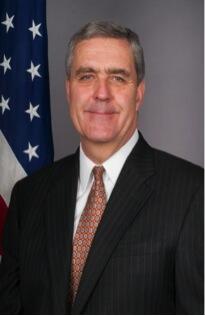
Douglas Lute, Ambassador of the United States to NATO


In August 2013, Douglas E. Lute was sworn-in as the Ambassador of the United States to the North Atlantic Treaty Organization (NATO).  From 2007 to 2013, Lute served at the White House under Presidents Bush and Obama, first as the Assistant to the President and Deputy National Security Advisor for Iraq and Afghanistan, and more recently as the Deputy Assistant to the President focusing on Afghanistan, Pakistan and India.  In 2010, AMB Lute retired from the U.S. Army as a Lieutenant General after 35 years on active duty.  Prior to the White House, he served as the Director of Operations on the Joint Staff, overseeing U.S. military operations worldwide. He served multiple tours in NATO commands including duty in Germany during the Cold War and commanding U.S. forces in Kosovo.  He holds degrees from the United States Military Academy and Harvard University.

A light lunch will be provided.  Please plan to arrive by 11:30am to allow time to check in at the registration desk, pick up your lunch and be seated by 12:00 noon.

Co-sponsored by The Europe Center, the Freeman Spogli Institute for International Studies, the Center for International Security and Cooperation and the Center for Russian, East European and Eurasian Studies.


Douglas Lute United States Ambassador to NATO Speaker
Lectures
-

This event has been cancelled. We will update our website once the new date has been determined.

Encina Hall, C148
616 Jane Stanford Way
Stanford, CA 94305

0
Olivier Nomellini Senior Fellow at the Freeman Spogli Institute for International Studies
Director of the Ford Dorsey Master's in International Policy
Research Affiliate at The Europe Center
Professor by Courtesy, Department of Political Science
yff-2021-14290_6500x4500_square.jpg

Francis Fukuyama is the Olivier Nomellini Senior Fellow at Stanford University's Freeman Spogli Institute for International Studies (FSI), and a faculty member of FSI's Center on Democracy, Development and the Rule of Law (CDDRL). He is also Director of Stanford's Ford Dorsey Master's in International Policy, and a professor (by courtesy) of Political Science.

Dr. Fukuyama has written widely on issues in development and international politics. His 1992 book, The End of History and the Last Man, has appeared in over twenty foreign editions. His book In the Realm of the Last Man: A Memoir will be published in fall 2026.

Francis Fukuyama received his B.A. from Cornell University in classics, and his Ph.D. from Harvard in Political Science. He was a member of the Political Science Department of the RAND Corporation, and of the Policy Planning Staff of the US Department of State. From 1996-2000 he was Omer L. and Nancy Hirst Professor of Public Policy at the School of Public Policy at George Mason University, and from 2001-2010 he was Bernard L. Schwartz Professor of International Political Economy at the Paul H. Nitze School of Advanced International Studies, Johns Hopkins University. He served as a member of the President’s Council on Bioethics from 2001-2004. He is editor-in-chief of American Purpose, an online journal.

Dr. Fukuyama holds honorary doctorates from Connecticut College, Doane College, Doshisha University (Japan), Kansai University (Japan), Aarhus University (Denmark), the Pardee Rand Graduate School, and Adam Mickiewicz University (Poland). He is a non-resident fellow at the Carnegie Endowment for International Peace. He is a member of the Board of Trustees of the Rand Corporation, the Board of Trustees of Freedom House, and the Board of the Volcker Alliance. He is a fellow of the National Academy for Public Administration, a member of the American Political Science Association, and of the Council on Foreign Relations. He is married to Laura Holmgren and has three children.

(October 2025)

CV
Date Label
Olivier Nomellini Senior Fellow at the Freeman Spogli Institute for International Studies (FSI); Resident in FSI's Center on Democracy, Development, and the Rule of Law; Professor, by courtesy, of Political Science Speaker Stanford University
Seminars
Authors
News Type
News
Date
Paragraphs

Michael McFaul, a Stanford political scientist and former U.S. ambassador to Russia, has been selected as the next director of the university’s Freeman Spogli Institute for International Studies.

The announcement was made Wednesday by Stanford Provost John Etchemendy and Ann Arvin, the university’s vice provost and dean of research. McFaul will succeed Mariano-Florentino Cuéllar, who was nominated in July as an associate justice of the California Supreme Court and elected Tuesday.

McFaul takes the helm of FSI in January.

"Stanford has long been a home for scholars who connect academia to policy and public service, and Professor McFaul is the embodiment of that model," Etchemendy said. "We are grateful for Mike's service and confident he will be a strong leader for FSI."

Arvin said McFaul is a strong fit for the position.

“Professor McFaul’s background as an outstanding scholar and his service as an influential ambassador give him a vital perspective to lead FSI, which is Stanford’s hub for studying and understanding international policy issues,” she said. “His scholarship, experience and energy will keep FSI and Stanford at the forefront of international studies as well as some of the most pressing global policy debates."

McFaul has been a faculty member in the department of political science at Stanford since 1994.  He joined the Obama administration in January 2009, serving for three years as Special Assistant to the President and Senior Director for Russian and Eurasian Affairs at the National Security Council at the White House. He then served as U.S. Ambassador to the Russian Federation from 2012 to 2014.

McFaul already has a deep affiliation with FSI. Before joining the government, he served as FSI deputy director from 2006 to 2009.  He also directed FSI’s Center on Democracy, Development, and the Rule of Law (CDDRL) from 2005 to 2009.

During his four years leading CDDRL, McFaul launched the Draper Hills Summer Fellowship program for mid-career lawyers, politicians, advocates and business leaders working to shore up democratic institutions in their home countries. He also established CDDRL’s senior honors program.  From 1992-1994, McFaul also worked as a Senior Research Fellow at FSI’s Center for International Security and Cooperation (CISAC).

“I am thrilled to be assuming a leadership role again at FSI,” McFaul said.  “FSI has become one of the premier institutions in the country for policy-relevant research on international affairs.  I look forward to using my recent government experience to deepen further FSI’s impact on policy debates in Washington and around the world.”

Arvin said McFaul’s previous positions at FSI and CDDRL will make for a smooth transition in the institute’s leadership.

“His familiarity with FSI’s history and infrastructure will allow him to start this new position with an immediate focus on the institute’s academic mission,” she said.

McFaul is also the Peter and Helen Bing Senior Fellow at the Hoover Institution, and plans to build on his long affiliations with both Hoover and FSI to deepen cooperation between these two premier public policy institutions on campus.

He has written and co-authored dozens of books including Advancing Democracy Abroad: Why We Should, How We CanTransitions To Democracy: A Comparative Perspective (with Kathryn Stoner); Power and Purpose: American Policy toward Russia after the Cold War (with James Goldgeier); and Russia’s Unfinished Revolution: Political Change from Gorbachev to Putin.

“In so many ways, Mike represents the best of FSI,” said Cuéllar, who has held leadership positions at FSI since 2004 and begins his term on the California Supreme Court in January. “He knows the worlds of academia and policy extremely well, and will bring unique experience and sound judgment to his new role at FSI.”

McFaul currently serves as a news analyst for NBC News, appearing frequently on NBC, MSNBC, and CNBC as a commentator on international affairs. He also appears frequently on The Charlie Rose Show and The Newshour, as well as PBS and BBC radio programs. He has recently published essays in Foreign AffairsThe New York TimesPolitico, and Time

McFaul was one of the first U.S. ambassadors to actively use social media for public diplomacy. He still maintains an active presence on Facebook at amb.mcfaul and on Twitter at @McFaul.

McFaul received his B.A. in International Relations and Slavic Languages and his M.A. in Russian and East European Studies from Stanford University in 1986.  As a Rhodes Scholar, he completed his D. Phil. in International Relations at Oxford University in 1991.

“Since coming here in 1981 as 17-year-old kid from Montana, Stanford has provided me with tremendous opportunities to grow as a student, scholar, and policymaker,” McFaul said. “I now look forward to giving back to Stanford by contributing to the development of one of the most vital and innovative institutions on campus.” 


Hero Image
mcfaul color large
All News button
1

Professor Sharon Zukin's talk will describe how, in cities across the world, the everyday spaces of local shopping streets are undergoing dramatic transformations.  Globalization brings new products and people, while different types of gentrification reshape the street's aesthetics and atmosphere.  How do we "read" these changes?  Do they destroy the sense of the "local" to make every street, in every city, more alike?

Professor Zukin is the author of a number of books on cities, culture and consumer culture, and urban, cultural and economic change.  She received the Lynd Award for Career Achievement in urban sociology from the American Sociological Association, and the C. Wright Mills Book Award for Landscapes of Power.  You can learn more about her work here: http://www.brooklyn.cuny.edu/web/academics/faculty/faculty_profile.jsp?faculty=420

Presented by the Program on Urban Studies and co-sponsored by the Anthropology Department, Center for East Asian Studies, Center on Poverty and Inequality, The Europe Center, Walter H. Shorenstein Asia-Pacific Research Center, Sociology Department, Stanford in Government and Urban Beyond Measure.

Building 200
Room 002

Sharon Zukin Professor of Sociology Speaker Brooklyn College, CUNY
Lectures
News Type
News
Date
Paragraphs

The Europe Center Graduate Student Grant Competition

Call for Proposals:

The Europe Center is pleased to announce the Fall 2014 Graduate Student Grant Competition for graduate and professional students at Stanford whose research or work focuses on Europe. Funds are available for Ph.D. candidates from across a wide range of disciplines in the humanities and social sciences to prepare for dissertation research and to conduct research on approved dissertation projects. The Europe Center also supports early graduate students who wish to determine the feasibility of a dissertation topic or acquire training relevant for that topic. Moreover, funds are available for professional students whose interests focus on some aspect of European politics, economics, history, or culture; the latter may be used to support an internship or a research project. Grants range from $500 to $5000.

Additional information about the grants, as well as the online application form, can be found here.  The deadline for this Fall’s competition is Friday, October 17th. Recipients will be notified by November 7th. A second competition is scheduled for Spring 2015.
 

Highlights from 2013-2014:

In the 2013-2014 academic year, the Center awarded grants to 26 graduate students in departments ranging from Linguistics to Political Science to Anthropology. We would like to introduce you to some of the students that we support and the projects on which they are working. Our featured students this month are Michela Giorcelli (Economics) and Orysia Kulick (History).

Giorc

Image
elli’s project, “The Effects of Management and Technology on Firms’ Productivity: Lesson from the US Marshall Plan in Italy,” explores the role of productivity in the process of economic growth and development. It is typically difficult to isolate the causal effect of management training programs and technology transfer programs on business productivity because these measures are often endogenous to other unobservable factors. To overcome this concern, Giorcelli employed a unique research design to analyze the effects of the Marshall Plan’s transfer of US management and technology to Italian firms in the aftermath of WWII. 

Image
Image of Archivio
Giorcelli collected and digitized balance sheets data for 6,035 Italian firms eligible to receive the US management and technology support between 1930 to 1970. She then exploited an exogenous change in policy implementation that randomly determined which firms actually received Marshall Plan support. Preliminary results show that all firms that received either support significantly increased their productivity. Moreover, firms that received both sets of support simultaneously showed an additional increase in productivity, suggesting that management and technology are complementary in production. (Inset: The archives where Giorcelli conducted her research)

Image
Kulick’s project, “Regionalism in Ukraine and the Long Collapse of the Soviet Union, 1954--2014,” used original historical evidence collected from Ukrainian archives to study the political nexus between party elites in Kiev and in Moscow. For example, Kulick gleaned insights about the political economy of postwar industrial reconstruction from local archives in Dnipropetrovsk, a metallurgical powerhouse in the region. Previously inaccessible primary sources indicate that as the Soviet economy grew more complex, the state apparatus became more independent. Consequently, managerial specialists needed more autonomy to meet deadlines and quotas, making them--rather than the party--the source of innovation in postwar Ukraine. 

Image
According to Kulick, “my research this summer opened up new ways of thinking about the relationship between the party and the institutions that made up the Soviet state and economy.” Kulick used insights from Soviet-era KGB documents to shed new light on the current propaganda emanating out of the Kremlin. For example, she found that the long-term pull toward greater improvisation has had ongoing consequences. The current conflict is not just about Ukraine’s geopolitical orientation; it is also the byproduct of the dissolution of intransigent and poorly understood late Soviet-era institutions. (Inset: Kulick documents military mobilization during her summer in Ukraine)


Undergraduate Internship Program: Highlights

The Europe Center sponsored four undergraduate student internships with leading think tanks and international organizations in Europe in Summer 2014.  Laura Conigliaro (International Relations, 2015) joined the Centre for European Policy Studies (CEPS), while Elsa Brown (Political Science, 2015), Noah Garcia (BA International Relations and MA Public Policy, 2015), and Jana Persky (Public Policy, 2016) joined Bruegel, a leading European think tank. Our featured student this month is Laura Conigliaro.

Image
During her time at CEPS, Conigliaro worked on a 68-page research paper on genetically modified organisms (GMO) policy in the European Union. In the paper, she traces E.U. legislation and policy development on GMOs from 1990 onward, and also offers conclusions for the future trajectory of the E.U.’s GMO policy. Conigliaro argues that the evolution of the E.U.’s GMO policy is a topic of extreme relevance--and difficulty--because it is the source of high-level trade conflicts between Europe and the United States. Consequently, the study of GMO policymaking can help advance our understanding of E.U. institutions, E.U. “comitology” (policy process), and E.U.-U.S. bilateral relations. 

Image
Image of CEPS signage.
Conigliaro plans to incorporate the summer fellowship experience into her Stanford academic career, for example, by presenting research findings at Stanford’s Symposia of Undergraduate Research and Public Service (SURPS). Looking ahead, she writes: “I hope to use the knowledge and experience gained of the E.U. Institutions and policy process through the lens of the GMO issue to broaden and diversify my potential career opportunities and areas from my traditional area of concentration, East Asia, to also include the European Union.”


Recap:  Panel on Europe-Russia Relations and EU expansion

On September 30, 2014, Miroslav Lajčák, the Deputy Prime Minister and the Minister of Foreign and European Affairs of the Slovak Republic, participated in a panel discussion in which he shared his thoughts and opinions about Europe’s relationship with Russia, and about the E.U.’s management of its future membership and associations. The Minister’s viewpoints were of particular interest, given his role in the E.U. foreign policy establishment, and the Slovak Republic’s role in the E.U. and NATO.

“The fact is that E.U.-Russia relations have worsened dramatically. That cannot be denied. But it’s not E.U. enlargement that played a major role in this.”  According to the Minister, Russia did not view E.U. enlargement with hostility, in part, because enlargement remained a transparent process. “But it all changed when Europe decided to enter into Russia’s immediate neighborhood...the former Soviet Republics. And this was something that

Image
Miroslav Lajčák
was seen by Russia as a hostile activity, and this was what Russia fiercely resisted.” The Minister spoke candidly about the potential conflicts of concepts between the E.U.’s Eastern Partnership policy, Russia’s Near Abroad policy, and the idea of a Eurasian Union. A fundamental and ongoing source of tension pertains to the geopolitical position of Russia’s immediate neighbors: “The fact is that Russia never accepted the full sovereignty of the former Soviet Republics.” Apart from discussing the escalation of tensions between the E.U. and Russia, the Minister spoke about the role of sanctions and reforms as a path for moving forward and achieving lasting peace in Europe.

Minister Lajčák’s brought a variety of experiences to the panel. He served as the European Union Chief Negotiator for the E.U.-Ukraine and E.U.-Moldova Association Agreements, and was the European Union Special Representative for Bosnia and Herzegovina, and Sarajevo. Additionally, he was previously the Ambassador of the Slovak Republic to the Former Republic of Yugoslavia, Albania and the Former Yugoslav Republic of Macedonia. 

After Minister Lajčák spoke, he was followed by comments by Michael McFaul, Professor of Political Science and Senior Fellow, Hoover Institute and Freeman Spogli Institute; Norman Naimark, the Robert and Florence McDonnell Professor in East European Studies in the History Department and The Director of Stanford Global Studies; and Kathryn Stoner, Senior Fellow at the Freeman Spogli Institute and Faculty Director of the Susan Ford Dorsey Program in International Studies.


Introducing “Immigration and Integration in Europe” Policy Lab

The Europe Center would like to introduce a new research project entitled, “Immigration and Integration in Europe:  A Public Policy Perspective,” led by Professors David Laitin and Jens Hainmueller. Duncan Lawrence has recently joined Stanford University to help direct the project. The project is part of the new Policy Implementation Lab at the Freeman Spogli Institute for International Studies.

The social and economic integration of its diverse and ever growing immigrant populations is one of the most fundamental and pressing policy issues European countries face today. Success or failure in integrating immigrants is likely to have a substantial effect on the ability of European countries individually and collectively as members of the European Union to achieve objectives ranging from the profound such as sustaining a robust democratic culture to the necessary such as fostering economic cooperation between countries. Various policies have been devised to address this grave political dilemma, but despite heated public debates we know very little about whether these policies achieve their stated goals and actually foster the integration of immigrants into the host societies. (Inset: David Laitin)

Professor Jens Hainmueller.The goal of this research program is to fill this gap and create a network of leading immigration scholars in the US and Europe to generate rigorous evidence about what works and what does not when it comes to integration policies. The methodological core of the lab’s research program is a focus on systematic impact evaluations that leverage experimental and quasi-experimental methods with common study protocols to quantify the social and economic returns to integration policies across Europe, including polices for public housing, education, citizenship acquisition, and integration contracts for newcomers. This work will add to the quality of informed public debate on a sensitive issue, and create cumulative knowledge about policies that will be broadly relevant. (Inset: Jens Hainmueller)

The Europe Center Sponsored Events

We invite you to attend the following events sponsored or co-sponsored by The Europe Center:

Additional Details on our website
October 8-10, 2014
“War, Revolution and Freedom: the Baltic Countries in the 20th Century”
Stauffer Auditorium, Hoover Institution
9:00 AM onward

Save the Date
April 24-25, 2015
Conference on Human Rights

A collaborative effort between the International Human Rights and Conflict Resolution Clinic at Stanford Law School (IHRCRC), the Research Center for Human Rights at Vienna University (RCHR), and The Europe Center. The conference will focus on the pedagogy and practice of human rights. 

Save the Date
May 20-22, 2015
TEC Lectureship on Europe and the World 
Joel Mokyr
Robert H. Strotz Professor of Arts and Sciences, and Professor of Economics and History, Northwestern University

We welcome you to visit our website for additional details.

All News button
1
-

Image
Amb. Ivo Daalder
Ivo H. Daalder is president of The Chicago Council on Global Affairs. Founded in 1922, the Council is a leading independent, nonpartisan organization committed to educating the public and influencing the discourse on global issues of the day. Prior to joining the Council in July 2013, Daalder served as the Ambassador to the North Atlantic Treaty Organization for more than four years. Daalder also served on the National Security Council staff as director for European Affairs from 1995-97. 

Before his appointment as Ambassador to NATO by President Obama in 2009, Daalder was a senior fellow in foreign policy studies at the Brookings Institution, specializing in American foreign policy, European security and transatlantic relations, and national security affairs. Prior to joining Brookings in 1998, he was an Associate Professor at the University of Maryland’s School of Public Policy and director of research at its Center for International and Security Studies. Ambassador Daalder was educated at Oxford and Georgetown Universities, and received his PhD in political science from the Massachusetts Institute of Technology.


Ivo Daalder Speaker President of the Chicago Council on Global Affairs and former US Ambassador to NATO
Lectures
Subscribe to The Americas