This event is now full. Please send an email to sj1874@stanford.edu if you would like to be added to the wait list.


Crimea has become a precedent in the newest world history. After annexation, Russia turned the peninsula into a testing ground for new tactics of information warfare, suppression of dissent, and the formation of militaristic sentiment. The former resort has been transformed into a powerful military base whose missiles can reach targets in the Baltic States, Poland, the Czech Republic, and other nearby countries.

Russia has closed access to international organizations in Crimea. For the past five years, about 2.5 million people have remained without any legal protection from the actions of the occupying power. Forced disappearances, politically-motivated arrests, religious persecution, censorship, and the destruction of independent media have all become an everyday reality.

Image
Mustafa Dzhemilev

During the Soviet Union, Mustafa Dzhemilev defended the right of the Crimean Tatar People to return from the places of deportation to their homeland, Crimea. He spent more than 15 years in Soviet camps and prisons and survived a 306-day hunger strike, which ended only after Andrei Sakharov's request. Mustafa Dzhemilev has been awarded dozens of international awards for his human rights activities. After the annexation of the peninsula, Russia banned Mustafa's return to his native Crimea.


This event is co-sponsored by The Center on Democracy, Development, and the Rule of Law, The European Security Initiative at The Europe Center, and the Center for Russian, East European and Eurasian Studies, Stanford University. It is free and open to the public.

Mustafa Dzhemilev speaker Leader of the Crimean Tatar People
Paragraphs

In 2008, when Michael McFaul was asked to leave his perch at Stanford and join an unlikely presidential campaign, he had no idea that he would find himself at the beating heart of one of today’s most contentious and consequential international relationships. As President Barack Obama’s adviser on Russian affairs, McFaul helped craft the United States’ policy known as “reset” that fostered new and unprecedented collaboration between the two countries. And then, as U.S. ambassador to Russia from 2012 to 2014, he had a front-row seat when this fleeting, hopeful moment crumbled with Vladimir Putin’s return to the presidency. This riveting inside account combines history and memoir to tell the full story of U.S.-Russia relations from the fall of the Soviet Union to the new rise of the hostile, paranoid Russian president. From the first days of McFaul’s ambassadorship, the Kremlin actively sought to discredit and undermine him, hassling him with tactics that included dispatching protesters to his front gates, slandering him on state media, and tightly surveilling him, his staff, and his family.

From Cold War to Hot Peace is an essential account of the most consequential global confrontation of our time.

All Publications button
1
Publication Type
Books
Publication Date
Journal Publisher
Houghton Mifflin Harcourt
Authors
Michael A. McFaul
-

We have reached capacity for CEMEX Auditorium and are no longer accepting RSVPs

Watch

Image
Michael McFaul, former US ambassador to Russia and director of Stanford's Freeman Spogli Institute for International Studies, shares an inside account of U.S.-Russia relations. In 2008, when he was asked to step away from Stanford and join an unlikely presidential campaign, Professor McFaul had no idea that he would find himself at the beating heart of one of today’s most contentious and consequential international relationships. Marking the publication of his new book, From Cold War to Hot Peace, this talk combines history and memoir to tell the full story of U.S.-Russia relations from the fall of the Soviet Union to the new rise of Vladimir Putin.


Image
Michael McFaul, MA '86, is a professor of political science, director and senior fellow at the Freeman Spogli Institute for International Studies, and the Peter and Helen Bing Senior Fellow at the Hoover Institution. He has served the Obama administration as Special Assistant to the President, Senior Director for Russian and Eurasian Affairs at the National Security Council at the White House, and most recently as the U.S. Ambassador to the Russian Federation. Professor McFaul has written and edited several books on international relations and foreign policy and his op-ed writings have been featured in the New York Times, the Wall Street Journal, and the Washington Post. His latest book is From Cold War to Hot Peace: An American Ambassador in Putin's Russia. As a NBC News analyst, he provides expertise on foreign affairs and national security coverage.


This event is co-sponsored by The European Security Initiative & Center for Russian, East European and Eurasian Studies, Stanford University. It is free and open to the public.


CEMEX Auditorium

Stanford Graduate School of Business

Encina Hall
616 Jane Stanford Way
Stanford, CA 94305-6055

0
Senior Fellow, Freeman Spogli Institute for International Studies
Ken Olivier and Angela Nomellini Professor of International Studies, Department of Political Science
Peter and Helen Bing Senior Fellow, Hoover Institution
mcfaul_headshot_2025.jpg PhD

Michael McFaul is the Ken Olivier and Angela Nomellini Professor of International Studies in Political Science, Senior Fellow at the Freeman Spogli Institute for International Studies, and the Peter and Helen Bing Senior Fellow at the Hoover Institution, all at Stanford University. He joined the Stanford faculty in 1995 and served as FSI Director from 2015 to 2025. He is also an international affairs analyst for MSNOW.

McFaul served for five years in the Obama administration, first as Special Assistant to the President and Senior Director for Russian and Eurasian Affairs at the National Security Council at the White House (2009-2012), and then as U.S. Ambassador to the Russian Federation (2012-2014).

McFaul has authored ten books and edited several others, including, most recently, Autocrats vs. Democrats: China, Russia, America, and the New Global Disorder, as well as From Cold War to Hot Peace: An American Ambassador in Putin’s Russia, (a New York Times bestseller) Advancing Democracy Abroad: Why We Should, How We Can; and Russia’s Unfinished Revolution: Political Change from Gorbachev to Putin.

He is a recipient of numerous awards, including an honorary PhD from Montana State University; the Order for Merits to Lithuania from President Gitanas Nausea of Lithuania; Order of Merit of Third Degree from President Volodymyr Zelenskyy of Ukraine, and the Dean’s Award for Distinguished Teaching at Stanford University. In 2015, he was the Distinguished Mingde Faculty Fellow at the Stanford Center at Peking University.

McFaul was born and raised in Montana. He received his B.A. in International Relations and Slavic Languages and his M.A. in Soviet and East European Studies from Stanford University in 1986. As a Rhodes Scholar, he completed his D. Phil. in International Relations at Oxford University in 1991. 

CV
Date Label
Freeman Spogli Institute for International Studies, Stanford University
Seminars

Keynote: 

Thursday, February 8, 2018
6:00pm
Stanford Alumni Center, Fisher Conference Center, 326 Galvez St. (please note venue change)

From Lenin to Putin: Biography as Window on Soviet/Russian Politics
with Professor William Taubman, Pulitzer Prize-winning historian


The conference, "Communist Century: New Studies in Revolution, Resistance and Radicalism" begins on February 9, 2018 at 9am.  For the agenda, please visit:
http://tec.fsi.stanford.edu/events/communist-century-new-studies-revolu…


More Information:
https://creees.stanford.edu/events/communist-century-new-studies-revolution-resistance-and-radicalism


Sponsorships:
The Center for Russian, East European and Eurasian Studies, The Europe Center, Department of History, School of Humanities and Sciences, and the Taube Center for Jewish Studies


Fisher Conference Center
Stanford Alumni Center
326 Galvez Street

-

Conference Agenda:

Friday, February 9, 2018
9:00am - 5:30pm
Stanford Alumni Center, Fisher Conference Center, 326 Galvez St.

  • 9:00-9:30 am: Breakfast
  • 9:30-9:45 am: Introductory Remarks
  • 9:45-10:45 am: Steven Zipperstein (Stanford University): Engineering the Human Soul:  Reflections on Jews and Communism
  • 10:45-11:45 am: Norman Naimark (Stanford University): Stalin, Europe, and the Struggle for Sovereignty, 1944-1949
  • 11:45 am-1:00 pm: Lunch
  • 1:00-2:00 pm: David Holloway (Stanford University): Science, Technology, and Soviet Modernity
  • 2:00-3:00 pm: Benjamin Nathans (University of Pennsylvania): Formations of Dissent in the Late Soviet Era: Circle, Square, Network, Movement
  • 3:00-3:30 pm:  Coffee Break
  • 3:30-4:30 pm: Amir Weiner (Stanford University): The KGB: An Autobiography
  • 4:30-5:30 pm: Anna Grzymala-Busse (Stanford University): Post-Communist Populism
  • 5:30 pm:  Concluding Remarks


More Information:
https://creees.stanford.edu/events/communist-century-new-studies-revolution-resistance-and-radicalism


Sponsorships:
The Center for Russian, East European and Eurasian Studies, The Europe Center, Department of History, School of Humanities and Sciences, and the Taube Center for Jewish Studies


Fisher Conference Center
Stanford Alumni Center
326 Galvez Street

Conferences
-

Vera Zakem has been leading work at CNA Center for Stability and Development on how Russia and other actors use propaganda and disinformation to influence and target populations in Europe. She will highlight how Russia and other actors exploit internal sources of vulnerabilities and instability to target vulnerable populations in Europe via disinformation and influence campaigns. Vera's work includes conducting in-country field work in many of the countries in the region.

Image
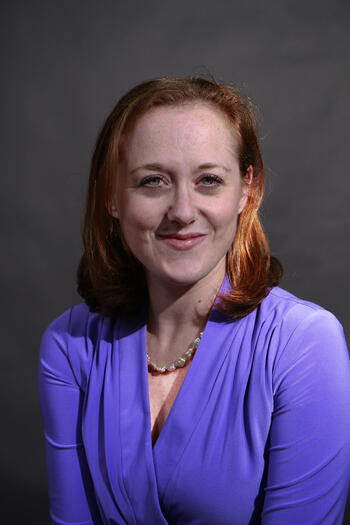
Image of Vera Zakem

Vera Zakem specializes in developing innovative solutions, analytics, and partnerships in assessing root causes of conflict and instability for vulnerable populations, information warfare, social media, and disinformation, and civil-military operations. She incorporates development, diplomacy, and civil-military operations in assessing today’s security environment. She currently leads CNA’s work in assessing internal vulnerabilities to vulnerable populations, Europe and Russia, disinformation and propaganda, technology, and influence.

Zakem has conducted in-country fieldwork in the Balkans, Baltics, Central Asia, and the Middle East. Earlier in her career, she has collaborated multinational and government organizations in analyzing and assessing human security. She taught adversary, futures analytics and red teaming at the Elliot School of International Affairs, George Washington University. Throughout her career, Zakem has worked with diverse sectors in promoting the role of women in security and development.

Zakem has an M.A. in Government from Johns Hopkins University, a B.A. in Politics and Economics from the University of San Francisco and has also spent a year at Tel Aviv University in Israel. She speaks Russian, Spanish, and Hebrew. She is a Term Member, Council on Foreign Relations.

William J. Perry Conference Room
Encina Hall, 2nd floor

Vera Zakem Director of Strategy and Partnerships and Project Director Guest speaker CNA Center for Stability and Development
Lectures
Paragraphs
We model the cultural outcomes of ‘sons of the soil’ conflicts. These are conflicts between the local inhabitants of a particular region and migrants to the region, typically belonging to a dominant national culture. Our goal is to understand the conditions under which migrants assimilate into the local culture, or in which locals assimilate into the national culture. The model has two main actors: a national elite of a dominant ethnic group, and a regional elite seeking to promote the traditional culture of the sons of the soil. Both actors haveparallel strategies, viz. assimilating the other group into their culture, controlling the size of t he migrant population, doing both, or allowing market forces to determine outcomes. The model has three possible cultural outcomes: the culture tips to that of the sons of the soil; the culture tips to that of the migrant group; or the region remains bicultural, with each group retaining its own culture. We illustrate these outcomes through four cases: (i) Bengalis and Assamese in the Indian state of Assam; (ii) Russians and Estonians in the Ida-Virumaa county of Estonia; (iii) Tamils and Sinhalese in Jaffna and the Eastern Province of Sri Lanka; and (iv) Castilians and Catalans in the autonomous community of Catalonia in Spain.
All Publications button
1
Publication Type
Journal Articles
Publication Date
Journal Publisher
Journal of Theoretical Politics
Authors
David Laitin
Authors
News Type
News
Date
Paragraphs

Political scientist Anna Grzymala-Busse finds that authoritarians face a choice in the face of change: try to cling to power, exit governing or reinvent themselves as democrats. It’s those who reinvent themselves as newly minted democrats who fare the worst in the long run.

In the years since World War II, as the global geopolitical map was drawn and redrawn along ideological lines, the world witnessed ascension of many authoritarians. They often ruled for long stretches, but eventually most faced a political reckoning. The people they governed no longer accepted their authority and demanded change.

The fate of authoritarians in the aftermath of such crises is the subject of a new study in the journal Party Politics written by Stanford political scientist Anna Grzymala-Busse. At such inflection points, she says, authoritarians face a [[{"fid":"229407","view_mode":"crop_870xauto","fields":{"format":"crop_870xauto","field_file_image_description[und][0][value]":"Photograph of Anna Grzymala-Busse.","field_file_image_alt_text[und][0][value]":"Photograph of Anna Grzymala-Busse.","field_file_image_title_text[und][0][value]":"Photograph of Anna Grzymala-Busse.","field_credit[und][0][value]":"","field_caption[und][0][value]":"","thumbnails":"crop_870xauto","alt":"Photograph of Anna Grzymala-Busse.","title":"Photograph of Anna Grzymala-Busse."},"type":"media","field_deltas":{"1":{"format":"crop_870xauto","field_file_image_description[und][0][value]":"Photograph of Anna Grzymala-Busse.","field_file_image_alt_text[und][0][value]":"Photograph of Anna Grzymala-Busse.","field_file_image_title_text[und][0][value]":"Photograph of Anna Grzymala-Busse.","field_credit[und][0][value]":"","field_caption[und][0][value]":"","thumbnails":"crop_870xauto","alt":"Photograph of Anna Grzymala-Busse.","title":"Photograph of Anna Grzymala-Busse."}},"link_text":null,"attributes":{"alt":"Photograph of Anna Grzymala-Busse.","title":"Photograph of Anna Grzymala-Busse.","style":"float: right; height: 350px; width: 200px; margin-top: 10px; margin-left: 15px; margin-bottom: 10px;","class":"media-element file-crop-870xauto","data-delta":"1"}}]]choice:theycan cling to power, albeit by ceding a certain degree of control, or they can exit governing altogether, either by dissolving the party entirely or, more dramatically, by reinventing themselves as democrats.
 

Newly minted democrats

It was these reinventors – the newly minted democrats – that intrigued Grzymala-Busse the most. She found that while many enjoyed initial electoral success, most ended up losing power in the long run.
 
“Paradoxically,” Grzymala-Busse said, “this fate seems to flow precisely from the decision to reinvent their organizations, their political symbols and their state programs to fit the norms of free political competition.”
 
In adopting democratic rhetoric and standards of competence, it seems, the parties find initial success, but then are unable to sustain newfound democratic philosophies and programs. They hoist themselves on their own petards, as she put it in her paper, alluding to Shakespeare’s Hamlet.
 
These reinvented parties often attract new politicians who are more entrepreneurial than their predecessors. Those new faces, however, often prove to be mere opportunists. The resulting scandals destroy party credibility and contribute to an unending downward political spiral.

Ironically, Grzymala-Busse found that the best choice for authoritarians is simply to cling to power “counting on a loyal if unhappy electorate,” even if it means ceding much of their once-monopolistic grip on power to democratic reforms.

81 governments studied

For her study, Grzymala-Busse examined and quantified the resulting political denouements of 81 authoritarian governments spanning the period from 1945 to 2015. Countries studied include the former Soviet Bloc, China, Cuba, several in Southeast Asia, many African nations and Mexico. The governing systems ranged from the communism of the Soviet Bloc and socialism to secular state-building and rule for the sake of national security.

The success of the reinventors can be rapid and remarkable, but so too can be the demise. Grzymala-Busse noted that the Hungarian Socialist Party won 43 percent of the vote and 49 percent of the seats in 2006, only to succumb to allegations of deception, mismanagement and fraud soon afterward. In Poland, the Democratic and Left Alliance (SLD), which won 41 percent of the vote in 2001, watched as its power steeply declined in the subsequent decade until the party dissolved entirely in 2011.

“Those who reinvented shone more brightly for a brief time, but burned out. Those who chose orthodoxy never enjoyed the great success of the reinventors, but they survived,” she said.

And what of those authoritarians who choose neither to remain nor to reinvent? Grzymala said that they simply dissolve back into society where former members often capitalize on their connections to become captains of industry.

“Some become oligarchs,” she said, “retaining power by other means.”

Lessons on change

The takeaway of her study for at-risk authoritarians, Grzymala-Busse said, is that reinvention alone is not enough to carry the party. New parties cannot survive as the remnants of their former selves. They must become entirely new organizations with viable programmatic approaches. Likewise, she said, when newly minted democrats hail competence as a competitive advantage, they must make good on the promise. If they fall short, they face exceptionally harsh outcomes at the polls.

“The irony is, without real change, the parties that built democracy by supporting free elections fall victim to those same democratic forces they championed.”

Anna Grzymala-Busse is the Kevin and Michelle Douglas Professor of International Studies and a senior fellow at the Freeman Spogli Institute for International Studies at Stanford University.

The study was made possible by financial support from the Carnegie Foundation.


All News button
1
-

Headquartered in Riga, Latvia, Meduza.io is the world’s number one independent source for professional reporting on Russia. The site also operates an ambitious translation project, making its content available to the global community at Meduza.io/en. Meduza launched in October 2014 and by August 2017 the monthly readership of Meduza exceeded 7.5 million unique visitors, with more than 700,000 app downloads and more than 2,000,000 followers on social media. Meduza and Buzzfeed recently announced an editorial partnership focused on joint investigative reports. Ilya Krasilshchik, Meduza’s publisher, will explain what it takes to mount such a project in an environment flooded by the Kremlin’s propaganda, and Anna Veduta, Meduza’s global outreach director, will discuss Meduza’s English-language edition.


Meduza is an online newspaper and news aggregator covering Russia and the Eurasian region, headed by Galina Timchenko, the former chief editor of the news website Lenta.ru, which during her tenure became the most popular news outlet on the Russian Internet. Meduza is run by a team of Russian journalists who resigned from their jobs at Lenta.ru, following Timchenko’s unexpected removal from her post by Alexander Mamut, the Putin-connected oligarch who owns the website.

Not long before the annexation of Crimea, Mamut fired Timchenko and replaced her with Alexey Goreslavsky, who had previously managed the pro-Kremlin website Vzglyad and later was a high-level official at the state-run news agency Interfax. The reason given for Timchenko’s dismissal was an official warning issued to Lenta.ru by Russia’s state censor because one of Lenta’s stories (an interview with a Ukrainian nationalist leader) contained a hyperlink to materials deemed extremist. More than 80 editors and reporters – nearly Lenta’s entire newsroom – quit in protest, publishing an open letter calling Timchenko’s ouster “an act of censorship” and a violation of Russia’s media laws. Timchenko and most of the staff who resigned with her went on to found Meduza. Explaining the decision to base Meduza in Latvia and register it outside the .RU domain zone, Timchenko told Forbes: “Right now, establishing an independent Russian-language news outlet in Latvia is possible, while in Russia it is not.”


Image
Ilia Krasilshchik image

Ilya Krasilshchik is Meduza’s publisher. In 2008, after leaving college at 21, Ilya became the chief editor of Afisha, then Moscow’s most influential entertainment and city life magazine. In his five years at Afisha, the magazine published more the 100 issues, including an issue dedicated to “Coming Out” stories (a response to Russia’s criminalization of so-called “gay propaganda”), as well as several special editions, including issues on “the oral history of the Russian media” and “the oral history of the Russian Internet.” In October 2014, he left Afisha and joined two partners to launch Meduza, a groundbreaking Russian-language news outlet based in Riga, Latvia. As of July 2017, Meduza’s monthly readership exceeded 7 million unique visitors, with 750,000 app downloads, and a reach of more than 15,000,000 people on social media. Seventy percent of Meduza’s audience is based in Russia.


Anna Veduta image


Anna Veduta is Meduza’s global outreach director, and also heads Meduza in English in Washington, D.C. Prior to Meduza, Anna served as Press Secretary to Alexey Navalny, Russia’s leading opposition politician and 2018 presidential hopeful. Anna headed Navalny's press office during his Moscow mayoral campaign in 2013, when he leveraged social media channels to break a blockage by Russia’s traditional media, nearly forcing a runoff vote. Anna holds degrees in political science and international relations from Moscow State University and Columbia University’s School of International Public Affairs.


This event is cosponsored by the Center for Russian, East European and Eurasian Studies.

Ilya Krasilshchik Meduza.io
Anna Veduta Meduza.io
Lectures
Paragraphs

The article introduces the All Minorities at Risk (AMAR) data, a sample of socially recognized and salient ethnic groups. Fully coded for the forty core Minorities at Risk variables, this AMAR sample provides researchers with data for empirical analysis free from the selection issues known in the study of ethnic politics to date. We describe the distinct selection issues motivating the coding of the data with an emphasis on underexplored selection issues arising with truncation of ethnic group data, especially when moving between levels of data. We then describe our sampling technique and the resulting coded data. Next, we suggest some directions for the future study of ethnicity and conflict using our bias-corrected data. Our preliminary correlations suggest selection bias may have distorted our understanding about both group and country correlates of ethnic violence.

All Publications button
1
Publication Type
Journal Articles
Publication Date
Journal Publisher
Journal of Conflict Resolution
Authors
David Laitin
Subscribe to Russia and Eurasia