Paragraphs

In the month of April, I found myself saying “I agree with Trump” more than anytime ever. On China, Russia, NATO and Syria, President Trump signaled radical changes in policy, nearly the complete opposite of what he said as a candidate. All were changes for the good — that is, new policy positions that advance American security, prosperity and values. The lingering question is whether these recent statements signal a fundamental change in Trump’s thinking about foreign policy or rather short-term reversals that could be reversed again. Is he learning or ad-libbing? It’s too early to tell.

All Publications button
1
Publication Type
Commentary
Publication Date
Journal Publisher
The Washington Post
Authors
Michael A. McFaul
Paragraphs

After the vote results came in last November, many Russians close to the Kremlin celebrated. “Our Trump” — or #TrumpNash, as they tweeted — had been elected president of the United States... Of course, many factors combined to produce Trump’s victory, but Putin’s intervention most certainly played a contributing role.

All Publications button
1
Publication Type
Commentary
Publication Date
Journal Publisher
The Washington Post
Authors
Michael A. McFaul
Authors
News Type
News
Date
Paragraphs

When the Soviet Union collapsed in 1991, the worry in the West was what would happen to that country’s thousands of nuclear weapons. Would “loose” nukes fall into the hands of terrorists, rogue states, criminals – and plunge the world into a nuclear nightmare?

Fortunately, scientists and technical experts in both the U.S. and the former Soviet Union rolled up their sleeves to manage and contain the nuclear problem in the dissolving Communist country.

One of the leaders in this relationship was Stanford engineering professor Siegfried Hecker, who served as a director of the Los Alamos National Laboratory before coming to Stanford as a senior fellow at the Center for International Security and Cooperation. He is a world-renowned expert in plutonium science, global threat reduction and nuclear security.

Hecker cited one 1992 meeting with Russian scientists in Moscow who were clearly concerned about the risks. In his new book, Doomed to Cooperate: How American and Russian scientists joined forces to avert some of the greatest post-Cold War nuclear dangers, Hecker quoted one Russian expert as saying, “We now need to be concerned about terrorism.”

Earning both scientific and political trust was a key, said Hecker, also a senior fellow at Stanford’s Freeman Spogli Institute for International Studies. The Russians were proud of their scientific accomplishments and highly competent in the nuclear business – and they sought to show this to the Americans scientists, who became very confident in their Russian counterparts’ technical capabilities as they learned more about their nuclear complex and toured the labs.

Economic collapse, political turmoil

But the nuclear experts faced an immense problem. The Soviets had about 39,000 nuclear weapons in their country and in Eastern Europe and about 1.5 million kilograms of plutonium and highly enriched uranium (the fuel for nuclear bombs), Hecker said. Consider that the bomb that the U.S. dropped on the Japanese city of Nagasaki in 1945 was only six kilograms of plutonium, he added. Meanwhile, the U.S. had about 25,000 nuclear weapons in the early 1990s.

Hecker and the rest of the Americans were deeply concerned about the one million-plus Russians who worked in nuclear facilities. Many faced severe financial pressure in an imploding society and thus constituted a huge potential security risk.

“The challenge that Russia faced with its economy collapsing was enormous,” he said in an interview.

The Russian scientists, Hecker said, were motivated to act responsibly because they realized the awful destruction that a single nuclear bomb could wreak. Hecker noted that one Russian scientist told him, “We arrived in the nuclear century all in one boat, and a movement by anyone will affect everyone.” Hecker noted, “Therefore, you know, we were doomed to work together to cooperate.”

All of this depended on the two governments involved easing nuclear tensions while allowing the scientists to collaborate. In short order, the scientists developed mutual respect and trust to address the loose nukes scenario.

The George H.W. Bush administration launched nuclear initiatives to put the Russian government at ease. For example, it took the nuclear weapons off U.S. Navy surface ships and some of its nuclear weapons off alert to allow the Russians to do the same. The U.S. Congress passed the Nunn-Lugar Cooperative Threat Reduction legislation, which helped fund some of the loose nuke containment efforts.

While those were positive measures, Hecker said, it was ultimately the cooperation among scientists, what they called lab-to-lab-cooperation, that allowed the two former superpower enemies to “get past the sensitivity barriers” and make “the world a safer place.”

Since the end of the Cold War, no significant nuclear event has occurred as a result of the dissolution of the Soviet Union and its nuclear complex, Hecker noted.

Lesson: cooperation counts

One lesson from it all, Hecker said, is that government policymakers need to understand that scientists and engineers can work together and make progress toward solving difficult, dangerous problems.

“We don’t want to lose the next generation from understanding what can actually be done by working together,” he said.  “So, we want to demonstrate to them, Look, this is what was done when the scientists were interested and enthusiastic and when the government gave us enough room to be able to do that.”

Hecker said this scientific cooperation extended to several thousand scientists and engineers at the Russian sites and at U.S. nuclear labs – primarily the three defense labs: Lawrence Livermore, Los Alamos, and Sandia national laboratories. Many technical exchanges and visits between scientists in Russia and the United States took place.

He recalled visiting some of the nuclear sites in Russian cities shrouded by mystery. “These cities were so secret, they didn’t even appear on Soviet maps.”

Change of threat

When the Soviet Union collapsed, the nature of the nuclear threat changed, Hecker said. The threat before was one of mutual annihilation, but now the threat changed to what would happen if nuclear assets were lost, stolen or somehow evaded the control of the government.

“From an American perspective we referred to these as the ‘four loose nuclear dangers,'” he said.

This included securing the loose nukes in the Soviet Union and Eastern Europe; preventing nuclear materials or bomb fuel from getting into the wrong hands; the human element involving the people who worked in the Soviet nuclear complex; and finally, the “loose exports” problem of someone trying to sell nuclear materials or technical components to overseas groups like terrorists or rogue nations.

For Hecker, this is not just an American story. It is about a selfless reconciliation with a longtime enemy for the greater global good, a relationship not corrupted by ideological or nationalistic differences, but one reflective of mutual interests of the highest order.

“The primary reason,” he said, “why we didn’t have a nuclear catastrophe was the Russian nuclear workers and the Russian nuclear officials. Their dedication, their professionalism, their patriotism for their country was so strong that it carried them through these times in the 1990s when they often didn’t get paid for six months at a time … The nuclear complex did its job through the most trying times. And it was a time when the U.S. government took crucial conciliatory measures with the new Russian Federation and gave us scientists the support to help make the world a safer place.”


Hero Image
Siegfried Hecker (second from left) takes a tour of a secret Russian nuclear facility in the city of Sarov in February, 1992. Hecker was serving as director of the Los Alamos National Laboratory during his visit.
CISAC
All News button
1

Room N349, Neukom Building
Stanford Law School
Stanford, CA  94305

(650) 723-0146 (650) 725-0253
0
Judge John W. Ford Professor of Dispute Resolution
Professor of Law
deborah-hensler-2-400x400.jpg PhD

Deborah R. Hensler is the Judge John W. Ford Professor of Dispute Resolution and Associate Dean for Graduate Studies Emerita at Stanford Law School, where she teaches courses on complex and transnational litigation, the legal profession, and empirical research methods. She co-founded the Law and Policy Laboratory at the law school with Prof. Paul Brest (emeritus). She is a member of the RAND Institute Civil Justice Board of Overseers and the Berkeley Law Civil Justice Initiative Advisory Board. From 2000-2005 she was the director of the Stanford Center on Conflict and Negotiation.

Prof. Hensler has written extensively on mass claims and class actions and is the lead author of Class Actions in Context: How Economics, Politics and Culture Shape Collective Litigation (2016) and Class Action Dilemmas: Pursuing Public Goals for Private Gain (2000) and the co-editor of The Globalization of Class Actions (2009). Prof. Hensler has taught classes on comparative class actions and empirical research methods at the University of Melbourne (Australia) and Catolica Universidade (Lisboa) and held a personal chair in Empirical Legal Studies on Mass Claims at Tilburg University (Netherlands) from 2011-2017. In 2014 she was awarded an honorary doctorate in law by Leuphana University (Germany). Prior to joining the Stanford faculty, Prof. Hensler was Director of the RAND Institute for Civil Justice (ICJ). She is a member of the American Academy of Arts & Sciences and the American Academy of Political and Social Sciences. Prof. Hensler received her A.B. in political science summa cum laude from Hunter College and her Ph.D. in political science from the Massachusetts Institute of Technology.

Affiliated faculty at The Europe Center
Associate Dean for Graduate Studies at the Stanford Law School
Director at the Law and Policy Lab
CV
Paragraphs

As Silicon Valley prepares to welcome Indian Prime Minister Narendra Modi, Stanford historian Priya Satia argues that Indians and Americans should remember the state-abetted violence and intolerance of minorities in the recent past as enthusiasm for "Digital India" overwhelms concerns of religious and individual freedom in the September 18, 2015 edition of The Huffington Post.

All Publications button
1
Publication Type
Commentary
Publication Date
Journal Publisher
The Huffington Post
Authors
Priya Satia
-

Demetrios G. Papademetriou is Distinguished Senior Fellow, Co-Founder and President Emeritus of the Migration Policy Institute (MPI), and President of MPI Europe. Dr. Papademetriou has published more than 270 books, monographs, articles and research reports on migration and related issues, and advises senior government officials, foundations, and civil society organizations in dozens of countries. He also convenes the Transatlantic Council on Migration and the Regional (North American) Migration Study Group, chairs the Advisory Board of The Open Society Foundations’ International Migration Initiative (IMI), and is Co-Founder and Chair Emeritus of Metropolis.

Demetrios G. Papademetriou Distinguished Senior Fellow, Co-Founder and President Emeritus of the Migration Policy Institute (MPI) and President of MPI Europe Speaker
Seminars
-

At the NATO Summit in Wales in September 2014, NATO leaders were clear about the security challenges on the Alliance’s borders. In the East, Russia’s actions threaten our vision of a Europe that is whole, free and at peace.  On the Alliance’s southeastern border, ISIL’s campaign of terror poses a threat to the stability of the Middle East and beyond.  To the south, across the Mediterranean, Libya is becoming increasingly unstable. As the Alliance continues to confront theses current and emerging threats, one thing is clear as we prepare for the 2016 Summit in Warsaw: NATO will adapt, just as it has throughout its 65-year history.

Image
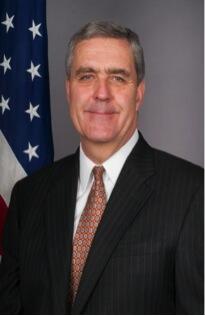
Douglas Lute, Ambassador of the United States to NATO


In August 2013, Douglas E. Lute was sworn-in as the Ambassador of the United States to the North Atlantic Treaty Organization (NATO).  From 2007 to 2013, Lute served at the White House under Presidents Bush and Obama, first as the Assistant to the President and Deputy National Security Advisor for Iraq and Afghanistan, and more recently as the Deputy Assistant to the President focusing on Afghanistan, Pakistan and India.  In 2010, AMB Lute retired from the U.S. Army as a Lieutenant General after 35 years on active duty.  Prior to the White House, he served as the Director of Operations on the Joint Staff, overseeing U.S. military operations worldwide. He served multiple tours in NATO commands including duty in Germany during the Cold War and commanding U.S. forces in Kosovo.  He holds degrees from the United States Military Academy and Harvard University.

A light lunch will be provided.  Please plan to arrive by 11:30am to allow time to check in at the registration desk, pick up your lunch and be seated by 12:00 noon.

Co-sponsored by The Europe Center, the Freeman Spogli Institute for International Studies, the Center for International Security and Cooperation and the Center for Russian, East European and Eurasian Studies.


Douglas Lute United States Ambassador to NATO Speaker
Lectures
News Type
News
Date
Paragraphs

The Europe Center Graduate Student Grant Competition

Call for Proposals:

The Europe Center is pleased to announce the Fall 2014 Graduate Student Grant Competition for graduate and professional students at Stanford whose research or work focuses on Europe. Funds are available for Ph.D. candidates from across a wide range of disciplines in the humanities and social sciences to prepare for dissertation research and to conduct research on approved dissertation projects. The Europe Center also supports early graduate students who wish to determine the feasibility of a dissertation topic or acquire training relevant for that topic. Moreover, funds are available for professional students whose interests focus on some aspect of European politics, economics, history, or culture; the latter may be used to support an internship or a research project. Grants range from $500 to $5000.

Additional information about the grants, as well as the online application form, can be found here.  The deadline for this Fall’s competition is Friday, October 17th. Recipients will be notified by November 7th. A second competition is scheduled for Spring 2015.
 

Highlights from 2013-2014:

In the 2013-2014 academic year, the Center awarded grants to 26 graduate students in departments ranging from Linguistics to Political Science to Anthropology. We would like to introduce you to some of the students that we support and the projects on which they are working. Our featured students this month are Michela Giorcelli (Economics) and Orysia Kulick (History).

Giorc

Image
elli’s project, “The Effects of Management and Technology on Firms’ Productivity: Lesson from the US Marshall Plan in Italy,” explores the role of productivity in the process of economic growth and development. It is typically difficult to isolate the causal effect of management training programs and technology transfer programs on business productivity because these measures are often endogenous to other unobservable factors. To overcome this concern, Giorcelli employed a unique research design to analyze the effects of the Marshall Plan’s transfer of US management and technology to Italian firms in the aftermath of WWII. 

Image
Image of Archivio
Giorcelli collected and digitized balance sheets data for 6,035 Italian firms eligible to receive the US management and technology support between 1930 to 1970. She then exploited an exogenous change in policy implementation that randomly determined which firms actually received Marshall Plan support. Preliminary results show that all firms that received either support significantly increased their productivity. Moreover, firms that received both sets of support simultaneously showed an additional increase in productivity, suggesting that management and technology are complementary in production. (Inset: The archives where Giorcelli conducted her research)

Image
Kulick’s project, “Regionalism in Ukraine and the Long Collapse of the Soviet Union, 1954--2014,” used original historical evidence collected from Ukrainian archives to study the political nexus between party elites in Kiev and in Moscow. For example, Kulick gleaned insights about the political economy of postwar industrial reconstruction from local archives in Dnipropetrovsk, a metallurgical powerhouse in the region. Previously inaccessible primary sources indicate that as the Soviet economy grew more complex, the state apparatus became more independent. Consequently, managerial specialists needed more autonomy to meet deadlines and quotas, making them--rather than the party--the source of innovation in postwar Ukraine. 

Image
According to Kulick, “my research this summer opened up new ways of thinking about the relationship between the party and the institutions that made up the Soviet state and economy.” Kulick used insights from Soviet-era KGB documents to shed new light on the current propaganda emanating out of the Kremlin. For example, she found that the long-term pull toward greater improvisation has had ongoing consequences. The current conflict is not just about Ukraine’s geopolitical orientation; it is also the byproduct of the dissolution of intransigent and poorly understood late Soviet-era institutions. (Inset: Kulick documents military mobilization during her summer in Ukraine)


Undergraduate Internship Program: Highlights

The Europe Center sponsored four undergraduate student internships with leading think tanks and international organizations in Europe in Summer 2014.  Laura Conigliaro (International Relations, 2015) joined the Centre for European Policy Studies (CEPS), while Elsa Brown (Political Science, 2015), Noah Garcia (BA International Relations and MA Public Policy, 2015), and Jana Persky (Public Policy, 2016) joined Bruegel, a leading European think tank. Our featured student this month is Laura Conigliaro.

Image
During her time at CEPS, Conigliaro worked on a 68-page research paper on genetically modified organisms (GMO) policy in the European Union. In the paper, she traces E.U. legislation and policy development on GMOs from 1990 onward, and also offers conclusions for the future trajectory of the E.U.’s GMO policy. Conigliaro argues that the evolution of the E.U.’s GMO policy is a topic of extreme relevance--and difficulty--because it is the source of high-level trade conflicts between Europe and the United States. Consequently, the study of GMO policymaking can help advance our understanding of E.U. institutions, E.U. “comitology” (policy process), and E.U.-U.S. bilateral relations. 

Image
Image of CEPS signage.
Conigliaro plans to incorporate the summer fellowship experience into her Stanford academic career, for example, by presenting research findings at Stanford’s Symposia of Undergraduate Research and Public Service (SURPS). Looking ahead, she writes: “I hope to use the knowledge and experience gained of the E.U. Institutions and policy process through the lens of the GMO issue to broaden and diversify my potential career opportunities and areas from my traditional area of concentration, East Asia, to also include the European Union.”


Recap:  Panel on Europe-Russia Relations and EU expansion

On September 30, 2014, Miroslav Lajčák, the Deputy Prime Minister and the Minister of Foreign and European Affairs of the Slovak Republic, participated in a panel discussion in which he shared his thoughts and opinions about Europe’s relationship with Russia, and about the E.U.’s management of its future membership and associations. The Minister’s viewpoints were of particular interest, given his role in the E.U. foreign policy establishment, and the Slovak Republic’s role in the E.U. and NATO.

“The fact is that E.U.-Russia relations have worsened dramatically. That cannot be denied. But it’s not E.U. enlargement that played a major role in this.”  According to the Minister, Russia did not view E.U. enlargement with hostility, in part, because enlargement remained a transparent process. “But it all changed when Europe decided to enter into Russia’s immediate neighborhood...the former Soviet Republics. And this was something that

Image
Miroslav Lajčák
was seen by Russia as a hostile activity, and this was what Russia fiercely resisted.” The Minister spoke candidly about the potential conflicts of concepts between the E.U.’s Eastern Partnership policy, Russia’s Near Abroad policy, and the idea of a Eurasian Union. A fundamental and ongoing source of tension pertains to the geopolitical position of Russia’s immediate neighbors: “The fact is that Russia never accepted the full sovereignty of the former Soviet Republics.” Apart from discussing the escalation of tensions between the E.U. and Russia, the Minister spoke about the role of sanctions and reforms as a path for moving forward and achieving lasting peace in Europe.

Minister Lajčák’s brought a variety of experiences to the panel. He served as the European Union Chief Negotiator for the E.U.-Ukraine and E.U.-Moldova Association Agreements, and was the European Union Special Representative for Bosnia and Herzegovina, and Sarajevo. Additionally, he was previously the Ambassador of the Slovak Republic to the Former Republic of Yugoslavia, Albania and the Former Yugoslav Republic of Macedonia. 

After Minister Lajčák spoke, he was followed by comments by Michael McFaul, Professor of Political Science and Senior Fellow, Hoover Institute and Freeman Spogli Institute; Norman Naimark, the Robert and Florence McDonnell Professor in East European Studies in the History Department and The Director of Stanford Global Studies; and Kathryn Stoner, Senior Fellow at the Freeman Spogli Institute and Faculty Director of the Susan Ford Dorsey Program in International Studies.


Introducing “Immigration and Integration in Europe” Policy Lab

The Europe Center would like to introduce a new research project entitled, “Immigration and Integration in Europe:  A Public Policy Perspective,” led by Professors David Laitin and Jens Hainmueller. Duncan Lawrence has recently joined Stanford University to help direct the project. The project is part of the new Policy Implementation Lab at the Freeman Spogli Institute for International Studies.

The social and economic integration of its diverse and ever growing immigrant populations is one of the most fundamental and pressing policy issues European countries face today. Success or failure in integrating immigrants is likely to have a substantial effect on the ability of European countries individually and collectively as members of the European Union to achieve objectives ranging from the profound such as sustaining a robust democratic culture to the necessary such as fostering economic cooperation between countries. Various policies have been devised to address this grave political dilemma, but despite heated public debates we know very little about whether these policies achieve their stated goals and actually foster the integration of immigrants into the host societies. (Inset: David Laitin)

Professor Jens Hainmueller.The goal of this research program is to fill this gap and create a network of leading immigration scholars in the US and Europe to generate rigorous evidence about what works and what does not when it comes to integration policies. The methodological core of the lab’s research program is a focus on systematic impact evaluations that leverage experimental and quasi-experimental methods with common study protocols to quantify the social and economic returns to integration policies across Europe, including polices for public housing, education, citizenship acquisition, and integration contracts for newcomers. This work will add to the quality of informed public debate on a sensitive issue, and create cumulative knowledge about policies that will be broadly relevant. (Inset: Jens Hainmueller)


The Europe Center Sponsored Events

We invite you to attend the following events sponsored or co-sponsored by The Europe Center:

Additional Details on our website
October 8-10, 2014
“War, Revolution and Freedom: the Baltic Countries in the 20th Century”
Stauffer Auditorium, Hoover Institution
9:00 AM onward

Save the Date
April 24-25, 2015
Conference on Human Rights

A collaborative effort between the International Human Rights and Conflict Resolution Clinic at Stanford Law School (IHRCRC), the Research Center for Human Rights at Vienna University (RCHR), and The Europe Center. The conference will focus on the pedagogy and practice of human rights. 

Save the Date
May 20-22, 2015
TEC Lectureship on Europe and the World 
Joel Mokyr
Robert H. Strotz Professor of Arts and Sciences, and Professor of Economics and History, Northwestern University

We welcome you to visit our website for additional details.

All News button
1
News Type
News
Date
Paragraphs

In the late 19th and early 20th centuries, an "open borders" United States absorbed millions of European immigrants in one of the largest mass migrations ever. New research by Stanford economist Ran Abramitzky challenges the perception that immigrants lagged behind native-born Americans in job pay and career growth.
 

BY CLIFTON B. PARKER

European immigrants to America during the country's largest migration wave in the late 19th and early 20th centuries had earnings comparable to native-born Americans, contrary to the popular perception, according to new Stanford research.

"Our paper challenges conventional wisdom and prior research about immigrant assimilation during this period," said Ran Abramitzky, an associate professor of economics at Stanford, faculty affiliate of The Europe Center and author of the research paper in the Journal of Political Economy.

New research challenges conventional wisdom about immigrant assimilation during the bygone era of open borders and mass migration.
Photo Credit: Lewis Hine/Library of Congress

New research challenges conventional wisdom about immigrant assimilation during the bygone era of open borders and mass migration.

Abramitzky and his colleagues found the average immigrant in that period did not face a substantial "earnings penalty" – lower pay than native-born workers – upon their arrival.

"The initial earnings penalty is overstated," said Abramitzky.

He said the conventional view is that the average European immigrants held substantially lower-paying jobs than native-born Americans upon first arrival and caught up with natives' earnings after spending some time in the United States. But that perception does not hold up to the facts, he said.

Abramitzky's co-authors include Leah Platt Boustan from the University of California, Los Angeles, and Katherine Eriksson from California Polytechnic State University.

The researchers examined records on 21,000 natives and immigrants from 16 European countries in U.S. Census Bureau data from 1900 to 1910 to 1920.

"Even when U.S. borders were open, the average immigrant who ended up settling in the United States over the long term held occupations that commanded pay similar to that of U.S. natives upon first arrival," Abramitzky said.

In that bygone era of "open borders," Abramitzky said, native-born Americans were concerned that immigrants were not assimilating properly into society – yet, on the whole, this concern appears to be unfounded. "Such concerns are echoed in today's debate over immigration policy," he added.

At the same time, Abramitzky said that immigrants from poorer countries started out with lower paid occupations relative to natives and did not manage to close this gap over time.

"This pattern casts doubt on the conventional view that, in the past, immigrants who arrived with few skills were able to invest in themselves and succeed in the U.S. economy within a single generation," Abramitzky and his colleagues wrote.

Age of migration

America took in more than 30 million immigrants during the Age of Mass Migration (1850-1913), a period when the country had open borders. By 1910, 22 percent of the U.S. labor force – and 38 percent of workers in non-southern cities – was foreign-born (compared with 17 percent today).

As the research showed, immigrants then were more likely than natives to settle in states with a high-paying mix of occupations. Location choice was an important strategy they used to achieve occupational parity with native-born Americans.

"This Age of Mass Migration not only is of interest in itself, as one of the largest migration waves in modern history, but also is informative about the process of immigrant assimilation in a world without migration restrictions," Abramitzky said.

Over time, many of the immigrants came from the poorer regions of southern and eastern Europe.

Abramitzky pointed out that native-born Americans in the late 19th and early 20th centuries were concerned about poverty in immigrant neighborhoods and low levels of education among children, many of whom left school early to work in industry.

Consequently, American political progressives championed a series of reforms, including U.S. child labor laws and compulsory schooling requirements.

Still, some natives believed that new arrivals would never fit into American society. And so, in 1924, Congress set a strict quota of 150,000 immigrant arrivals per year, with more slots allocated to immigrants from northern and western European countries than those from southern and eastern Europe.

But those early-20th-century fears of unassimilated immigrants were baseless, according to Abramitzky.

"Our results indicate that these concerns were unfounded: The average long-term immigrants in this era arrived with skills similar to those of natives and experienced identical rates of occupational upgrading over their life cycle," he wrote.

How does this lesson apply to today's immigration policy discussion? Should the numbers of immigrants and their countries of origin be limited and those with higher skills be given more entry slots?

Abramitzky said stereotyping immigrants has affected the political nature of the contemporary debate.

"These successful outcomes suggest that migration restrictions are not always necessary to ensure strong migrants' performance in the labor market," he said.

Hero Image
Image of "First sight of New York Bay -- arrival of a European steamer" by James Wells Champney
First sight of New York Bay--arrival of a European steamer.
James Wells Champney/New York Public Library
All News button
1
Date Label
Subscribe to North America