Paragraphs

"Tracking the Travels of Adam Olearius" is chapter 9 of the book Word and Image in Russian History: Essays in Honor of Gary Marker, edited by Maria di Salvo, Daniel H. Kaiser, and Valerie A. Kivelson and published by Academic Studies Press.

Word and Image invokes and honors the scholarly contributions of Gary Marker. Twenty scholars from Russia, the United Kingdom, Italy, Ukraine and the United States examine some of the main themes of Marker’s scholarship on Russia—literacy, education, and printing; gender and politics; the importance of visual sources for historical study; and the intersections of religious and political discourse in Imperial Russia. A biography of Marker, a survey of his scholarship, and a list of his publications complete the volume.

All Publications button
1
Publication Type
Books
Publication Date
Journal Publisher
Word and Image in Russian History: Essays in Honor of Gary Marker, edited by Maria di Salvo, Daniel H. Kaiser, and Valerie A. Kivelson
Authors
Nancy Kollmann
Number
978-1618114587
Authors
Michael A. McFaul
News Type
Commentary
Date
Paragraphs

In an opinion piece published on October 23, 2015 in the New York Time, FSI director and senior fellow Michael McFaul shares his latest comentary on Russian President Vladimir Putin.

Read Professor McFaul's Op Ed in the New York Times: http://www.nytimes.com/2015/10/23/opinion/the-myth-of-putins-strategic-….

Hero Image
nytlogobiggerbackground
All News button
1
-

The fate of a soldier serving in the Russian army in the First World War largely depended on luck and circumstances. But even though his own means of influencing his fate were limited, there were available certain active choices – such as shirking and desertion – that could turn his life around in both positive and negative ways. For Russian civil and military authorities, of course, desertion was a nuisance that was fought against by all available means. Sometimes, such as with physical punishment, these means only succeeded in lowering the already low morale and increasing the number of deserters.

Dr. Mart Kuldkepp's presentation will focus on a small and somewhat exceptional group of deserters from the Russian army: the soldiers who served in the border guard regiments in Northern Finland and deserted alone or in small groups over the border to neutral Sweden. He will consider their motivation in doing so, and their subsequent fate, as much as it is known. At the same time, he will also look at how Sweden administratively handled this very unforeseen phenomenon and how the deserters were treated by Swedish authorities.

Mart Kuldkepp completed his PhD dissertation at University of Tartu, Estonia, in 2014 and joined University College London in 2015. Dr. Kuldkepp has been active as an academic in the field of Scandinavian Studies since 2007. Dr. Kuldkepp’s primary research focus is on 20th century Scandinavian political history, with a particular interest in contacts between the Scandinavian and the Baltic states, but also has interest in the history of secret services and espionage and Old Norse-Icelandic literature and culture. His teaching has mostly concerned the history of Scandinavian culture, society, and politics from the earliest times up to today. He has taught subjects related to Old Norse studies and overview courses in humanities.

Organized by the Center for Russian, East European and Eurasian Studies and co-sponsored by The Europe Center and Stanford University Libraries

Mart Kuldkepp Lecturer Speaker Scandinavian Studies, University College London
Lectures
-

The Pussy Riot protest, and the subsequent heavy handed treatment of the protestors, grabbed the headlines, but this was not an isolated instance of art being noticeably critical of the regime. As this book, based on extensive original research, shows, there has been gradually emerging over recent decades a significant counter-culture in the art world which satirises and ridicules the regime and the values it represents, at the same time putting forward, through art, alternative values. The book traces the development of art and protest in recent decades, discusses how art of this kind engages in political and social protest, and provides many illustrations as examples of art as protest. The book concludes by discussing how important art has been in facilitating new social values and in prompting political protests.


Lena Jonson is Associate Research Fellow at UI. Her research currently focuses on Russian domestic politics and issues of political and societal change (modernisation) as well as the contemporary role of culture and its standing in Russia.

Lena Jonson has published several articles and works examining Russian society and politics (mainly foreign and security policy), Russia's relations with Europe and Russian relations with the former Soviet territories. She has also published widely on Central Asia, and on Tajikistan in particular. 

Lena Jonson is one of the founders of the network "Sällskapet för studier av Ryssland, Central-och Östeuropa samt Centralasien" (1997) and was its first chairperson. She has been a guest researcher at George Washington University and the Kennan Institute at the Wilson Centre, as well as a scholarship recipient at the universities of (then) Leningrad and Moscow. From 2005-2009, she served as Cultural Attaché at the Swedish Embassy in Moscow. In 2002, she worked as a Political Officer at the OSCE-office i Dushanbe, Tajikistan. In 1997-1998, she was a Senior Researcher at the Royal Institute of International Affairs in London.

Sponsored by the Center for Russian, East European and Eurasian Studies and co-sponsored by The Europe Center.

Lena Jonson Associate Research Fellow Speaker Swedish Institute of International Affairs (UI)
Lectures
-

This event is now full, and we are unable to accept any further RSVPs.  Please email khaley@stanford.edu if you would like to be added to a wait list.


Russia's aggressive foreign policy is backed by Putin's domestic popularity ratings and his strong grip on Russia's political system. But in reality, how firmly does Putin control Russian politics? Can the ongoing economic crisis in Russia pose challenges to his system and the upcoming federal elections of 2016-2018? What impact will Russian domestic politics play in Russia's international behavior?


Vladimir Milov is a Russian opposition politician, publicist, economist & energy expert. He was the Deputy Minister of Energy of Russia (2002), adviser to the Minister of Energy (2001-2002), and head of strategy department at the Federal Energy Commission, the natural monopoly regulator (1999-2001). Milov is the author of major energy reform concepts, including the concept of market restructuring and unbundling of Gazprom, which was banned from implementation by President Vladimir Putin. He is the founder and president of the Institute of Energy Policy, a leading independent Russian energy policy think tank (since 2003). Milov is a columnist of major Russian political and business publications, including Forbes Russia, and a frequent commentator on Russian political and economic affairs in major Western media outlets (The New York Times, The Financial Times, The Washington Post, The Economist, etc.). Since leaving the Russian Government in 2002, Milov has became a vocal public critic of Vladimir Putin’s dirigiste and authoritarian course. Milov is also active in the Russian opposition politics, serving as Chairman of the “Democratic Choice” opposition party (www.en.demvybor.ru), and is also known as co-author of the critical public report on Vladimir Putin’s Presidential legacy called “Putin. The Results”, written together with Boris Nemtsov (several editions published since 2008).

Vladimir Milov former Russian Deputy Minister of Energy Speaker
Lectures
-

Due to the high interest in this event, we have moved it to a larger room.  It is now in the Oksenberg Conference Room, Encina Hall, 3rd floor.


The February Minsk II agreement introduced a fragile ceasefire in eastern Ukraine, following a year of crisis and conflict between Kyiv and Moscow.  Ukrainian President Poroshenko needs to grapple with a daunting list of critical economic and political reforms.  Russian President Putin, however, appears intent on destabilizing the Ukrainian government and has the means, including military force, to do so.  What can we expect next in the Ukraine-Russia stand-off, and how should the West respond?

Image
Steven Pifer


Steven Pifer is a senior fellow at the Brookings Institution, where his work focuses on arms control, Ukraine and Russia. A retired Foreign Service officer, his more than 25 years with the State Department included assignments as deputy assistant secretary of state with responsibilities for Russia and Ukraine (2001-2004), ambassador to Ukraine (1998-2000), and special assistant to the president and senior director for Russia, Ukraine and Eurasia on the National Security Council (1996-1997).


Co-sponsored by the Freeman Spogli Institute for International Studies and The Europe Center.

Steven Pifer Senior Fellow Speaker the Brookings Institution
Lectures
-

At the NATO Summit in Wales in September 2014, NATO leaders were clear about the security challenges on the Alliance’s borders. In the East, Russia’s actions threaten our vision of a Europe that is whole, free and at peace.  On the Alliance’s southeastern border, ISIL’s campaign of terror poses a threat to the stability of the Middle East and beyond.  To the south, across the Mediterranean, Libya is becoming increasingly unstable. As the Alliance continues to confront theses current and emerging threats, one thing is clear as we prepare for the 2016 Summit in Warsaw: NATO will adapt, just as it has throughout its 65-year history.

Image
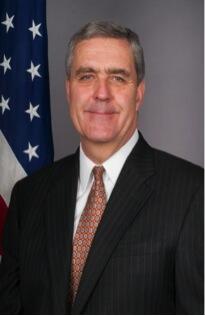
Douglas Lute, Ambassador of the United States to NATO


In August 2013, Douglas E. Lute was sworn-in as the Ambassador of the United States to the North Atlantic Treaty Organization (NATO).  From 2007 to 2013, Lute served at the White House under Presidents Bush and Obama, first as the Assistant to the President and Deputy National Security Advisor for Iraq and Afghanistan, and more recently as the Deputy Assistant to the President focusing on Afghanistan, Pakistan and India.  In 2010, AMB Lute retired from the U.S. Army as a Lieutenant General after 35 years on active duty.  Prior to the White House, he served as the Director of Operations on the Joint Staff, overseeing U.S. military operations worldwide. He served multiple tours in NATO commands including duty in Germany during the Cold War and commanding U.S. forces in Kosovo.  He holds degrees from the United States Military Academy and Harvard University.

A light lunch will be provided.  Please plan to arrive by 11:30am to allow time to check in at the registration desk, pick up your lunch and be seated by 12:00 noon.

Co-sponsored by The Europe Center, the Freeman Spogli Institute for International Studies, the Center for International Security and Cooperation and the Center for Russian, East European and Eurasian Studies.


Douglas Lute United States Ambassador to NATO Speaker
Lectures
-

Karen Dawisha is the author of Putin’s Kleptocracy. Who Owns Russia? and the Walter E. Havighurst Professor of Political Science and Director of the Havighurst Center at Miami University in Oxford, Ohio.

Co-sponsored by the Center for Russian, East European and Eurasian Studies, The Europe Center, and the Center on Democracy, Development and the Rule of Law.

Encina Hall 3rd Floor
616 Serra Street

Karen Daiwisha Walter E. Havighurst Professor of Political Science Speaker Miami University
Lectures

Department of History
Stanford University
Stanford, CA  94305-2024
 

(650) 723-1884 (650) 725-0597
0
Senior Lecturer in History
Senior Fellow of the WSD HANDA Center for Human Rights and International Justice
k_jolluck_webpage_photo.jpg PhD

Katherine R. Jolluck is Senior Lecturer and Coordinator of the Public History/Public Service Track in the Department of History at Stanford University.  She is also a Senior Fellow at the Center for Human Rights and International Justice.  She has also taught at the University of North Carolina at Chapel Hill and the Naval Post-Graduate School in Monterey.  A specialist on the history of twentieth-century Eastern Europe and Russia, she focuses on the topics of women and war, women in communist societies, nationalism, the Soviet Gulag, and human trafficking. Her books include: Exile and Identity: Polish Women in the Soviet Union during WWII, and Gulag Voices: Oral Histories of Soviet Incarceration and Exile (with Jehanne M Gheith). She has also written articles on Poland in World War II, antisemitism, and human trafficking in Europe.  Jolluck serves on the Faculty Steering Committee of the Haas Center for Public Service, offers service-learning courses, and is active in the Bay Area anti-trafficking community.  She is a Steering Committee member of No Traffick Ahead, a multi-county, multi-disciplinary workgroup dedicated to combating human trafficking in all forms.


Affiliated Senior Lecturer at The Europe Center
Affiliated Senior Lecturer at the Program on Human Rights
CV
Subscribe to Russia