
Ryan Yan (Psychology) | Using computational neuroscience tools to understand affective experiences (MPI Biological Cybernetics)
Ryan Yan (Psychology) | Using computational neuroscience tools to understand affective experiences (MPI Biological Cybernetics)
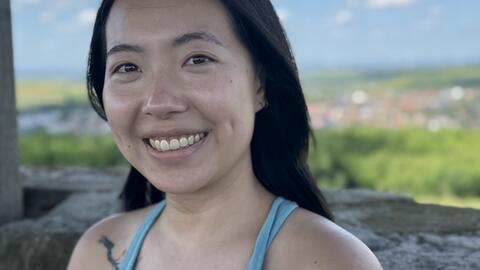
Over the summer of 2025, I had the wonderful opportunity to visit the Max Planck Institute for Biological Cybernetics in the beautiful city of Tübingen. I collaborated with Professor Peter Dayan, the institute’s director, on a project using computational modelling to understand how affect arises from the anticipation of reward and punishment. I learned so much—not only from Peter himself, but also from the lab and the wider scientific community in Tübingen. It was a pleasure to connect with people passionate about using mathematical tools to understand the brain and behavior.
In my PhD, I investigate how affect emerges from reward and punishment using pupillometry (the measurement of pupil size) and functional magnetic resonance imaging, mapping the neural correlates of affect over time. Alongside this empirical work, I have been drawn to a more normative and mechanistic perspective—asking whether we can mathematically formalize this process. Peter has been a pioneer in computational neuroscience and psychiatry, and I am deeply grateful for the chance to collaborate with him. During my research visit, we revisited my PhD work and developed reinforcement learning models to account for self-report data I had collected at Stanford. This work will hopefully form a chapter of my dissertation. I also attended three conferences on reinforcement learning and decision making across Europe—in Dublin, Lyon, and Tübingen—presenting my research, receiving invaluable feedback, and building connections with European researchers who share my interest in affect and decision making. None of this would have been possible without the support of GRIP.
Although I have visited Germany before, living here for three months is a new experience for me. Though I bitterly missed Asian and Mexican food, I got to try so many different things: the freshly baked, unsliced bread from the local organic bakery, white asparagus and feldsalat, air-dried snack sausage and liver paste, späzle (German egg noodles), traditional German Kebap… I even visited the Ritter-Sport factory half an hour away from Tübingen with my Stanford friend.
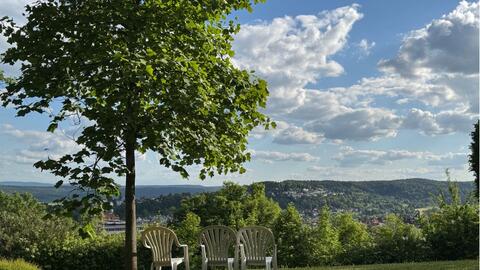
Tübingen itself is a scenic and poetic city. I stayed in the University guest house on a hill; although I initially dreaded carrying my luggage up what felt like a hundred flights of stairs, I was soon rewarded with the garden’s view: the entire city of Tübingen framed by distant mountains. No book on German Romanticism could match the understanding inspired by such a sight.
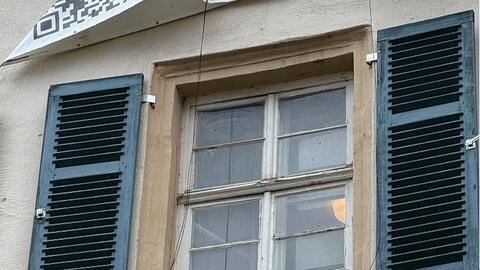
The city is full of hidden gems. One bus stop is named ‘Hölderlinstraße,’ honoring the great poet Hölderlin, who once lived in a small tower by the river. While wandering the city center, I stumbled upon the former residence of Alois Alzheimer, namesake of Alzheimer’s disease. Just a few hundred metres away, on the second floor of an unassuming house, a sign read: “Goethe puked here.” These small moments of delight are precious. To live, even briefly, in a place so rich with intellectual history feels almost unreal, and I know I will remember this summer for years to come.