(650) 723-3251
0
Donald L. Lucas Endowed Professor in Economics
Professor of Economics
Senior Fellow at the Stanford Institute for Economic Policy Research
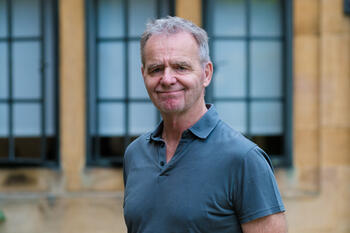
3606-kyle-bagwell01.jpg

Kyle Bagwell is the Donald L. Lucas Endowed Professor in Economics at Stanford University. He is also a Senior Fellow of the Stanford Institute for Economic Policy Research, a Research Associate of the National Bureau of Economic Research and a Faculty Affiliate of the Stanford Center on Global Poverty and Development.

Bagwell works in the fields of International Trade, Industrial Organization and Game Theory. His research examines a range of theoretical and empirical questions relating to the purpose and design of GATT/WTO. He also explores theories of competition and cooperation in settings where asymmetric information is present. His research has been published in numerous academic journals, and in a book, The Economics of the World Trading System, co-authored with Robert W. Staiger and published by The MIT Press (2002).

Bagwell holds undergraduate degrees in Economics and Mathematics from SMU (1983) and a Ph.D. in Economics from Stanford University (1986). Prior to joining Stanford at the start of 2009, he was a faculty member at Northwestern University (1986-96) and at Columbia University (1996-2008). He was the Kelvin J. Lancaster Professor of Economic Theory at Columbia (2000-08).

Bagwell has served on the editorial boards of numerous academic journals, and he was an Editor at The Rand Journal of Economics (1996-2002). He was a National Fellow of the Hoover Institution (1991-92) and a Fellow at CASBS at Stanford (2014-15). He was the Director of the Stanford Institute for Theoretical Economics (2010-13), and a Reporter for the American Law Institute in its study of Principles of Trade Law: The World Trade Organization (2002-12). He is also a Fellow of the Econometric Society (2005).


Affiliated faculty at The Europe Center
Affiliated faculty at the Stanford Center on Global Poverty and Development
CV
-


Image
Matteo Renzi, former Prime Minister of Italy


Matteo Renzi was born in Florence in January 1975. In 2004 he was elected president of the province of Florence; five years later, in 2009, he was elected Mayor of Florence. In 2012 he ran in the primary elections for the centre-left, losing in the run-off. In 2013 he stood once again in the primaries, this time for leader of the Italian Democratic Party (Partito Democratico, PD), winning with 67.5% of the vote.

On February 22, 2014, following the resignation of Enrico Letta and after a vote by a large majority within the PD, he became President of the Council of Ministers (Prime Minister of Italy), the youngest in the history of Italy. After the negative result of the constitutional referendum on December 4, 2016, Matteo Renzi resigned as Prime Minister. 
 
In April 2017, almost two million voters took part in the primary elections for Secretary of the PD. Renzi was re-elected with 69% of the votes cast. Following the results of the Italian parliamentary election, in March 2018 he resigned as Leader of the PD.
 
Matteo Renzi is currently Senator for the Electoral College of Florence, Scandicci, Signa, Lastra a Signa and Impruneta. His activity as a politician has been accompanied by his writing, which includes the books Fuori! (2011), Stilnovo (2012), Oltre la rottamazione (2013), and Avanti! Perché l’Italia non si ferma (2017). He has also taught at Stanford's Florence campus in recent years. 
Matteo Renzi, former Prime Minister of Italy speaker
Lectures
Authors
News Type
News
Date
Paragraphs

Timothy Josling, a professor emeritus at the former Food Research Institute and an affiliate of The Europe Center known for his encyclopedic knowledge of international agricultural policy, died on Nov. 27.

Timothy Josling, a Stanford professor emeritus of agricultural economics, died at his home in Davis, California, on Nov. 27 after a two-year battle with cancer. He was 78.

Josling, professor emeritus at the former Food Research Institute, was a prolific scholar in agricultural economics. He was known for his humor, patience and devotion to his work and family, according to his relatives and colleagues.

“My dad was one of those people who had an answer to every question,” said his daughter, Catherine Josling. “I loved asking him questions because I knew whether he knew the answer or not, he would confidently answer the question. He also had a wonderful sense of humor – you could always count on him for a witty retort.”

Tim Josling portrait

A walking encyclopedia

Originally from London, England, Josling joined Stanford in 1978 to teach at the former Food Research Institute, which was founded in 1921 by Herbert Hoover to investigate the issues of food production, distribution and consumption.

Josling’s research interests centered on agricultural policies and international trade regulations – and he was admired by his colleagues for his wide breadth of knowledge on these topics.

“Tim Josling was a walking encyclopedia of international agricultural institutions, and he made lasting contributions in the fields of international trade and policy analysis,” said Walter P. Falcon, who directed the Food Research Institute from 1972 to 1991 and recruited Josling to join the faculty. “He was also uncommonly broad. We used to jokingly – but seriously – say that if one wanted 10 pages overnight of really good analysis on any economics topic, best to call Tim.”

Among his many contributions to the field of agricultural economics, Josling is most known for developing the “producer subsidy equivalent approach,” a measure that helps countries understand how much of a farmer’s earnings was created by agricultural policy. Josling initially developed the formula, also known as the “PSE,” for the Food and Agriculture Organization of the United Nations, and it has since been adopted by the Organization for Economic Cooperation and Development, the United States Department of Agriculture and the World Trade Organization (WTO).

“The Josling PSE is used to this day,” said his colleague Scott Pearson, who served on the Stanford faculty as a professor of agricultural economics from 1968 until his retirement in 2002 and as director of the Food Research Institute from 1991 to 1996. “The PSE helps governments understand the costs of agricultural protection and support.”

Dedicated scholar

From 1993 to 1996, Josling served as the director for the Center for European Studies at the Freeman Spogli Institute for International Studies (FSI). When the Food Research Institute closed in 1996, he went on to co-convene the European Forum, now The Europe Center, until he retired in 2003.

Throughout retirement, Josling remained active on campus as a senior fellow, by courtesy, at FSI. Until 2016, he taught a course on the economics of the WTO for the Program in International Relations and would regularly meet with his students at the Europe Center’s offices, said program administrator Karen Haley.

Josling’s recent publications include the three-volume Handbook on International Food and Agricultural Policies, which was published in 2018. In 2015, he co-authored Transatlantic Food and Agricultural Trade Policy: 50 Years of Conflict and Convergence with his long-time collaborator, Stefan Tangermann of the University of Göttingen in Germany.

“One could discuss the most crazy ideas with him and develop them jointly into workable hypotheses and proposals,” said Tangermann, who first met Josling in 1973. Over the next 40 years, the pair developed a close professional partnership and wrote more than 50 publications together, including two major books.

“From the 1980s on, Josling and Tangermann were considered the profession’s leaders in explaining European agricultural policy and in discussing its implications for policymakers,” said Pearson.

Josling was a member of the International Policy Council on Food and Agricultural Trade and former chair of the executive committee of the International Agricultural Trade Research Consortium. He also held a visiting professorship at the University of Kent, in the United Kingdom, and was a past president of the UK Agricultural Economics Association. In 2004, he was made a Fellow of the American Agricultural Economics Association.

Despite his accomplishments, Josling was “very self-effacing,” said his colleague and friend Christophe Crombez, a senior research scholar at the Europe Center. “Tim was not someone who sought the spotlight.”

Quintessential English professor; avid sports fan

Prior to joining Stanford, Josling taught at the London School of Economics and the University of Reading in England.

Josling received a BSc in agriculture from the University of London (Wye College), an MSc in agricultural economics from the University of Guelph, Canada, and a PhD in agricultural economics from Michigan State University.

His family described him as the “quintessential English professor,” and according to Falcon, “He never lost all of his English ways. If he were to walk in the door you would think he belonged in a Shakespeare play – he looked the part of an English actor.”

Josling also loved sports, including cricket and thanks to Pearson, baseball as well.

Pearson remembers taking Josling to his first game at Stanford’s Sunken Diamond in the late 1970s: “At his first game, Tim offered a suggestion. He noted that it would be much more difficult for the batter to hit the baseball if only the pitcher – no, Tim, he was not called the hurler – would bounce the ball in front of home plate. I had to tell him that, alas, this would not work in American baseball.”

For years, Josling and his wife, Anthea, also had season tickets for Stanford football as well as for women’s and men’s basketball.

Josling was devoted to his family and garden. In 2003, he and Anthea moved to the hills in Los Gatos. There, he grew a variety of vegetables and tended to goats and chickens, as well as caring for several cats and dogs. His also enjoyed sailing, photography and travel. In early 2018, the Joslings moved to Davis to be closer to his daughter and grandchildren.

“What I liked most about Tim was his good nature,” Falcon said. “Tim could find the bright side of things, when the rest of us had trouble.”

Josling is survived by his wife, Anthea; his children, Catherine, BS ’03, and John Mark, BS ’99, and their spouses, Amiel Sagpao and Jessica Smith, as well as two grandchildren, Claire Sagpao and Andrew Sagpao. Plans for a celebration of life in the new year are pending. In lieu of flowers, the family request donations in Josling’s name to the Cancer Research Institute.


All News button
1
Paragraphs
Handbook of International Food and Agricultural Policies is a three-volume set that aims to provide an accessible reference for those interested in the aims and implementation of food and farm policies throughout the world. The treatment is authoritative, comprehensive and forward looking. The three volumes combine scholarship and pragmatism, relating academic writing to real-world issues faced by policy-makers. A companion volume looking at the future resource and climate challenges for global agriculture will be published in the future.

Volume I covers Farm and Rural Development policies of developed and developing countries. The volume contains 20 country chapters together with a concluding comprehensive synthesis of lessons to be drawn from the experiences of the individual countries.

Volume II examines the experience of countries with food policies, including those dealing with food safety and quality and the responsibility for food security in developing countries. The chapters address issues such as obesity, nutritional supplements, organic foods, food assistance programs, biotech food acceptance, and the place of private standards.

Volume III describes and explains the international trade dimension of farm and food policies — both at the bilateral and regional level — and also the multilateral rules that influence and constrain individual governments. The volume also looks at the steps that countries are together taking to meet the needs of developing and low-income countries.

The volumes are of value to students and researchers interested in economic development, agricultural markets and food systems. Policy-makers and professionals involved in monitoring and regulating agricultural and food markets would also find the volumes useful in their practical work. This three-volume set is also a suitable source for the general public interested in how their food system is influenced by government policies.

Readership: Students and researchers who are interested in economic development, agricultural markets and food systems; and policy-makers and professionals involved in monitoring and regulating agricultural and food markets.


All Publications button
1
Publication Type
Books
Publication Date
Journal Publisher
World Scientific Publishing
Authors
Timothy E. Josling
Number
3 volumes
Paragraphs

The 1987 INF Treaty was a landmark arms control and disarmament agreement that eliminated from Europe the most dangerous weapons of the era, and significantly decreased nuclear threats between NATO and the Soviet Union. For NATO, Moscow’s deployment of the SS-20 ballistic missiles, which could carry up to three warheads and hold at risk all Western European capitals, was highly destabilizing. In response, NATO decided to deploy the Pershing II ballistic missiles and fast-flying ground-launched cruise missiles (GLCMs) in Europe. Soviet Premier Mikhail Gorbachev quipped, “it was like holding a gun to our head.” Disarming these weapons was therefore in the interest of both sides, and it created favourable conditions for further arms control measures between Washington and Moscow.

All Publications button
1
Publication Type
Commentary
Publication Date
Journal Publisher
European Leadership Network
Authors
Anna Péczeli
-

At 11am on November 11, 1918, the armistice that effectively ended the First World War was signed. What came to be known as “The Great War” had a profound and lasting impact on the cultural fabric of the nations involved: as Paul Fussell wrote, “its dynamics and iconography proved crucial to the political, rhetorical, and artistic life of the years that followed; while relying on inherited myth, war was generating new myth.” Over the course of the 20th century, the concept of war evolved beyond historically traceable moments and events to include the consideration of war as site and influence shaping every aspect of lived experience. This conference seeks to examine ways in which literature and the arts have taken up and taken apart war and the myths surrounding it -- grappling with it both as subject and context while also considering the ways in which the experience of war molded, mutilated, and morphed artistic forms. Though the word “centennial” often rings of monolithic celebration, it is equally an opportunity to highlight the attempts of writers and artists to contain, contend, or survive war and to question and problematize preconceptions and existing views of war by investigating their inherently bipolar nature.

November 10, 2018 (Day 2)
SCHEDULE:

  • 9 – 11am - 2nd PANEL
    Chair: Jennifer Scappettone (University of Chicago, Associate Professor)
     
  • Aubrey Knox (CUNY, PhD Student)
    "The Regulated Body: The Grand Palais as Military Hospital in World War I"
  • Joanna Fiduccia (Reed College, Assistant Professor)
    "A Destructive Character: Alberto Giacometti’s Crisis of the Monument"
  • Hadrien Laroche (INHA, France, Philosopher and Researcher)
    "Duchamp's waste: Trauma, Violence and Aesthetics"
     
  • 11 - 11.30am – COFFEE BREAK
     
  • 11.30am - 12.45pm – KEYNOTE ADDRESS

Jay Winter (Yale University, Emeritus Professor)
"All the Things We Cannot Hear: Silences of the Great War"

  • 12.45am – 2pm – LUNCH BREAK
     
  • 2 - 4.30pm - 3rd PANEL
    Chair: Peter Stansky (Stanford University, Emeritus Professor)
     
  • Martin Löschnigg (University of Graz, Austria, Professor)
    "‘The extreme fury of war self-multiplies’: First World War Literature and the Aesthetics of Loss"
  • Ron Ben-Tovim (Ben Gurion University, Israel, Post-Doc), Boris Shoshitaishvili (Stanford University, PhD Student)
    "Re-Enchanting the World after War: J. R. R. Tolkien, David Jones, and the Revision of Epic"
  • Anna Abramson (MIT, Post-Doc)
    "Atmospheric Myths of The Great War"
  • Isaac Blacksin (UC Santa Cruz, PhD Student)
    Senseless Encounter, Immutable Sense: The Contradictions of Reporting War


  • 4.30 – 4.45pm – COFFEE BREAK
     
  • 4.45 – 6pm – KEYNOTE ADDRESS

Alexander Nemerov (Stanford University, Professor)
"A Soldier Killed in the First World War"

For more info,  please email: massucco@stanford.edu

Sponsored by:  the Division of Literatures, Languages, and Cultures;  Stanford Department of Art and Art History; Theater and Performance Studies; Stanford Humanities Center; The Europe Center; Dept. of French and Italian; Dept. of History; Dept. of German Studies; and the Dean's Office of Humanities and Sciences.


Stanford Humanities Center
424 Santa Teresa Street
Stanford, CA 94305

Conferences
-


At 11am on November 11, 1918, the armistice that effectively ended the First World War was signed. What came to be known as “The Great War” had a profound and lasting impact on the cultural fabric of the nations involved: as Paul Fussell wrote, “its dynamics and iconography proved crucial to the political, rhetorical, and artistic life of the years that followed; while relying on inherited myth, war was generating new myth.” Over the course of the 20th century, the concept of war evolved beyond historically traceable moments and events to include the consideration of war as site and influence shaping every aspect of lived experience. This conference seeks to examine ways in which literature and the arts have taken up and taken apart war and the myths surrounding it -- grappling with it both as subject and context while also considering the ways in which the experience of war molded, mutilated, and morphed artistic forms. Though the word “centennial” often rings of monolithic celebration, it is equally an opportunity to highlight the attempts of writers and artists to contain, contend, or survive war and to question and problematize preconceptions and existing views of war by investigating their inherently bipolar nature.

November 9, 2018 (Day 1)
SCHEDULE:

  • 4 – 4.30pm – OPENING REMARKS
  • 4.30 - 7pm - 1st PANEL

Chair: Russell Berman (Stanford University, Professor)

  • Greg Chase (College of the Holy Cross, Lecturer)
  • ‘Death is not an event of life’: How Wittgenstein’s War Experience Re-Shaped His Philosophy
  • Victoria Zurita (Stanford University, PhD Student)
  • Ironic prospects: hope in Jean Giono’s To the Slaughterhouse
  • André Fischer (Auburn University, Assistant Professor)
  • Politics by other means: War photography in the work of Ernst Jünger
  • Nicholas Jenkins (Stanford University, Associate Professor)


For more info,  please email: massucco@stanford.edu

Sponsored by:  the Division of Literatures, Languages, and Cultures;  Stanford Department of Art and Art History; Theater and Performance Studies; Stanford Humanities Center; The Europe Center; Dept. of French and Italian; Dept. of History; Dept. of German Studies; and the Dean's Office of Humanities and Sciences.
 

Stanford Humanities Center
424 Santa Teresa Street
Stanford, CA 94305

Conferences
-

The paper that Mark Kayser will be presenting is co-authored by Matthias Orlowski (Humboldt University, Berlin) and Jochen Rehmert (Hertie School of Governance, Berlin).

Synopsis:  Policies are made with one eye cast to the future. As policy is most strongly influenced from within government, coalition inclusion prospects would seem predictive of the behavior of office- or policy-seeking parties. But, oddly, coalition models are poorly designed for empirical prediction. Most theoretical models rely predominantly on seat shares and ideological distance while empirical work tells us that other variables such as coalition history and anti-system parties matter as much; most empirical models predict coalition composition rather than individual parties’ coalition probabilities; neither calculate bargaining leverage between elections and neither test their predictions out of sample. We do. Combining empirical coalition formation models and a large set of political polls, we estimate coalition inclusion probabilities for parties in a sample of 20 parliamentary democracies at a monthly frequency over four decades. The probability of entering or remaining in an alternative government – i.e., bargaining leverage – serves as a strong predictor of party behavior, markedly superior to polls or expected seat shares. We demonstrate our measure’s utility with applications to no-confidence motions and financial policy reform.

Image
Photo of Mark Kayser, Hertie School of Governance, Berlin.

Mark Kayser teaches applied quantitative methods and comparative politics at the Hertie School of Governance in Berlin. His research generally centers on elections and political economy.  Current major projects focus on partisan responses to economic crisis, the electoral effects of media reporting of the economy, and the effect of electoral competitiveness on government responsiveness. Before coming to the Hertie School of Governance, he served as an Assistant Professor of Political Science at the University of Rochester.  He has also held a postdoctoral Prize Research Fellowship at Nuffield College, Oxford and will spend the 2018-19 academic year as a Fellow at the Center for Advanced Studies in the Behavioral Sciences (CASBS) at Stanford. He is the co-author of a book on the effect of electoral systems on regulation and price levels (Cambridge University Press, 2011) and the author or co-author of articles in the American Political Science Review, American Journal of Political Science, Political Analysis and other leading journals. He is a recipient of the 2013 GESIS/Klingemann research award, the 2007 best paper award from the APSA Section on European Politics and Society, the Senior Editor for Political Economy of the Oxford Research Encyclopdia and a member of several editorial boards.
Mark Kayser Professor of Applied Methods and Comparative Politics Speaker Hertie School of Governance, Berlin
Lectures
0
Visiting Scholar at The Europe Center, 2018-2019
anna_peczeli_headshot.jpg

Dr. Anna Péczeli is a visiting scholar at The Europe Center (TEC) at Stanford University. She is also a research fellow at the Centre for Strategic and Defence Studies at the National University of Public Service in Budapest, Hungary. In 2016 - 2017 she was a Stanton Nuclear Security Fellow at the Center for International Security and Cooperation (CISAC) at Stanford University. Previously, she was an assistant lecturer at Corvin us University of Budapest, an adjunct fellow at the Hungarian Institute of International Affairs, a visiting research fellow at the Peace Research Institute Frankfurt, and a visiting Fulbright fellow at the Nuclear Information Project of the Federation of American Scientists in Washington, DC. Dr. Péczeli earned a Ph.D. degree in International Relations from Corvinus University of Budapest, her research focused on the Obama administration’s nuclear strategy – the review of nuclear guidance, and the extent t o which the legacies of the Cold War still define U.S. nuclear planning. Dr. Péczeli is a member of the G7 Berlin Group – International Coalition for CBRN Security Culture; the European Defence and Security Network (sponsored by the European Parliament); t he CSIS Project on Nuclear Issues (PONI); the EU Non - Proliferation and Disarmament Consortium; and chair of the Executive Board of the International Student/Young Pugwash (ISYP) group.

Paragraphs

A large literature is focused on governments’ fiscal policy making under the disciplining force of fiscal rules. That literature is devoted to map governments’ incentives for (non)compliance, but widely ignores the role of fiscal rule enforcement. This is remarkable, given the situation in the European Union, where we observe frequent breaches of the fiscal rules in the absence of sanctions. This paper focuses therefore on the incentives of the European Commission as enforcer of the Stability and Growth Pact (SGP) and on how individual governments take these incentives into account. Based on actual cases and literature on international agreements we distinguish rationales which make the Commission lenient. Accordingly, we present a game theoretical model to map the interaction between the Commission and governments under incomplete information. We find that unforeseen fiscal needs stemming from crises or other contingencies enhance enforcement costs for the Commission. Given that crises require additional public expenditures, our model shows that some enforcement costs are welfare enhancing. We also find that governments have an incentive to emphasize the fiscal impact of crises to increase the Commission’s enforcement costs. Moreover, governments might even overstate crises’ fiscal impact to hide other expenditures. In doing so, governments exploit their informational advantage over their budget allocation and crisis solving costs. Finally, we provide examples related to Europe’s migrant crisis and national security to support our theoretical findings.

All Publications button
1
Publication Type
Working Papers
Publication Date
Journal Publisher
SSRN
Authors
Christophe Crombez
Subscribe to Europe