News Type
News
Date
Paragraphs

Image
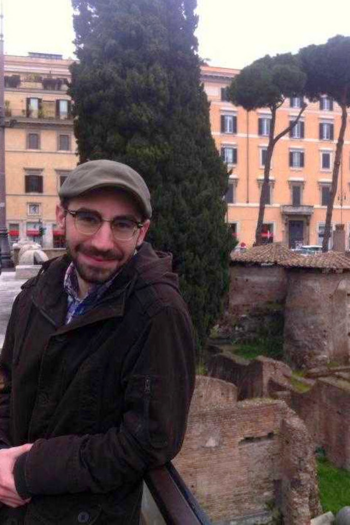
Simeon Ehrlich
Simeon Ehrlich is a PhD candidate in the Department of Classics and, concurrently, J.E.A. Crake Doctoral Fellow in Classics at Mount Allison University. His dissertation research focuses on the organizational principles of urban plans in the cities of the Greeks, Romans and contemporary Mediterranean cultures c. 800 BCE-600 CE. With the support of a graduate student grant from The Europe Center, Simeon undertook a program of research at the libraries of the American Academy in Rome and the American School of Classical Studies at Athens from January-March 2017. This allowed him access to a wealth of archaeological site plans, excavation reports, and conference proceedings not readily available in North America.

Image
In Rome and Athens, Simeon’s research focused on ascertaining the relationship of the forms of archaic (8th-6th centuries BCE) and classical (5th-4th centuries BCE) Greek settlements to those of settlements of the contemporary Italic Etruscan culture. The traditional view holds grid planning to be a Greek innovation, adopted by the Etruscans only once their southward expansion down the Italian peninsula brings them into contact with the cities founded by the Greeks expanding northwards up the peninsula. Whereas such models are often predicated on the notion of a strict dichotomy of grid planned sites and unplanned sites, Simeon’s research draws on ideas from recent studies of comparative urbanism and conceives, instead, of grid planning as the culmination of a series of organizing principles that order the urban space to various degrees.

Through analysis of the plans of more than one hundred sites during his time abroad, he was able to trace concurrent developments in the organization of Greek and Etruscan sites, in terms of the coordination, alignment, and orthogonality of the buildings, streets, and blocks that comprise their plans. On this basis, he was able to develop an argument positing that grid planning is indeed the culmination of a series of organizational principles affecting urban plans, that grid planning only emerges under certain topographic conditions, and that the Greeks found settlements on sites meeting these conditions at an earlier date than the Etruscans. Thus, he finds that the Etruscans did not copy the grid plan from the Greeks; rather, they had the potential to implement it all along, they simply lacked for an opportunity to do so. This research serves as the basis for a history of grid planning in Classical antiquity and is complemented by case studies showing the weakening of the conditions sustaining grid planning during the Roman empire and the removal of these conditions in late antiquity.

Hero Image
Simeon Ehrlich
All News button
1
Image
simeon_ehrlich
Aria Label
Read more about Simeon's GSGC experience
Date Label
News Type
News
Date
Paragraphs

Image
Elaine Treharne
Elaine Treharne earned her PhD from the University of Manchester, with a year as a Procter Graduate Fellow at Princeton University. She came to Stanford in 2012, after five years at Florida State, and fifteen years at the University of Leicester, where she had been Chair of the English Department, and interim Dean of the Faculty of Arts. She is a Fellow of the Society of Antiquaries, of the Royal Historical Society, and of the English Association; and has won grants from the Arts and Humanities Research Council, the British Academy, the NEH, the American Philosophical Society, and the Cyber Initiative. At Stanford, she is the Director of the Center for Spatial and Textual Analysis (CESTA) and Director of Stanford Text Technologies. She is a Fellow of the STS Interdisciplinary Program, and a Stanford Fellow 2017-2019.

Elaine’s research is focused on medieval British manuscripts from c.600CE to 1450CE. Numerous publications—including The Old English Life of St Nicholas and Wiley-Blackwell’s Old and Middle English: An Anthology (which is about to be published in its fourth edition)—present edited and translated texts, ranging from sermons and religious poetry to extracts from Beowulf and Chaucer’s Canterbury Tales. Other books and articles concern the prestige of the vernacular and the transmission of works in English from the late Anglo-Saxon period into the thirteenth century. This research has overturned previous scholarly opinion that held there to be little or nothing of value written in English between the Norman Conquest and the thirteenth century. In Living Through Conquest: The Politics of Early English, Elaine discussed the significant corpus of manuscripts that survive from this period, and highlighted the contemporaneity and political functionalism of many of the works copied by English scribes.

Image
Elaine Treharne book image
Her very recent work is focused on a History of Text Technologies (with Claude Willan for Stanford University Press), which traces trends in the production and consumption of all forms of human communication from 30000BCE to the present day. And in The Phenomenal Book, Elaine is focused on the interpretation of the handwritten book as an embodied whole (even where the only evidence is fragments and parts of books), which represents the traces and experiences of users and readers through time. It includes a chapter on ‘invisible things’, highlighting the sensual and emotional qualities of book production and use. She has also just completed the CyberText Technologies Project in CESTA—using historical patterns of textual facture and consumption to predict future text technologies; and she is just beginning a new digital project, Stanford Ordinary People’s Extraordinary Stories (SOPES), which recuperates the lives of otherwise unknown people whose ephemera (like letter collections, scrapbooks, notebooks, autograph albums, postcards, receipts, and photo albums) can be acquired from Ebay and bric-a-brac shops. Preliminary research shows that the amazing stories of people’s lives emerge from their written remnants.

Elaine’s teaching focuses on Text Technologies, Medieval English Literature, and the study of the Handwritten Book.

Hero Image
Elaine Treharne
All News button
1
Paragraphs

I spent my adolescence around maps of places that didn’t exist. An older cousin read The Lord of the Rings over the course of a hot summer when I was nine, and I watched in fascination as he traced the Fellowship’s progress across the foldout map that came with the book in those days. This, I decided, had to be what grown-up reading looked like.

All Publications button
1
Publication Type
Commentary
Publication Date
Journal Publisher
Longreads
Authors
Adrian Daub
Paragraphs

"Here's what the end of globalization looks like," a headline in Business Insider thundered at the end of 2016 before laying out a doom-and-gloom scenario in the wake of the Trans-Pacific Partnership's demise. The swing away from liberalization and globalization and toward protectionism and nationalism is probably the biggest political earthquake of recent times in wealthy Western countries, and explaining it is probably the biggest intellectual challenge. Until we understand its causes, after all, we cannot address them.

All Publications button
1
Publication Type
Commentary
Publication Date
Journal Publisher
Stratfor
Authors
Ian Morris
Building 200, Room 027
Lane History Corner
Stanford University


0
John L. Hinds Professor of History of Science
Director, Gendered Innovations in Science, Health & Medicine, Engineering, and Environment
londa_schiebinger_image.jpg

Londa Schiebinger is the John L. Hinds Professor of History of Science in the History Department at Stanford University and Director of the EU/US Gendered Innovations in Science, Health & Medicine, Engineering, and Environment Project. From 2004-2010, Schiebinger served as the Director of Stanford's Clayman Institute for Gender Research. She is a member of the American Academy of Arts and Sciences.

Professor Schiebinger received her Ph.D. from Harvard University in 1984 and is a leading international authority on gender and science. Over the past thirty years, Schiebinger's work has been devoted to teasing apart three analytically distinct but interlocking pieces of the gender and science puzzle: the history of women's participation in science; gender in the structure of scientific institutions; and the gendering of human knowledge.

Londa Schiebinger presented the keynote address and wrote the conceptual background paper for the United Nations' Expert Group Meeting on Gender, Science, and Technology, September 2010 in Paris. She presented the finding at the United Nations in New York, February 2011 with an update spring 2014. The UN Resolutions of March 2011 call for "gender-based analysis ... in science and technology" and for the integrations of a "gender perspective in science and technology curricula."

In 2011-2012 and 2018-2020, Schiebinger entered into major collaborations with the European Commission and the U.S. National Science Foundation to promote Gendered Innovations in Science, Health & Medicine, Engineering, and Environment. This project draws experts from across the U.S., Europe, Canada, Asia, and was presented at the European Parliament, July 2013. For a popular overview, see Gendered Innovations: Harnessing the Creative Power of Gender Analysis.

Schiebinger has also addressed the Korean National Assembly (2014). In 2015, she addressed 600 participants from 40 countries on Gendered Innovations at the Gender Summit 6—Asia Pacific, a meeting devoted to gendered innovations in research, development, and business. She spoke at the Gender Summit 10 in Tokyo in 2017. She has given seminars at the Japanese Science and Technology Agency in Tokyo, the Japanese Science Council, at Nature magazine in London, the George Institute in Sydney, the Royal Palace in Amsterdam, L'Oréal and UNESCO in Paris, the Global Research Council in São Paulo, the German Science Foundation in Bonn, and UK Research and Innovation in London, and the EDIS Symposium on Inclusive Research and Experimental Design, Francis Crick Institute in London, among others.

Schiebinger recently moderated the launch of American Association of University Women's launch of Solving the Equation: The Variables for Women's Success in Engineering and Computing at Samsung's Mountain View Campus (2015). Schiebinger also helped launch the League of European Research Universities' major report Gendered Research & Innovation, Brussels (2015).

Her study, "Housework is an Academic Issue," with Shannon Gilmartin, Academe (Jan/Feb. 2010): 39-44, was profiled on ABC News. A 30-minute interview on gender in science can be seen on Belgian television. Recent podcasts include: Does gender diversity lead to better science? (2018), Skeleton Wars, the History of Women in Science (2018), and The Secret Cures of Slaves (2018), and The Future of Everything (2019). See also The Robots are Coming! But Should They be Gendered? Schiebinger is a member of the Faculty Planning Committee for Stanford Human-Centered AI Institute. Her work on gender in AI was featured in Nature comment: Design AI so that it's Fair.

Schiebinger's work in the eighteenth century investigates colonial science in the Atlantic World. In particular she explores medical experimentation with slave populations in the Caribbean. Her project reconceptualizes research in four areas: first and foremost knowledge of African contributions to early modern science; the historiography of race in science; the history of human experimentation; and the role of science in the eighteenth-century Atlantic world.

Londa Schiebinger has been the recipient of numerous prizes and awards, including the prestigious Alexander von Humboldt Research Prize and John Simon Guggenheim Fellowship. Schiebinger has just been appointed a Distinguished Affiliated Professor at the Technische Universität, Münichen, and member of their Institute for Advanced Studies. She has also served as a Senior Research Fellow at the Max-Planck-Institut für Wissenschaftsgeschichte in Berlin, the Jantine Tammes Chair in the Faculty of Mathematics and Natural Sciences at the University of Groningen, a guest professor at the Georg-August-Universität in Göttingen, and the Maria Goeppert-Meyer Distinguished Visitor, Oldenburg University. Her research has been supported by the National Science Foundation, National Institutes of Health, National Endowment for the Humanities, Rockefeller Foundation, Fulbright-Hays Commission, Woodrow Wilson Foundation, and Deutscher Akademischer Austauschdienst.

Londa Schiebinger was awarded an honorary doctorate from the Vrije Universiteit Brussel (2013), the Faculty of Science, Lund University, Sweden (2017), and the University of Valencia, Spain (2018); the Interdisciplinary Leadership Award from Women's Health at Stanford Medical School, 2010; Prize in Atlantic History from the American Historical Association, 2005 and the Alf Andrew Heggoy Book Prize from the French Colonial Historical Society, 2005, both for her Plants and Empire: Colonial Bioprospecting in the Atlantic World. She also won the 2005 J. Worth Estes Prize from the American Association for the History of Medicine for her article "Feminist History of Colonial Science," Hypatia 19 (2004): 233-254. This prize goes to the author of an article of outstanding scholarly merit in the history of pharmacology. Her work has been translated into thirteen languages.

Londa Schiebinger's research has been featured in Forbesthe Times Higher EducationLe MondeLa RechercheWorld Economic Forum, El PaísThe New YorkerDiscovHerEuroScientistUniversity World NewsMoneyish, the New York Times, Die Zeit, Frankfurter Allgemeine Zeitschrift, La Vanguardia, at the London Museum of Natural History, on NPR, and elsewhere. She speaks and consults nationally and internationally on gender in science, medicine, and engineering.

Schiebinger is currently accepting graduate students in Gendered Innovations in Science, Health & Medicine, Engineering, and Environment and the History of Science.


Affiliated faculty at The Europe Center
Date Label
Paragraphs

Populism is on the rise: but to understand this phenomenon, we should first clearly conceptualize it and recognize that populism takes on different forms in various historical and political contexts. These “populisms” pose a threat to modern liberal democracy. As Poland and Hungary show, populists exclude entire swathes of society from the polity, and undermine the formal institutions and the informal norms of democracy. 

All Publications button
1
Publication Type
Journal Articles
Publication Date
Journal Publisher
Slavic Review
Authors
Anna Grzymała-Busse

Encina Hall
616 Serra Street
Stanford, CA  94305-6165
 

0
scp_1.25.jpg PhD

Sarah Cormack-Patton is an Honorary Research Fellow at the University of Aberdeen. She is a political scientist whose research examines the politics of globalization, and particularly international migration, in the European Union and the United States. Sarah is interested in the economic and social effects of the cross-border movement of people, goods, and capital; the political coalitions that form over the cross-border movement of people, goods, and capital; the conditions under which states permit or limit the entry or exit of goods, capital, and people; and the efficacy of state policies designed to effect the entry or exit of goods, capital, and people. Her current research projects examine the ways in which varying bundles of migrant rights affect immigration policy preferences, the political coalitions that form over immigration policy, and the types of immigration policies enacted. Sarah earned her Ph.D. in Political Science from the University of Pittsburgh in 2015 and was a Postdoctoral Scholar at Stanford University from September 2015 to September 2017.

Visiting Scholar at The Europe Center, 2017-2018
CV
-

"Movements of Objects and Textual Mobilities"

Following on the successful 2016 “Reformations” conference, the 2017 Primary Source Symposium will focus on cultural exchange through the movement of objects (gifts, textiles, booty, books, spices, animals, etc.). The goal of the symposium is to understand better the ways in which objects served as agents of cultural translation across linguistic, political, religious, geographic or gendered “borders.”


For the symposium schedule, please visit:

https://cmems.stanford.edu/primary-source-symposium

[[{"fid":"228564","view_mode":"crop_870xauto","fields":{"format":"crop_870xauto","field_file_image_description[und][0][value]":"Stanford Primary Source Symposium 2017 poster","field_file_image_alt_text[und][0][value]":"Stanford Primary Source Symposium 2017 poster","field_file_image_title_text[und][0][value]":"Stanford Primary Source Symposium 2017 poster","field_credit[und][0][value]":"","field_caption[und][0][value]":"","thumbnails":"crop_870xauto","alt":"Stanford Primary Source Symposium 2017 poster","title":"Stanford Primary Source Symposium 2017 poster"},"type":"media","field_deltas":{"1":{"format":"crop_870xauto","field_file_image_description[und][0][value]":"Stanford Primary Source Symposium 2017 poster","field_file_image_alt_text[und][0][value]":"Stanford Primary Source Symposium 2017 poster","field_file_image_title_text[und][0][value]":"Stanford Primary Source Symposium 2017 poster","field_credit[und][0][value]":"","field_caption[und][0][value]":"","thumbnails":"crop_870xauto","alt":"Stanford Primary Source Symposium 2017 poster","title":"Stanford Primary Source Symposium 2017 poster"}},"link_text":null,"attributes":{"alt":"Stanford Primary Source Symposium 2017 poster","title":"Stanford Primary Source Symposium 2017 poster","style":"height: 566px; width: 800px; float: left;","class":"media-element file-crop-870xauto","data-delta":"1"}}]]


Free and open to the public

Please contact Lora Webb at loraw@stanford.edu with any questions about this event.

Co-sponsored by:

The Stanford Humanities Center, The Europe Center, the Department of History, the Division of Literatures, Cultures, and Languages, the Department of Religious Studies, the Department of East Asian Languages and Cultures, the Center for South Asia and the Department of Art and Art History

The Stanford Humanities Center
424 Santa Teresa Street
Stanford, CA 94305

Symposiums
-
We contend that contemporary support for populist parties stems from a set of economic and cultural developments that have severed the connections that usually bind people to their society. Building on an important ethnographic literature, we assess whether populism can be seen as a problem of social integration through an examination of political attitudes and electoral behavior in 26 developed democracies. Using subjective social status as an indicator for the social integration of individuals, we find that people who feel more marginal to society, because they lack social engagement or a sense of social respect, are more likely to be alienated from mainstream politics and to not vote or vote for parties of the populist right or left. The implication is that support for parties of the populist right and left has both economic and cultural roots and should be addressed, not only as an issue of economic deprivation requiring redistribution, but also as an issue of social integration requiring efforts to expand social recognition.
 
Noam Gidron image
Noam Gidron
 is fellow at the Niehaus Center for Globalization and Governance at Princeton. Noam received his Ph.D. from Harvard University in May 2016. His research focuses on political sociology and electoral politics in advanced democracies. It draws on multiple methods, including survey analysis, experiments, text analysis, and elite interviews. Geographically, Noam’s work covers member states of the European Union, the United States and Israel. Next year, Noam will join the faculty of the political science department at the Hebrew University of Jerusalem.


Co-sponsored by the Global Populisms Project

Noam Gidron Princeton University
Lectures
Subscribe to Europe