Paragraphs

This article develops a game-theoretical model of European Union (EU) policy making that suggests that the amount of legislative activity depends on the size of the gridlock interval. This is consistent with Krehbiel's study of US politics. This interval depends on two factors: (1) the preference configuration of the political actors and (2) the legislative procedures used in a particular period. Actors’ preferences and procedures are not expected to have any effect beyond their impact on the gridlock interval. The study predicts smaller gridlock intervals, and thus more legislative activity, under the co-decision (consultation) procedure when the pivotal member states and the European Parliament (Commission) are closer to each other. More activity is expected under qualified majority voting in the Council than under unanimity. The results find support for these propositions in an empirical analysis of EU legislative activity between 1979 and 2009.

All Publications button
1
Publication Type
Journal Articles
Journal Publisher
British Journal of Political Science
Authors
Christophe Crombez
News Type
News
Date
Paragraphs

Special Event:  The Europe Center Lectureship on Europe and the World

 
The Europe Center invites you to the inaugural annual lectures in this series by Adam Tooze, Barton M. Briggs Professor of History, Yale University. 
 
“Making Peace in Europe 1917-1919: Brest-Litovsk and Versailles”
Date: Wednesday, Apr 30, 2014
Time: 4:00 - 5:30 pm
Location: Koret Taube Room, Gunn-SIEPR
 
“Hegemony: Europe, America and the Problem of Financial Reconstruction, 1916-1933”
Date: Thursday, May 1, 2014
Time: 4:00 - 5:30 pm
Location: Koret Taube Room, Gunn-SIEPR
 
“Unsettled Lands: The Interwar Crisis of Agrarian Europe”
Date: May 2, 2014
Time: 4:00 - 5:30 pm
Location: Bechtel Conference Center
Reception: 5:30 - 6:15 pm
 
RSVP by Apr 23, 2014
 
 
Image
Image of Adam Tooze

Adam Tooze will deliver three lectures from his forthcoming book, A World Fit for Heroes. In particular, he will speak about the history of the transformation of the global power structure that followed from Imperial Germany’s decision to provoke America’s declaration of war in 1917. Tooze is the author of The Wages of Destruction: The Making and Breaking of the Nazi Economy (2006) and Statistics and the German State 1900-1945: The Making of Modern Economic Knowledge (2001), among numerous other scholarly articles on modern European history.


Open Call:  The Europe Center Graduate Student Grant Competition

 
The Europe Center invites applications from graduate and professional students at Stanford University whose research or work focuses on Europe. Funds are available for Ph.D. candidates across a wide range of disciplines in the humanities and social sciences to prepare for dissertation research and to conduct research on approved dissertation projects. The Europe Center also supports early graduate students who wish to determine the feasibility of a dissertation topic or acquire training relevant for that topic. Additionally, funds are available for professional students whose interests focus on some aspect of European politics, economics, history, or culture; the latter may be used to support an internship or a research project. Grants range from $500 to $5000.
 
Applications for the 2013-2014 Spring competition are currently being accepted through April 15, 2014. For additional details about the grant program, please visit our website.


Meet our Visiting Scholars:  Andreas Kilcher 

 
In each newsletter, The Europe Center would like to introduce you to a visiting scholar or collaborator at the Center. We welcome you to visit the Center and get to know our guests.
 
Image
Image of Andreas Kilcher

Andreas Kilcher, FSI-Humanities Center International Visitor 2013-2014, is professor of Literature and Cultural Studies at the Eidgenössische Technische Hochschule (ETH) Zurich. Kilcher is a prominent scholar of German-Jewish literature and culture, Kabbalah, and the European tradition of esotericism. He has written and edited a range of publications on the encounters between European and Jewish cultures from the sixteenth century through the present, with a focus on the twentieth century. His publications include Geteilte Freude: Schiller-Rezeption in der jüdischen Moderne (Munich, 2006), biographies of the writers Franz Kafka (Frankfurt, 2008) and Max Frisch (Berlin 2011) and numerous other articles. Kilcher’s current project includes collaboration with colleagues at Stanford on the divergent constructions of Jewish ethnography in German-speaking and Russian-speaking territories. 


Student Scholar Profile:  Christof Brandtner

 
The Europe Center regularly sponsors the research of undergraduate and graduate students through our research grant, internship, and scholarly exchange programs. We would like to introduce you to some of the students that we support and the projects on which they are working.
 
 
Image
Image of Christof Brandtner

Christof Brandtner, a PhD student in the Department of Sociology at Stanford, will be visiting the Vienna University of Economics and Business to present findings from his research on city rankings. Brandter’s project explores where the criteria of systematic city comparisons come from, and how they came to supplement economic power as measures of urban performance. By investigating the types and sources of variation in the evaluation of organizations, and by mapping the ways in which urban qualities are operationalized, this research sheds new light on questions related to the sustainability of global cities. Brandtner will use his visit to also conduct interviews with members of the urban development department of the City of Vienna.


Workshop Schedules  

 
The Europe Center invites you to attend the talks of speakers in the following workshop series: 
 

Europe and the Global Economy

 
Apr 3, 2014
Kåre Vernby, Associate Professor, Department of Government, Uppsala University
RSVP by Apr 2, 2014
 
Apr 17, 2014
Mark Hallerberg, Professor of Public Management and Political Economy, Hertie School of Governance 
RSVP by Apr 14, 2014
 
May 15, 2014
Christina Davis, Prof. of Politics and International Affairs, Princeton University
RSVP by May 12, 2014
 

European Governance

 
May 22, 2014
Wolfgang Ischinger, Former German Ambassador to the U.S.; Chairman, Munich Security Conference
RSVP by May 19, 2014
 
May 29, 2014
Simon Hug, Professor of Political Science, University of Geneva
RSVP by May 26, 2014


The Europe Center Sponsored Events

 
We invite you to attend the following events sponsored or co-sponsored by The Europe Center:
 
French Culture Workshop
Apr 3, 2014
    Mark Braude, Fellow, Humanities+design and French, Stanford
“Monte Carlo, Open City: The Making of a Cosmopolitan Company Town”
Apr 17, 2014  
    Michel Wieviorka, École des Hautes Études en Sciences Sociales
“The New Arena of Hatred and Racism in France and Europe”
May 1, 2014
    Cécile Alduy, French, Stanford
Title TBA
 
Apr 11, 2014
Roundtable on Ukraine
Mark von Hagen, Valeriy Kuchynsky, Yaroslav Prytula
 
Apr 15, 2014
Ulrich Wilhelm, Director General, Bavarian Broadcasting Corporation
“Assessing the Impact of the NSA Spy Scandal on American-European Relations” 
The Europe Center and FSI Stanford Special Event
Additional Details and RSVP by April 11, 2014
 
Jun 3, 2014
Tommaso Piffer
“The Allies, the European Resistance and the Origins of the Cold War in Europe”


Other Events

 
The Europe Center also invites you to attend the following events of interest:
 
Apr 10, 2014
Richard English, University of St. Andrews
“Does Terrorism Work? The Case of the Provisional IRA”
CISAC Social Science Seminar
 
May 2-3, 2014
Stanford Journal of International Law Conference
“Governing Intelligence: Transnational Threats and the National Security State”
Save the Date: Additional Details to follow
 
May 12, 2014
Latvian Cultural Evening: Sustaining a Memory of the Future
 
 
We welcome you to visit our website for additional details. 
 
All News button
1
News Type
News
Date
Paragraphs

Recap:  The Europe Center Lectureship on Europe and the World

 
On April 30, May 1, and May 2, 2014, Adam Tooze, Barton M. Briggs Professor of History at Yale University, delivered in three parts The Europe Center Lectureship on Europe and the World, the first of an annual series. 
 
With the centenary of the outbreak of the First World War as his backdrop, Tooze spoke about the history of the transformation of the global power structure that followed from Germany’s decision to provoke America’s declaration of war in 1917. He advanced a powerful explanation for why the First World War rearranged political and economic structures across Eurasia and the British Empire, sowed the seeds of revolution in Russia and China, and laid the foundations of a new global order that began to revolve around the United States. 
 
The three lectures focused successively on diplomatic, economic, and social aspects of the troubled interwar history of Europe and its relationship with the wider world. Over the course of the lectures, he presented an argument for why the fate of effectively the whole of civilization changed in 1917, and why the First World War’s legacy continues to shape our world even today.
 
Tooze also participated in a lunchtime question-and-answer roundtable with graduate students from the History department.
 
Image of Yale's Barton M. Briggs Professor of History Adam Tooze, speaking at Stanford University, May 2, 2014Tooze is the author of The Wages of Destruction: The Making and Breaking of the Nazi Economy(2006) and Statistics and the German State 1900-1945: The Making of Modern Economic Knowledge (2001), among numerous other scholarly articles on modern European history. His latest book, The Deluge: The Great War and the Remaking of Global Order 1916-1931, will be released in Summer 2014 in the United Kingdom and in Fall 2014 in the United States.
 
We welcome you to visit our website for additional details about this event.


Recap:  European Commission President José Barroso Visits Stanford

 
José Manuel Barroso, President of the European Commission, delivered a lecture entitled, “Global Europe: From the Atlantic to the Pacific,” before an audience at Stanford on May 1, 2014. 
 
Barroso discussed at length the political and economic consequences of the global financial crisis of 2008 for European affairs. He acknowledged that the crisis revealed “serious flaws” in the economic management of some national economies, but stressed that the 28-member union adapted and reformed to handle the fallout from the crisis. For example, he explained how banking supervision is now controlled at the “European level through the European Central Bank,” and that “there are common rules for banks so that we avoid having to use taxpayers' money to rescue them." 
 
Barroso also discussed various political and security aspects related to the ongoing upheaval in Ukraine, and affirmed that Europe “stands ready” to support the country as it comes “closer to the European Union.” He added that Russia’s decision “to interfere, to destabilize, and to occupy part of the territory of a neighboring country” was a “gesture that we hoped was long buried in history books.”
 
Image of José Manuel Barroso, President of the European CommissionBarroso was named President of the Social Democratic Party (PSD) of Portugal in 1999, following which he was re-elected three times. He was appointed Prime Minister of Portugal in 2002. He remained in office until July 2004 when he was elected by the European Parliament to the post of President of the European Commission. He was re-elected to a second term as President of the European Commission by an absolute majority in the European Parliament in September 2009.
 
We welcome you to visit our website for additional details about this event.


Workshop:  Comparative Approaches to the Study of Immigration, Ethnicity, and Religion

 
On May 9, 2014 and May 10, 2014, The Europe Center will host the Fourth Annual Workshop on Comparative Approaches to the Study of Immigration, Ethnicity, and Religion.
 
Speakers draw from a range of national and international universities and include Jens Hainmueller, Dominik Hangartner, Efrén Pérez, Lauren Prather, Jorge Bravo,  Giovanni Facchini, Cecilia Testa, Harris Mylonas, Rahsaan Maxwell, Ali Valenzuela, Mark Helbling, Rob Ford, Matthew Wright, Karen Jusko, Maggie Peters, Justin Gest, Rafaela M. Dancygier, and Yotam Margalit.
 
The all-day workshop will begin at 8:30 am on Friday and at 9:15 am on Saturday, and will be held in the CISAC Conference Room in Encina Hall. Visitors are cordially invited to attend. 
 
We welcome you to visit our website for additional details about this event.


Spring 2014 Graduate Student Grant Competition Winners Announced

 
Please join us in congratulating the winners of The Europe Center Spring 2014 Graduate Student Grant Competition:
 
Lisa Barge, German Studies, “Beyond Objectivity: Questioning Shifting Scientific Paradigms in Erwin Schrödinger's Thought”
 
Michela Giorcelli, Economics, “Transfer of Production and Management Model Across National Borders:  Evidence from the Technical Assistance and Productivity Program”
 
Benjamin Hein, Modern European History, “Capitalism Dispersed: Frankfurt and the European Stock Exchanges, 1880-1960”
 
Michelle Kahn, Modern European History, “Everyday Integration: Turks, Germans, and the Boundaries of Europe”
 
Friederike Knüpling, German Studies, “Kleist vom Ende lesen”
 
Orysia Kulick, History, “Politics, Power, and Informal Networks in Soviet Ukraine”
 
Claire Rydell, U.S. History, “Inventing an American Liberal Tradition: How England's John Locke Became ‘America's Philosopher’, 1700-2000”
 
Lena Tahmassian, Iberian and Latin American Cultures, “Post-Utopian Visions: Modes of Countercultural Discourse of the Spanish Transition to Democracy”
 
Donni Wang, Classics, “Illich Seminar”
 
Lori Weekes, Anthropology & Law, “Nation Building in the Post-Soviet Baltics as a Legal, Institutional, and Ethno-Cultural Project”
 
The Spring Grant Competition winners will join 16 graduate students who were awarded competitive research grants by the Center in Fall 2013. The Center regularly supports graduate and professional students at Stanford University whose research or work focuses on Europe. Funds are available for Ph.D. candidates across a wide range of disciplines in the humanities and social sciences to prepare for dissertation research and to conduct research on approved dissertation projects. The Center also supports early graduate students who wish to determine the feasibility of a dissertation topic or acquire training relevant for that topic. Additionally, funds are available for professional students whose interests focus on some aspect of European politics, economics, history, or culture; the latter may be used to support an internship or a research project. 
 
We welcome you to visit our website for additional details about this event.


Meet our Visiting Scholars:  Vibeke Kieding Banik

 
In each newsletter, The Europe Center would like to introduce you to a visiting scholar or collaborator at the Center. We welcome you to visit the Center and get to know our guests.
 
Image of Vibeke Banik, Visiting Scholar at The Europe Center, Stanford UniversityVibeke Kieding Banik is currently affiliated as a postdoctoral fellow at the Department of Archaeology, Conservation and History, at the University of Oslo. Her main focus of research is on the history of minorities in Scandinavia, particularly Jews, with an emphasis on migration and integration. Her research interests also include gender history, and her current project investigates whether there was a gendered integration strategy among Scandinavian Jews in the period 1900-1940. Dr. Banik has authored several articles on Jewish life in Norway, Jewish historiography, and on the Norwegian women’s suffragette movement. She has taught extensively on Jewish history and is currently writing a book on the history of the Norwegian Jews, scheduled to be published in 2015.


Workshop Schedules  

 
The Europe Center invites you to attend the talks of speakers in the following workshop series: 
 

Europe and the Global Economy

 
May 15, 2014
Christina Davis, Professor of Politics and International Affairs, Princeton University
“Membership Conditionality and Institutional Reform: The Case of the OECD”  
RSVP by May 12, 2014
 

European Governance

 
May 22, 2014
Wolfgang Ischinger, Former German Ambassador to the U.S.; Chairman, Munich Security Conference
“The Future of European Security & Defence” 
RSVP by May 19, 2014
 
May 29, 2014
Simon Hug, Professor of Political Science, University of Geneva
“The European Parliament after Lisbon (and before)” 
RSVP by May 26, 2014


The Europe Center Sponsored Events

 
We invite you to attend the following events sponsored or co-sponsored by The Europe Center:
 
May 16 and May 17, 2014
“Let There Be Enlightenment: The Religious and Mystical Sources of Rationality”
A Stanford University Conference
Margaret Jacks Hall: Terrace Room
 
May 29, 2014
Josef Joffe, FSI Senior Fellow, Hoover Institution Research Fellow, and Publisher/Editor of Die Zeit
“The Myth of America's Decline: Politics, Economics, and a Half Century of False Prophecies”
Oksenberg Conference Room
 
Jun 3, 2014
Tommaso Piffer, Marie Curie Postdoctoral Fellow, Harvard University and University of Cambridge
“The Allies, the European Resistance and the Origins of the Cold War in Europe”
History Corner, Room 307


Other Events

 
The Europe Center also invites you to attend the following event of interest:
 
May 12, 2014
Latvian Cultural Evening: Sustaining a Memory of the Future
Cubberley Auditorium
 

We welcome you to visit our website for additional details.

All News button
1
News Type
News
Date
Paragraphs

Special Event:  Pascal Lamy Lecture

“World Trade and Global Governance”

 
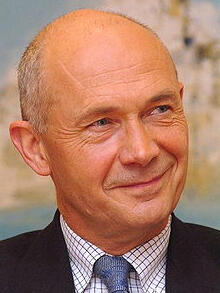
The Europe Center invites you to a special lecture by Pascal Lamy, the former Director-General of the World Trade Organization.
 
Image
Image of Pascal Lamy
Date: February 10, 2014 
Time: 4:00 - 5:30 p.m.
Venue: Bechtel Conference Center, Encina Hall
RSVP by February 5, 2014                       
  
Mr. Lamy will speak on the necessary mix of economic, social, and political policies that will determine the efficacy of free trade as an engine of global economic growth. In particular, he will outline a statement of his own thinking about the future of global governance and international trade, and describe what remains to be done in addressing the challenges of globalization. Additionally, Mr. Lamy will reflect on the features of modern politics that create governance gridlock and thwart global oversight, and will identify how progress can be made in overcoming impediments to policy action at the international level. 
 
My Lamy served as the Director-General of the World Trade Organization from 2005-2013. He is currently the Honorary President of the Paris-based think tank, Notre Europe.


Meet our Visiting Scholars:  Bjørn Høyland 

 
In each newsletter, The Europe Center would like to introduce you to a visiting scholar or collaborator at the Center. We welcome you to visit the Center and get to know our guests.
 
Bjør
Image
Image of Bjorn Hoyland
n Høyland (PhD, London School of Economics, 2005) is Professor of Political Science at the University of Oslo, Norway. He is currently visiting Professor and Anna Lindh Fellow at The Europe Center, Freeman Spogli Institute for International Studies and Stanford Global. The focus of his research is European Union politics and comparative legislative politics. Professor Høyland’s list of journal publications includes the American Political Science Review, Annual Review of Political Science, British Journal of Political Science, and European Union Politics. His textbook (with Simon Hix) The Political System of the European Union (3rd ed) is the standard text for advanced courses on the European Union.

Workshop Schedules  

 
The Europe Center invites you to attend the talks of speakers in the following workshop series: 
 

Europe and the Global Economy

 
January 23, 2014
David Dreyer Lassen, Professor of Economics, University of Copenhagen
RSVP by Jan 20, 2014 
 
February 20, 2014
Alan Deardorff, John W. Sweetland Professor of International Economics & Prof. of Economics and Public Policy, University of Michigan
RSVP by Feb 17, 2014
 
Mar 6, 2014
Sophie Meunier, Research Scholar, Woodrow Wilson School and Co-Director, EU Program at Princeton, Princeton University
RSVP by Mar 3, 2014
 
Mar 13, 2014
Randy Stone, Professor of Political Science, University of Rochester
RSVP by Mar 10, 2014
 
Apr 3, 2014
Kåre Vernby, Associate Professor, Department of Government, Uppsala University
RSVP by Mar 31, 2014
 
Apr 17, 2014
Mark Hallerberg, Professor of Public Management and Political Economy, Hertie School of Governance 
RSVP by Apr 4, 2014
 
May 15, 2014
Christina Davis, Prof. of Politics and International Affairs, Princeton University
RSVP by May 12, 2014

European Governance

 
February 6, 2014
Matthew Gabel, Professor of Political Science, Washington University at St. Louis
RSVP by Feb 3, 2014
 
May 22, 2014
Wolfgang Ischinger, Former German Ambassador to the U.S.; Chairman, Munich Security Conference
RSVP by May 19, 2014
 
May 29, 2014
Simon Hug, Professor of Political Science, University of Geneva
RSVP by May 26, 2014

Other Events

 
The Europe Center also invites you to attend the following events of interest:
 
January 27, 2014
Vassil Terziev, Co-founder & CEO, Telerik (BG); and Japec Jakopin, Co-founder & CEO, Seaway (SI)
“Worldclass Enterprise Software and Design Firms in SouthEast and Balkans Europe” 
Sponsor: European Entrepreneurship & Innovation Thought Leaders Seminar
 
January 30, 2014
Ken Schultz, Professor of Political Science, Stanford University
“Making and Breaking Territorial Agreements: Explaining European Exceptionalism”
Sponsor: CISAC Social Science Seminar; co-sponsored by The Europe Center
 
 
All News button
1
Authors
Date
Paragraphs

The electoral eruption of anti-European Union populism is a reflection of structural flaws in that body but does not represent a fatal political blow, according to Stanford scholars.

In the May 25 elections for the European Parliament, anti-immigration parties won 140 of the 751 seats, well short of control, but enough to rattle supporters of the EU, which has 28 member nations. In Britain, Denmark, France and Greece, the political fringe vote totals stunned the political establishments.

Stanford political scientist Francis Fukuyama said the rise of extremism and anti-elitism is not surprising in the wake of the 2008 economic downturn and subsequent high levels of unemployment throughout Europe. In one sense, the EU elites have themselves to blame, he said.

"The elites who designed the EU and the eurozone failed in a major way," he said. "There was a structural flaw in the design of the euro (monetary union absent fiscal union, and the method of disciplining countries once in the zone)," said Fukuyama, the Olivier Nomellini Senior Fellow at Stanford's Freeman Spogli Institute for International Studies and the Center on Democracy, Development and the Rule of Law, and Research Afflilate at The Europe Center.

Some have argued that the European Union should adopt a form of fiscal union because without one, decisions about taxes and spending remain at the national level.

As Fukuyama points out, this becomes a problem, as in the case of a debt-ridden Greece, which he believes should not have qualified for EU membership in the first place. In fact, he said, it would have been better for Greece itself to leave the euro at the outset of the 2008 crisis.

Still, Fukuyama said the big picture behind the recent election is clear – it was a confluence of issues and timing.

"It is a bit like an off-year election in the U.S., where activists are more likely to vote than ordinary citizens," he said.

Fukuyama believes the EU will survive this electoral crisis. "I think the EU will be resilient. It has weathered other rejections in the past. The costs of really exiting the EU are too high in the end, and the elites will adjust, having been given this message," he said.

Meanwhile, the populist parties in the different countries are not unified or intent on building coalitions with each other.

"Other than being anti-EU, most of them have little in common," Fukuyama said. "They differ with regard to specific positions on immigration, economic policy, and they respond to different social bases."

Ongoing anger

Dan Edelstein, a professor of French, said the largest factor for success by extremist candidates was "ongoing anger toward the austerity policy imposed by the EU," primarily by Germany.

Edelstein estimates that a large majority of French voters are still generally supportive of the EU. For the time being, the anti-EU faction does not have a majority, though they now have much more representation in the European Parliament.

Edelstein noted existing strains among the anti-EU parties – for example, the UK Independence Party in Britain has stated that it would not form an alliance with the National Front party in France.

Immigration remains a thorny issue for some Europeans, Edelstein said.

"'Immigration' in most European political debates, tends to be a synonym for 'Islam.' While there are some countries, such as Britain, that are primarily worried about the economic costs of immigration, in most continental European countries, the fears are cultural," he said.

As Edelstein put it, Muslims are perceived as a "demographic threat" to white or Christian Europe. However, he is optimistic in the long run.

"It seems a little early to be writing the obituary of the EU. Should economic conditions improve over the next few years, as they are predicted to, we will likely see this high-water mark of populist anger recede," said Edelstein.

Cécile Alduy, an associate professor of French, writes in the May 28 issue of The Nation about how the ultra-right-wing National Front came in first place in France's election.

"This outcome was also the logical conclusion of a string of political betrayals, scandals and mismanagement that were only compounded by the persistent economic and social morass that has plunged France into perpetual gloom," she wrote.

Historian J.P. Daughton said that like elsewhere in the world, immigration often becomes a contentious issue in Europe in times of economic difficulties.  

"High unemployment and painful austerity measures in many parts of Europe have led extremist parties to blame immigrants for taking jobs and sapping already limited social programs," he said.

Anti-immigration rhetoric plays particularly well in EU elections, Daughton said. "Extremist parties portray European integration as a threat not only to national sovereignty, but also to national identity.

Edelstein, Alduy and Daughton are all Faculty Affiliates of The Europe Center.

Wake-up call

Russell A. Berman, a professor of German studies and comparative literature, said many Europeans perceive the EU as "somehow impenetrable, far from the civic politics of the nation states."

As a result, people resent regulations issued by an "intangible bureaucracy," and have come to believe that the European Parliament has not grappled with major issues such as mustering a coherent foreign policy voice, he said.

"The EU can be great on details but pretty weak on the big picture," said Berman, who is the Walter A. Haas Professor in the Humanities, Senior Fellow at the Hoover Institution, and Faculty Affiliate of The Europe Center. "It is this discrepancy that feeds the dissatisfaction."

Yet he points out that the extremist vote surged in only 14 nations of the EU – in the other 14, there was "negligible extremism," as he describes it.

"We're a long way from talking about a fatal blow, but the vote is indeed a wake-up call to the centrists that they have to make a better case for Europe," Berman said.


All News button
1
-

The presentation summarizes preliminary findings of my research project on Allied policy towards resistance groups during World War II and its impact on post-war political and ideological divisions.

The research is linked with a multiplicity of historical problems: the western Allies’ balance of political and military considerations during World War II; the Anglo-American cooperation and competition in the field of intelligence; the use of special operations as an instrument of foreign policy, especially in regard to countries where the development of resistance movements had a strong impact on post-war settlement (e.g. Yugoslavia, Greece and Poland); the politics of communist movements between war and revolution in Central and Eastern Europe; the relationship between the Western Allies and the Soviet Union and the Allies’ perception of the latter.

The particular contribution of the project is to bring together aspects which are usually addressed separately: the different national scenarios, whose connections and mutual influence will be investigated; the two Western intelligence agencies, which have been researched mostly in separate ways by scholars of the corresponding nationalities; the Soviet and Western allies’ policies.

Tommaso Piffer is a Marie Curie Postdoctoral Fellow at the Davis Center for Russian and Eurasian Studies at Harvard and at the University of Cambridge. Among his publications is a biography of Alfredo Pizzoni, the political chief of the Italian Resistance (Il Banchiere della Resistenza, 2005), an account of the relationship between the Allies and the Italian Resistance during World War II (Gli Alleati e la Resistenza Italiana, 2010) as well as several essays. He also edited a book in memory of Victor Zaslavsky on Totalitarian societies and democratic transition (Società totalitarie e transizione alla democrazia, 2011, with Vladislav Zubok) and the collection of essays on the political mass murder of Porzus (Porzus. Violenza e resistenza sul confine orientale, 2012). He is an affiliate at the Harvard Center for European Studies and a contributor to the cultural insert of the Italian newspaper Corriere della Sera.

Open to Stanford affiliates

Sponsored by the Center for Russian, East European and Eurasian Studies and co-sponsored by The Europe Center

History Corner, Room 307

Tommaso Piffer Marie Curie Postdoctoral Fellow, Davis Center for Russian and Eurasian Studies, Harvard and University of Cambridge Speaker
Seminars

Workshop Goals

On the first day, develop a set of research interventions (surveys, experiments, archival searches, participant observations, etc.) that will gain some leverage in measuring differential policies in Europe and their impact on integration, however specified; or in examining the various immigrant populations to measure their differential success in integration, however specified. Each of the participants (either singly or in collaboration) will write up one or two research proposals that lay out the outcomes of interest and the strategy for explaining variation on those outcomes.  Discuss problems and opportunities for each of the submitted proposals and fulfill this first goal.

The second goal of the workshop, and the subject for the second day, to think through three related issues. The first is how to frame the set of proposals in a way that they all fit into a well-defined framework, as if each proposal were a piece of a coherent puzzle. The second is to think through funding sources for this set of interventions that would allow us to conduct the research we proposed and to continue collaborating across these projects. The third is to explore whether there are scholars whose work we know who should be invited to join our group and become part of the grant proposing team.

Wednesday, May 7, 2014 Agenda

I.  Citizenship (discussant Thad) – [9-11AM]

  • Hainmueller/Hangartner – Return on getting citizenship; encouragement design in Switzerland
  • Gest/Hainmueller/Hiscox – Encouragement design on citizenship in US (Chicago)
  • Hainmueller/Laitin – Encouragement design on citizenship in France
  • Alter/Margalit – Immigration and political participation, where immigrants get immediate rights to citizenship (Israel)
  • Dancygier/Vernby – return on citizenship for labor market success (Sweden)

II. Local Context (Rafaela) [11:15-12:15]

  • Adida/Hangartner – RDD on Sudanese refugees in various US cities; experiment with IRC on Iraqi/Chaldian integration in El Cajon

III. Contracts of Integration (Yotam) [1:30-3PM]

  • Hainmueller/Hangartner – Integration Contracts and Naturalization
  • Hainmueller/Laitin – Integration Contracts in France

IV. Discrimination (Jens) [3:30-5PM]

  • Ortega/Polavieja – Immigrants and Job security in Spain and elsewhere in Europe
  • Margalit – Overcoming employer abuse of immigrant workers
  • Dancygier/Vernby – failure of immigrants to get nominated for political office

Thursday, May 8, 2014 Agenda

Discussion on what investments in collective goods might advance this research perspective productively. We might look at favorable granting institutions and how we might combine our memos into a macro proposal; or we might think about building a common research infrastructure (in the way J-PAL has done for experimental development studies). Working towards a jointly authored volume might be another way to aggregate our research projects. All of this discussion depends on the complementarities that emerge from our discussions on Wednesday. David will chair the Thursday discussion.

Reuben W. Hills Conference Room

Department of Political Science
Stanford University
Encina Hall, W423
Stanford, CA 94305-6044

(650) 725-9556 (650) 723-1808
0
James T. Watkins IV and Elise V. Watkins Professor of Political Science
laitin.jpg PhD

David Laitin is the James T. Watkins IV and Elise V. Watkins Professor of Political Science and a co-director of the Immigration Policy Lab at Stanford. He has conducted field research in Somalia, Nigeria, Spain, Estonia and France. His principal research interest is on how culture – specifically, language and religion – guides political behavior. He is the author of “Why Muslim Integration Fails in Christian-heritage Societies” and a series of articles on immigrant integration, civil war and terrorism. Laitin received his BA from Swarthmore College and his PhD from the University of California, Berkeley.

Affiliated faculty at the Center for International Security and Cooperation
Affiliated faculty at The Europe Center
David Laitin (Workshop Faculty Organizer) Stanford University Speaker
Jens Hainmueller Stanford University Speaker
Claire Adida UC San Diego Speaker
Dominik Hangartner London School of Economics and Political Science Speaker
Kare Vernby Uppsala University, Sweden Speaker
Yotam Margalit Columbia University Speaker
Francesc Ortega Queens College CUNY Speaker
Thad Dunning UC Berkeley Speaker
Rafaela Dancygier Princeton University Speaker
Simon Ejdemyr Stanford University Speaker
Simon Hix London School of Economics and Political Science Speaker
Workshops
News Type
News
Date
Paragraphs

On April 30, May 1, and May 2, 2014, Adam Tooze, Barton M. Briggs Professor of History at Yale University, delivered in three parts "The Europe Center Lectureship on Europe and the World", the first of an annual series.

With the centenary of the outbreak of the First World War as his backdrop, Tooze spoke about the history of the transformation of the global power structure that followed from Germany’s decision to provoke America’s declaration of war in 1917. He advanced a powerful explanation for why the First World War rearranged political and economic structures across Eurasia and the British Empire, sowed the seeds of revolution in Russia and China, and laid the foundations of a new global order that began to revolve around the United States.

The three lectures focused successively on diplomatic, economic, and social aspects of the troubled interwar history of Europe and its relationship with the wider world. Over the course of the lectures, he presented an argument for why the fate of effectively the whole of civilization changed in 1917, and why the First World War’s legacy continues to shape our world even today.

Tooze also participated in a lunchtime question-and-answer roundtable with graduate students from the History department.

The First Lecture

Tooze motivated his first lecture, entitled, “Making Peace in Europe 1917-1919: Brest-Litovsk and Versailles,” by the recent political developments in Ukraine, Crimea, and in Eastern Europe. In light of these political frictions, Tooze posed the question: Is a comprehensive peace for Europe, both East and West, possible? To properly answer this question, Tooze argued that we must look back to the first moment in which that question was posed, during and after World War I.

He focused on the influence of Russian power and powerlessness in shaping both the abortive effort to make peace in the East between Imperial Germany and Soviet Russia at Brest Litovsk—the first treaty to recognize the existence of an independent Ukraine—and the efforts to make peace in the West at Versailles and after.

In the Brest treaty, Russia lost territories inhabited by 55 million people, one third of its agricultural land, more than half of its industrial undertakings, and 90 percent of its coal mines. Whereas conventional narratives view these developments either as an expression of German ultra imperialism or as the ultimate demonstration of Lenin’s revolutionary realism, Tooze drew attention to Brest as the first international venue to recognize the independence of Ukraine in the modern era.

“The map that was created at Brest, the existence side by side within separate dispensations of a fragile and independent Ukraine alongside a battered, reduced and resentful Russia, is strikingly reminiscent of that which we have taken for granted since the collapse of the Soviet Union in 1991.”

Tooze argued that Brest is the only historical precedent for the structure that the international community is seeking to defend today in Ukraine. In turn, “the first good peace gone bad was not Versailles, but Brest. Furthermore, it is not just that Versailles echoes Brest, but Brest actually directly conditioned the more familiar story of Versailles. And after acts one and two, after Brest and Versailles, there was a third act in which between 1919 and 1923 the search for a truly comprehensive peace in Europe, a peace that would embrace eastern as well as western Europe, unleashed a violent see-sawing movement that did not finally come to rest until Europe relapsed into exhausted division in 1924.”

Tooze drew insights from the period between 1917 and 1923 to draw conclusions about the stability of the world order that has largely been taken for granted since 1991.

“What the current crisis makes clear is that if we want to disarm Russian nationalism, we need to find some way of addressing the trauma of 1991, the collapse of the Soviet Union and the dismembering of its component parts. If we do not want to entrench a new cold war, we need to make a serious effort to reconcile Moscow to the new order that must otherwise seem like a Brest Litovsk set in stone.”

The Second Lecture

In his second lecture, “Hegemony: Europe, America and the problem of financial reconstruction 1916-1933,” Tooze reflected on the rearrangements in the transatlantic power structure in the aftermath of World War I. Having established itself in the 19th century as the financial center of the world, Europe’s sudden impoverishment by World War I came as a dramatic shock. The ensuing transatlantic crises of the 1920s and early 1930s were not only the most severe, but also the most consequential in the history of Europe and the wider world.

Tooze began by discussing the vast efforts that were made to restore European economies to prewar normality—and in particular, to restore gold and gold-backed currency as the basis of the international financial system—in the immediate aftermath of 1919.

Yet, these efforts culminated not in prosperity but in unprecedented deflation, unemployment and trading disruptions: “The result, by 1933 was a truly catastrophic disintegration, which marks a caesura in the history of capitalism and in world politics. The demons of imperialism, racism and nationalism were unleashed.”

To this day, Tooze pointed out, there is substantial disagreement amongst both social scientists and historians as to the causes of these economic developments. Conventional interpretations view the interwar period either as an era of trans-historic hegemonic succession or as time when global economic cooperation disintegrated, yet Tooze argued that neither account gives adequate importance to the actual impact of World War I. According to Tooze, the war abruptly changed the nature of the international cooperation by laying the foundations of a new world system that centered on the public debt of the major entente allies: Britain, France, Russia, and the United States.

“Within that new system, from 1918 a new game of politicized global finance was played out, a power game in which the United States emerged from November 1916 as the central actor…Once we acknowledge this shift in the functioning of the international financial system, then the politics of that crucial moment in 1931 appear rather different.”

Tooze argued that the political issue of the settlement of war debts played a central role in shaping the groundwork for each nation’s return to the gold standard between 1924 and 1930. Two complementary power plays emerged and began to define what became a “self-equilibrating” system: the strategy of persistent surplus and the strategy of persistent deficit.

According to Tooze, the absence of American influence was crucial in determining Europe’s economic fate during this period. “What was catastrophic was America’s failure to commit to any of its former partners in the war, in leading a joint effort to create a new order.”

These developments hold major lessons for our understanding of world politics today, because many of the current imbalances in the global economy stem from national strategies that resonate strongly with the politics of the interwar era.

The Third Lecture

In his third and final lecture, “Unsettled lands: the interwar crisis of agrarian Europe,” Tooze laid out an ambitious agenda for a new agrarian history of the interwar crisis by drawing on “the strange entangled” micro history of an agrarian cooperative in Wuerttemberg.

Lost in scholars’ preoccupation with the study of the industrial revolution, Tooze reminded us, is the stark fact that until the middle of the twentieth century Europe, like the rest of the world, was majority agrarian. Europe’s agrarian population peaked as late as in the 1930s at roughly 250 million people. Roughly 110 million lived in the Soviet Union while the remainder inhabited the rest of Europe, pursuing occupations as rural laborers, sharecroppers, long-term tenants and peasant proprietors.

The interwar era heralded major shifts and dislocations in the organization of agrarian life in Europe. During this period, “more than in any other sector millions of small scale producers were caught up in the turmoil of early globalization.” Opportunities for migration and movement to industrial work were limited during the interwar period, producing overcrowding and severe distress. Additionally, rural struggles over the distribution of land—in Russia, Italy, Spain, and much of Central and Eastern Europe in the immediate aftermath of World War I—routinely spilled over into violent confrontation.

And yet, Tooze observed, the most influential accounts of the interwar crisis, framed by the industrial and urban world of the later twentieth-century Europe, have tended to ignore these agrarian developments, focusing instead on workers, businessmen, politicians and soldiers.

An alternate approach that studies the ebbs and flows of agrarian life in Europe during the interwar period promises to shed new light on the historical political economy of the period. Tooze’s proposal was to eschew considerations of the “macrostructures of modern history” but to instead delve into a micro history of “the more intimate networks through which the interwar crisis was understood and lived.” His goal was “to reconstruct the experience of structural change, to reconstruct how Europeans came to terms with this trajectory, how they sought to resist, to deflect to shape or to accommodate themselves to it.”

Tooze’s micro history pertained to Haeusern, a tiny Wuerttemberg hamlet containing nine homesteads that was situated 2 kilometers away from the village of Ummendorf, on the rail-line connecting the medieval market town of Biberach to Stuttgart.

“There were thousands of cooperatives across Europe, for all sorts of things, but amongst specialists this unlikely place came to stand in agronomical debates at the mid-century for a special kind of agrarian modernity…It was in fact to become an improbable model for global development policy.”

By delving into the micro history of Haeusern—which is to become the foundation for his latest research agenda— Tooze attempted to illustrate how brining the peasantry “back in” has the potential not only to throw new light on Europe's great epoch of crisis, but to open that history, beyond the “Bloodlands” to the wider world.

Video recordings of these lectures can be found on The Europe Center Lectureship on Europe and the World webpage.

Tooze is the author of The Wages of Destruction: The Making and Breaking of the Nazi Economy (2006) and Statistics and the German State 1900-1945: The Making of Modern Economic Knowledge (2001), among numerous other scholarly articles on modern European history. Tooze’s latest book, The Deluge: The Great War and the Remaking of Global Order 1916-1931, will be released in Summer 2014 in the United Kingdom and in Fall 2014 in the United States.


Hero Image
Yale professor Adam Tooze's series of talks were based on his forthcoming book, "The Deluge. The Great War and the Remaking of the Global Order, 1916-1931."
All News button
1
Authors
News Type
News
Date
Paragraphs

Former President George W. Bush met with Stanford students for an hourlong conversation that touched on many of the defining moments and policies of his presidency.

In a relaxed and sometimes self-deprecating exchange on May 5, Bush talked about the limits of congressional power and his relationships and personal diplomacy with other world leaders. His tone was more serious when discussing what he described as universal desires for freedom, his military strategies following 9/11, and his commitment to addressing Africa’s HIV/AIDS pandemic.

Mariano-Florentino Cuéllar, director of the university’s Freeman Spogli Institute for International Studies, moderated the session. Stanford President John Hennessy and Condoleezza Rice – Bush’s secretary of state and national security adviser who has returned to teaching political science and business at Stanford – joined the conversation.

"FSI has a terrific track record of convening leaders at Stanford, from the head of the International Monetary Fund to prime ministers and presidents,” Cuéllar said. “On this occasion, we wanted our students to have an opportunity for a candid conversation with one of the key policymakers of the early 21st century, and we think such experiences will further prepare them for leadership in a complex world."

About 30 students were invited to the session at Encina Hall, but they didn’t know they were meeting Bush until the 43rd president walked into the room.

“I suspect he misses this sort of engagement,” said Gregory Schweizer, a second-year law school student who was part of the discussion that also covered immigration reform, national education policies and the Edward Snowden affair.

“The media always portrays him as being disengaged from current affairs,” Schweizer said. “But I’m impressed with how interested and engaged he still is.”

Along with representatives from Stanford Law School, other students were invited from the Ford Dorsey Program in International Policy Studies. Honors students from FSI’s Center for International Security and Cooperation and Center on Democracy, Development, and the Rule of Law also joined the conversation.

Bush’s visit was arranged with the help of  Brad Freeman, a former university trustee and Ronald Spogli, who is currently on Stanford's board of trustees. Freeman and Spogli are longtime friends of the former president and philanthropists who donated a naming gift to FSI in 2005. Bush appointed Spogli as ambassador to Italy in 2005 and as ambassador to San Marino a year later. 

Stanford has a tradition of hosting current and former heads of state, including German Chancellor Angela Merkel and former Russian President Dmitry Medvedev – both of whom visited in 2010.

Hero Image
screen shot 2014 08 22 at 10 16 22 am
All News button
1
Authors
News Type
News
Date
Paragraphs

Europe is benefiting from tough, painful economic reforms in the wake of the 2008 downturn, according to the leader of the European Union.

"Europe had to evolve dramatically because reality forced it to," said José Manuel Barroso, president of the European Commission, in a May 1 talk on campus. "This change came about with the economic and financial crisis initiated with the collapse of the Lehman Brothers back in 2008, and that has caused me many sleepless nights."

The title of Barroso's presentation was "Global Europe, from the Atlantic to the Pacific." The event was co-sponsored by Stanford's Freeman Spogli Institute for International Studies, The Europe Center and the Center for Russia, East European and Eurasian Studies. The European Commission is the executive body of the European Union.

Barroso acknowledged that the financial meltdown hit Europe especially hard, given the "serious flaws" in the way some countries were running their economies, living beyond their means and lacking the competitiveness required in a globalized world.

The crisis revealed, he added, the "economic interdependence inside Europe," and the fact that the 28-member union did not have the capability to handle large-scale financial emergencies or prevent unsound policies on the part of member nations like Greece.

"So we had to adapt and reform as we have done many times in the European Union," Barroso said.

Economic reforms, regulations

And so, the European Union adopted a more extensive system of economic and budgetary governance to ensure member states stick to their financial commitments and become more competitive. Today, each country sends their national budget to the EU headquarters in Brussels before approving it at the national level, he said.

Barroso added that the EU created a "European stability mechanism," or safety net, worth about $1 trillion to help member states adopt key reforms and assist them in times of crisis. There are also more detailed banking regulations that give the EU more authority over national banks.

"Now the control is exercised at European level through the European Central Bank and there are common rules for banks so that we avoid having to use taxpayers' money to rescue them," he said.

Barroso dismissed criticism that the EU moves too slowly, saying that is inevitable in a system that depends on the will of national governments and citizens to work together rather than coercion.

Still, high unemployment persists in Europe, especially among the young, he said. But he is hopeful about Europe's prospects in the long run.

He added, "We have now returned to growth after some painful but necessary reforms."

Upheaval in Ukraine

With the situation in Ukraine worsening by the day, Barroso said that Europe "stands ready" to support that country in becoming a democratic, prosperous and independent country. He described the Ukrainian crisis as the "biggest threat to Europe's stability and security since the fall of the Berlin Wall."

He said the people of Ukraine expressed a "clear wish to take their future into their own hands and come closer to the European Union" through an agreement that would have given them political association and economic integration.

"Instead of accepting the sovereign choices of Ukraine, Russia decided to interfere, to destabilize and to occupy part of the territory of a neighboring country in a gesture that we hoped was long buried in history books," said Barroso.

He noted, "Europe cannot accept nor condone this type of behavior." Russia's aggression will carry political, diplomatic and economic costs, he said, adding that the issue looms larger than Europe, the United States or even the G7.

"It should concern the rest of the world as well, as it is a direct threat to international law and to international peace," he said.

Barroso served as the prime minister of Portugal from 2002 to 2004. He has been the president of the European Commission for the past 10 years.

Clifton B. Parker is a writer for the Stanford News Service. 

All News button
1
Subscribe to Western Europe