


**CANCELLED** At the "End of History" Still Stands Democracy
-
This event has been cancelled. We will update our website once the new date has been determined.
Francis Fukuyama
Encina Hall, C148
616 Jane Stanford Way
Stanford, CA 94305
0
f.fukuyama@stanford.edu
Olivier Nomellini Senior Fellow at the Freeman Spogli Institute for International Studies
Director of the Ford Dorsey Master's in International Policy
Research Affiliate at The Europe Center
Professor by Courtesy, Department of Political Science
Francis Fukuyama is the Olivier Nomellini Senior Fellow at Stanford University's Freeman Spogli Institute for International Studies (FSI), and a faculty member of FSI's Center on Democracy, Development and the Rule of Law (CDDRL). He is also Director of Stanford's Ford Dorsey Master's in International Policy, and a professor (by courtesy) of Political Science.
Dr. Fukuyama has written widely on issues in development and international politics. His 1992 book, The End of History and the Last Man, has appeared in over twenty foreign editions. His book In the Realm of the Last Man: A Memoir will be published in fall 2026.
Francis Fukuyama received his B.A. from Cornell University in classics, and his Ph.D. from Harvard in Political Science. He was a member of the Political Science Department of the RAND Corporation, and of the Policy Planning Staff of the US Department of State. From 1996-2000 he was Omer L. and Nancy Hirst Professor of Public Policy at the School of Public Policy at George Mason University, and from 2001-2010 he was Bernard L. Schwartz Professor of International Political Economy at the Paul H. Nitze School of Advanced International Studies, Johns Hopkins University. He served as a member of the President’s Council on Bioethics from 2001-2004. He is editor-in-chief of American Purpose, an online journal.
Dr. Fukuyama holds honorary doctorates from Connecticut College, Doane College, Doshisha University (Japan), Kansai University (Japan), Aarhus University (Denmark), the Pardee Rand Graduate School, and Adam Mickiewicz University (Poland). He is a non-resident fellow at the Carnegie Endowment for International Peace. He is a member of the Board of Trustees of the Rand Corporation, the Board of Trustees of Freedom House, and the Board of the Volcker Alliance. He is a fellow of the National Academy for Public Administration, a member of the American Political Science Association, and of the Council on Foreign Relations. He is married to Laura Holmgren and has three children.
(October 2025)
Global Populisms
A new project examining the global surge in populist movements and what it means for established democratic rules and institutions.
Read More
CV
Document
francis_fukuyama_cv_april_2024.pdf
(223.42 KB)
Hide publication sections
Off
Seminars
Former ambassador, political scientist McFaul to lead FSI
News Type
News
Date
Paragraphs
Michael McFaul, a Stanford political scientist and former U.S. ambassador to Russia, has been selected as the next director of the university’s Freeman Spogli Institute for International Studies.
The announcement was made Wednesday by Stanford Provost John Etchemendy and Ann Arvin, the university’s vice provost and dean of research. McFaul will succeed Mariano-Florentino Cuéllar, who was nominated in July as an associate justice of the California Supreme Court and elected Tuesday.
McFaul takes the helm of FSI in January.
"Stanford has long been a home for scholars who connect academia to policy and public service, and Professor McFaul is the embodiment of that model," Etchemendy said. "We are grateful for Mike's service and confident he will be a strong leader for FSI."
Arvin said McFaul is a strong fit for the position.
“Professor McFaul’s background as an outstanding scholar and his service as an influential ambassador give him a vital perspective to lead FSI, which is Stanford’s hub for studying and understanding international policy issues,” she said. “His scholarship, experience and energy will keep FSI and Stanford at the forefront of international studies as well as some of the most pressing global policy debates."
McFaul has been a faculty member in the department of political science at Stanford since 1994. He joined the Obama administration in January 2009, serving for three years as Special Assistant to the President and Senior Director for Russian and Eurasian Affairs at the National Security Council at the White House. He then served as U.S. Ambassador to the Russian Federation from 2012 to 2014.
McFaul already has a deep affiliation with FSI. Before joining the government, he served as FSI deputy director from 2006 to 2009. He also directed FSI’s Center on Democracy, Development, and the Rule of Law (CDDRL) from 2005 to 2009.
During his four years leading CDDRL, McFaul launched the Draper Hills Summer Fellowship program for mid-career lawyers, politicians, advocates and business leaders working to shore up democratic institutions in their home countries. He also established CDDRL’s senior honors program. From 1992-1994, McFaul also worked as a Senior Research Fellow at FSI’s Center for International Security and Cooperation (CISAC).
“I am thrilled to be assuming a leadership role again at FSI,” McFaul said. “FSI has become one of the premier institutions in the country for policy-relevant research on international affairs. I look forward to using my recent government experience to deepen further FSI’s impact on policy debates in Washington and around the world.”
Arvin said McFaul’s previous positions at FSI and CDDRL will make for a smooth transition in the institute’s leadership.
“His familiarity with FSI’s history and infrastructure will allow him to start this new position with an immediate focus on the institute’s academic mission,” she said.
McFaul is also the Peter and Helen Bing Senior Fellow at the Hoover Institution, and plans to build on his long affiliations with both Hoover and FSI to deepen cooperation between these two premier public policy institutions on campus.
He has written and co-authored dozens of books including Advancing Democracy Abroad: Why We Should, How We Can; Transitions To Democracy: A Comparative Perspective (with Kathryn Stoner); Power and Purpose: American Policy toward Russia after the Cold War (with James Goldgeier); and Russia’s Unfinished Revolution: Political Change from Gorbachev to Putin.
“In so many ways, Mike represents the best of FSI,” said Cuéllar, who has held leadership positions at FSI since 2004 and begins his term on the California Supreme Court in January. “He knows the worlds of academia and policy extremely well, and will bring unique experience and sound judgment to his new role at FSI.”
McFaul currently serves as a news analyst for NBC News, appearing frequently on NBC, MSNBC, and CNBC as a commentator on international affairs. He also appears frequently on The Charlie Rose Show and The Newshour, as well as PBS and BBC radio programs. He has recently published essays in Foreign Affairs, The New York Times, Politico, and Time.
McFaul was one of the first U.S. ambassadors to actively use social media for public diplomacy. He still maintains an active presence on Facebook at amb.mcfaul and on Twitter at @McFaul.
McFaul received his B.A. in International Relations and Slavic Languages and his M.A. in Russian and East European Studies from Stanford University in 1986. As a Rhodes Scholar, he completed his D. Phil. in International Relations at Oxford University in 1991.
“Since coming here in 1981 as 17-year-old kid from Montana, Stanford has provided me with tremendous opportunities to grow as a student, scholar, and policymaker,” McFaul said. “I now look forward to giving back to Stanford by contributing to the development of one of the most vital and innovative institutions on campus.”
Hero Image

All News button
1
Towards a Post-9/11 Foreign Policy
-
Image
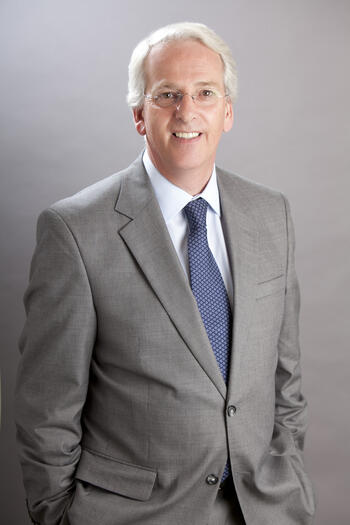
Before his appointment as Ambassador to NATO by President Obama in 2009, Daalder was a senior fellow in foreign policy studies at the Brookings Institution, specializing in American foreign policy, European security and transatlantic relations, and national security affairs. Prior to joining Brookings in 1998, he was an Associate Professor at the University of Maryland’s School of Public Policy and director of research at its Center for International and Security Studies. Ambassador Daalder was educated at Oxford and Georgetown Universities, and received his PhD in political science from the Massachusetts Institute of Technology.
Ivo Daalder
Speaker
President of the Chicago Council on Global Affairs and former US Ambassador to NATO
Lectures
The Contemporary
This project examines the “contemporary” with a focus on defining moments such as: 1945, 1973, 1989, and 2001. In recent years the concept of the contemporary has been taken up within limited disciplinary discourses and in the context of distinct geographical settings. The horizon of this project, however, is the global. We employ a comparative and interdisciplinary approach to the hybrid term “contemporary” as it intersects various fields and serves as a heuristic device to understand phenomena in politics, culture, and the arts.
The Europe Center April 2014 Newsletter
News Type
News
Date
Paragraphs
Special Event: The Europe Center Lectureship on Europe and the World
The Europe Center invites you to the inaugural annual lectures in this series by Adam Tooze, Barton M. Briggs Professor of History, Yale University.
“Making Peace in Europe 1917-1919: Brest-Litovsk and Versailles”
Date: Wednesday, Apr 30, 2014
Time: 4:00 - 5:30 pm
Location: Koret Taube Room, Gunn-SIEPR
“Hegemony: Europe, America and the Problem of Financial Reconstruction, 1916-1933”
Date: Thursday, May 1, 2014
Time: 4:00 - 5:30 pm
Location: Koret Taube Room, Gunn-SIEPR
“Unsettled Lands: The Interwar Crisis of Agrarian Europe”
Date: May 2, 2014
Time: 4:00 - 5:30 pm
Location: Bechtel Conference Center
Reception: 5:30 - 6:15 pm
RSVP by Apr 23, 2014
Image
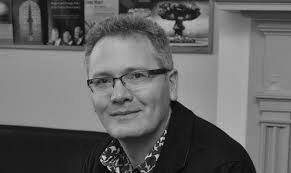
Adam Tooze will deliver three lectures from his forthcoming book, A World Fit for Heroes. In particular, he will speak about the history of the transformation of the global power structure that followed from Imperial Germany’s decision to provoke America’s declaration of war in 1917. Tooze is the author of The Wages of Destruction: The Making and Breaking of the Nazi Economy (2006) and Statistics and the German State 1900-1945: The Making of Modern Economic Knowledge (2001), among numerous other scholarly articles on modern European history.
Open Call: The Europe Center Graduate Student Grant Competition
The Europe Center invites applications from graduate and professional students at Stanford University whose research or work focuses on Europe. Funds are available for Ph.D. candidates across a wide range of disciplines in the humanities and social sciences to prepare for dissertation research and to conduct research on approved dissertation projects. The Europe Center also supports early graduate students who wish to determine the feasibility of a dissertation topic or acquire training relevant for that topic. Additionally, funds are available for professional students whose interests focus on some aspect of European politics, economics, history, or culture; the latter may be used to support an internship or a research project. Grants range from $500 to $5000.
Applications for the 2013-2014 Spring competition are currently being accepted through April 15, 2014. For additional details about the grant program, please visit our website.
Meet our Visiting Scholars: Andreas Kilcher
In each newsletter, The Europe Center would like to introduce you to a visiting scholar or collaborator at the Center. We welcome you to visit the Center and get to know our guests.
Image
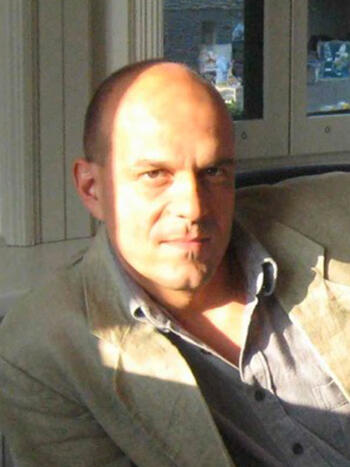
Andreas Kilcher, FSI-Humanities Center International Visitor 2013-2014, is professor of Literature and Cultural Studies at the Eidgenössische Technische Hochschule (ETH) Zurich. Kilcher is a prominent scholar of German-Jewish literature and culture, Kabbalah, and the European tradition of esotericism. He has written and edited a range of publications on the encounters between European and Jewish cultures from the sixteenth century through the present, with a focus on the twentieth century. His publications include Geteilte Freude: Schiller-Rezeption in der jüdischen Moderne (Munich, 2006), biographies of the writers Franz Kafka (Frankfurt, 2008) and Max Frisch (Berlin 2011) and numerous other articles. Kilcher’s current project includes collaboration with colleagues at Stanford on the divergent constructions of Jewish ethnography in German-speaking and Russian-speaking territories.
Student Scholar Profile: Christof Brandtner
The Europe Center regularly sponsors the research of undergraduate and graduate students through our research grant, internship, and scholarly exchange programs. We would like to introduce you to some of the students that we support and the projects on which they are working.
Image

Christof Brandtner, a PhD student in the Department of Sociology at Stanford, will be visiting the Vienna University of Economics and Business to present findings from his research on city rankings. Brandter’s project explores where the criteria of systematic city comparisons come from, and how they came to supplement economic power as measures of urban performance. By investigating the types and sources of variation in the evaluation of organizations, and by mapping the ways in which urban qualities are operationalized, this research sheds new light on questions related to the sustainability of global cities. Brandtner will use his visit to also conduct interviews with members of the urban development department of the City of Vienna.
Workshop Schedules
The Europe Center invites you to attend the talks of speakers in the following workshop series:
Europe and the Global Economy
Apr 3, 2014
Kåre Vernby, Associate Professor, Department of Government, Uppsala University
RSVP by Apr 2, 2014
Apr 17, 2014
Mark Hallerberg, Professor of Public Management and Political Economy, Hertie School of Governance
RSVP by Apr 14, 2014
May 15, 2014
Christina Davis, Prof. of Politics and International Affairs, Princeton University
RSVP by May 12, 2014
European Governance
May 22, 2014
Wolfgang Ischinger, Former German Ambassador to the U.S.; Chairman, Munich Security Conference
RSVP by May 19, 2014
May 29, 2014
Simon Hug, Professor of Political Science, University of Geneva
RSVP by May 26, 2014
The Europe Center Sponsored Events
We invite you to attend the following events sponsored or co-sponsored by The Europe Center:
French Culture Workshop
Apr 3, 2014
Mark Braude, Fellow, Humanities+design and French, Stanford
“Monte Carlo, Open City: The Making of a Cosmopolitan Company Town”
Apr 17, 2014
Michel Wieviorka, École des Hautes Études en Sciences Sociales
“The New Arena of Hatred and Racism in France and Europe”
May 1, 2014
Cécile Alduy, French, Stanford
Title TBA
Apr 11, 2014
Roundtable on Ukraine
Mark von Hagen, Valeriy Kuchynsky, Yaroslav Prytula
Apr 15, 2014
Ulrich Wilhelm, Director General, Bavarian Broadcasting Corporation
“Assessing the Impact of the NSA Spy Scandal on American-European Relations”
The Europe Center and FSI Stanford Special Event
Additional Details and RSVP by April 11, 2014
Jun 3, 2014
Tommaso Piffer
“The Allies, the European Resistance and the Origins of the Cold War in Europe”
Other Events
The Europe Center also invites you to attend the following events of interest:
Apr 10, 2014
Richard English, University of St. Andrews
“Does Terrorism Work? The Case of the Provisional IRA”
CISAC Social Science Seminar
May 2-3, 2014
Stanford Journal of International Law Conference
“Governing Intelligence: Transnational Threats and the National Security State”
Save the Date: Additional Details to follow
May 12, 2014
Latvian Cultural Evening: Sustaining a Memory of the Future
We welcome you to visit our website for additional details.
All News button
1
Display Hero Image Wide (1320px)
No
The Europe Center May 2014 Newsletter
News Type
News
Date
Paragraphs
Recap: The Europe Center Lectureship on Europe and the World
On April 30, May 1, and May 2, 2014, Adam Tooze, Barton M. Briggs Professor of History at Yale University, delivered in three parts The Europe Center Lectureship on Europe and the World, the first of an annual series.
With the centenary of the outbreak of the First World War as his backdrop, Tooze spoke about the history of the transformation of the global power structure that followed from Germany’s decision to provoke America’s declaration of war in 1917. He advanced a powerful explanation for why the First World War rearranged political and economic structures across Eurasia and the British Empire, sowed the seeds of revolution in Russia and China, and laid the foundations of a new global order that began to revolve around the United States.
The three lectures focused successively on diplomatic, economic, and social aspects of the troubled interwar history of Europe and its relationship with the wider world. Over the course of the lectures, he presented an argument for why the fate of effectively the whole of civilization changed in 1917, and why the First World War’s legacy continues to shape our world even today.
Tooze also participated in a lunchtime question-and-answer roundtable with graduate students from the History department.
 Tooze is the author of The Wages of Destruction: The Making and Breaking of the Nazi Economy(2006) and Statistics and the German State 1900-1945: The Making of Modern Economic Knowledge (2001), among numerous other scholarly articles on modern European history. His latest book, The Deluge: The Great War and the Remaking of Global Order 1916-1931, will be released in Summer 2014 in the United Kingdom and in Fall 2014 in the United States.
We welcome you to visit our website for additional details about this event.
Recap: European Commission President José Barroso Visits Stanford
José Manuel Barroso, President of the European Commission, delivered a lecture entitled, “Global Europe: From the Atlantic to the Pacific,” before an audience at Stanford on May 1, 2014.
Barroso discussed at length the political and economic consequences of the global financial crisis of 2008 for European affairs. He acknowledged that the crisis revealed “serious flaws” in the economic management of some national economies, but stressed that the 28-member union adapted and reformed to handle the fallout from the crisis. For example, he explained how banking supervision is now controlled at the “European level through the European Central Bank,” and that “there are common rules for banks so that we avoid having to use taxpayers' money to rescue them."
Barroso also discussed various political and security aspects related to the ongoing upheaval in Ukraine, and affirmed that Europe “stands ready” to support the country as it comes “closer to the European Union.” He added that Russia’s decision “to interfere, to destabilize, and to occupy part of the territory of a neighboring country” was a “gesture that we hoped was long buried in history books.”
 Barroso was named President of the Social Democratic Party (PSD) of Portugal in 1999, following which he was re-elected three times. He was appointed Prime Minister of Portugal in 2002. He remained in office until July 2004 when he was elected by the European Parliament to the post of President of the European Commission. He was re-elected to a second term as President of the European Commission by an absolute majority in the European Parliament in September 2009.
We welcome you to visit our website for additional details about this event.
Workshop: Comparative Approaches to the Study of Immigration, Ethnicity, and Religion
On May 9, 2014 and May 10, 2014, The Europe Center will host the Fourth Annual Workshop on Comparative Approaches to the Study of Immigration, Ethnicity, and Religion.
Speakers draw from a range of national and international universities and include Jens Hainmueller, Dominik Hangartner, Efrén Pérez, Lauren Prather, Jorge Bravo, Giovanni Facchini, Cecilia Testa, Harris Mylonas, Rahsaan Maxwell, Ali Valenzuela, Mark Helbling, Rob Ford, Matthew Wright, Karen Jusko, Maggie Peters, Justin Gest, Rafaela M. Dancygier, and Yotam Margalit.
The all-day workshop will begin at 8:30 am on Friday and at 9:15 am on Saturday, and will be held in the CISAC Conference Room in Encina Hall. Visitors are cordially invited to attend.
We welcome you to visit our website for additional details about this event.
Spring 2014 Graduate Student Grant Competition Winners Announced
Please join us in congratulating the winners of The Europe Center Spring 2014 Graduate Student Grant Competition:
Lisa Barge, German Studies, “Beyond Objectivity: Questioning Shifting Scientific Paradigms in Erwin Schrödinger's Thought”
Michela Giorcelli, Economics, “Transfer of Production and Management Model Across National Borders: Evidence from the Technical Assistance and Productivity Program”
Benjamin Hein, Modern European History, “Capitalism Dispersed: Frankfurt and the European Stock Exchanges, 1880-1960”
Michelle Kahn, Modern European History, “Everyday Integration: Turks, Germans, and the Boundaries of Europe”
Friederike Knüpling, German Studies, “Kleist vom Ende lesen”
Orysia Kulick, History, “Politics, Power, and Informal Networks in Soviet Ukraine”
Claire Rydell, U.S. History, “Inventing an American Liberal Tradition: How England's John Locke Became ‘America's Philosopher’, 1700-2000”
Lena Tahmassian, Iberian and Latin American Cultures, “Post-Utopian Visions: Modes of Countercultural Discourse of the Spanish Transition to Democracy”
Donni Wang, Classics, “Illich Seminar”
Lori Weekes, Anthropology & Law, “Nation Building in the Post-Soviet Baltics as a Legal, Institutional, and Ethno-Cultural Project”
The Spring Grant Competition winners will join 16 graduate students who were awarded competitive research grants by the Center in Fall 2013. The Center regularly supports graduate and professional students at Stanford University whose research or work focuses on Europe. Funds are available for Ph.D. candidates across a wide range of disciplines in the humanities and social sciences to prepare for dissertation research and to conduct research on approved dissertation projects. The Center also supports early graduate students who wish to determine the feasibility of a dissertation topic or acquire training relevant for that topic. Additionally, funds are available for professional students whose interests focus on some aspect of European politics, economics, history, or culture; the latter may be used to support an internship or a research project.
We welcome you to visit our website for additional details about this event.
Meet our Visiting Scholars: Vibeke Kieding Banik
In each newsletter, The Europe Center would like to introduce you to a visiting scholar or collaborator at the Center. We welcome you to visit the Center and get to know our guests.
 Vibeke Kieding Banik is currently affiliated as a postdoctoral fellow at the Department of Archaeology, Conservation and History, at the University of Oslo. Her main focus of research is on the history of minorities in Scandinavia, particularly Jews, with an emphasis on migration and integration. Her research interests also include gender history, and her current project investigates whether there was a gendered integration strategy among Scandinavian Jews in the period 1900-1940. Dr. Banik has authored several articles on Jewish life in Norway, Jewish historiography, and on the Norwegian women’s suffragette movement. She has taught extensively on Jewish history and is currently writing a book on the history of the Norwegian Jews, scheduled to be published in 2015.
Workshop Schedules
The Europe Center invites you to attend the talks of speakers in the following workshop series:
Europe and the Global Economy
May 15, 2014
Christina Davis, Professor of Politics and International Affairs, Princeton University
“Membership Conditionality and Institutional Reform: The Case of the OECD”
RSVP by May 12, 2014
European Governance
May 22, 2014
Wolfgang Ischinger, Former German Ambassador to the U.S.; Chairman, Munich Security Conference
“The Future of European Security & Defence”
RSVP by May 19, 2014
May 29, 2014
Simon Hug, Professor of Political Science, University of Geneva
“The European Parliament after Lisbon (and before)”
RSVP by May 26, 2014
The Europe Center Sponsored Events
We invite you to attend the following events sponsored or co-sponsored by The Europe Center:
May 16 and May 17, 2014
“Let There Be Enlightenment: The Religious and Mystical Sources of Rationality”
A Stanford University Conference
Margaret Jacks Hall: Terrace Room
May 29, 2014
Josef Joffe, FSI Senior Fellow, Hoover Institution Research Fellow, and Publisher/Editor of Die Zeit
“The Myth of America's Decline: Politics, Economics, and a Half Century of False Prophecies”
Oksenberg Conference Room
Jun 3, 2014
Tommaso Piffer, Marie Curie Postdoctoral Fellow, Harvard University and University of Cambridge
“The Allies, the European Resistance and the Origins of the Cold War in Europe”
History Corner, Room 307
Other Events
The Europe Center also invites you to attend the following event of interest:
May 12, 2014
Latvian Cultural Evening: Sustaining a Memory of the Future
Cubberley Auditorium
We welcome you to visit our website for additional details.
All News button
1
Display Hero Image Wide (1320px)
No
The Allies, the European Resistance and the Origins of the Cold War in Europe
-
The presentation summarizes preliminary findings of my research project on Allied policy towards resistance groups during World War II and its impact on post-war political and ideological divisions.
The research is linked with a multiplicity of historical problems: the western Allies’ balance of political and military considerations during World War II; the Anglo-American cooperation and competition in the field of intelligence; the use of special operations as an instrument of foreign policy, especially in regard to countries where the development of resistance movements had a strong impact on post-war settlement (e.g. Yugoslavia, Greece and Poland); the politics of communist movements between war and revolution in Central and Eastern Europe; the relationship between the Western Allies and the Soviet Union and the Allies’ perception of the latter.
The particular contribution of the project is to bring together aspects which are usually addressed separately: the different national scenarios, whose connections and mutual influence will be investigated; the two Western intelligence agencies, which have been researched mostly in separate ways by scholars of the corresponding nationalities; the Soviet and Western allies’ policies.
Tommaso Piffer is a Marie Curie Postdoctoral Fellow at the Davis Center for Russian and Eurasian Studies at Harvard and at the University of Cambridge. Among his publications is a biography of Alfredo Pizzoni, the political chief of the Italian Resistance (Il Banchiere della Resistenza, 2005), an account of the relationship between the Allies and the Italian Resistance during World War II (Gli Alleati e la Resistenza Italiana, 2010) as well as several essays. He also edited a book in memory of Victor Zaslavsky on Totalitarian societies and democratic transition (Società totalitarie e transizione alla democrazia, 2011, with Vladislav Zubok) and the collection of essays on the political mass murder of Porzus (Porzus. Violenza e resistenza sul confine orientale, 2012). He is an affiliate at the Harvard Center for European Studies and a contributor to the cultural insert of the Italian newspaper Corriere della Sera.
Open to Stanford affiliates
Sponsored by the Center for Russian, East European and Eurasian Studies and co-sponsored by The Europe Center
History Corner, Room 307
Tommaso Piffer
Marie Curie Postdoctoral Fellow, Davis Center for Russian and Eurasian Studies, Harvard and University of Cambridge
Speaker
Seminars
Adam Tooze Delivers The Europe Center Lectureship on Europe and the World
News Type
News
Date
Paragraphs
On April 30, May 1, and May 2, 2014, Adam Tooze, Barton M. Briggs Professor of History at Yale University, delivered in three parts "The Europe Center Lectureship on Europe and the World", the first of an annual series.
With the centenary of the outbreak of the First World War as his backdrop, Tooze spoke about the history of the transformation of the global power structure that followed from Germany’s decision to provoke America’s declaration of war in 1917. He advanced a powerful explanation for why the First World War rearranged political and economic structures across Eurasia and the British Empire, sowed the seeds of revolution in Russia and China, and laid the foundations of a new global order that began to revolve around the United States.
The three lectures focused successively on diplomatic, economic, and social aspects of the troubled interwar history of Europe and its relationship with the wider world. Over the course of the lectures, he presented an argument for why the fate of effectively the whole of civilization changed in 1917, and why the First World War’s legacy continues to shape our world even today.
Tooze also participated in a lunchtime question-and-answer roundtable with graduate students from the History department.
The First Lecture
Tooze motivated his first lecture, entitled, “Making Peace in Europe 1917-1919: Brest-Litovsk and Versailles,” by the recent political developments in Ukraine, Crimea, and in Eastern Europe. In light of these political frictions, Tooze posed the question: Is a comprehensive peace for Europe, both East and West, possible? To properly answer this question, Tooze argued that we must look back to the first moment in which that question was posed, during and after World War I.
He focused on the influence of Russian power and powerlessness in shaping both the abortive effort to make peace in the East between Imperial Germany and Soviet Russia at Brest Litovsk—the first treaty to recognize the existence of an independent Ukraine—and the efforts to make peace in the West at Versailles and after.
In the Brest treaty, Russia lost territories inhabited by 55 million people, one third of its agricultural land, more than half of its industrial undertakings, and 90 percent of its coal mines. Whereas conventional narratives view these developments either as an expression of German ultra imperialism or as the ultimate demonstration of Lenin’s revolutionary realism, Tooze drew attention to Brest as the first international venue to recognize the independence of Ukraine in the modern era.
“The map that was created at Brest, the existence side by side within separate dispensations of a fragile and independent Ukraine alongside a battered, reduced and resentful Russia, is strikingly reminiscent of that which we have taken for granted since the collapse of the Soviet Union in 1991.”
Tooze argued that Brest is the only historical precedent for the structure that the international community is seeking to defend today in Ukraine. In turn, “the first good peace gone bad was not Versailles, but Brest. Furthermore, it is not just that Versailles echoes Brest, but Brest actually directly conditioned the more familiar story of Versailles. And after acts one and two, after Brest and Versailles, there was a third act in which between 1919 and 1923 the search for a truly comprehensive peace in Europe, a peace that would embrace eastern as well as western Europe, unleashed a violent see-sawing movement that did not finally come to rest until Europe relapsed into exhausted division in 1924.”
Tooze drew insights from the period between 1917 and 1923 to draw conclusions about the stability of the world order that has largely been taken for granted since 1991.
“What the current crisis makes clear is that if we want to disarm Russian nationalism, we need to find some way of addressing the trauma of 1991, the collapse of the Soviet Union and the dismembering of its component parts. If we do not want to entrench a new cold war, we need to make a serious effort to reconcile Moscow to the new order that must otherwise seem like a Brest Litovsk set in stone.”
The Second Lecture
In his second lecture, “Hegemony: Europe, America and the problem of financial reconstruction 1916-1933,” Tooze reflected on the rearrangements in the transatlantic power structure in the aftermath of World War I. Having established itself in the 19th century as the financial center of the world, Europe’s sudden impoverishment by World War I came as a dramatic shock. The ensuing transatlantic crises of the 1920s and early 1930s were not only the most severe, but also the most consequential in the history of Europe and the wider world.
Tooze began by discussing the vast efforts that were made to restore European economies to prewar normality—and in particular, to restore gold and gold-backed currency as the basis of the international financial system—in the immediate aftermath of 1919.
Yet, these efforts culminated not in prosperity but in unprecedented deflation, unemployment and trading disruptions: “The result, by 1933 was a truly catastrophic disintegration, which marks a caesura in the history of capitalism and in world politics. The demons of imperialism, racism and nationalism were unleashed.”
To this day, Tooze pointed out, there is substantial disagreement amongst both social scientists and historians as to the causes of these economic developments. Conventional interpretations view the interwar period either as an era of trans-historic hegemonic succession or as time when global economic cooperation disintegrated, yet Tooze argued that neither account gives adequate importance to the actual impact of World War I. According to Tooze, the war abruptly changed the nature of the international cooperation by laying the foundations of a new world system that centered on the public debt of the major entente allies: Britain, France, Russia, and the United States.
“Within that new system, from 1918 a new game of politicized global finance was played out, a power game in which the United States emerged from November 1916 as the central actor…Once we acknowledge this shift in the functioning of the international financial system, then the politics of that crucial moment in 1931 appear rather different.”
Tooze argued that the political issue of the settlement of war debts played a central role in shaping the groundwork for each nation’s return to the gold standard between 1924 and 1930. Two complementary power plays emerged and began to define what became a “self-equilibrating” system: the strategy of persistent surplus and the strategy of persistent deficit.
According to Tooze, the absence of American influence was crucial in determining Europe’s economic fate during this period. “What was catastrophic was America’s failure to commit to any of its former partners in the war, in leading a joint effort to create a new order.”
These developments hold major lessons for our understanding of world politics today, because many of the current imbalances in the global economy stem from national strategies that resonate strongly with the politics of the interwar era.
The Third Lecture
In his third and final lecture, “Unsettled lands: the interwar crisis of agrarian Europe,” Tooze laid out an ambitious agenda for a new agrarian history of the interwar crisis by drawing on “the strange entangled” micro history of an agrarian cooperative in Wuerttemberg.
Lost in scholars’ preoccupation with the study of the industrial revolution, Tooze reminded us, is the stark fact that until the middle of the twentieth century Europe, like the rest of the world, was majority agrarian. Europe’s agrarian population peaked as late as in the 1930s at roughly 250 million people. Roughly 110 million lived in the Soviet Union while the remainder inhabited the rest of Europe, pursuing occupations as rural laborers, sharecroppers, long-term tenants and peasant proprietors.
The interwar era heralded major shifts and dislocations in the organization of agrarian life in Europe. During this period, “more than in any other sector millions of small scale producers were caught up in the turmoil of early globalization.” Opportunities for migration and movement to industrial work were limited during the interwar period, producing overcrowding and severe distress. Additionally, rural struggles over the distribution of land—in Russia, Italy, Spain, and much of Central and Eastern Europe in the immediate aftermath of World War I—routinely spilled over into violent confrontation.
And yet, Tooze observed, the most influential accounts of the interwar crisis, framed by the industrial and urban world of the later twentieth-century Europe, have tended to ignore these agrarian developments, focusing instead on workers, businessmen, politicians and soldiers.
An alternate approach that studies the ebbs and flows of agrarian life in Europe during the interwar period promises to shed new light on the historical political economy of the period. Tooze’s proposal was to eschew considerations of the “macrostructures of modern history” but to instead delve into a micro history of “the more intimate networks through which the interwar crisis was understood and lived.” His goal was “to reconstruct the experience of structural change, to reconstruct how Europeans came to terms with this trajectory, how they sought to resist, to deflect to shape or to accommodate themselves to it.”
Tooze’s micro history pertained to Haeusern, a tiny Wuerttemberg hamlet containing nine homesteads that was situated 2 kilometers away from the village of Ummendorf, on the rail-line connecting the medieval market town of Biberach to Stuttgart.
“There were thousands of cooperatives across Europe, for all sorts of things, but amongst specialists this unlikely place came to stand in agronomical debates at the mid-century for a special kind of agrarian modernity…It was in fact to become an improbable model for global development policy.”
By delving into the micro history of Haeusern—which is to become the foundation for his latest research agenda— Tooze attempted to illustrate how brining the peasantry “back in” has the potential not only to throw new light on Europe's great epoch of crisis, but to open that history, beyond the “Bloodlands” to the wider world.
Video recordings of these lectures can be found on The Europe Center Lectureship on Europe and the World webpage.
Tooze is the author of The Wages of Destruction: The Making and Breaking of the Nazi Economy (2006) and Statistics and the German State 1900-1945: The Making of Modern Economic Knowledge (2001), among numerous other scholarly articles on modern European history. Tooze’s latest book, The Deluge: The Great War and the Remaking of Global Order 1916-1931, will be released in Summer 2014 in the United Kingdom and in Fall 2014 in the United States.
Hero Image

All News button
1
George W. Bush shares presidential insights with Stanford students
News Type
News
Date
Paragraphs
Former President George W. Bush met with Stanford students for an hourlong conversation that touched on many of the defining moments and policies of his presidency.
In a relaxed and sometimes self-deprecating exchange on May 5, Bush talked about the limits of congressional power and his relationships and personal diplomacy with other world leaders. His tone was more serious when discussing what he described as universal desires for freedom, his military strategies following 9/11, and his commitment to addressing Africa’s HIV/AIDS pandemic.
Mariano-Florentino Cuéllar, director of the university’s Freeman Spogli Institute for International Studies, moderated the session. Stanford President John Hennessy and Condoleezza Rice – Bush’s secretary of state and national security adviser who has returned to teaching political science and business at Stanford – joined the conversation.
"FSI has a terrific track record of convening leaders at Stanford, from the head of the International Monetary Fund to prime ministers and presidents,” Cuéllar said. “On this occasion, we wanted our students to have an opportunity for a candid conversation with one of the key policymakers of the early 21st century, and we think such experiences will further prepare them for leadership in a complex world."
About 30 students were invited to the session at Encina Hall, but they didn’t know they were meeting Bush until the 43rd president walked into the room.
“I suspect he misses this sort of engagement,” said Gregory Schweizer, a second-year law school student who was part of the discussion that also covered immigration reform, national education policies and the Edward Snowden affair.
“The media always portrays him as being disengaged from current affairs,” Schweizer said. “But I’m impressed with how interested and engaged he still is.”
Along with representatives from Stanford Law School, other students were invited from the Ford Dorsey Program in International Policy Studies. Honors students from FSI’s Center for International Security and Cooperation and Center on Democracy, Development, and the Rule of Law also joined the conversation.
Bush’s visit was arranged with the help of Brad Freeman, a former university trustee and Ronald Spogli, who is currently on Stanford's board of trustees. Freeman and Spogli are longtime friends of the former president and philanthropists who donated a naming gift to FSI in 2005. Bush appointed Spogli as ambassador to Italy in 2005 and as ambassador to San Marino a year later.
Stanford has a tradition of hosting current and former heads of state, including German Chancellor Angela Merkel and former Russian President Dmitry Medvedev – both of whom visited in 2010.
Hero Image

All News button
1