Authors
News Type
News
Date
Paragraphs

The new European Security Initiative at Stanford will examine the long-term policy issues and trends in Europe's changing geopolitical landscape, especially given Russia's growing aggression in the region.


First, it was the 2014 annexation of Crimea. Then, it was the intervention in eastern Ukraine. Most recently, airstrikes and naval cruise missiles are hitting targets in Syria.

What, many are wondering, is Russian President Vladimir Putin up to?

Russia's spate of aggressive tactics has thrust Europe into a new era of uncertainty and has raised pertinent policy questions that Stanford scholars have set out to explore more deeply with the launch this fall of a new European Security Initiative (ESI).

The working group of a dozen senior faculty members – whose breadth of expertise in Russian and Eurasian affairs spans multiple administrations – portrays Russia's actions as constituting the greatest challenge to European security and stability since the end of the Cold War. At the same time, Russia's own unstable economy and political landscape complicate the matter; policy changes moving forward will be high-stakes decisions, as Russia and the West step into a period of sustained competition.

Stanford, with its heavyweight lineup, is poised to play a role. The European Security Initiative – formed by the Freeman Spogli Institute for International Studies (FSI), the Europe Center, the Hoover Institution and other university partners – will serve as the collaborative framework for the policy research.

"Policymakers in Washington have to react immediately to events in the world, making it difficult to develop longer-term strategies for dealing with ongoing challenges," said FSI's director, Michael McFaul. "At Stanford, we have the luxury of being able to think about longer trends and then recommend more enduring strategies to our colleagues in government.

"We also have deep expertise on Russia and Europe, which assigns us a special responsibility to tackle these new challenges to European security."

The initial group of Stanford faculty involved in the initiative includes: McFaul, former U.S. ambassador to Russia and a professor of political science; Condoleezza Rice, former U.S. secretary of state and a professor of political science; international studies Professor Coit Blacker, former special assistant to President Bill Clinton and director for Russian, Ukrainian and Eurasian Affairs on the National Security Council; David Holloway, professor of history and of political science, and one of the world's leading authorities on Russia's nuclear weapons program and defense policies; and Kathryn Stoner, an expert on Russia's governance and political economy and a senior fellow at FSI. 

Analyzing Russia's actions

One of the first objectives of the initiative is to understand the nature of the conflicts at hand and develop theories on Russia's domestic and international intentions.

For example, is Putin trying to re-establish Russian dominance over former Soviet states? Is he trying to distract internal constituencies from an array of domestic problems? Depending on the answers, the initiative's faculty members say the United States would have to pursue different policy options.

Working group discussions and a series of public events featuring key figures in U.S.-Russian and European policy will facilitate the Stanford-based dialogue and help broaden the academic discussion among students.

In September, for instance, ESI launched the new academic year with a talk at the Europe Center by Anders Fogh Rasmussen, who was at the center of European and global politics as the former secretary-general of NATO.

Other fall quarter ESI events, past and upcoming, include an Oct. 14 talk by Sergey Aleksashenko, a former deputy chairman of the Russian Central Bank; a Nov. 2 visit by Vladimir Milov, the former Russian deputy minister of energy; and a Nov. 9 visit by General Philip M. Breedlove, supreme allied commander, Europe. 

Students, scholarship

In addition, Stanford students are showing a growing interest in Putin's actions and the unfolding refugee crisis in Europe. Applications for new student fellowships on European issues in Brussels this past summer far outstripped the six spaces available. To capitalize on this renewed interest, the initiative will involve students through events, new fellowships and a new seminar.

The initiative aims to rebuild scholarship in an area of academic interest that waned as the Cold War ended.

"At the end of the Cold War, many thought that we no longer needed to study Russia. I myself even stopped teaching courses on Russia and Eastern Europe," McFaul said. "That was a mistake." He noted that Stanford is ideally positioned to seed a new generation of expertise on Russia and Europe.

FSI provided the startup money to create the initiative, but it will be looking for funds to sustain the program.


This article was originally published in The Stanford Report on October 28, 2015.

Hero Image
15803 europe news
All News button
1

Encina Hall

616 Serra St., C100

Stanford, CA 94305-6055

(650) 723-9732
0
sam_rebo_headshot.jpg

Sam Rebo is a Research and Project Assistant at FSI. He aids FSI Director Michael McFaul with background research for his upcoming book and facilitates FSI's new European Security Initiative.

Sam received his B.A. in International Relations with Honors in International Security from Stanford University. In the past, he has worked at the Moscow Carnegie Center, the French Institute of International Relations in Paris, and Global Integrity in Washington, D.C. His interests include Soccer and the Violin. He claims to make the best grilled cheese sandwich known to man.

Research Assistant and Project Coordinator
-

**Reservations for this event is closed**  We are at capacity and cannot accept further reservations.


Twenty-four years ago the Soviet Union collapsed. Since then, Russia has been transformed in many dimensions but it is difficult to describe the country today.  According to its Constitution, Russia is a democratic republic and federation, but modern Russia looks more like an absolute monarchy. The Russian economy is dominated by state corporations, the oligarchs of the 90's, and the cronies of the 2000’s. The economy has been in recession for more than a year and hasn’t exhibited any signs of recovery. Is the country stable? Can it face its governance and economic challenges? Can we forecast the medium-term future of the Russian economy? Could the economy collapse?


Sergey Aleksashenko is a Senior Fellow at the Development Center (a Moscow-based think tank) and Nonresident Senior fellow at the Brookings Institution. Since graduating Moscow State University in 1986, he has been involved in academia, the public sector, and in business. From 1990-1991 he was appointed to the Commission on Economic reforms of the Government of the USSR as one of the "500 days" plan members. In 1993-1995 he worked as deputy Minister of Finance of Russia in charge of budgetary planning, macroeconomic, and tax policy. From 1995-1998 he was responsible for monetary policy as the first deputy Governor of the Central bank of Russia. From 2000 to 2004 he was the deputy CEO of the Interros Holding where he lead the strategy and business development teams. In 2006-2008 he was the Chairman and CEO of Merrill Lynch Russia, the largest financial institution in Moscow, where he greatly increased the bank's scope and presence. Before the financial crisis of 2008, he returned to academia and became the Director of Macroeconomic Research at the Higher School of Economics in Moscow. At the same time, he sat on the boards of Aeroflot, United Grain company, United Aircraft Corporation, and the National Reserve bank. At the end of 2012 he faced political persecution and in September 2013 he left Russia for Washington D.C. where he currently resides. 

Sergey Aleksashenko Former Deputy Chairman of the Russian Central Bank
Lectures
-

This event is now full, and we are unable to accept any further RSVPs.  Please email khaley@stanford.edu if you would like to be added to a wait list.


Russia's aggressive foreign policy is backed by Putin's domestic popularity ratings and his strong grip on Russia's political system. But in reality, how firmly does Putin control Russian politics? Can the ongoing economic crisis in Russia pose challenges to his system and the upcoming federal elections of 2016-2018? What impact will Russian domestic politics play in Russia's international behavior?


Vladimir Milov is a Russian opposition politician, publicist, economist & energy expert. He was the Deputy Minister of Energy of Russia (2002), adviser to the Minister of Energy (2001-2002), and head of strategy department at the Federal Energy Commission, the natural monopoly regulator (1999-2001). Milov is the author of major energy reform concepts, including the concept of market restructuring and unbundling of Gazprom, which was banned from implementation by President Vladimir Putin. He is the founder and president of the Institute of Energy Policy, a leading independent Russian energy policy think tank (since 2003). Milov is a columnist of major Russian political and business publications, including Forbes Russia, and a frequent commentator on Russian political and economic affairs in major Western media outlets (The New York Times, The Financial Times, The Washington Post, The Economist, etc.). Since leaving the Russian Government in 2002, Milov has became a vocal public critic of Vladimir Putin’s dirigiste and authoritarian course. Milov is also active in the Russian opposition politics, serving as Chairman of the “Democratic Choice” opposition party (www.en.demvybor.ru), and is also known as co-author of the critical public report on Vladimir Putin’s Presidential legacy called “Putin. The Results”, written together with Boris Nemtsov (several editions published since 2008).

Vladimir Milov former Russian Deputy Minister of Energy Speaker
Lectures
-

Due to the high interest in this event, we have moved it to a larger room.  It is now in the Oksenberg Conference Room, Encina Hall, 3rd floor.


The February Minsk II agreement introduced a fragile ceasefire in eastern Ukraine, following a year of crisis and conflict between Kyiv and Moscow.  Ukrainian President Poroshenko needs to grapple with a daunting list of critical economic and political reforms.  Russian President Putin, however, appears intent on destabilizing the Ukrainian government and has the means, including military force, to do so.  What can we expect next in the Ukraine-Russia stand-off, and how should the West respond?

Image
Steven Pifer


Steven Pifer is a senior fellow at the Brookings Institution, where his work focuses on arms control, Ukraine and Russia. A retired Foreign Service officer, his more than 25 years with the State Department included assignments as deputy assistant secretary of state with responsibilities for Russia and Ukraine (2001-2004), ambassador to Ukraine (1998-2000), and special assistant to the president and senior director for Russia, Ukraine and Eurasia on the National Security Council (1996-1997).


Co-sponsored by the Freeman Spogli Institute for International Studies and The Europe Center.

Steven Pifer Senior Fellow Speaker the Brookings Institution
Lectures
-

At the NATO Summit in Wales in September 2014, NATO leaders were clear about the security challenges on the Alliance’s borders. In the East, Russia’s actions threaten our vision of a Europe that is whole, free and at peace.  On the Alliance’s southeastern border, ISIL’s campaign of terror poses a threat to the stability of the Middle East and beyond.  To the south, across the Mediterranean, Libya is becoming increasingly unstable. As the Alliance continues to confront theses current and emerging threats, one thing is clear as we prepare for the 2016 Summit in Warsaw: NATO will adapt, just as it has throughout its 65-year history.

Image
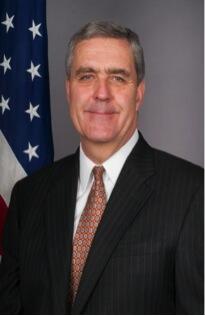
Douglas Lute, Ambassador of the United States to NATO


In August 2013, Douglas E. Lute was sworn-in as the Ambassador of the United States to the North Atlantic Treaty Organization (NATO).  From 2007 to 2013, Lute served at the White House under Presidents Bush and Obama, first as the Assistant to the President and Deputy National Security Advisor for Iraq and Afghanistan, and more recently as the Deputy Assistant to the President focusing on Afghanistan, Pakistan and India.  In 2010, AMB Lute retired from the U.S. Army as a Lieutenant General after 35 years on active duty.  Prior to the White House, he served as the Director of Operations on the Joint Staff, overseeing U.S. military operations worldwide. He served multiple tours in NATO commands including duty in Germany during the Cold War and commanding U.S. forces in Kosovo.  He holds degrees from the United States Military Academy and Harvard University.

A light lunch will be provided.  Please plan to arrive by 11:30am to allow time to check in at the registration desk, pick up your lunch and be seated by 12:00 noon.

Co-sponsored by The Europe Center, the Freeman Spogli Institute for International Studies, the Center for International Security and Cooperation and the Center for Russian, East European and Eurasian Studies.


Douglas Lute United States Ambassador to NATO Speaker
Lectures
News Type
Commentary
Date
Paragraphs


As the world reacts to the death of Boris Nemtsov, FSI Director Michael McFaul adds his thoughts and commentary on the slaying of the Russian opposition leader. McFaul, who served as Washington’s ambassador to Moscow, knew Nemtsov well and called him a “real patriot who believed in the possibility of Russia’s greatness.”

The outspoken opposition leader was shot dead Friday evening in central Moscow, on a bridge near Red Square. His death came several days before he was to lead a public protest of the war in Ukraine.

“He was my friend before he was my interlocutor as a government official,” McFaul said. “He was one of the most charismatic politicians that I’ve known in Russia for the last 30 years.”
 
 
Listen to and read more from McFaul:


Hero Image
nemtsov
A poster of Kremlin Boris Nemtsov is seen during a march to commemorate him near St. Basil's Cathedral in central Moscow March 1. Holding placards declaring "I am not afraid", thousands of Russians marched in Moscow on Sunday in memory of Nemtsov, whose murder has widened a split in society that some say could threaten Russia's future. The poster reads, "Heroes don't die".
Reuters
All News button
1
-

This event has been cancelled. We will update our website once the new date has been determined.

Encina Hall, C148
616 Jane Stanford Way
Stanford, CA 94305

0
Olivier Nomellini Senior Fellow at the Freeman Spogli Institute for International Studies
Director of the Ford Dorsey Master's in International Policy
Research Affiliate at The Europe Center
Professor by Courtesy, Department of Political Science
yff-2021-14290_6500x4500_square.jpg

Francis Fukuyama is the Olivier Nomellini Senior Fellow at Stanford University's Freeman Spogli Institute for International Studies (FSI), and a faculty member of FSI's Center on Democracy, Development and the Rule of Law (CDDRL). He is also Director of Stanford's Ford Dorsey Master's in International Policy, and a professor (by courtesy) of Political Science.

Dr. Fukuyama has written widely on issues in development and international politics. His 1992 book, The End of History and the Last Man, has appeared in over twenty foreign editions. His book In the Realm of the Last Man: A Memoir will be published in fall 2026.

Francis Fukuyama received his B.A. from Cornell University in classics, and his Ph.D. from Harvard in Political Science. He was a member of the Political Science Department of the RAND Corporation, and of the Policy Planning Staff of the US Department of State. From 1996-2000 he was Omer L. and Nancy Hirst Professor of Public Policy at the School of Public Policy at George Mason University, and from 2001-2010 he was Bernard L. Schwartz Professor of International Political Economy at the Paul H. Nitze School of Advanced International Studies, Johns Hopkins University. He served as a member of the President’s Council on Bioethics from 2001-2004. He is editor-in-chief of American Purpose, an online journal.

Dr. Fukuyama holds honorary doctorates from Connecticut College, Doane College, Doshisha University (Japan), Kansai University (Japan), Aarhus University (Denmark), the Pardee Rand Graduate School, and Adam Mickiewicz University (Poland). He is a non-resident fellow at the Carnegie Endowment for International Peace. He is a member of the Board of Trustees of the Rand Corporation, the Board of Trustees of Freedom House, and the Board of the Volcker Alliance. He is a fellow of the National Academy for Public Administration, a member of the American Political Science Association, and of the Council on Foreign Relations. He is married to Laura Holmgren and has three children.

(October 2025)

CV
Date Label
Olivier Nomellini Senior Fellow at the Freeman Spogli Institute for International Studies (FSI); Resident in FSI's Center on Democracy, Development, and the Rule of Law; Professor, by courtesy, of Political Science Speaker Stanford University
Seminars
Subscribe to Russia and Eurasia