News Type
News
Date
Paragraphs

Special Event:  The Europe Center Lectureship on Europe and the World

 
The Europe Center invites you to the inaugural annual lectures in this series by Adam Tooze, Barton M. Briggs Professor of History, Yale University. 
 
“Making Peace in Europe 1917-1919: Brest-Litovsk and Versailles”
Date: Wednesday, Apr 30, 2014
Time: 4:00 - 5:30 pm
Location: Koret Taube Room, Gunn-SIEPR
 
“Hegemony: Europe, America and the Problem of Financial Reconstruction, 1916-1933”
Date: Thursday, May 1, 2014
Time: 4:00 - 5:30 pm
Location: Koret Taube Room, Gunn-SIEPR
 
“Unsettled Lands: The Interwar Crisis of Agrarian Europe”
Date: May 2, 2014
Time: 4:00 - 5:30 pm
Location: Bechtel Conference Center
Reception: 5:30 - 6:15 pm
 
RSVP by Apr 23, 2014
 
 
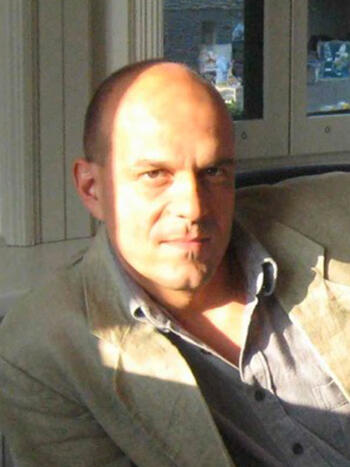
Image
Image of Adam Tooze

Adam Tooze will deliver three lectures from his forthcoming book, A World Fit for Heroes. In particular, he will speak about the history of the transformation of the global power structure that followed from Imperial Germany’s decision to provoke America’s declaration of war in 1917. Tooze is the author of The Wages of Destruction: The Making and Breaking of the Nazi Economy (2006) and Statistics and the German State 1900-1945: The Making of Modern Economic Knowledge (2001), among numerous other scholarly articles on modern European history.


Open Call:  The Europe Center Graduate Student Grant Competition

 
The Europe Center invites applications from graduate and professional students at Stanford University whose research or work focuses on Europe. Funds are available for Ph.D. candidates across a wide range of disciplines in the humanities and social sciences to prepare for dissertation research and to conduct research on approved dissertation projects. The Europe Center also supports early graduate students who wish to determine the feasibility of a dissertation topic or acquire training relevant for that topic. Additionally, funds are available for professional students whose interests focus on some aspect of European politics, economics, history, or culture; the latter may be used to support an internship or a research project. Grants range from $500 to $5000.
 
Applications for the 2013-2014 Spring competition are currently being accepted through April 15, 2014. For additional details about the grant program, please visit our website.


Meet our Visiting Scholars:  Andreas Kilcher 

 
In each newsletter, The Europe Center would like to introduce you to a visiting scholar or collaborator at the Center. We welcome you to visit the Center and get to know our guests.
 
Image
Image of Andreas Kilcher

Andreas Kilcher, FSI-Humanities Center International Visitor 2013-2014, is professor of Literature and Cultural Studies at the Eidgenössische Technische Hochschule (ETH) Zurich. Kilcher is a prominent scholar of German-Jewish literature and culture, Kabbalah, and the European tradition of esotericism. He has written and edited a range of publications on the encounters between European and Jewish cultures from the sixteenth century through the present, with a focus on the twentieth century. His publications include Geteilte Freude: Schiller-Rezeption in der jüdischen Moderne (Munich, 2006), biographies of the writers Franz Kafka (Frankfurt, 2008) and Max Frisch (Berlin 2011) and numerous other articles. Kilcher’s current project includes collaboration with colleagues at Stanford on the divergent constructions of Jewish ethnography in German-speaking and Russian-speaking territories. 


Student Scholar Profile:  Christof Brandtner

 
The Europe Center regularly sponsors the research of undergraduate and graduate students through our research grant, internship, and scholarly exchange programs. We would like to introduce you to some of the students that we support and the projects on which they are working.
 
 
Image
Image of Christof Brandtner

Christof Brandtner, a PhD student in the Department of Sociology at Stanford, will be visiting the Vienna University of Economics and Business to present findings from his research on city rankings. Brandter’s project explores where the criteria of systematic city comparisons come from, and how they came to supplement economic power as measures of urban performance. By investigating the types and sources of variation in the evaluation of organizations, and by mapping the ways in which urban qualities are operationalized, this research sheds new light on questions related to the sustainability of global cities. Brandtner will use his visit to also conduct interviews with members of the urban development department of the City of Vienna.


Workshop Schedules  

 
The Europe Center invites you to attend the talks of speakers in the following workshop series: 
 

Europe and the Global Economy

 
Apr 3, 2014
Kåre Vernby, Associate Professor, Department of Government, Uppsala University
RSVP by Apr 2, 2014
 
Apr 17, 2014
Mark Hallerberg, Professor of Public Management and Political Economy, Hertie School of Governance 
RSVP by Apr 14, 2014
 
May 15, 2014
Christina Davis, Prof. of Politics and International Affairs, Princeton University
RSVP by May 12, 2014
 

European Governance

 
May 22, 2014
Wolfgang Ischinger, Former German Ambassador to the U.S.; Chairman, Munich Security Conference
RSVP by May 19, 2014
 
May 29, 2014
Simon Hug, Professor of Political Science, University of Geneva
RSVP by May 26, 2014


The Europe Center Sponsored Events

 
We invite you to attend the following events sponsored or co-sponsored by The Europe Center:
 
French Culture Workshop
Apr 3, 2014
    Mark Braude, Fellow, Humanities+design and French, Stanford
“Monte Carlo, Open City: The Making of a Cosmopolitan Company Town”
Apr 17, 2014  
    Michel Wieviorka, École des Hautes Études en Sciences Sociales
“The New Arena of Hatred and Racism in France and Europe”
May 1, 2014
    Cécile Alduy, French, Stanford
Title TBA
 
Apr 11, 2014
Roundtable on Ukraine
Mark von Hagen, Valeriy Kuchynsky, Yaroslav Prytula
 
Apr 15, 2014
Ulrich Wilhelm, Director General, Bavarian Broadcasting Corporation
“Assessing the Impact of the NSA Spy Scandal on American-European Relations” 
The Europe Center and FSI Stanford Special Event
Additional Details and RSVP by April 11, 2014
 
Jun 3, 2014
Tommaso Piffer
“The Allies, the European Resistance and the Origins of the Cold War in Europe”


Other Events

 
The Europe Center also invites you to attend the following events of interest:
 
Apr 10, 2014
Richard English, University of St. Andrews
“Does Terrorism Work? The Case of the Provisional IRA”
CISAC Social Science Seminar
 
May 2-3, 2014
Stanford Journal of International Law Conference
“Governing Intelligence: Transnational Threats and the National Security State”
Save the Date: Additional Details to follow
 
May 12, 2014
Latvian Cultural Evening: Sustaining a Memory of the Future
 
 
We welcome you to visit our website for additional details. 
 
All News button
1
News Type
News
Date
Paragraphs

Recap:  The Europe Center Lectureship on Europe and the World

 
On April 30, May 1, and May 2, 2014, Adam Tooze, Barton M. Briggs Professor of History at Yale University, delivered in three parts The Europe Center Lectureship on Europe and the World, the first of an annual series. 
 
With the centenary of the outbreak of the First World War as his backdrop, Tooze spoke about the history of the transformation of the global power structure that followed from Germany’s decision to provoke America’s declaration of war in 1917. He advanced a powerful explanation for why the First World War rearranged political and economic structures across Eurasia and the British Empire, sowed the seeds of revolution in Russia and China, and laid the foundations of a new global order that began to revolve around the United States. 
 
The three lectures focused successively on diplomatic, economic, and social aspects of the troubled interwar history of Europe and its relationship with the wider world. Over the course of the lectures, he presented an argument for why the fate of effectively the whole of civilization changed in 1917, and why the First World War’s legacy continues to shape our world even today.
 
Tooze also participated in a lunchtime question-and-answer roundtable with graduate students from the History department.
 
Image of Yale's Barton M. Briggs Professor of History Adam Tooze, speaking at Stanford University, May 2, 2014Tooze is the author of The Wages of Destruction: The Making and Breaking of the Nazi Economy(2006) and Statistics and the German State 1900-1945: The Making of Modern Economic Knowledge (2001), among numerous other scholarly articles on modern European history. His latest book, The Deluge: The Great War and the Remaking of Global Order 1916-1931, will be released in Summer 2014 in the United Kingdom and in Fall 2014 in the United States.
 
We welcome you to visit our website for additional details about this event.


Recap:  European Commission President José Barroso Visits Stanford

 
José Manuel Barroso, President of the European Commission, delivered a lecture entitled, “Global Europe: From the Atlantic to the Pacific,” before an audience at Stanford on May 1, 2014. 
 
Barroso discussed at length the political and economic consequences of the global financial crisis of 2008 for European affairs. He acknowledged that the crisis revealed “serious flaws” in the economic management of some national economies, but stressed that the 28-member union adapted and reformed to handle the fallout from the crisis. For example, he explained how banking supervision is now controlled at the “European level through the European Central Bank,” and that “there are common rules for banks so that we avoid having to use taxpayers' money to rescue them." 
 
Barroso also discussed various political and security aspects related to the ongoing upheaval in Ukraine, and affirmed that Europe “stands ready” to support the country as it comes “closer to the European Union.” He added that Russia’s decision “to interfere, to destabilize, and to occupy part of the territory of a neighboring country” was a “gesture that we hoped was long buried in history books.”
 
Image of José Manuel Barroso, President of the European CommissionBarroso was named President of the Social Democratic Party (PSD) of Portugal in 1999, following which he was re-elected three times. He was appointed Prime Minister of Portugal in 2002. He remained in office until July 2004 when he was elected by the European Parliament to the post of President of the European Commission. He was re-elected to a second term as President of the European Commission by an absolute majority in the European Parliament in September 2009.
 
We welcome you to visit our website for additional details about this event.


Workshop:  Comparative Approaches to the Study of Immigration, Ethnicity, and Religion

 
On May 9, 2014 and May 10, 2014, The Europe Center will host the Fourth Annual Workshop on Comparative Approaches to the Study of Immigration, Ethnicity, and Religion.
 
Speakers draw from a range of national and international universities and include Jens Hainmueller, Dominik Hangartner, Efrén Pérez, Lauren Prather, Jorge Bravo,  Giovanni Facchini, Cecilia Testa, Harris Mylonas, Rahsaan Maxwell, Ali Valenzuela, Mark Helbling, Rob Ford, Matthew Wright, Karen Jusko, Maggie Peters, Justin Gest, Rafaela M. Dancygier, and Yotam Margalit.
 
The all-day workshop will begin at 8:30 am on Friday and at 9:15 am on Saturday, and will be held in the CISAC Conference Room in Encina Hall. Visitors are cordially invited to attend. 
 
We welcome you to visit our website for additional details about this event.


Spring 2014 Graduate Student Grant Competition Winners Announced

 
Please join us in congratulating the winners of The Europe Center Spring 2014 Graduate Student Grant Competition:
 
Lisa Barge, German Studies, “Beyond Objectivity: Questioning Shifting Scientific Paradigms in Erwin Schrödinger's Thought”
 
Michela Giorcelli, Economics, “Transfer of Production and Management Model Across National Borders:  Evidence from the Technical Assistance and Productivity Program”
 
Benjamin Hein, Modern European History, “Capitalism Dispersed: Frankfurt and the European Stock Exchanges, 1880-1960”
 
Michelle Kahn, Modern European History, “Everyday Integration: Turks, Germans, and the Boundaries of Europe”
 
Friederike Knüpling, German Studies, “Kleist vom Ende lesen”
 
Orysia Kulick, History, “Politics, Power, and Informal Networks in Soviet Ukraine”
 
Claire Rydell, U.S. History, “Inventing an American Liberal Tradition: How England's John Locke Became ‘America's Philosopher’, 1700-2000”
 
Lena Tahmassian, Iberian and Latin American Cultures, “Post-Utopian Visions: Modes of Countercultural Discourse of the Spanish Transition to Democracy”
 
Donni Wang, Classics, “Illich Seminar”
 
Lori Weekes, Anthropology & Law, “Nation Building in the Post-Soviet Baltics as a Legal, Institutional, and Ethno-Cultural Project”
 
The Spring Grant Competition winners will join 16 graduate students who were awarded competitive research grants by the Center in Fall 2013. The Center regularly supports graduate and professional students at Stanford University whose research or work focuses on Europe. Funds are available for Ph.D. candidates across a wide range of disciplines in the humanities and social sciences to prepare for dissertation research and to conduct research on approved dissertation projects. The Center also supports early graduate students who wish to determine the feasibility of a dissertation topic or acquire training relevant for that topic. Additionally, funds are available for professional students whose interests focus on some aspect of European politics, economics, history, or culture; the latter may be used to support an internship or a research project. 
 
We welcome you to visit our website for additional details about this event.


Meet our Visiting Scholars:  Vibeke Kieding Banik

 
In each newsletter, The Europe Center would like to introduce you to a visiting scholar or collaborator at the Center. We welcome you to visit the Center and get to know our guests.
 
Image of Vibeke Banik, Visiting Scholar at The Europe Center, Stanford UniversityVibeke Kieding Banik is currently affiliated as a postdoctoral fellow at the Department of Archaeology, Conservation and History, at the University of Oslo. Her main focus of research is on the history of minorities in Scandinavia, particularly Jews, with an emphasis on migration and integration. Her research interests also include gender history, and her current project investigates whether there was a gendered integration strategy among Scandinavian Jews in the period 1900-1940. Dr. Banik has authored several articles on Jewish life in Norway, Jewish historiography, and on the Norwegian women’s suffragette movement. She has taught extensively on Jewish history and is currently writing a book on the history of the Norwegian Jews, scheduled to be published in 2015.


Workshop Schedules  

 
The Europe Center invites you to attend the talks of speakers in the following workshop series: 
 

Europe and the Global Economy

 
May 15, 2014
Christina Davis, Professor of Politics and International Affairs, Princeton University
“Membership Conditionality and Institutional Reform: The Case of the OECD”  
RSVP by May 12, 2014
 

European Governance

 
May 22, 2014
Wolfgang Ischinger, Former German Ambassador to the U.S.; Chairman, Munich Security Conference
“The Future of European Security & Defence” 
RSVP by May 19, 2014
 
May 29, 2014
Simon Hug, Professor of Political Science, University of Geneva
“The European Parliament after Lisbon (and before)” 
RSVP by May 26, 2014


The Europe Center Sponsored Events

 
We invite you to attend the following events sponsored or co-sponsored by The Europe Center:
 
May 16 and May 17, 2014
“Let There Be Enlightenment: The Religious and Mystical Sources of Rationality”
A Stanford University Conference
Margaret Jacks Hall: Terrace Room
 
May 29, 2014
Josef Joffe, FSI Senior Fellow, Hoover Institution Research Fellow, and Publisher/Editor of Die Zeit
“The Myth of America's Decline: Politics, Economics, and a Half Century of False Prophecies”
Oksenberg Conference Room
 
Jun 3, 2014
Tommaso Piffer, Marie Curie Postdoctoral Fellow, Harvard University and University of Cambridge
“The Allies, the European Resistance and the Origins of the Cold War in Europe”
History Corner, Room 307


Other Events

 
The Europe Center also invites you to attend the following event of interest:
 
May 12, 2014
Latvian Cultural Evening: Sustaining a Memory of the Future
Cubberley Auditorium
 

We welcome you to visit our website for additional details.

All News button
1
News Type
News
Date
Paragraphs

2014 Undergraduate Internship Program Winners Announced

 
A key priority of The Europe Center is to provide Stanford’s undergraduate student community with opportunities to develop a deep understanding of contemporary European society and affairs.  By promoting knowledge about the opportunities and challenges facing one of the world’s most economically and politically integrated regions, the Center strives to equip our future leaders with the tools necessary to tackle complex problems related to governance and economic interdependence both in Europe and in the world more broadly.
 
To this end, the Center recently spearheaded a new initiative, The Europe Center Undergraduate Internship Program in Europe.  The Center is sponsoring four undergraduate student internships with leading think tanks and international organizations in Europe in Summer 2014.  Laura Conigliaro (International Relations, 2015) will join the Centre for European Policy Studies (CEPS), where she will work on a policy-related research project.  Additionally, Elsa Brown (Political Science, 2015), Noah Garcia (BA International Relations and MA Public Policy, 2015), and Jana Persky (Public Policy, 2016) will be joining Bruegel, a leading European think tank, where they will work on public policy briefs for the new European Union Commission that will take office in Fall 2014.  The Center is actively seeking to develop ties with business, governmental, and non-governmental organizations in Europe that can participate in The Europe Center Undergraduate Internship Program in future years.


Workshop Recap:  Comparative Approaches to the Study of Immigration, Ethnicity, and Religion

 
On May 9, 2014 and May 10, 2014, The Europe Center hosted the Fourth Annual Workshop on Comparative Approaches to the Study of Immigration, Ethnicity, and Religion.  Speakers drew from a range of national and international universities.  Some of the papers presented included:
 
“Does Naturalization Foster the Political Integration of Immigrants?  Evidence from a Regression Discontinuity Design in Switzerland,” Jens Hainmueller (Stanford) & Dominik Hangartner (LSE).
 
“The Rhetoric of Closed Borders:  Quotas, Lax Enforcement and Illegal Migration,” Giovanni Facchini (Nottingham) & Cecilia Testa (Royal Holloway).
 
“How State Support of Religion Shapes Religious Attitudes Toward Muslims,” Mark Helbling (WZB Berlin).
 
“Opposition to Race Targeted Policies -- Ideology or Racism?  Particular or Universal?  Experimental Evidence from Britain,” Robert Ford (Manchester).
 
“Nature over Nurture:  Explaining Muslim Integration Discrepancies in Britain, France, and the United States,” Justin Gest (Harvard).
 
Other speakers included:  Efrén Pérez (Vanderbilt), Lauren Prather (Stanford), Jorge Bravo (Rutgers), Harris Mylonas (George Washington), Harris Mylonas (George Washington), Rahsaan Maxwell (UNC-Chapel Hill), and Matthew Wright (American).
 
We welcome you to visit our website for additional details about this event.


Recordings of The Europe Center Special Events Available Online

 
On May 29, 2014, Josef Joffe, FSI Senior Fellow, Hoover Institution Research Fellow, and publisher/editor of the German weekly Die Zeit, talked about his latest book, The Myth of America’s Decline:  Politics, Economics, and a Half Century of False Prophesies.  Stephen Krasner and Kathyrn Stoner served as discussants.  We welcome you to visit our website for an audio recording of the event. 
 
On April 30, May 1, and May 2, 2014, Adam Tooze, Barton M. Briggs Professor of History at Yale University, delivered The Europe Center Lectureship on Europe and the World.  This series of three lectures focused successively on diplomatic, economic, and social aspects of the troubled interwar history of Europe and its relationship with the wider world.  Video recordings of the lectures are available for viewing on our website.


Student Scholar Profile:  Jessie Marino

 
The Europe Center regularly sponsors the research of undergraduate and graduate students through our research grant, internship, and scholarly exchange programs.  We would like to introduce you to some of the students that we support and the projects on which they are working.  Our featured student this month has been sponsored by the Center’s Program on Sweden, Scandinavia, and the Baltic Region.
 
 
Image of Serge Vuille and Mark Knoop performing Jessie Marino's original piece Jessie Marino, a DMA candidate in Composition at Stanford, recently returned from Copenhagen’s SPOR festival, where she was selected as one of five artists from a field of 140 (representing 34 nationalities) to perform her original work, titled “Heartfelt bird, vivid and great in style.”  “I was commissioned by the SPOR Festival to compose a new piece featuring percussionist Serge Vuille and pianist Mark Knoop (photo inset) which was featured in a concert of all world premiere works,” writes Marino.  “This event allowed me to meet new musicians, artists, curators, and composers who are working under similar guises and to exchange ideas about how our art can expand and develop in the 21st century.” 
 
Image of Stanford PhD student Jessie MarinoMarino (inset) is also a recipient of a summer travel grant from the Center’s Graduate Student Grant Program.  She will be traveling to Germany to attend the 2014 Darmstadt International Summer Course for New Music.  Marino writes that the opportunity will give her the chance to “practice and perform my own compositions,” to “work and develop new ideas with composers and academics,” and to “attend lectures on current research, developments and discoveries in sound production and music technology.”


Featured Faculty Research:  David Laitin

 
The Europe Center serves as a research hub bringing together Stanford faculty members, students, and researchers conducting cutting-edge research on topics related to Europe.  Our faculty affiliates draw from the humanities, social sciences, and business and legal traditions, and are at the forefront of scholarly debates on Europe-focused themes.  The Center regularly highlights new research by faculty affiliates that is of interest to the broader community.  
 
 
Image of David Laitin, Stanford UniversityDavid Laitin and his co-author Rafaela Dancygier’s article in the Annual Review of Political Science, “Immigration into Europe: Economic Discrimination, Violence, and Public Policy,” investigates and reviews recent research on changing Western European demographic patterns, and its implications for labor-market discrimination, immigrant-state relations, and immigrant-native violence.  The authors “discuss some of the methodological challenges that scholars have not fully confronted in trying to identify the causes and consequences of discrimination and violence,” and propose pathways to resolve contradictory results in existing studies regarding the economic consequences of immigration policymaking.  Laitin is the James T. Watkins IV and Elise V. Watkins Professor of Political Science at Stanford University.  
 
Additional information about The Europe Center’s research program on migration can be found here, and a copy of the research article can be found here.  


Events 

 
The regular seminar series sponsored by The Europe Center will be on break during the summer months.  We invite you to attend the following event of interest:
 
August 20, 2014
7:00 pm -- 9:00 pm
Film Screening 
Forasters (Outsiders), dir. Ventura Pona
Joan Ramon Resina, Director of The Europe Center’s Iberian Studies Program, will lead a Q&A session after the film.  The screening is part of the summer film series, “Beyond Boundaries:  Race, Gender and Culture Across the Globe,” organized by the Stanford Global Studies Division.
Braun Corner (Building 320), Room 105
 

We welcome you to visit our website for additional details.  Here is wishing you a pleasant and productive summer.
All News button
1
News Type
News
Date
Paragraphs

The Europe Center recently initiated a distinguished annual lectureship named, The Europe Center Lectureship on Europe and the World.  The lectures are intended to promote awareness of Europe's lessons and experiences with a goal of enhancing our collective knowledge of both contemporary global affairs and Europe itself.  Each year, faculty affiliates at the Center select a renowned intellectual to deliver the lectureship on a topic of significant scholarly interest.  The Europe Center invites you to the inaugural annual lectures of this series by Adam Tooze, Barton M. Briggs Professor of History, Yale University.


“Making Peace in Europe 1917-1919: Brest-Litovsk and Versailles”

Date: Wednesday, Apr 30, 2014

Time: 4:00 - 5:30 pm

Location: Koret Taube Room, Gunn-SIEPR


“Hegemony: Europe, America and the Problem of Financial Reconstruction, 1916-1933”

Date: Thursday, May 1, 2014

Time: 4:00 - 5:30 pm

Location: Koret Taube Room, Gunn-SIEPR


“Unsettled Lands: The Interwar Crisis of Agrarian Europe”

Date: May 2, 2014

Time: 4:00 - 5:30 pm

Location: Bechtel Conference Center

Reception: 5:30 - 6:15 pm


RSVP by Apr 23, 2014


On the centenary of the outbreak of the First World War, Adam Tooze will deliver three lectures about the history of the transformation of the global power structure that followed from Imperial Germany’s decision to provoke America’s declaration of war in 1917.  Tooze advances a powerful explanation of why the First World War rearranged political and economic structures across Eurasia and the British Empire, sowed the seeds of revolution in Russia and China, and laid the foundations of a new global order that began to revolve around the United States and the Pacific.  These lectures will present an argument for why the fate of effectively the whole of civilization changed in 1917, and why the First World War’s legacy continues to shape our world today.

Tooze is the author of The Wages of Destruction: The Making and Breaking of the Nazi Economy (2006) and Statistics and the German State 1900-1945: The Making of Modern Economic Knowledge (2001), among numerous other scholarly articles on modern European history.

Hero Image
front page iwm art 2856 the signing of peace 420
All News button
1

The Europe Center invites you to the inaugural annual lectures of this series by Adam Tooze, Barton M. Briggs Professor of History, Yale University. On the centenary of the outbreak of the First World War, Adam Tooze will deliver three lectures about the history of the transformation of the global power structure that followed from Imperial Germany’s decision to provoke America’s declaration of war in 1917.  Tooze advances a powerful explanation of why the First World War rearranged political and economic structures across Eurasia and the British Empire, sowed the seeds of revolution in Russia and China, and laid the foundations of a new global order that began to revolve around the United States and the Pacific. These lectures will present an argument for why the fate of effectively the whole of civilization changed in 1917, and why the First World War’s legacy continues to shape our world today.

Titles and venues are listed below.


Wednesday, Apr 30, 2014, 4:00 pm - 5:30 pm
Location: Koret Taube Room, Gunn-SIEPR
“Making Peace in Europe 1917-1919: Brest-Litovsk and Versailles”
Recent events in Ukraine pose the question, is a comprehensive peace for Europe, both East and West, possible? This lecture will address the first moment in which that question was posed, during and after World War I. In light of current events the lecture will focus on the influence of Russian power and powerlessness in shaping both the abortive effort to make peace in the East between Imperial Germany and Soviet Russia at Brest Litovsk - the first treaty to recognize the existence of an independent Ukraine - and the efforts to make peace in the West at Versailles and after. Returning to the period 1917-1923 suggests sobering conclusions about the stability of the order that we have taken for granted since 1991.


Thursday, May 1, 2014, 4:00 pm - 5:30 pm
Location: Koret Taube Room, Gunn-SIEPR
“Hegemony: Europe, America and the Problem of Financial Reconstruction, 1916-1933”

Having established itself in the 19th century as the financial center of the world, Europe's sudden impoverishment by World War I came as a dramatic shock. The ensuing trans-Atlantic crises of the 1920s and early 1930s were not only the most severe but the most consequential in the history of Europe and the wider world. But, to this day there is substantial disagreement amongst both social scientists and historians as to the causes of the disaster. Was it American leadership or a failure of cooperation that was to blame? This lecture will argue the case for a revised and historicized version of the hegemonic failure thesis. The absence presence of American influence was crucial in determining Europe's fate.


Friday, May 2, 2014, 4:00 pm - 5:30 pm
Location: Bechtel Conference Center
Followed by a reeception, 5:30 pm - 6:15 pm
“Unsettled Lands: The Interwar Crisis of Agrarian Europe”
Until the middle of the twentieth century Europe, like the rest of the world, was majority agrarian. And yet the most influential accounts of the interwar crisis, framed as they were by the industrial and urban world of the later twentieth-century Europe, tended to ignore this evident fact, focusing instead on workers and business-men, politicians and soldiers. This lecture will illustrate how brining the peasantry back in has the potential not only to throw new light on Europe's great epoch of crisis, but to open that history, beyond the Bloodlands to the wider world.


Tooze is the author of The Wages of Destruction: The Making and Breaking of the Nazi Economy (2006) and Statistics and the German State 1900-1945: The Making of Modern Economic Knowledge (2001), among numerous other scholarly articles on modern European history.


April 30th and May 1st: Koret-Taube Conference Center in the Gunn–SIEPR Building (366 Galvez Street).

May 2nd: Bechtel Conference Center in Encina Hall (616 Serra Street).

Adam Tooze Barton M. Briggs Professor of History Speaker Yale University
Lectures
-

Ulrich Wilhelm will be giving a talk on the German and European reaction to the NSA spying revelations.  This will be followed by discussion on the US reaction to the disclosure and the impact to American-European relations.

Ulrich Wilhelm is the Director General of Bayerischer Rundfunk (Bavarian Broadcasting Corporation) in Munich, Germany. From 1991 to 2005, he held positions within various Bavarian ministries as well as within the State Chancellery of the German Federal State of Bavaria. In November 2005, Wilhelm assumed responsibility for the German Federal Government’s Press and Information Office and became the Government Spokesman in his new capacity as a Permanent State Secretary.  Ulrich Wilhelm was elected Director General of Bayerischer Rundfunk in May 2010 and took office in February 2011. He has also served as the representative of Germany’s ARD and ZDF public broadcasting services on the Executive Board of the EBU since 2013.

Oksenberg Conference Room

Ulrich Wilhelm Director General, Bavarian Broadcasting Speaker
Conferences
News Type
News
Date
Paragraphs

Stanford associate professor of German Studies, Adrian Daub, presents a new study on German opera in his book Tristan's Shadow: Sexuality and the Total Work of Art after Wagner.

For more information, please visit the publication's webpage by clicking on the book title below.

All News button
1
-

This seminar is part of the "European Governance" program series.

After decades of ambiguity towards European integration, the United States is pushing for Europe to become a genuine actor in security and foreign policy. As Vice President Biden put it at the 2013 Munich Security Conference, “a strong and capable Europe is profoundly in America’s interest, and I might add, presumptuously, the world’s interest.”

In principle, Europeans have accepted that closer defense cooperation is essential in order to maintain, and hopefully expand, existing military capabilities, and in order to reinforce mutual trust and contribute to a convergence in common goals and strategic cultures. But the sad reality is that decision-makers have not yet been willing to take the necessary decisions and disagree about what that means. In matters of European security and defense, the gap between rhetoric and policy is wider than in every other area of the European agenda, despite ever-shrinking defense budgets, declining capabilities, and the US “pivot.”

The European Council in December of 2013, focusing on defense and security issues for the first time in many years, will have to deliver ambitious projects - and member states will have to deliver when it comes to their implementation. The European Security Strategy from 2003 is in dire need of an update. And the EU’s new High Representative for Foreign and Security Policy, who will assume office in 2014, will have the difficult task of developing a genuine "one voice approach", a common European foreign and security policy.

A number of fundamental issues will need to be addressed: European security policy priorities, the EU level of ambition and, even larger, the purpose and influence of the EU in a world in which we will increasingly struggle to make ourselves heard. Are EU countries ready and willing to truly join forces and pool resources?

The talk will address current efforts to enhance European security and defense policy, the political feasibility of further steps, Germany’s responsibility to push the agenda forward, and what these efforts in European defense and security policy mean for the United States.


Wolfgang Ischinger was the Federal Republic of Germany's Ambassador to London from 2006-2008. Prior to this assignment, he was the German Ambassador to the United States of America from 2001 to 2006. In 2007, he also represented the European Union in the Troika negotiations on the future of Kosovo.

Wolfgang Ischinger studied law at the universities of Bonn and Geneva and obtained his law degree in 1972.  He did graduate and postgraduate work at the Fletcher School of Law and Diplomacy and at Harvard Law School, Cambridge/USA (M. A., Fletcher School, 1973).

Ambassador Ischinger has published widely on foreign policy, security, and arms control policy as well as on European and transatlantic issues. He is a member of the Trilateral Commission, of the European Council on Foreign Relations, and of the Governing Board of SIPRI, Stockholm. He is Co-Chair of the Euro-Atlantic Security Initiative (Carnegie Endowment) and a member of the Global Zero Commission. He also serves on the Boards of the Atlantic Council of the U. S., of the American Institute of Contemporary German Studies (AICGS), of the American Academy, Berlin and of SWP, Berlin. He is an adjunct professor at the University of Tübingen.

CISAC Conference Room

Ambassador Wolfgang Ischinger Career diplomat; Chairman of the Munich Security Conference; Global head of Government Relations at Allianz SE; member of the Supervisory Board of Allianz Deutschland AG, and of the European Advisory Board of Investcorp, London Speaker
Seminars
Subscribe to Germany