International Relations

FSI researchers strive to understand how countries relate to one another, and what policies are needed to achieve global stability and prosperity. International relations experts focus on the challenging U.S.-Russian relationship, the alliance between the U.S. and Japan and the limitations of America’s counterinsurgency strategy in Afghanistan.

Foreign aid is also examined by scholars trying to understand whether money earmarked for health improvements reaches those who need it most. And FSI’s Walter H. Shorenstein Asia-Pacific Research Center has published on the need for strong South Korean leadership in dealing with its northern neighbor.

FSI researchers also look at the citizens who drive international relations, studying the effects of migration and how borders shape people’s lives. Meanwhile FSI students are very much involved in this area, working with the United Nations in Ethiopia to rethink refugee communities.

Trade is also a key component of international relations, with FSI approaching the topic from a slew of angles and states. The economy of trade is rife for study, with an APARC event on the implications of more open trade policies in Japan, and FSI researchers making sense of who would benefit from a free trade zone between the European Union and the United States.

News Type
News
Date
Paragraphs


Special Event: The European Security Initiative

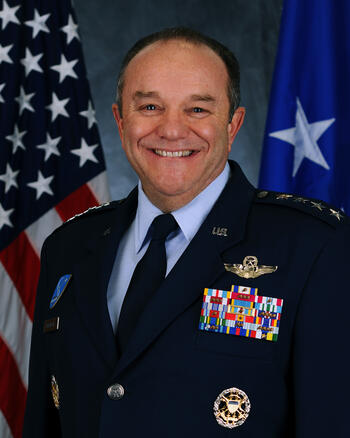
Upcoming talk by Supreme Allied Commander Europe, General Philip M. Breedlove.

"Europe at the Crossroads"
Date: November 9, 2015 
Time: 12:00PM to 1:30PM 
Location: Koret Taube Conference Center, Room 130 
RSVP by 5:00PM November 5, 2015.

Image
Photo of General Philip M. Breedlove
General Philip M. Breedlove is a four-star general in the United States Air Force and the current Supreme Allied Commander Europe (SACEUR). In this position, General Breedlove is one of NATO's two strategic commanders and is the head of Allied Command Operations (ACO). General Breedlove became the Supreme Allied Commander, Europe on 13 May 2013. During his visit to Stanford, General Breedlove will discuss Europe's rapidly-evolving geopolitical climate and highlight many of the security challenges for which the United States and NATO must prepare.

General Breedlove has served in the United States Air Force since graduating from the Georgia Institute of Technology in 1977. Immediately prior to assuming his current position, General Breedlove served as Commander, U.S. Air Forces in Europe; Commander, U.S. Air Forces Africa; Commander Headquarters Allied Air Command, Ramstein; and Director, Joint Air Power Competence Centre, Kalkar Germany. We invite you to visit ourwebsite for additional information about this event.


Featured Faculty Research: Jens Hainmueller

We would like to introduce you to some of the faculty members that we support and the projects on which they are working. Our featured faculty member this month is Jens Hainmueller, who is an Associate Professor in the Department of Political Science.

Jens Hainmueller

Jens earned his Ph.D. in Government from Harvard University in 2009 and joined the faculty at Stanford University in 2014. His research interests include statistical methods, immigration, political economy, and political behavior. An example of Jens's research on immigration and migrant integration is his recent co-authored work with Dominik Hangertner at the London School of Economics and Giuseppe Pietrantuono at the University of Zurich, which examined the effect of naturalization on migrant political integration into the host society. Establishing the effects of naturalization on political integration is complicated by an unobservable selection process; a non-random sample of migrants chooses to apply for naturalization and a non-random sample of naturalization applicants is approved. As a result, previous work has neither been able to establish the direction of the relationship between naturalization and poitical integration nor isolate the effect of naturalization on political integration vis-à-vis alternatives. In order to limit the bias induced by this dual-selection process, Jens and his coauthors analyzed data from Switzerland, where some municipalities used referendums to make decisions on naturalization applications. By limiting the sample to those applications that were approved or rejected by only a few votes, the authors were able to establish treatment and control groups that were otherwise equivalent, thereby removing selection bias from their data. Using this unbiased sample, Jens and his coauthors found that naturalization indeed has a positive effect on migrant political integration by increasing political participation, political knowledge, and political efficacy, among others. This research was published in the Proceedings of the National Academy of Sciences. We invite you to visit our website for additional information about this research.

Publication Details: Hainmueller, Jens, Dominik Hangartner, and Guiseppe Pietrantuono. 2015. "Naturalization Fosters the Long-Term Political Integration of Immigrants." Proceedings of the National Academy of Sciences of the United States of America 112(41):12,651-12,656.


Featured Graduate Student Research: Jason Weinreb

We would like to introduce you to some of the students that we support and the projects on which they are working. Our featured student this month is Jason Weinreb (Political Science). Jason is a Ph.D. Candidate in the Department of Political Science at Stanford University.

Jason WeinrebJason is a political economist who is interested in political risk, the politics of public finance, and economic history. His dissertation examines how newly-independent states finance themselves, focusing on former British colonies. Analysis of the London Stock Exchange in the quarter century following World War II reveals a surprising trend: colonial debt bond prices remained remarkably stable throughout decolonization. In his research at the British National Archives in London, funded in part by The Europe Center, Jason found that price stability was an insufficient indicator of investor confidence. Far from reflecting investors unperturbed by the uncertainty of decolonization, Jason's research uncovers evidence that investors were indeed concerned about the effects of independence on their investment. In fact, investor concerns manifested in higher interest rates, fewer colonial debt bond issues, and lower subscription rates relative to earlier periods. His archival research further uncovers factors that explain why colonial debt bond prices fail to reflect investor sentiment. Chief among these was the British government's intervention in the market. Its strategic purchase and holding of colonial debt bonds ensured price stability despite investor concerns.


Featured Event: Taking the Stand - A Film Presentation and Q&A with Survivors of the Holocaust

Firestone, Liska, and RammerstorferPictured: Renée Firestone, Hermine Liska, and Bernhard Rammerstorfer
By: Christof Brandtner and Sebastian Schuster 

This year we commemorate the 70th anniversary of the liberation of Auschwitz. At the same time, the number of people who can give us a personal account of the cruelties of the Holocaust is dwindling. Together with students from the Stanford Austria Club, The Europe Center hosted two survivors of the Holocaust and witnesses of the Nazi era: Renée Firestone (born in 1924 in today's Ukraine) and Hermine Liska (born 1930 in Austria). Firestone and Liska were introduced by TEC affiliated faculty Prof. Amir Eshel, interviewed by Austrian documentarian Bernhard Rammerstorfer, and answered engaging questions from students and community members in the audience. In their accounts, Firestone and Liska reported on the years leading up to their persecution, highlighted the importance of religion and family for their survival, and pointed out connections between the diaspora of the 1930s and 1940s and the current global refugee crisis. Rammerstorfer also presented his newest film and book project ‘Taking the stand: We have more to say’ which condenses the experience and memories of nine Holocaust survivors in response to 100 questions from high school students around the world.

Recap: Former NATO Secretary General Anders Fogh Rasmussen Visits Stanford

Anders Fogh RasmussenIn his recent visit to Stanford University, former NATO Secretary General Anders Fogh Rasmussen painted a bleak picture of global politics. The hope of the Arab Spring has been replaced by new authoritarian regimes, civil war, and ISIS. Russia is becoming more internally authoritarian and externally aggressive. According to one measure, global levels of freedom have been in decline for the past nine consecutive years. "It looks", he said, "as if a Pandora's box of religious, ethnic, and political strife has been opened, and many nations have plunged into chaos and extremism." According to Rasmussen, successfully navigating these global challenges requires a concerted effort among liberal democratic states, spearheaded by American leadership. In order to create a strong global community of liberal democracies, he advocated strengthening the Transatlantic alliance. In addition to the existing military alliance forged through NATO, he proposed the creation of a Transatlantic Free Trade Area (TAFTA) and a Transatlantic peoples program, which would foster educational, scientific, and cultural exchanges among the partner states. More than 150 people attended the talk, which was held on September 25. To watch Rasmussen's talk in full, please visit our website.


Fall 2015 Graduate Student Grant Competition Winners Announced

Please join us in congratulating the winners of The Europe Center Fall 2015 Graduate Student Grant Competition: 

  • Elena DancuComparative Literature, "From Vienna to Rio de Janeiro: Stefan Zweig and a World in Ruins."
  • Mathilde EmeriauPolitical Science, "Discrimination and Integration of Asylum Seekers in France."
  • William ParmerPhilosophy, "The Art of Cruelty."
  • Rebecca PerlmanPolitical Science, "The Politics of Protection: Health and Safety Regulation in a Globalized Marketplace."
  • Nicola PierriEconomics, "Credit Constraints and Firms' Productivity: Evidence from the Italian Economy."
  • Jens PohlmannGerman Studies, "Capitalizing on the Avant-Garde? An Analysis of Adversarial Authors’ Marketing Strategies in the Second Half of the 20th Century."
  • Beata SzymkowHistory, "Nationalisms Interacting, L'viv 1890-1914."
  • Alice UnderwoodComparative Literature, "The Comrade's Deviant Body: Myth, Citizenship, and Socialist Decay in the Pre-Perestroika Soviet Union."
  • Ashley WaltersHistory, "The Evolution of a Modern Jewish Legal Defense Against Anti-Semitism in Late Imperial Russia ."
  • Jason WeinrebPolitical Science, "Decolonization's Money Doctor: The Bank of England and Commonwealth Central Banks, 1955 - 1970."
  • Seth WerfelPolitical Science, "Representation as Intermediation."
  • Duygu YildirimHistory, "Historicizing Nature: Approaches to The Natural History of Crete in the Eastern Mediterranean."
Please visit our website for more information about our Graduate Student Grant program.

The Europe Center Sponsored Events

November 5, 2015 
6:30PM - 9:30PM 
Romanian Film Festival (Stanford, Day 1) 
"Travelling Shorts:Families Beyond Boundaries" 
East Asia Library, Room 224, Lathrop Library Building 
Please visit our website for additional information.

November 8, 2015 
1:00PM - 8:45PM 
Romanian Film Festival (Stanford, Day 2) 
"Travelling Shorts:Families Beyond Boundaries" 
Cubberley Auditorium 
Please visit our website for additional information.

November 9, 2015 
12:00PM - 1:15PM Mart Kuldkepp, Scandinavian Studies, University College London 
"Russian deserters to Sweden in World War I" 
Reuben Hills Conference Room, Encina Hall East 
Open to Stanford affiliates only. 
RSVP requested
This seminar is organized by the Center for Russian, Eastern European and Eurasian Studies and co-sponsored by The Europe Center.

European Security Initiative Events

November 9, 2015 
12:00PM - 1:30PM 
General Philip M. Breedlove, Supreme Allied Commander Europe and Commander, US European Command, NATO 
"Europe at the Crossroads" 
Koret-Taube Conference Center, Room 130, Gunn-SIERP Building 
RSVP by 5:00PM November 5, 2015. 

November 10, 2015 
5:30PM - 7:00PM 
Lilia Shevtsova, Non-Resident Fellow, Brookings Institution and Associate Fellow Russia-Eurasia Program, Chatham House - The Royal Institute of International Affairs 
"Russia as a Global Challenge" 
Bechtel Conference Center, Encina Hall 
RSVP requested 

Save the Date: January 5, 2016 
Sergei Guriev, Professor of Economics, New Economic School, Moscow and Visiting Professor of Economics, Sciences Po, Paris 

Other Campus Events of Interest

November 16, 2015 
6:30PM - 8:15PM 
"In the Crosswinds" (2014) Film Screening 
Cubberley Auditorium, Cubberley Education Library 
RSVP requested 
For more information, please visit the event website.

We welcome you to visit our website for additional details.


Hero Image
stanford events logo
All News button
1
-

Image
heritage bureaucracies

This conference aims to further our understanding of the institutional cultures, funding schemes and power structures underlying transnational institutions, with a particular focus on heritage bureaucracies. We bring together scholars working at the intersection of archaeology, anthropology, sociology and law to offer a broader understanding of the intricacies of multilateral institutions and global civic society in shaping contemporary heritage governance. Speakers will provide ethnographic perspectives on the study of international organizations, such as the UN and EU, in an effort to show the entanglement of political and technical decision-making.

A 2-day international conference organized by Claudia Liuzza and Gertjan Plets.

Speakers:

Brigitta Hauser-Shäublin (Institute of Ethnology, Göttingen University)
Ellen Hertz (Institute of Ethnology, University of Neuchâtel)
Miyako Inoue (Department of Anthropology, Stanford University)
Claudia Liuzza (Department of Anthropology, Stanford University)
Brigit Müller (Ecole des Hautes Etudes en Sciences Sociales, Paris)
Elisabeth Niklason (Department of Archeaology, Stockholm University)
Gertjan Plets (Stanford Archaeology Center, Stanford University)
Cris Shore (Department of Anthropology, The University of Auckland)
Ana Vrdoljak (Department of Law, University of Technology, Sydney)

Co-sponsored by Stanford Archaeology Center, Cantor Arts Center, Department of Anthropology, Center for Russian, East European & Eurasian Studies, Stanford Humanities Center, The Europe Center, France-Stanford Center for Interdisciplinary Studies, The Mediterranean Studies Forum.

Contact: heritagebur@gmail.com

Stanford Archaeology Center (BLDG 500)
488 Escondido Mall
Stanford University

Workshops
-

-This event is now full and we are no longer able to accept RSVPs-
 

Image
Image of the front cover of Why Muslim Integration Fails in Christian-Heritage Societies
Please join us as we celebrate the publication of David Laitin and co-authors Claire Adida (UC San Diego) and Marie-Anne Valfort's (Paris School of Economics and the Sorbonne) recent book Why Muslim Integration Fails in Christian-Heritage Societies which will be released in January 2016 by Harvard University Press.  

Amid mounting fears of violent Islamic extremism, many Europeans ask whether Muslim immigrants can integrate into historically Christian countries. In a groundbreaking ethnographic investigation of France’s Muslim migrant population, Why Muslim Integration Fails in Christian-Heritage Societies explores this complex question. The authors conclude that both Muslim and non-Muslim French must share responsibility for the slow progress of Muslim integration.

Book signing to immediately follow.  Copies of the book will also be available for sale.


David D. Laitin is the James T. Watkins IV and Elise V. Watkins Professor of Political Science at Stanford University. His specialty is comparative politics. In that field he conducts research on political culture, ethnic conflict, and civil war. His field expertise spans Somalia, Nigeria, Catalonia, Estonia and France.

Department of Political Science
Stanford University
Encina Hall, W423
Stanford, CA 94305-6044

(650) 725-9556 (650) 723-1808
0
James T. Watkins IV and Elise V. Watkins Professor of Political Science
laitin.jpg PhD

David Laitin is the James T. Watkins IV and Elise V. Watkins Professor of Political Science and a co-director of the Immigration Policy Lab at Stanford. He has conducted field research in Somalia, Nigeria, Spain, Estonia and France. His principal research interest is on how culture – specifically, language and religion – guides political behavior. He is the author of “Why Muslim Integration Fails in Christian-heritage Societies” and a series of articles on immigrant integration, civil war and terrorism. Laitin received his BA from Swarthmore College and his PhD from the University of California, Berkeley.

Affiliated faculty at the Center for International Security and Cooperation
Affiliated faculty at The Europe Center
James T. Watkins IV and Elise V. Watkins Professor of Political Science Speaker Department of Political Science

110 Pigott Hall
Building 260
Stanford, CA 94305-2010

(650) 793-7712
0
Professor of French
portrait-seuil-gris-blousecropped_-_cecile_alduy.jpg PhD

Cécile Alduy works on notions of "nationhood", "identity," on cultural and political constructions and mythologies of "Frenchness" at critical junctures of France's cultural history. Areas of interests include the history and mythology of national and ethnic identities since the Renaissance, far right ideology and rhetoric (National Front/Rassemblement national), the relations between cultural, literary and medical discourses on gender and the body in early modern Europe, poetry and poetics, narrative forms and their discontent, French cinema and contemporary French literature, and gender studies. 

Her last book, La Langue de Zemmour was published by Seuil in February 2022 (it was featured in the tv night show Quotidien and L’instant M on France Inter radio among others). 

Her previous book, Ce qu'ils disent vraiment. Les présidentiables pris aux mots (Seuil, 2017), combines digital humanities tools on wide corpora of political discourse with stylistic and rhetorical analysis, narratology, barthesian mythemes, the history of ideas to parse the discursive output and communication strategies of the major presidential candidates of the 2017 election. 

Her book Marine Le Pen prise aux mots. Décryptage du nouveau discours frontiste (Seuil, 2015) was the first to propose a comprehensive, corpus-based comparative analysis of the discourse, lexicon, mythemes, and ideological tenets of far right leaders Jean-Marie and Marine Le Pen. 

Cécile Alduy contributes regularly to French, British and American media: she has written a profile of Marine Le Pen for The Atlantic, as well as many investigative, analytical and opinion pieces in Le Monde, Foreign Affairs, Politico, The Nation, The Boston Review, L'Obs, Sciences Humaines, ZAdig, le 1, Le Nouveau Magazine Litéraire, AOC, etc.

She has co-edited with Dominic Thomas and Bruno Cornellier a special issue of the journal "Occasions" on “The Charlie Hebdo Attacks and their Aftermath” that gathers over a dozen essays from French, Canadian, American and English intellectuals from all horizons. 

Her previous book, The Politics of Love: Poetics and Genesis of the "Amours" in Renaissance France (1549-1560) (Geneva: Droz, 2007), examines how the poetics of French Petrarchan love collections was exploited by the generation of Ronsard and Du Bellay to promote a nationalist agenda, that of a "Defense and Illustration of the French Tongue" and its cultural supremacy. 

In Renaissance studies, she has published extensively on the works of Marot, Scève, Du Bellay, Ronsard, Louise Labé, La Boétie, Montaigne, Rabelais, and Philippe Jaccottet among others. Her publications also include a revised critical edition of Maurice Scève's Délie (Paris: STFM, 2001) and a comprehensive study of all works written by or on Scève from his lifetime to the present (Maurice Scève. Roma: Memini, 2006). She has served as guest editor of two collected volumes: a special issue of Réforme Humanisme Renaissance entitled "Licences et censures poétiques. La littérature érotique et pornographique vernaculaire à la Renaissance" (vol. 69, 2009); and the proceedings of the 2008 interdisciplinary conference Between Experience and Experiment In The Early Modern World, co-edited with Roland Greene and published in Republic of Letters (2010). 

Prof. Alduy was the Chair of the Division of Literatures, Cultures, and Languages from 2020 to 2023. Previously, she has served as Director of the French and Italian Department (2015-2019), and Director of the Center of Medieval and Early Modern Studies (CMEMS) from 2010 to 2013. 

She is an affiliated scholar at the Freeman Spogli Institute as well as a "chercheur associée" at the CEVIPOF, Sciences Po. 

In 2007, Cécile Alduy was awarded the "Médaille de l'ordre des Lettres et des Arts."

Affiliated faculty at The Europe Center
Date Label
Associate Professor of French and Director, Department of French and Italian Discussant Division of Literatures, Cultures, and Languages
Amalia Kessler Lewis Talbot and Nadine Hearn Shelton Professor of International Legal Studies Discussant Stanford Law School
Seminars


The rights of refugees and obligations of states under international law was broadly addressed before focusing on how European Union law affects these rights and obligations. Discussants explored how international law has influenced the ways in which Europe and the larger international community has addressed the latest refugee crisis.

Co-sponsored by The Europe Center and the WSD HANDA Center for Human Rights and International Justice.

Image
Headshot of Emily Arnold Fernandez


Emily Arnold-Fernández, the founder and executive director of Asylum Access, is a social entrepreneur and human rights pioneer.

A lawyer who has advocated nationally and internationally for the human rights of women, children, and other vulnerable individuals, Emily first became involved in refugee rights in 2002, when she represented refugees in United Nations proceedings in Cairo, Egypt.

Her first client was a young Liberian who had fled to Egypt to avoid being abducted and forced to fight as a child soldier. Because he was initially denied legal status as a refugee, he was at constant risk of arrest, detention and deportation by Egyptian authorities unless he could get the decision reversed – and he only had one chance to do so. Emily’s legal advocacy won her client protection and safety in Egypt until his eventual resettlement in the U.S. Unfortunately, Cairo was one of the few places where refugees had access to legal advocates like Emily.

Recognizing that refugees throughout Africa, Asia and Latin America – some of whom flee with nothing more than the clothes on their backs – were almost always unequipped to go into a legal proceeding in a foreign country, alone, and explain why they should not be deported, Emily founded Asylum Access to advocate on behalf of refugees seeking to assert their rights.

For her innovative approach to the global refugee crisis, Emily was honored by the Dalai Lama as one of 50 “Unsung Heroes of Compassion” from around the world (2009), Waldzell Institute’s Architects of the Future Award (2012) and Grinnell College Young Innovator for Social Justice Prize (2013). She has also been recognized as Pomona College’s Inspirational Young Alumna (2006), awarded the prestigious Echoing Green fellowship (2007), and recognized as the New Leaders Council’s 40 Under 40 (2010), among others.

Emily’s ground-breaking work with Asylum Access has earned her international speaking invitations and widespread media attention, including the Rotary International Peace Symposium (2008, 2009), the UN High Commissioner for Refugees’ Annual Consultations (2008, 2009), a cover feature in the Christian Science Monitor (September 2009), and the San Francisco Examiner’s Credo column (July 2011). She holds a B.A. cum laude from Pomona College and a J.D. from Georgetown University Law Center.

Committed to sharing her knowledge with young and aspiring social entrepreneurs, Emily serves as an adjunct professor at the University of San Francisco, teaching a course in social entrepreneurship. In Fall 2012, Emily was selected as one of three Social Entrepreneurs in Residence at Stanford where she participated as “expert respondent” in Stanford Law School’s Law, Social Entrepreneurship and Social Change course, and this Spring 2013, Emily is leading an intensive skills-building course on social entrepreneurship at Pomona College.

Even before founding Asylum Access, Emily was an accomplished human rights advocate. She previously litigated civil rights claims in private practice and with Equal Rights Advocates, where she was part of the legal team in the landmark gender discrimination case against Wal-Mart. She has also been involved in a range of international work, including collaborating with a Nigerian women’s rights organization to draft a gender-egalitarian model Shar’ia marriage and divorce code.

A visionary human rights activist, Emily Arnold-Fernández takes her inspiration from a line in a June Jordan poem: “We are the ones we have been waiting for.”

Emily is particularly passionate about Asylum Access, however, because it has the power to transform refugee rights from paper promises to on-the-ground reality. “For half a century, international law has given refugees the rights to live safely, seek employment, send children to school and rebuild their lives. But those rights are meaningless unless they are respected on the ground,” she says. “Asylum Access provides a rare opportunity to fill a gaping hole in our human rights system – by making refugee rights a reality for real people.”

Discussants: James Cavallaro, Stanford Law School and Jenny S. Martinez, Stanford Law School. 
                        

Emily Arnold-Fernandez Founder and Executive Director Speaker Asylum Access
James Cavallaro Professor of law and Founder and Director of the International Human Rights and Conflict Resolution Clinic Discussant Stanford Law School
Jenny S. Martinez Warren Christopher Professor in the Practice of International Law and Diplomacy Discussant Stanford Law School
Panel Discussions
Paragraphs

"Ethnicity, Insurgency, and Civil War" is chapter 25 of the book The Contemporary Conflict Resolution Reader, edited by Hugh Miall, Tom Woodhouse, Oliver Ramsbotham, and Christopher Mitchell and published by Polity.

Armed conflict may appear to be in long term decline, but the intractability and destructiveness of contemporary conflicts make conflict resolution as urgent and necessary as ever. The Contemporary Conflict Resolution Reader is the first comprehensive survey of the field as it has evolved over the last fifty years, bringing together the seminal writings of its founders with the cutting-edge interventions of today’s leading exponents and practitioners.

All Publications button
1
Publication Type
Books
Publication Date
Journal Publisher
The Contemporary Conflict Resolution Reader, edited by Hugh Miall, Tom Woodhouse, Oliver Ramsbotham, and Christopher Mitchell
Authors
David Laitin
Number
978-0745686769
News Type
Q&As
Date
Paragraphs

Last Friday's multiple terrorist attacks in Paris that killed 129 people and injured over 350 was the topic of KQED Radio’s “forum with Michael Krasny" (Monday, Nov. 16, 2015).   The discussion centered around the potential impact to US and European strategy for fighting ISIS, immigration policy, and to French nationalism, values and public discourse on multiculturalism and open borders.

Participating in the panel was French literature associate professor and TEC faculty affiliate Cécile Alduy.  Alduy is the author of the recent book Marine Le Pen's Words: Deciphering the New National Front's Discourse.

Joining Alduy were Bloomberg Paris bureau chief Geraldine Amiel, UC Berkeley professor of public policy Michael Nacht, and Brookings’ Center for Middle East Policy fellow William McCants.

Visit KQED Radio's Forum web article “France Closes Borders After Multiple Terror Attacks in Paris" to download a recording of this interview.

Hero Image
Image of A banner with the drawing "Peace for Paris" of French artist Jean Jullien.
A banner with the drawing "Peace for Paris" of French artist Jean Jullien hangs on the facade of the city hall in Nantes, France, November 16, 2015, as people observe a minute of silence to pay tribute to the victims of the series of deadly attacks on Friday in Paris.
REUTERS/Stephane Mahe
All News button
1
Authors
News Type
News
Date
Paragraphs


NATO must bolster its presence in Europe as a way to counter Russian aggression in the region.

That was the message from General PHILIP M. BREEDLOVE, the supreme allied commander of the North Atlantic Treaty Organization (NATO), when he visited Stanford on Monday.

“Europe is clearly at a crossroads,” he said.

Breedlove addressed the need for a strong NATO amid the evolving geopolitical climate in Europe. Of great concern are Moscow’s intrusions into Ukraine, Crimea and Georgia in Eastern Europe in recent years.

“We have to recalibrate what we’re thinking,” he said. NATO is building up its troop rotations to deal with hostile moves in the region, for example.

Breedlove spoke to a couple hundred people at the Koret Taube Conference room in the Gunn Building. Breedlove’s speech was sponsored by The Europe Center in the Freeman Spogli Institute for International Studies (FSI).

“Highly dynamic” is how Breedlove described Europe’s security situation as a resurgent Russia seeks to “rewrite” the rules of international order. “They have been aggressive and coercive in their use of diplomatic, military and economic tools,” he said.

Lies and distortions characterize Russia’s attempt to change borders and bully its neighbors, Breedlove added. Russian President Vladimir Putin’s greater goal is to destabilize NATO and chip away at the alliance. Russia is acting in the east, south and north of Europe, including forays into the Arctic Circle and near Japan.

“This is all about extending Russian control” over its neighbors, Breedlove said.

Massive, seemingly endless migration coming from the Middle East into Europe poses a monumental crisis, he added. “The situation is creating serious political problems for political leaders” in European countries, he said. On top of this, possible terrorists and foreign fighters within the sheer numbers of migrants are extremely difficult to track, he added.

These European and NATO challenges intersect in the case of Syria and Russia’s involvement there, Breedlove said. “Russia’s striving to project [itself] as a world power.”

Syria is an opportunity for Putin to shift the world’s attention from his country’s aggressions in the Ukraine to the Middle East, he said. Breedlove disputed Putin’s rationale – fighting ISIS and terrorism – for intervening in Syria. “There’s a clear gap between his words and actions.”

Time will tell if Russia overextends itself in its adventurism, Breedlove said. For NATO, it must “rebuild its capacity” to address such threats. “Defend territory, people and values” is how he defined NATO’s mission.

A free, peaceful and prosperous Europe is much more attractive to the world than a menacing Russia that lacks similar values and attributes, he noted.

The security of Europe is Breedlove’s “daily business,” said MICHAEL MCFAUL, director of FSI. “You could not have a more well informed person speak about European security.”

McFaul noted that a new initiative series on European security, sponsored by the Europe Center, will bring other speakers and events to campus.

Breedlove, a distinguished graduate of Georgia Tech’s ROTC program, has flown combat missions, mostly in the F-16 jet, and has served as vice chief of staff for the U.S. Air Force and commander of the U.S. Air Force in Europe and Africa.

“I feel right at home, because this is the type of weather we have in Belgium,” he quipped on a rainy day at Stanford.


This article was originally published in The Stanford Report on November 9, 2015.

Hero Image
Photo of General Philip M. Breedlove
All News button
1
-

The Russian System of personalized power has been demonstrating an amazing capacity for survival even in the midst of decay. It has defied many predictions and ruined many analytical narratives. Today the Russian authoritarian rule is trying to prolong its life by turning to repressions at home and by containing the West. Russia, kicking over the global chess board with the war in Ukraine, returns to the international scene as a revisionist and revanchist power. The Russian Matrix demise will be painful, and it already has brought about  Russia’s confrontation with the West.  The challenge posed by Russia’s decaying petro –nuclear state is huge, and it is sure to be one of the dominant problems of the twenty-first century.

RSVP

Lilia Shevtsova is a Non-Resident Fellow at the Brookings Institution (Washington), and an Associate Fellow at the Russia-Eurasia Program, Chatham House - The Royal Institute of International Affairs (London). She is the member of the boards of the Institute for Humanities (Vienna), the Finnish Centre for Excellence in Russian Studies (Helsinki), the Liberal Mission Foundation, and the New Eurasia Foundation (Moscow); a member of the International Forum for Democratic Studies’ Research Council(Washington); a member of the Editorial Boards of the journals: “American Interest,”“Journal of Democracy,” and “New Eastern Europe.“ Shevtsova was Senior Associate at the Carnegie Endowment for International Peace (Washington) and the Moscow Carnegie Center, founding chair of the Davos World Economic Forum Council on Russia’s Future, and a member of the Council on Terrorism. “Foreign Policy” magazine included Shevtsova in the list of 100 Global Public Intellectuals. She was a participant at the Bilderberg Club meetings; served as Chair of the Program on Eurasia and Eastern Europe, SSRC (Washington) and member of the Social Council for Central and Eastern European Studies. She contributes to global leading media, including: Foreign Policy, FT, Washington Post, Le Monde, Monde Diplomatique, Die Zeit, Fokus, El Pais, American Interest, Survival, Journal of Democracy, Diplomaatia. 

Shevtsova is author of twenty books, including Yeltsin’s Russia: Myths and Reality; Putin’s Russia; Russia –Lost in Transition: The Yeltsin and Putin Legacies; Lonely Power (Why Russia Has Failed to Become the West and Why the West Is Weary of Russia), Russia: Change or Decay (in co-authorship with Andrew Wood), Crisis: Russia and the West in the Time of Trouble.

 
Lectures
Subscribe to International Relations