International Relations

FSI researchers strive to understand how countries relate to one another, and what policies are needed to achieve global stability and prosperity. International relations experts focus on the challenging U.S.-Russian relationship, the alliance between the U.S. and Japan and the limitations of America’s counterinsurgency strategy in Afghanistan.

Foreign aid is also examined by scholars trying to understand whether money earmarked for health improvements reaches those who need it most. And FSI’s Walter H. Shorenstein Asia-Pacific Research Center has published on the need for strong South Korean leadership in dealing with its northern neighbor.

FSI researchers also look at the citizens who drive international relations, studying the effects of migration and how borders shape people’s lives. Meanwhile FSI students are very much involved in this area, working with the United Nations in Ethiopia to rethink refugee communities.

Trade is also a key component of international relations, with FSI approaching the topic from a slew of angles and states. The economy of trade is rife for study, with an APARC event on the implications of more open trade policies in Japan, and FSI researchers making sense of who would benefit from a free trade zone between the European Union and the United States.

-

The 2008 global financial crisis came with fears - and, for some, hopes of a new wave of public mobilisation in industrialised countries. Large protests were particularly expected in the epicentre of the crisis, the European Union. Yet, the force with which social groups garnered their calls for strikes ebbed quickly away. Gerald Schneider provides new evidence for why this was the case. He claims that strikes, and particularly political strikes, are 'bad weather' phenomena and crises exacerbate them. In monetary unions, where currency adjustments are difficult, fiscal changes are not supported by easing monetary measures and should unchain social unrest unless supranational actors get involved. Schneider argues that the political actions of the European Central Bank (ECB) have countered the potential for strikes in the Eurozone. He provides evidence for his theory with yearly panel data and a new original data  set of monthly strikes between 2001 and 2013. His analyses support the thesis that the EU institution was successful at attenuating social indignation over the Eurocrisis and its political fallout.

This paper is based on co-authored work with Dr. Federica Genovese (Essex) and Pia Wassmann (Hannover).

Image
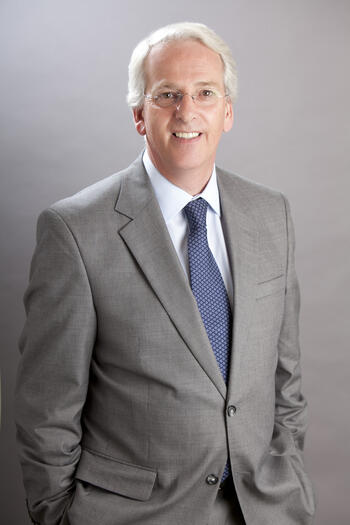
Professor Gerald Schneider, University of Konstanz

Gerald Schneider is Professor of International Politics and Executive Editor of “European Union Politics”. His main areas of research are European Union decision making, the causes and consequences of armed violence, the international political economy of financial markets, bargaining and conflict management.

Schneider defended his doctoral thesis at the University of Zurich in 1991, worked as post-doc at the University of Michigan (Ann Arbor) for two years and was an assistant professor (1992 – 1995) at the Institut universitaire de hautes études internationales in Geneva. Before joining the faculty at Konstanz in 1997, he was a Professor of Political Science at the University of Stuttgart (1996-1997) and Program Director at the University of Berne (1994 – 1997). Gerald Schneider has also been visiting scholar at Università Bocconi (Visiting Research Professor), Charles University Prague, Harvard University, University of Kobe, Sciences Po Paris (Grosser Chair) and Università Siena. He has published around 150 articles in various journals and volumes. Schneider is President of the European Political Science Association (2013-2015) and was also in 2003-2004 Vice President of the International Studies Association, and served as Program Chair for the 50th annual convention in New York City in 2009. Schneider has acted as a consultant and referee for various organizations, including the World Bank and the U.S. National Science Foundation. He has served for various selection committees of the the Alexander von Humboldt Foundation since 2007 and was a member of the scientific board of the Swiss Network of International Studies (2008-2013). Besides his native German, Schneider speaks English, French and survives in Italian and Danish.

The Eurotower Strikes Back: Crises, Adjustments and Europe's Austerity Protests
Download pdf

CISAC Central Conference Room
Encina Hall, 2nd floor
 

Gerald Schneider Professor of International Politics Speaker Universität Konstanz, Germany
Seminars
-

Conference Agenda for Day 3, October 10, 2014:


9:00 – 10:15 AM Chair: Katherine Jolluck, Stanford University

  • Aigi Rahi-Tamm, Tartu University. Doubly Marginalized People: the Hidden Stories of Breaking Trust between People in Estonian Society (1940–1960)
  • Daina Bleiere, Rīga Stradiņš University. Women in the Soviet Latvian Nomenclature (1940–1987)

10:30 AM – 12:15 PM Chair: Darius Staliunas, Lithuanian Institute of History

  • Saulius Grybkauskas, Lithuanian Institute of History. The Second Secretaries of Communist Parties in the Soviet Baltic Republics during 1944–1990
  • David Beecher, University of California, Berkeley. A Tale of Two Scholars:  Paul Ariste and Yuri Lotman
  • Gail Lapidus, Stanford University. The Baltic National Movements and the End of the USSR

12:15 – 2:00 PM Break

2:00 – 3:15 PM Chair: Paul Roderick Gregory, Hoover Institution

  • Elga Zalīte, Green Library. The Rev. Richards Zariņš Collection in Stanford University Libraries as a Source for the Study of the Post-World War II Latvian Emigration in the United States
  • David Jacobs, Hoover Institution Archives. Stateless Representatives: Baltic Diplomats during the Cold War

3:30 – 4:15 PM Chair: Saulius Sužiedėlis, Millersville University, Pennsylvania

  • Maciej Siekierski, Hoover Institution Archives. Baltic Collections and Scholarship at the Hoover Institution
  • Liisi Esse, Green Library. The Baltic Studies Program of Stanford University Libraries


6:00 – 8:00 PM, Cubberley Auditorium, Education Building, 485 Lasuen Mall

Latvian film director Pēteris Krilovs will present his documentary Obliging Collaborators (2014)


Conference organizers:  Professors Lazar Fleishman (Slavic Department) and Amir Weiner (History Department)

Sponsored by: Hoover Institution Library and Archives, Office of the Provost, Stanford School of Humanities and Sciences, Stanford Global Studies Division, The Europe Center, Stanford University Libraries, Division of Literatures, Cultures, & Languages, Department of Slavic Languages and Literatures, Department of History, Center for Russian, East European and Eurasian Studies, and the Stanford Humanities Center.


Stauffer Auditorium, Hoover Institution (9:00am - 4:15pm)
Cubberley Auditorium (for film screening, 6:00pm - 8:00pm)
 

Conferences
-

Conference Agenda for Day 2, October 9, 2014:


9:00-10:45 AM Chair: Magnus Ilmjärv, Тallinn University

  • Ineta Lipša, Institute of History of Latvia. Interwar History of Latvia: the Gender Aspects
  • Aivars Stranga, University of Latvia. Kārlis Ulmanis' Regime: Politics, Economics, Culture
  • Andres Kasekamp, Tartu University. The Estonian Radical Right in the 1930s: The Collapse of Democracy and the Rise of Authoritarianism. 

11:00 AM – 12:15 PM Chair: David Holloway, Stanford University

  • Arturas Svarauskas, Lithuanian Institute of History. Regime, Society, and Political Tensions in Lithuania, 1938–1940.
  • Magnus Ilmjärv, Тallinn University. Munich Pact and the Baltic States, 1938 – The Fateful Year for the Baltic States.

12:15 – 2:00 PM Break

2:00 – 3:15 PM Chair: Norman Naimark, Stanford University

  • Saulius Sužiedėlis, Millersville University, Pennsylvania. The Nazi Occupation and the Holocaust in Reichskommissariat Ostland: Conflicting Narratives and Memories
  • Uldis Neiburgs, Museum of the Occupation of Latvia. Latvia, Nazi German Occupation, and the Western Allies, 1941–1945

3:30 – 4:45 PM Chair: Gabriella Safran, Stanford

  • Ene Kõresaar, Tartu University. World War II in Estonian Memory and Commemoration
  • Kristina Burinskaitė, The Genocide and Resistance Research Centre of Lithuania. The KGB Search of War Criminals in the West and the Attempts to Discredit Lithuanian Emigration


Conference organizers:  Professors Lazar Fleishman (Slavic Department) and Amir Weiner (History Department)

Sponsored by: Hoover Institution Library and Archives, Office of the Provost, Stanford School of Humanities and Sciences, Stanford Global Studies Division, The Europe Center, Stanford University Libraries, Division of Literatures, Cultures, & Languages, Department of Slavic Languages and Literatures, Department of History, Center for Russian, East European and Eurasian Studies, and the Stanford Humanities Center.


Stauffer Auditorium, Hoover Institution

Conferences

Encina Hall
616 Serra Street
Stanford, CA  94305-6165

0
Anna Lindh Visiting Scholar at The Europe Center, 2014-2015
maria_sjoholm.jpg

Maria Sjöholm currently holds the position as a post-doc researcher at the Faculty of Law of Stockholm University, Sweden. She is in the process of writing a monograph reviewing the integration of women’s human rights law into regional human rights treaties, analysing the methodological and theoretical frameworks with which such rights have been incorporated into these treaties. Her previous research includes the book “Defining Rape: Emerging Obligations for States under International Law?” (Brill) and an article on the approach by the European Court of Human Rights to human trafficking. She is a member of the Committee on Feminism and International Law of the International Law Association and has taught courses on international human rights law and international criminal law at various universities in Sweden.

Main Quad, Building 50
450 Serra Mall
Stanford University
Stanford, CA 94305-2034


(650) 723-3421
0
Associate Professor of Anthropology
Sykes Family Director of the Emmett Interdisciplinary Program in Environment and Resources (E-IPER)
krish_-_headshot_3_-_krish_seetah.jpg

Krish Seetah's research covers a range of issues relating to colonialism and colonization. Prof. Seetah is the director of Stanford's ‘Mauritian Archaeology and Cultural Heritage’ (MACH) project, which studies European Imperialism and colonial activity. Much of his work uses bioarchaeological materials, with a strong emphasis on human-environmental interactions. He is keen to use the long duree perspective to help contextualize the most recent phase of globalization witnessed in the IOW, and study both the impacts of imperialism on ecology, identity and the development of nationhood following mass diaspora.

His teaching focuses on osteoarchaeology, human-animal relationships, the the Indian Ocean World. Recent publications include a monograph titled ‘Humans, Animals and the Craft of Slaughter in Archaeo-Historic Society (Cambridge University Press), and an edited volume ‘Connecting Continents: Archaeology and History in the Indian Ocean’ (Ohio University Press), which won the 2019 Society for American Archaeology Book Prize in the Scholarly category. Seetah gained his Ph.D. in Archaeology from the University of Cambridge, holds two MSc degrees, the first in Ecology and a second in Osteoarchaeology, with a BA in Biology. He has held visiting fellowships at Cambridge University, UK, the Scientific Research Center, Slovenia, and was an ERC Research Fellow at Reading University, UK.

Affiliated faculty at The Europe Center
CV

Conference Agenda for Day 1, October 8, 2014:


9:00 AM

  • Welcome Remarks – Eric T. Wakin, Robert H. Malott Director of Hoover Institution Library & Archives

  • Opening Remarks – Amir Weiner, Stanford University

9:15-10:45 AM – Chair: Amir Weiner

  • Toomas Hiio, Estonian War Museum. Multi-ethnic (or Multi-national) Student Body of the University of Tartu and the WW I: Choices, Political Movements, Volunteers, Mobilizations, and Postwar Consequences

  • Darius Staliunas, Lithuanian Institute of History. Anti-Jewish Violence in Lithuania at the Turn of the 20th Century

11:00 AM – 12:30 PM Chair: Aivars Stranga, The University of Latvia

  • Ēriks Jēkabsons, University of Latvia. The War for Independence of Latvia and the United States

  • Tomas Balkelis, Vilnius University. Paramilitarism in Lithuania: Violence, Civic Activism and Nation-making, 1918–1920

  • Bert Patenaude, Stanford University. “Yankee Doodle: American Attitudes toward Baltic Independence, 1918–1921”


Conference organizers:  Professors Lazar Fleishman (Slavic Department) and Amir Weiner (History Department)

Sponsored by: Hoover Institution Library and Archives, Office of the Provost, Stanford School of Humanities and Sciences, Stanford Global Studies Division, The Europe Center, Stanford University Libraries, Division of Literatures, Cultures, & Languages, Department of Slavic Languages and Literatures, Department of History, Center for Russian, East European and Eurasian Studies, and the Stanford Humanities Center.

Stauffer Auditorium, Hoover Institution

Conferences

This project examines the  “contemporary” with a focus on defining moments such as: 1945, 1973, 1989, and 2001. In recent years the concept of the contemporary has been taken up within limited disciplinary discourses and in the context of distinct geographical settings. The horizon of this project, however, is the global. We employ a comparative and interdisciplinary approach to the hybrid term “contemporary” as it intersects various fields and serves as a heuristic device to understand phenomena in politics, culture, and the arts.

News Type
News
Date
Paragraphs

In the late 19th and early 20th centuries, an "open borders" United States absorbed millions of European immigrants in one of the largest mass migrations ever. New research by Stanford economist Ran Abramitzky challenges the perception that immigrants lagged behind native-born Americans in job pay and career growth.
 

BY CLIFTON B. PARKER

European immigrants to America during the country's largest migration wave in the late 19th and early 20th centuries had earnings comparable to native-born Americans, contrary to the popular perception, according to new Stanford research.

"Our paper challenges conventional wisdom and prior research about immigrant assimilation during this period," said Ran Abramitzky, an associate professor of economics at Stanford, faculty affiliate of The Europe Center and author of the research paper in the Journal of Political Economy.

New research challenges conventional wisdom about immigrant assimilation during the bygone era of open borders and mass migration.
Photo Credit: Lewis Hine/Library of Congress

New research challenges conventional wisdom about immigrant assimilation during the bygone era of open borders and mass migration.

Abramitzky and his colleagues found the average immigrant in that period did not face a substantial "earnings penalty" – lower pay than native-born workers – upon their arrival.

"The initial earnings penalty is overstated," said Abramitzky.

He said the conventional view is that the average European immigrants held substantially lower-paying jobs than native-born Americans upon first arrival and caught up with natives' earnings after spending some time in the United States. But that perception does not hold up to the facts, he said.

Abramitzky's co-authors include Leah Platt Boustan from the University of California, Los Angeles, and Katherine Eriksson from California Polytechnic State University.

The researchers examined records on 21,000 natives and immigrants from 16 European countries in U.S. Census Bureau data from 1900 to 1910 to 1920.

"Even when U.S. borders were open, the average immigrant who ended up settling in the United States over the long term held occupations that commanded pay similar to that of U.S. natives upon first arrival," Abramitzky said.

In that bygone era of "open borders," Abramitzky said, native-born Americans were concerned that immigrants were not assimilating properly into society – yet, on the whole, this concern appears to be unfounded. "Such concerns are echoed in today's debate over immigration policy," he added.

At the same time, Abramitzky said that immigrants from poorer countries started out with lower paid occupations relative to natives and did not manage to close this gap over time.

"This pattern casts doubt on the conventional view that, in the past, immigrants who arrived with few skills were able to invest in themselves and succeed in the U.S. economy within a single generation," Abramitzky and his colleagues wrote.

Age of migration

America took in more than 30 million immigrants during the Age of Mass Migration (1850-1913), a period when the country had open borders. By 1910, 22 percent of the U.S. labor force – and 38 percent of workers in non-southern cities – was foreign-born (compared with 17 percent today).

As the research showed, immigrants then were more likely than natives to settle in states with a high-paying mix of occupations. Location choice was an important strategy they used to achieve occupational parity with native-born Americans.

"This Age of Mass Migration not only is of interest in itself, as one of the largest migration waves in modern history, but also is informative about the process of immigrant assimilation in a world without migration restrictions," Abramitzky said.

Over time, many of the immigrants came from the poorer regions of southern and eastern Europe.

Abramitzky pointed out that native-born Americans in the late 19th and early 20th centuries were concerned about poverty in immigrant neighborhoods and low levels of education among children, many of whom left school early to work in industry.

Consequently, American political progressives championed a series of reforms, including U.S. child labor laws and compulsory schooling requirements.

Still, some natives believed that new arrivals would never fit into American society. And so, in 1924, Congress set a strict quota of 150,000 immigrant arrivals per year, with more slots allocated to immigrants from northern and western European countries than those from southern and eastern Europe.

But those early-20th-century fears of unassimilated immigrants were baseless, according to Abramitzky.

"Our results indicate that these concerns were unfounded: The average long-term immigrants in this era arrived with skills similar to those of natives and experienced identical rates of occupational upgrading over their life cycle," he wrote.

How does this lesson apply to today's immigration policy discussion? Should the numbers of immigrants and their countries of origin be limited and those with higher skills be given more entry slots?

Abramitzky said stereotyping immigrants has affected the political nature of the contemporary debate.

"These successful outcomes suggest that migration restrictions are not always necessary to ensure strong migrants' performance in the labor market," he said.

Hero Image
Image of "First sight of New York Bay -- arrival of a European steamer" by James Wells Champney
First sight of New York Bay--arrival of a European steamer. | James Wells Champney/New York Public Library
All News button
1
Date Label

PROGRAM
Friday May 9, 2014

9:00am Introduction

9:10am Does Naturalization Foster the Political Integration of Immigrants? Evidence from a Regression Discontinuity Design in Switzerland
Jens Hainmueller & Dominik Hangartner
Discussant: Rafaela Dancygier

9:50am Lingua Franca: How Language Shapes the Direction of Public Opinion
Efrén Pérez
Discussant: Rahsaan Maxwell

10:30am BREAK

10:50am Transnational Ties and Support for International Redistribution
Lauren Prather
Discussant: Ali Valenzuela

11:30am Gender-Based Stereotyping and Negotiation Performance: an Experimental Study
Jorge Bravo
Discussant: Rob Ford

12:10pm BREAK

1:00pm The Rhetoric of Closed Borders: Quotas, Lax Enforcement and Illegal Migration
Giovanni Facchini & Cecilia Testa
Discussant: Karen Jusko

1:40pm Varieties of Diaspora Management
Harris Mylonas
Discussant: Yotam Margalit

2:20pm BREAK

2:40pm The Situational Context of Attitudes Towards Immigrant-Origin Minorities
Rahsaan Maxwell
Discussant: Jorge Bravo

3:20pm The Politics of Churchgoing and its Consequences among Whites, Blacks and Latinos in the U.S.
Ali Valenzuela
Discussant: Cara Wong


Saturday May 10, 2014

9:50am How State Support of Religion Shapes Religious Attitudes Toward Muslims
Mark Helbling
Discussant: Sara Goodman

10:30am BREAK

10:50am Opposition to Race Targeted Policies – Ideology or Racism? Particular or Universal? Experimental Evidence from Britain
Rob Ford
Discussant: Jens Hainmueller

11:30am Conflict and Consensus on American Public Opinion on Illegal Immigration
Matthew Wright
Discussant: Efrén Pérez

12:10pm BREAK

1:00pm The Electoral Geography of American Immigration, 1880-1900
Karen Jusko
Discussant: Dan Hopkins

1:40pm Do We Really Know That Employers Want Illegal Immigration?
Maggie Peters
Discussant: Giovanni Facchini

2:20pm BREAK

2:40pm Nurture over Nature: Explaining Muslim Integration Discrepancies in Britain, France and the United States
Justin Gest
Discussant: Claire Adida

3:20pm Immigration and Electoral Appeals over the Past Half Century: A Sketch of the Evidence
Rafaela M. Dancygier & Yotam Margalit
Discussant: Cecilia Testa

4:00pm Looking Ahead

CISAC Conference Room
Encina Hall Central, 2nd floor
616 Serra St.
Stanford University
Stanford, CA 94305
 

Karen Jusko Assistant Professor of Political Science Participant and Workshop Organizer Stanford University
Claire Adida Participant UC San Diego
Jorge Bravo Participant Rutgers University
Rafaela Dancygier Participant Princeton University
Giovanni Facchini Participant University of Nottingham
Robert Ford Participant University of Manchester
Justin Gest Participant Harvard University
Sara Wallace Goodman Participant UC Irvine

616 Serra Street
Encina Hall West, Room 440
Stanford, CA 94305-6044

0
Kimberly Glenn Professor of Political Science
Professor, by courtesy, of Political Economy
101105_jenshainmueller_1583.jpg

Jens Hainmueller's research has appeared in journals such as the American Political Science Review, American Journal of Political Science, Journal of the American Statistical Association, Review of Economics and Statistics, Political Analysis, International Organization, and the Journal of Statistical Software, and has received awards from the American Political Science Association, the Society of Political Methodology, the Midwest Political Science Association.

Hainmueller received his PhD from Harvard University and also studied at the London School of Economics, Brown University, and the University of Tübingen. Before joining Stanford, he served on the faculty of the Massachusetts Institute of Technology.

Affiliated faculty at The Europe Center
Participant Stanford University
Dominik Hangartner Participant London School of Economics and Political Science
Marc Helbling Participant WZB Berlin Social Science Center
Dan Hopkins Participant Georgetown University
Yotam Margalit Participant Columbia University
Rahsaan Maxwell Participant UNC at Chapel Hill
Harris Mylonas Participant George Washington University
Efrén O. Pérez Participant Vanderbilt University
Maggie Peters Participant Yale University
Lauren Prather Participant Stanford University
Judith Spirig Participant University of Zurich
Cecilia Testa Participant Royal Holloway University of London
Ali A. Valenzuela Participant Princeton University
Cara Wong Participant University of Illinois, Urbana-Champaign
Matthew Wright Participant American University (Washington, D.C.)
Workshops

Two premises motivate the “Immigration and Integration” project that is able to get off the ground with seed money from the FSI Policy Implementation Lab. First, there is compelling evidence of systematic discrimination, integration failure, and growing hostility towards immigrants throughout Western Europe. Second, while there is a range of innovative policies developed across Europe in the past decade to address this compelling public concern, existing research falls short in providing rigorous evidence on the success or failure of these policies.

Subscribe to International Relations