Foreign Policy
-

Due to the high interest in this event, we have moved it to a larger room.  It is now in the Oksenberg Conference Room, Encina Hall, 3rd floor.


The February Minsk II agreement introduced a fragile ceasefire in eastern Ukraine, following a year of crisis and conflict between Kyiv and Moscow.  Ukrainian President Poroshenko needs to grapple with a daunting list of critical economic and political reforms.  Russian President Putin, however, appears intent on destabilizing the Ukrainian government and has the means, including military force, to do so.  What can we expect next in the Ukraine-Russia stand-off, and how should the West respond?

Image
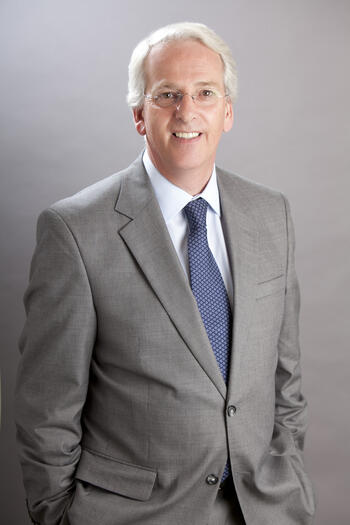
Steven Pifer


Steven Pifer is a senior fellow at the Brookings Institution, where his work focuses on arms control, Ukraine and Russia. A retired Foreign Service officer, his more than 25 years with the State Department included assignments as deputy assistant secretary of state with responsibilities for Russia and Ukraine (2001-2004), ambassador to Ukraine (1998-2000), and special assistant to the president and senior director for Russia, Ukraine and Eurasia on the National Security Council (1996-1997).


Co-sponsored by the Freeman Spogli Institute for International Studies and The Europe Center.

Steven Pifer Senior Fellow Speaker the Brookings Institution
Lectures
News Type
Q&As
Date
Paragraphs

For 14 years, Mariano-Florentino Cuéllar has been a tireless Stanford professor who has strengthened the fabric of university’s interdisciplinary nature. Joining the faculty at Stanford Law School in 2001, Cuéllar soon found a second home for himself at the Freeman Spogli for International Studies. He held various leadership roles throughout the institute for several years – including serving as co-director of the Center for International Security and Cooperation. He took the helm of FSI as the institute’s director in 2013, and oversaw a tremendous expansion of faculty, research activity and student engagement. 

An expert in administrative law, criminal law, international law, and executive power and legislation, Cuéllar is now taking on a new role. He leaves Stanford this month to serve as justice of the California Supreme Court and will be succeeded at FSI by Michael McFaul on Jan. 5.

 As the academic quarter comes to a close, Cuéllar took some time to discuss his achievements at FSI and the institute’s role on campus. And his 2014 Annual Letter and Report can be read here.

You’ve had an active 20 months as FSI’s director. But what do you feel are your major accomplishments? 

We started with a superb faculty and made it even stronger. We hired six new faculty members in areas ranging from health and drug policy to nuclear security to governance. We also strengthened our capacity to generate rigorous research on key global issues, including nuclear security, global poverty, cybersecurity, and health policy. Second, we developed our focus on teaching and education. Our new International Policy Implementation Lab brings faculty and students together to work on applied projects, like reducing air pollution in Bangladesh, and improving opportunities for rural schoolchildren in China.  We renewed FSI's focus on the Ford Dorsey Program in International Policy Studies, adding faculty and fellowships, and launched a new Stanford Global Student Fellows program to give Stanford students global experiences through research opportunities.   Third, we bolstered FSI's core infrastructure to support research and education, by improving the Institute's financial position and moving forward with plans to enhance the Encina complex that houses FSI.

Finally, we forged strong partnerships with critical allies across campus. The Graduate School of Business is our partner on a campus-wide Global Development and Poverty Initiative supporting new research to mitigate global poverty.  We've also worked with the Law School and the School of Engineering to help launch the new Stanford Cyber Initiative with $15 million in funding from the Hewlett Foundation. We are engaging more faculty with new health policy working groups launched with the School of Medicine and an international and comparative education venture with the Graduate School of Education. 

Those partnerships speak very strongly to the interdisciplinary nature of Stanford and FSI. How do these relationships reflect FSI's goals?

The genius of Stanford has been its investment in interdisciplinary institutions. FSI is one of the largest. We should be judged not only by what we do within our four walls, but by what activity we catalyze and support across campus. With the business school, we've launched the initiative to support research on global poverty across the university. This is a part of the SEED initiative of the business school and it is very complementary to our priorities on researching and understanding global poverty and how to alleviate. It's brought together researchers from the business school, from FSI, from the medical school, and from the economics department.  

Another example would be our health policy working groups with the School of Medicine. Here, we're leveraging FSI’s Center for Health Policy, which is a great joint venture and allows us to convene people who are interested in the implementation of healthcare reforms and compare the perspective and on why lifesaving interventions are not implemented in developing countries and how we can better manage biosecurity risks. These working groups are a forum for people to understand each other's research agendas, to collaborate on seeking funding and to engage students. 

I could tell a similar story about our Mexico Initiative.  We organize these groups so that they cut across generations of scholars so that they engage people who are experienced researchers but also new fellows, who are developing their own agenda for their careers. Sometimes it takes resources, sometimes it takes the engagement of people, but often what we've found at FSI is that by working together with some of our partners across the university, we have a more lasting impact.

Looking at a growing spectrum of global challenges, where would you like to see FSI increase its attention? 

FSI's faculty, students, staff, and space represent a unique resource to engage Stanford in taking on challenges like global hunger, infectious disease, forced migration, and weak institutions.  The  key breakthrough for FSI has been growing from its roots in international relations, geopolitics, and security to focusing on shared global challenges, of which four are at the core of our work: security, governance, international development, and  health. 

These issues cross borders. They are not the concern of any one country. 

Geopolitics remain important to the institute, and some critical and important work is going on at the Center for International Security and Cooperation to help us manage the threat of nuclear proliferation, for example. But even nuclear proliferation is an example of how the transnational issues cut across the international divide. Norms about law, the capacity of transnational criminal networks, smuggling rings, the use of information technology, cybersecurity threats – all of these factors can affect even a traditional geopolitical issue like nuclear proliferation. 

So I can see a research and education agenda focused on evolving transnational pressures that will affect humanity in years to come. How a child fares when she is growing up in Africa will depend at least as much on these shared global challenges involving hunger and poverty, health, security, the role of information technology and humanity as they will on traditional relations between governments, for instance. 

What are some concrete achievements that demonstrate how FSI has helped create an environment for policy decisions to be better understood and implemented?

We forged a productive collaboration with the U.N. High Commissioner for Refugees through a project on refugee settlements that convened architects, Stanford researchers, students and experienced humanitarian responders to improve the design of settlements that house refugees and are supposed to meet their human needs. That is now an ongoing effort at the UN Refugee Agency, which has also benefited from collaboration with us on data visualization and internship for Stanford students. 

Our faculty and fellows continue the Institute's longstanding research to improve security and educate policymakers. We sometimes play a role in Track II diplomacy on sensitive issues involving global security – including in South Asia and Northeast Asia.  Together with Hoover, We convened a first-ever cyber bootcamp to help legislative staff understand the Internet and its vulnerabilities. We have researchers who are in regular contact with policymakers working on understanding how governance failures can affect the world's ability to meet pressing health challenges, including infectious diseases, such as Ebola.

On issues of economic policy and development, our faculty convened a summit of Japanese prefectural officials work with the private sector to understand strategies to develop the Japanese economy.  

And we continued educating the next generation of leaders on global issues through the Draper Hills summer fellows program and our honors programs in security and in democracy and the rule of law. 

How do you see FSI’s role as one of Stanford’s independent laboratories?

It's important to recognize that FSI's growth comes at particularly interesting time in the history of higher education – where universities are under pressure, where the question of how best to advance human knowledge is a very hotly debated question, where universities are diverging from each other in some ways and where we all have to ask ourselves how best to be faithful to our mission but to innovate. And in that respect, FSI is a laboratory. It is an experimental venture that can help us to understand how a university like Stanford can organize itself to advance the mission of many units, that's the partnership point, but to do so in a somewhat different way with a deep engagement to practicality and to the current challenges facing the world without abandoning a similarly deep commitment to theory, empirical investigation, and rigorous scholarship.

What have you learned from your time at Stanford and as director of FSI that will inform and influence how you approach your role on the state’s highest court?

Universities play an essential role in human wellbeing because they help us advance knowledge and prepare leaders for a difficult world. To do this, universities need to be islands of integrity, they need to be engaged enough with the outside world to understand it but removed enough from it to keep to the special rules that are necessary to advance the university's mission. 

Some of these challenges are also reflected in the role of courts. They also need to be islands of integrity in a tumultuous world, and they require fidelity to high standards to protect the rights of the public and to implement laws fairly and equally.  

This takes constant vigilance, commitment to principle, and a practical understanding of how the world works. It takes a combination of humility and determination. It requires listening carefully, it requires being decisive and it requires understanding that when it's part of a journey that allows for discovery but also requires deep understanding of the past.

Hero Image
tino mug
All News button
1
News Type
News
Date
Paragraphs

The Europe Center Graduate Student Grant Competition

Call for Proposals:

The Europe Center is pleased to announce the Fall 2014 Graduate Student Grant Competition for graduate and professional students at Stanford whose research or work focuses on Europe. Funds are available for Ph.D. candidates from across a wide range of disciplines in the humanities and social sciences to prepare for dissertation research and to conduct research on approved dissertation projects. The Europe Center also supports early graduate students who wish to determine the feasibility of a dissertation topic or acquire training relevant for that topic. Moreover, funds are available for professional students whose interests focus on some aspect of European politics, economics, history, or culture; the latter may be used to support an internship or a research project. Grants range from $500 to $5000.

Additional information about the grants, as well as the online application form, can be found here.  The deadline for this Fall’s competition is Friday, October 17th. Recipients will be notified by November 7th. A second competition is scheduled for Spring 2015.
 

Highlights from 2013-2014:

In the 2013-2014 academic year, the Center awarded grants to 26 graduate students in departments ranging from Linguistics to Political Science to Anthropology. We would like to introduce you to some of the students that we support and the projects on which they are working. Our featured students this month are Michela Giorcelli (Economics) and Orysia Kulick (History).

Giorc

Image
elli’s project, “The Effects of Management and Technology on Firms’ Productivity: Lesson from the US Marshall Plan in Italy,” explores the role of productivity in the process of economic growth and development. It is typically difficult to isolate the causal effect of management training programs and technology transfer programs on business productivity because these measures are often endogenous to other unobservable factors. To overcome this concern, Giorcelli employed a unique research design to analyze the effects of the Marshall Plan’s transfer of US management and technology to Italian firms in the aftermath of WWII. 

Image
Image of Archivio
Giorcelli collected and digitized balance sheets data for 6,035 Italian firms eligible to receive the US management and technology support between 1930 to 1970. She then exploited an exogenous change in policy implementation that randomly determined which firms actually received Marshall Plan support. Preliminary results show that all firms that received either support significantly increased their productivity. Moreover, firms that received both sets of support simultaneously showed an additional increase in productivity, suggesting that management and technology are complementary in production. (Inset: The archives where Giorcelli conducted her research)

Image
Kulick’s project, “Regionalism in Ukraine and the Long Collapse of the Soviet Union, 1954--2014,” used original historical evidence collected from Ukrainian archives to study the political nexus between party elites in Kiev and in Moscow. For example, Kulick gleaned insights about the political economy of postwar industrial reconstruction from local archives in Dnipropetrovsk, a metallurgical powerhouse in the region. Previously inaccessible primary sources indicate that as the Soviet economy grew more complex, the state apparatus became more independent. Consequently, managerial specialists needed more autonomy to meet deadlines and quotas, making them--rather than the party--the source of innovation in postwar Ukraine. 

Image
According to Kulick, “my research this summer opened up new ways of thinking about the relationship between the party and the institutions that made up the Soviet state and economy.” Kulick used insights from Soviet-era KGB documents to shed new light on the current propaganda emanating out of the Kremlin. For example, she found that the long-term pull toward greater improvisation has had ongoing consequences. The current conflict is not just about Ukraine’s geopolitical orientation; it is also the byproduct of the dissolution of intransigent and poorly understood late Soviet-era institutions. (Inset: Kulick documents military mobilization during her summer in Ukraine)


Undergraduate Internship Program: Highlights

The Europe Center sponsored four undergraduate student internships with leading think tanks and international organizations in Europe in Summer 2014.  Laura Conigliaro (International Relations, 2015) joined the Centre for European Policy Studies (CEPS), while Elsa Brown (Political Science, 2015), Noah Garcia (BA International Relations and MA Public Policy, 2015), and Jana Persky (Public Policy, 2016) joined Bruegel, a leading European think tank. Our featured student this month is Laura Conigliaro.

Image
During her time at CEPS, Conigliaro worked on a 68-page research paper on genetically modified organisms (GMO) policy in the European Union. In the paper, she traces E.U. legislation and policy development on GMOs from 1990 onward, and also offers conclusions for the future trajectory of the E.U.’s GMO policy. Conigliaro argues that the evolution of the E.U.’s GMO policy is a topic of extreme relevance--and difficulty--because it is the source of high-level trade conflicts between Europe and the United States. Consequently, the study of GMO policymaking can help advance our understanding of E.U. institutions, E.U. “comitology” (policy process), and E.U.-U.S. bilateral relations. 

Image
Image of CEPS signage.
Conigliaro plans to incorporate the summer fellowship experience into her Stanford academic career, for example, by presenting research findings at Stanford’s Symposia of Undergraduate Research and Public Service (SURPS). Looking ahead, she writes: “I hope to use the knowledge and experience gained of the E.U. Institutions and policy process through the lens of the GMO issue to broaden and diversify my potential career opportunities and areas from my traditional area of concentration, East Asia, to also include the European Union.”


Recap:  Panel on Europe-Russia Relations and EU expansion

On September 30, 2014, Miroslav Lajčák, the Deputy Prime Minister and the Minister of Foreign and European Affairs of the Slovak Republic, participated in a panel discussion in which he shared his thoughts and opinions about Europe’s relationship with Russia, and about the E.U.’s management of its future membership and associations. The Minister’s viewpoints were of particular interest, given his role in the E.U. foreign policy establishment, and the Slovak Republic’s role in the E.U. and NATO.

“The fact is that E.U.-Russia relations have worsened dramatically. That cannot be denied. But it’s not E.U. enlargement that played a major role in this.”  According to the Minister, Russia did not view E.U. enlargement with hostility, in part, because enlargement remained a transparent process. “But it all changed when Europe decided to enter into Russia’s immediate neighborhood...the former Soviet Republics. And this was something that

Image
Miroslav Lajčák
was seen by Russia as a hostile activity, and this was what Russia fiercely resisted.” The Minister spoke candidly about the potential conflicts of concepts between the E.U.’s Eastern Partnership policy, Russia’s Near Abroad policy, and the idea of a Eurasian Union. A fundamental and ongoing source of tension pertains to the geopolitical position of Russia’s immediate neighbors: “The fact is that Russia never accepted the full sovereignty of the former Soviet Republics.” Apart from discussing the escalation of tensions between the E.U. and Russia, the Minister spoke about the role of sanctions and reforms as a path for moving forward and achieving lasting peace in Europe.

Minister Lajčák’s brought a variety of experiences to the panel. He served as the European Union Chief Negotiator for the E.U.-Ukraine and E.U.-Moldova Association Agreements, and was the European Union Special Representative for Bosnia and Herzegovina, and Sarajevo. Additionally, he was previously the Ambassador of the Slovak Republic to the Former Republic of Yugoslavia, Albania and the Former Yugoslav Republic of Macedonia. 

After Minister Lajčák spoke, he was followed by comments by Michael McFaul, Professor of Political Science and Senior Fellow, Hoover Institute and Freeman Spogli Institute; Norman Naimark, the Robert and Florence McDonnell Professor in East European Studies in the History Department and The Director of Stanford Global Studies; and Kathryn Stoner, Senior Fellow at the Freeman Spogli Institute and Faculty Director of the Susan Ford Dorsey Program in International Studies.


Introducing “Immigration and Integration in Europe” Policy Lab

The Europe Center would like to introduce a new research project entitled, “Immigration and Integration in Europe:  A Public Policy Perspective,” led by Professors David Laitin and Jens Hainmueller. Duncan Lawrence has recently joined Stanford University to help direct the project. The project is part of the new Policy Implementation Lab at the Freeman Spogli Institute for International Studies.

The social and economic integration of its diverse and ever growing immigrant populations is one of the most fundamental and pressing policy issues European countries face today. Success or failure in integrating immigrants is likely to have a substantial effect on the ability of European countries individually and collectively as members of the European Union to achieve objectives ranging from the profound such as sustaining a robust democratic culture to the necessary such as fostering economic cooperation between countries. Various policies have been devised to address this grave political dilemma, but despite heated public debates we know very little about whether these policies achieve their stated goals and actually foster the integration of immigrants into the host societies. (Inset: David Laitin)

Professor Jens Hainmueller.The goal of this research program is to fill this gap and create a network of leading immigration scholars in the US and Europe to generate rigorous evidence about what works and what does not when it comes to integration policies. The methodological core of the lab’s research program is a focus on systematic impact evaluations that leverage experimental and quasi-experimental methods with common study protocols to quantify the social and economic returns to integration policies across Europe, including polices for public housing, education, citizenship acquisition, and integration contracts for newcomers. This work will add to the quality of informed public debate on a sensitive issue, and create cumulative knowledge about policies that will be broadly relevant. (Inset: Jens Hainmueller)


The Europe Center Sponsored Events

We invite you to attend the following events sponsored or co-sponsored by The Europe Center:

Additional Details on our website
October 8-10, 2014
“War, Revolution and Freedom: the Baltic Countries in the 20th Century”
Stauffer Auditorium, Hoover Institution
9:00 AM onward

Save the Date
April 24-25, 2015
Conference on Human Rights

A collaborative effort between the International Human Rights and Conflict Resolution Clinic at Stanford Law School (IHRCRC), the Research Center for Human Rights at Vienna University (RCHR), and The Europe Center. The conference will focus on the pedagogy and practice of human rights. 

Save the Date
May 20-22, 2015
TEC Lectureship on Europe and the World 
Joel Mokyr
Robert H. Strotz Professor of Arts and Sciences, and Professor of Economics and History, Northwestern University

We welcome you to visit our website for additional details.

All News button
1

Encina Hall
616 Serra Street
Stanford, CA  94305-6165

0
Visiting Scholar at The Europe Center, 2014-2015
marboe.jpg

Irmgard Marboe is a visiting scholar at The Europe Center and an Associate Professor of International Law in the Department of European, International and Comparative Law, Faculty of Law at the University of Vienna. She is the head of the Austrian National Point of Contact for Space Law (NPOC) of the European Centre for Space Law (ECSL). Between 2008 and 2012, she was the chair of the working group on national space legislation of the Legal Subcommittee of the UN Committee for the Peaceful Uses of Outer Space which drafted the most recent UN General Assembly resolution relating to outer space activities (Res 68/74 of 11 December 2013).

Another research focus is international investment law where Professor Marboe specializes on the issue of compensation and damages. A second edition of her book Calculation of Compensation and Damages in International Investment Law (Oxford University Press, 2009) is currently in preparation. In addition, she works on Islamic law in the context of international law. She has been the director of the bi-annual Vienna International Christian-Islamic Summer University (www.vicisu.com) since 2008.

While at Stanford, Professor Marboe will work on a research project comparing US and European policies and legislation on data collected by Earth observation satellites.

-

Image
Amb. Ivo Daalder
Ivo H. Daalder is president of The Chicago Council on Global Affairs. Founded in 1922, the Council is a leading independent, nonpartisan organization committed to educating the public and influencing the discourse on global issues of the day. Prior to joining the Council in July 2013, Daalder served as the Ambassador to the North Atlantic Treaty Organization for more than four years. Daalder also served on the National Security Council staff as director for European Affairs from 1995-97. 

Before his appointment as Ambassador to NATO by President Obama in 2009, Daalder was a senior fellow in foreign policy studies at the Brookings Institution, specializing in American foreign policy, European security and transatlantic relations, and national security affairs. Prior to joining Brookings in 1998, he was an Associate Professor at the University of Maryland’s School of Public Policy and director of research at its Center for International and Security Studies. Ambassador Daalder was educated at Oxford and Georgetown Universities, and received his PhD in political science from the Massachusetts Institute of Technology.


Ivo Daalder Speaker President of the Chicago Council on Global Affairs and former US Ambassador to NATO
Lectures
-


Please click on the image below to view the video recording of this event.


Co-sponsored by The Europe Center and the Center for Russian, East European and Eurasian Studies.


Barnes/McDowell/Cranston Room
Fisher Conference Center at the Arrillaga Alumni Center

Miroslav Lajcak Deputy Prime Minister and Foreign Minister Speaker Slovak Republic

Encina Hall
616 Jane Stanford Way
Stanford, CA 94305-6055

0
Senior Fellow, Freeman Spogli Institute for International Studies
Ken Olivier and Angela Nomellini Professor of International Studies, Department of Political Science
Peter and Helen Bing Senior Fellow, Hoover Institution
mcfaul_headshot_2025.jpg PhD

Michael McFaul is the Ken Olivier and Angela Nomellini Professor of International Studies in Political Science, Senior Fellow at the Freeman Spogli Institute for International Studies, and the Peter and Helen Bing Senior Fellow at the Hoover Institution, all at Stanford University. He joined the Stanford faculty in 1995 and served as FSI Director from 2015 to 2025. He is also an international affairs analyst for MSNOW.

McFaul served for five years in the Obama administration, first as Special Assistant to the President and Senior Director for Russian and Eurasian Affairs at the National Security Council at the White House (2009-2012), and then as U.S. Ambassador to the Russian Federation (2012-2014).

McFaul has authored ten books and edited several others, including, most recently, Autocrats vs. Democrats: China, Russia, America, and the New Global Disorder, as well as From Cold War to Hot Peace: An American Ambassador in Putin’s Russia, (a New York Times bestseller) Advancing Democracy Abroad: Why We Should, How We Can; and Russia’s Unfinished Revolution: Political Change from Gorbachev to Putin.

He is a recipient of numerous awards, including an honorary PhD from Montana State University; the Order for Merits to Lithuania from President Gitanas Nausea of Lithuania; Order of Merit of Third Degree from President Volodymyr Zelenskyy of Ukraine, and the Dean’s Award for Distinguished Teaching at Stanford University. In 2015, he was the Distinguished Mingde Faculty Fellow at the Stanford Center at Peking University.

McFaul was born and raised in Montana. He received his B.A. in International Relations and Slavic Languages and his M.A. in Soviet and East European Studies from Stanford University in 1986. As a Rhodes Scholar, he completed his D. Phil. in International Relations at Oxford University in 1991. 

CV
Date Label
Professor of Political Science, and Senior Fellow, the Freeman Spogli Institute and the Hoover Institution Speaker Stanford University

CISAC
Stanford University
Encina Hall, C235
Stanford, CA 94305-6165

(650) 723-6927 (650) 725-0597
0
Senior Fellow, by courtesy, at the Freeman Spogli Institute for International Studies
Robert & Florence McDonnell Professor of East European Studies
Professor of History
Professor, by courtesy, of German Studies
Senior Fellow at the Hoover Institution
Naimark,_Norman.jpg MS, PhD

Norman M. Naimark is the Robert and Florence McDonnell Professor of East European Studies, a Professor of History and (by courtesy) of German Studies, and Senior Fellow of the Hoover Institution and (by courtesy) of the Freeman-Spogli Institute for International Studies. Norman formerly served as the Sakurako and William Fisher Family Director of the Stanford Global Studies Division, the Burke Family Director of the Bing Overseas Studies Program, the Convener of the European Forum (predecessor to The Europe Center), Chair of the History Department, and the Director of Stanford’s Center for Russian, East European, and Eurasian Studies.

Norman earned his Ph.D. in History from Stanford University in 1972 and before returning to join the faculty in 1988, he was a professor of history at Boston University and a fellow of the Russian Research Center at Harvard. He also held the visiting Catherine Wasserman Davis Chair of Slavic Studies at Wellesley College. He has been awarded the Officer's Cross of the Order of Merit of the Federal Republic of Germany (1996), the Richard W. Lyman Award for outstanding faculty volunteer service (1995), and the Dean's Teaching Award from Stanford University for 1991-92 and 2002-3.

Norman is interested in modern Eastern European and Russian history and his research focuses on Soviet policies and actions in Europe after World War II and on genocide and ethnic cleansing in the twentieth century. His published monographs on these topics include The History of the "Proletariat": The Emergence of Marxism in the Kingdom of Poland, 1870–1887 (1979, Columbia University Press), Terrorists and Social Democrats: The Russian Revolutionary Movement under Alexander III (1983, Harvard University Press), The Russians in Germany: The History of The Soviet Zone of Occupation, 1945–1949 (1995, Harvard University Press), The Establishment of Communist Regimes in Eastern Europe (1998, Westview Press), Fires of Hatred: Ethnic Cleansing In 20th Century Europe (2001, Harvard University Press), Stalin's Genocides (2010, Princeton University Press), and Genocide: A World History (2016, Oxford University Press). Naimark’s latest book, Stalin and the Fate of Europe: The Postwar Struggle for Sovereignty (Harvard 2019), explores seven case studies that illuminate Soviet policy in Europe and European attempts to build new, independent countries after World War II.


Affiliated faculty at The Europe Center
Affiliated faculty at the Center on Democracy, Development and the Rule of Law
The Sakurako and William Fisher Family Director of the Stanford Global Studies Division and Robert and Florence McDonnell Professor in East European Studies Speaker Stanford University
Kathryn Stoner Faculty Director, Susan Ford Dorsey Program in International Policy Studies and Senior Fellow, Freeman Spogli Institute Speaker Stanford University

This project examines the  “contemporary” with a focus on defining moments such as: 1945, 1973, 1989, and 2001. In recent years the concept of the contemporary has been taken up within limited disciplinary discourses and in the context of distinct geographical settings. The horizon of this project, however, is the global. We employ a comparative and interdisciplinary approach to the hybrid term “contemporary” as it intersects various fields and serves as a heuristic device to understand phenomena in politics, culture, and the arts.

News Type
News
Date
Paragraphs

Appeared in Stanford Report, May 29, 2014

By Clifton B. Parker

The electoral eruption of anti-European Union populism is a reflection of structural flaws in that body but does not represent a fatal political blow, according to Stanford scholars.

In the May 25 elections for the European Parliament, anti-immigration parties won 140 of the 751 seats, well short of control, but enough to rattle supporters of the EU, which has 28 member nations. In Britain, Denmark, France and Greece, the political fringe vote totals stunned the political establishments.

Stanford political scientist Francis Fukuyama said the rise of extremism and anti-elitism is not surprising in the wake of the 2008 economic downturn and subsequent high levels of unemployment throughout Europe. In one sense, the EU elites have themselves to blame, he said.

"The elites who designed the EU and the eurozone failed in a major way," he said. "There was a structural flaw in the design of the euro (monetary union absent fiscal union, and the method of disciplining countries once in the zone)," said Fukuyama, the Olivier Nomellini Senior Fellow at Stanford's Freeman Spogli Institute for International Studies and the Center for Democracy, Development and the Rule of Law, and Research Afflilate at The Europe Center.

Some have argued that the European Union should adopt a form of fiscal union because without one, decisions about taxes and spending remain at the national level.

As Fukuyama points out, this becomes a problem, as in the case of a debt-ridden Greece, which he believes should not have qualified for EU membership in the first place. In fact, he said, it would have been better for Greece itself to leave the euro at the outset of the 2008 crisis.

Still, Fukuyama said the big picture behind the recent election is clear – it was a confluence of issues and timing.

"It is a bit like an off-year election in the U.S., where activists are more likely to vote than ordinary citizens," he said.

Fukuyama believes the EU will survive this electoral crisis. "I think the EU will be resilient. It has weathered other rejections in the past. The costs of really exiting the EU are too high in the end, and the elites will adjust, having been given this message," he said.

Meanwhile, the populist parties in the different countries are not unified or intent on building coalitions with each other.

"Other than being anti-EU, most of them have little in common," Fukuyama said. "They differ with regard to specific positions on immigration, economic policy, and they respond to different social bases."

Ongoing anger

Dan Edelstein, a professor of French, said the largest factor for success by extremist candidates was "ongoing anger toward the austerity policy imposed by the EU," primarily by Germany.

Edelstein estimates that a large majority of French voters are still generally supportive of the EU. For the time being, the anti-EU faction does not have a majority, though they now have much more representation in the European Parliament.

Edelstein noted existing strains among the anti-EU parties – for example, the UK Independence Party in Britain has stated that it would not form an alliance with the National Front party in France.

Immigration remains a thorny issue for some Europeans, Edelstein said.

"'Immigration' in most European political debates, tends to be a synonym for 'Islam.' While there are some countries, such as Britain, that are primarily worried about the economic costs of immigration, in most continental European countries, the fears are cultural," he said.

As Edelstein put it, Muslims are perceived as a "demographic threat" to white or Christian Europe. However, he is optimistic in the long run.

"It seems a little early to be writing the obituary of the EU. Should economic conditions improve over the next few years, as they are predicted to, we will likely see this high-water mark of populist anger recede," said Edelstein.

Cécile Alduy, an associate professor of French, writes in the May 28 issue of The Nation about how the ultra-right-wing National Front came in first place in France's election.

"This outcome was also the logical conclusion of a string of political betrayals, scandals and mismanagement that were only compounded by the persistent economic and social morass that has plunged France into perpetual gloom," she wrote.

Historian J.P. Daughton said that like elsewhere in the world, immigration often becomes a contentious issue in Europe in times of economic difficulties.  

"High unemployment and painful austerity measures in many parts of Europe have led extremist parties to blame immigrants for taking jobs and sapping already limited social programs," he said.

Anti-immigration rhetoric plays particularly well in EU elections, Daughton said. "Extremist parties portray European integration as a threat not only to national sovereignty, but also to national identity.

Edelstein, Alduy and Daughton are all Faculty Affiliates of The Europe Center.

Wake-up call

Russell A. Berman, a professor of German studies and comparative literature, said many Europeans perceive the EU as "somehow impenetrable, far from the civic politics of the nation states."

As a result, people resent regulations issued by an "intangible bureaucracy," and have come to believe that the European Parliament has not grappled with major issues such as mustering a coherent foreign policy voice, he said.

"The EU can be great on details but pretty weak on the big picture," said Berman, who is the Walter A. Haas Professor in the Humanities, Senior Fellow at the Hoover Institution, and Faculty Affiliate of The Europe Center. "It is this discrepancy that feeds the dissatisfaction."

Yet he points out that the extremist vote surged in only 14 nations of the EU – in the other 14, there was "negligible extremism," as he describes it.

"We're a long way from talking about a fatal blow, but the vote is indeed a wake-up call to the centrists that they have to make a better case for Europe," Berman said.

Hero Image
A man walks past a board displaying provisional results of the European Parliament election at the EU Parliament in Brussels
A man walks past a board displaying provisional results of the European Parliament election at the EU Parliament in Brussels May 25, 2014.
REUTERS / Francois Lenoir
All News button
1
Paragraphs
Why do voters agree to bear the costs of bailing out other countries? Despite the prominence of public opinion in the ongoing debate over the eurozone bailouts, voters’ preferences on the topic are poorly understood. The article's authors conduct the first systematic analysis of this issue using observational and experimental survey data from Germany, the country shouldering the largest share of the EU’s financial rescue fund. Testing a range of theoretical explanations, we find that individuals’ own economic standing has limited explanatory power in accounting for their position on the bailouts. In contrast, social dispositions such as altruism and cosmopolitanism robustly correlate with support for the bailouts. The results indicate that the divide in public opinion over the bailouts does not reflect distributive lines separating domestic winners and losers. Instead, the bailout debate is better understood as a foreign policy issue that pits economic nationalist sentiments versus greater cosmopolitan affinity and other-regarding concerns.
All Publications button
1
Publication Type
Journal Articles
Journal Publisher
American Journal of Political Science
Authors
Subscribe to Foreign Policy