The Europe Center January 2014 Newsletter
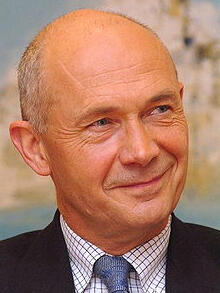
Special Event: Pascal Lamy Lecture
“World Trade and Global Governance”
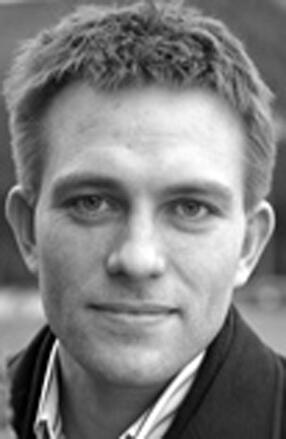
Meet our Visiting Scholars: Bjørn Høyland
The Europe Center is jointly housed in the Freeman Spogli Institute for International Studies and the Stanford Global Studies Division.
The electoral eruption of anti-European Union populism is a reflection of structural flaws in that body but does not represent a fatal political blow, according to Stanford scholars.
In the May 25 elections for the European Parliament, anti-immigration parties won 140 of the 751 seats, well short of control, but enough to rattle supporters of the EU, which has 28 member nations. In Britain, Denmark, France and Greece, the political fringe vote totals stunned the political establishments.
Stanford political scientist Francis Fukuyama said the rise of extremism and anti-elitism is not surprising in the wake of the 2008 economic downturn and subsequent high levels of unemployment throughout Europe. In one sense, the EU elites have themselves to blame, he said.
"The elites who designed the EU and the eurozone failed in a major way," he said. "There was a structural flaw in the design of the euro (monetary union absent fiscal union, and the method of disciplining countries once in the zone)," said Fukuyama, the Olivier Nomellini Senior Fellow at Stanford's Freeman Spogli Institute for International Studies and the Center on Democracy, Development and the Rule of Law, and Research Afflilate at The Europe Center.
Some have argued that the European Union should adopt a form of fiscal union because without one, decisions about taxes and spending remain at the national level.
As Fukuyama points out, this becomes a problem, as in the case of a debt-ridden Greece, which he believes should not have qualified for EU membership in the first place. In fact, he said, it would have been better for Greece itself to leave the euro at the outset of the 2008 crisis.
Still, Fukuyama said the big picture behind the recent election is clear – it was a confluence of issues and timing.
"It is a bit like an off-year election in the U.S., where activists are more likely to vote than ordinary citizens," he said.
Fukuyama believes the EU will survive this electoral crisis. "I think the EU will be resilient. It has weathered other rejections in the past. The costs of really exiting the EU are too high in the end, and the elites will adjust, having been given this message," he said.
Meanwhile, the populist parties in the different countries are not unified or intent on building coalitions with each other.
"Other than being anti-EU, most of them have little in common," Fukuyama said. "They differ with regard to specific positions on immigration, economic policy, and they respond to different social bases."
Dan Edelstein, a professor of French, said the largest factor for success by extremist candidates was "ongoing anger toward the austerity policy imposed by the EU," primarily by Germany.
Edelstein estimates that a large majority of French voters are still generally supportive of the EU. For the time being, the anti-EU faction does not have a majority, though they now have much more representation in the European Parliament.
Edelstein noted existing strains among the anti-EU parties – for example, the UK Independence Party in Britain has stated that it would not form an alliance with the National Front party in France.
Immigration remains a thorny issue for some Europeans, Edelstein said.
"'Immigration' in most European political debates, tends to be a synonym for 'Islam.' While there are some countries, such as Britain, that are primarily worried about the economic costs of immigration, in most continental European countries, the fears are cultural," he said.
As Edelstein put it, Muslims are perceived as a "demographic threat" to white or Christian Europe. However, he is optimistic in the long run.
"It seems a little early to be writing the obituary of the EU. Should economic conditions improve over the next few years, as they are predicted to, we will likely see this high-water mark of populist anger recede," said Edelstein.
Cécile Alduy, an associate professor of French, writes in the May 28 issue of The Nation about how the ultra-right-wing National Front came in first place in France's election.
"This outcome was also the logical conclusion of a string of political betrayals, scandals and mismanagement that were only compounded by the persistent economic and social morass that has plunged France into perpetual gloom," she wrote.
Historian J.P. Daughton said that like elsewhere in the world, immigration often becomes a contentious issue in Europe in times of economic difficulties.
"High unemployment and painful austerity measures in many parts of Europe have led extremist parties to blame immigrants for taking jobs and sapping already limited social programs," he said.
Anti-immigration rhetoric plays particularly well in EU elections, Daughton said. "Extremist parties portray European integration as a threat not only to national sovereignty, but also to national identity.
Edelstein, Alduy and Daughton are all Faculty Affiliates of The Europe Center.
Russell A. Berman, a professor of German studies and comparative literature, said many Europeans perceive the EU as "somehow impenetrable, far from the civic politics of the nation states."
As a result, people resent regulations issued by an "intangible bureaucracy," and have come to believe that the European Parliament has not grappled with major issues such as mustering a coherent foreign policy voice, he said.
"The EU can be great on details but pretty weak on the big picture," said Berman, who is the Walter A. Haas Professor in the Humanities, Senior Fellow at the Hoover Institution, and Faculty Affiliate of The Europe Center. "It is this discrepancy that feeds the dissatisfaction."
Yet he points out that the extremist vote surged in only 14 nations of the EU – in the other 14, there was "negligible extremism," as he describes it.
"We're a long way from talking about a fatal blow, but the vote is indeed a wake-up call to the centrists that they have to make a better case for Europe," Berman said.
The presentation summarizes preliminary findings of my research project on Allied policy towards resistance groups during World War II and its impact on post-war political and ideological divisions.
The research is linked with a multiplicity of historical problems: the western Allies’ balance of political and military considerations during World War II; the Anglo-American cooperation and competition in the field of intelligence; the use of special operations as an instrument of foreign policy, especially in regard to countries where the development of resistance movements had a strong impact on post-war settlement (e.g. Yugoslavia, Greece and Poland); the politics of communist movements between war and revolution in Central and Eastern Europe; the relationship between the Western Allies and the Soviet Union and the Allies’ perception of the latter.
The particular contribution of the project is to bring together aspects which are usually addressed separately: the different national scenarios, whose connections and mutual influence will be investigated; the two Western intelligence agencies, which have been researched mostly in separate ways by scholars of the corresponding nationalities; the Soviet and Western allies’ policies.
Tommaso Piffer is a Marie Curie Postdoctoral Fellow at the Davis Center for Russian and Eurasian Studies at Harvard and at the University of Cambridge. Among his publications is a biography of Alfredo Pizzoni, the political chief of the Italian Resistance (Il Banchiere della Resistenza, 2005), an account of the relationship between the Allies and the Italian Resistance during World War II (Gli Alleati e la Resistenza Italiana, 2010) as well as several essays. He also edited a book in memory of Victor Zaslavsky on Totalitarian societies and democratic transition (Società totalitarie e transizione alla democrazia, 2011, with Vladislav Zubok) and the collection of essays on the political mass murder of Porzus (Porzus. Violenza e resistenza sul confine orientale, 2012). He is an affiliate at the Harvard Center for European Studies and a contributor to the cultural insert of the Italian newspaper Corriere della Sera.
Open to Stanford affiliates
Sponsored by the Center for Russian, East European and Eurasian Studies and co-sponsored by The Europe Center
History Corner, Room 307
The Europe Center recently initiated a distinguished annual lectureship named, The Europe Center Lectureship on Europe and the World. The lectures are intended to promote awareness of Europe's lessons and experiences with a goal of enhancing our collective knowledge of both contemporary global affairs and Europe itself. Each year, faculty affiliates at the Center select a renowned intellectual to deliver the lectureship on a topic of significant scholarly interest. The Europe Center invites you to the inaugural annual lectures of this series by Adam Tooze, Barton M. Briggs Professor of History, Yale University.
“Making Peace in Europe 1917-1919: Brest-Litovsk and Versailles”
Date: Wednesday, Apr 30, 2014
Time: 4:00 - 5:30 pm
Location: Koret Taube Room, Gunn-SIEPR
“Hegemony: Europe, America and the Problem of Financial Reconstruction, 1916-1933”
Date: Thursday, May 1, 2014
Time: 4:00 - 5:30 pm
Location: Koret Taube Room, Gunn-SIEPR
“Unsettled Lands: The Interwar Crisis of Agrarian Europe”
Date: May 2, 2014
Time: 4:00 - 5:30 pm
Location: Bechtel Conference Center
Reception: 5:30 - 6:15 pm
RSVP by Apr 23, 2014
On the centenary of the outbreak of the First World War, Adam Tooze will deliver three lectures about the history of the transformation of the global power structure that followed from Imperial Germany’s decision to provoke America’s declaration of war in 1917. Tooze advances a powerful explanation of why the First World War rearranged political and economic structures across Eurasia and the British Empire, sowed the seeds of revolution in Russia and China, and laid the foundations of a new global order that began to revolve around the United States and the Pacific. These lectures will present an argument for why the fate of effectively the whole of civilization changed in 1917, and why the First World War’s legacy continues to shape our world today.
Tooze is the author of The Wages of Destruction: The Making and Breaking of the Nazi Economy (2006) and Statistics and the German State 1900-1945: The Making of Modern Economic Knowledge (2001), among numerous other scholarly articles on modern European history.
Mark von Hagen teaches the history of Eastern Europe and Russia, with a focus on Ukrainian-Russian relations, at Arizona State University, after teaching 24 years at Columbia University, where he also chaired the history department and directed the Harriman Institute. At the Harriman Institute, he developed Ukrainian studies in the humanities and social sciences. He was elected President of the International Association for Ukrainian Studies in 2002 and presided over the Congress in Donetsk in 2005. He also served as President of the Association for Slavic, East European and Eurasian Studies (2009). During his New York years, he was a member of the Council on Foreign Relations, and remains a member of the Advisory Board for Europe and Asia at Human Rights Watch. He has worked with historians, archivists, and educators in independent Ukraine and with diaspora institutions. He has served on the advisory board of the European University in Minsk (in exile in Vilnius, Lithuania), to the Open Society Institute; on the Board of Directors of the National Council for Eurasian and East European Research, and the International Fellowship Committee of the Social Science Research Council.
Ambassador Vlad Lupan has been the Ambassador, Permanent Representative of the Republic of Moldova to the United Nations, in New York, since January 2012, where he is focusing on development issues, rule of law and human rights, and conflict resolution. He has held a variety of diplomatic posts since 1996 till 2008, last one being Head of Political-Military Cooperation Department and was a negotiator on Transnistrian conflict settlement. He also worked with OSCE field Missions in in Georgia, Albania and Croatia. In 2008 Mr. Lupan joined the civil society, and became a member of the advisory board to the Ministry of Defense. During this time he was also the host of the “Euro-Atlantic Dictionary” radio talk show. In 2010 he became the Foreign Policy Advisor to the Acting President of the Republic of Moldova, and was later elected as a Member of the Parliament.
Educated at the State University of Moldova and at the National School of Political Science and Public Administration in Bucharest, Romania, Ambassador Lupan earned his international relations degree, and later a master’s degree in journalism and public communications from the Free Independent Moldovan University in Chisinau. Ambassador Lupan has published mainly in Romanian, though he also published in Russian or English, on foreign and domestic politics issues, including international security matters, Security Sector Reform, Transnistrian conflict settlement and European Union Eastern Partnership.
Dr. Yaroslav Prytula is an Associate Professor at the Department of International Economic Analysis and Finance at Lviv Ivan Franko National University (LIFNU) and a Professor at the Lviv Business School of the Ukrainian Catholic University in Lviv, Ukraine. Previously he served as an Academic Secretary of LIFNU and a Vice-Dean of the Faculty of International Relations at LIFNU. He is a member of the Supervisory Board of Lviv Ivan Franko National University. His scholarly interests are in macroeconomic modelling, quantitative methods in social science and higher education in transitional societies. His current research is related to socio-economic regional development in Ukraine. During 2001 he spent a semester in The George Washington University Elliott School of International Affairs under William and Helen Petrach scholarship and continued his research during 2003-04 in The George Washington University Research Program in Social and Organizational Learning under the U.S. Department of State funded Junior Faculty Development Program. During 2004-07 he was a fellow of the Open Society Institute Academic Fellowship Program. During 2007-09 Yaroslav was a fellow of the Global Policy Fellowship Program of the Institute for Higher Education Policy (Washington, DC). In 2011 Dr. Prytula was a visiting scholar at the George Mason University under the University Administration Support Program funded by the Carnegie Corporation of New York and administered by the International Research and Exchanges Board (IREX). Currently Dr. Prytula is a Fulbright Research Scholar at the George Washington University School of Business. Dr. Prytula was awarded his PhD in Mathematical Analysis from LIFNU in 2000. He graduated from the Faculty of Mechanics and Mathematics of LIFNU. Yaroslav Prytula has received numerous awards and scholarships.
Presented by the Center for Russian, East European and Eurasian Studies, and co-sponsored by The Europe Center and the Stanford Humanities Center.
Levinthal Hall
The Europe Center invites you to the inaugural annual lectures of this series by Adam Tooze, Barton M. Briggs Professor of History, Yale University. On the centenary of the outbreak of the First World War, Adam Tooze will deliver three lectures about the history of the transformation of the global power structure that followed from Imperial Germany’s decision to provoke America’s declaration of war in 1917. Tooze advances a powerful explanation of why the First World War rearranged political and economic structures across Eurasia and the British Empire, sowed the seeds of revolution in Russia and China, and laid the foundations of a new global order that began to revolve around the United States and the Pacific. These lectures will present an argument for why the fate of effectively the whole of civilization changed in 1917, and why the First World War’s legacy continues to shape our world today.
Titles and venues are listed below.
Wednesday, Apr 30, 2014, 4:00 pm - 5:30 pm
Location: Koret Taube Room, Gunn-SIEPR
“Making Peace in Europe 1917-1919: Brest-Litovsk and Versailles”
Recent events in Ukraine pose the question, is a comprehensive peace for Europe, both East and West, possible? This lecture will address the first moment in which that question was posed, during and after World War I. In light of current events the lecture will focus on the influence of Russian power and powerlessness in shaping both the abortive effort to make peace in the East between Imperial Germany and Soviet Russia at Brest Litovsk - the first treaty to recognize the existence of an independent Ukraine - and the efforts to make peace in the West at Versailles and after. Returning to the period 1917-1923 suggests sobering conclusions about the stability of the order that we have taken for granted since 1991.
Thursday, May 1, 2014, 4:00 pm - 5:30 pm
Location: Koret Taube Room, Gunn-SIEPR
“Hegemony: Europe, America and the Problem of Financial Reconstruction, 1916-1933”
Having established itself in the 19th century as the financial center of the world, Europe's sudden impoverishment by World War I came as a dramatic shock. The ensuing trans-Atlantic crises of the 1920s and early 1930s were not only the most severe but the most consequential in the history of Europe and the wider world. But, to this day there is substantial disagreement amongst both social scientists and historians as to the causes of the disaster. Was it American leadership or a failure of cooperation that was to blame? This lecture will argue the case for a revised and historicized version of the hegemonic failure thesis. The absence presence of American influence was crucial in determining Europe's fate.
Friday, May 2, 2014, 4:00 pm - 5:30 pm
Location: Bechtel Conference Center
Followed by a reeception, 5:30 pm - 6:15 pm
“Unsettled Lands: The Interwar Crisis of Agrarian Europe”
Until the middle of the twentieth century Europe, like the rest of the world, was majority agrarian. And yet the most influential accounts of the interwar crisis, framed as they were by the industrial and urban world of the later twentieth-century Europe, tended to ignore this evident fact, focusing instead on workers and business-men, politicians and soldiers. This lecture will illustrate how brining the peasantry back in has the potential not only to throw new light on Europe's great epoch of crisis, but to open that history, beyond the Bloodlands to the wider world.
Tooze is the author of The Wages of Destruction: The Making and Breaking of the Nazi Economy (2006) and Statistics and the German State 1900-1945: The Making of Modern Economic Knowledge (2001), among numerous other scholarly articles on modern European history.
April 30th and May 1st: Koret-Taube Conference Center in the Gunn–SIEPR Building (366 Galvez Street).
May 2nd: Bechtel Conference Center in Encina Hall (616 Serra Street).
Bechtel Conference Center
450 Serra Mall
Building 110
Stanford, CA 94305-2145
Ian Morris is Jean and Rebecca Willard Professor of Classics and a Fellow of the Archaeology Center at Stanford University. He grew up in Britain and studied at Birmingham and Cambridge Universities before moving to the University of Chicago in 1987 and on to Stanford University in 1995. He directed Stanford’s archaeological excavations at Monte Polizzo in Sicily between 2000 and 2007 and has served at Stanford as Senior Associate Dean of Humanities and Sciences, Chair of the Classics department, and Director of the Stanford Archaeology Center and Social Science History Institute. He has served as a contributing editor at Stratfor, the Roman Professor of International Studies at the LSE, the Australian Army's Professor of Future Land Warfare, and as a member of the Max Planck Institute's Scientific Advisory Board. In 2012 he was elected as a Fellow of the British Academy.
He has published thirteen books and more than a hundred essays in scholarly journals and newspapers. His book Why the West Rules—For Now: The Patterns of History, and What they Reveal About the Future (published by Farrar, Straus & Giroux in 2010) won three literary awards, was named as one of the best books of the year by The New York Times, The Economist, Foreign Affairs, Newsweek, Nature, and the London Evening Standard, and has been translated into fourteen languages. Foreign Policy magazine ranked it number 2 among the books global thinkers were reading in 2011. His most recent book, Foragers, Farmers, and Fossil Fuels: How Values Evolve, was published by Princeton University Press in 2015. His next book looks at Britain's relations with Europe and the wider world--all the way back to 6000 BC, when rising sea levels physically separated the British Isles from the European continent.
This seminar is part of the "Europe and the Global Economy" series.
How do geopolitical forces influence international capital markets? In particular, do market actors condition their responses to crisis lending initiatives on the political incentives of major lenders? In this paper, Randall Stone and co-writers Terrence Chapman, Songying Fang and Xin Li analyze a formal model which demonstrates that the effect of crisis lending announcements on international investment flows is conditional on how market actors interpret the political and economic motivations behind lending decisions on the part of the lender and borrower. If investors believe the decision to accept crisis lending is a sign of economic weakness and lending decisions are influenced by the political interests of the major donor countries, then crisis lending may not reduce borrowing costs or quell fears of international investors. On the other hand, if market actors believe that crisis lending programs, and attendant austerity conditions, will significantly reduce the risk of a financial crisis, they may respond with increased private investment, creating a "catalytic effect." In this model, the political biases of key lending countries can affect the inferences market actors draw, because some sovereign lenders have strategic interests in ensuring that certain borrowing countries do not collapse under the strain of economic crisis. Although this theory applies to multiple types of crisis lending, it helps explain discrepant empirical findings about market reactions to IMF programs. The implications of their theory is tested by examining how sovereign bond yields are affected by IMF program announcements, loan size, the scope of conditions attached to loans, and measures of the geopolitical interests of the United States, a key IMF principal.
Randall Stone (Ph.D. 1993, Harvard) is Professor of Political Science at the University of Rochester. His research is in international political economy and combines formal theory, quantitative methods, and qualitative fieldwork. He is the author of Controlling Institutions: International Organizations and the Global Economy (Cambridge University Press 2011), Lending Credibility: The International Monetary Fund and the Post-Communist Transition (Princeton University Press, 2002) and Satellites and Commissars: Strategy and Conflict in the Politics of Soviet-Bloc Trade (Princeton University Press, 1996), as well as articles in the American Political Science Review, International Organization, International Studies Quarterly, the Journal of Conflict Resolution, Review of International Organizations, and Global Environmental Politics. He has been awarded grants by the NSF, SSRC, NCEEER, and IREX, was the last recipient of the Soviet Peace Prize (1991), and has been a Senior Fulbright Scholar visiting the Stiftung Wissenschaft und Politik in Berlin. He speaks German and Russian fluently and Polish moderately well, and reads all Slavic languages.
CISAC Conference Room