Governance

FSI's research on the origins, character and consequences of government institutions spans continents and academic disciplines. The institute’s senior fellows and their colleagues across Stanford examine the principles of public administration and implementation. Their work focuses on how maternal health care is delivered in rural China, how public action can create wealth and eliminate poverty, and why U.S. immigration reform keeps stalling. 

FSI’s work includes comparative studies of how institutions help resolve policy and societal issues. Scholars aim to clearly define and make sense of the rule of law, examining how it is invoked and applied around the world. 

FSI researchers also investigate government services – trying to understand and measure how they work, whom they serve and how good they are. They assess energy services aimed at helping the poorest people around the world and explore public opinion on torture policies. The Children in Crisis project addresses how child health interventions interact with political reform. Specific research on governance, organizations and security capitalizes on FSI's longstanding interests and looks at how governance and organizational issues affect a nation’s ability to address security and international cooperation.

-

Image
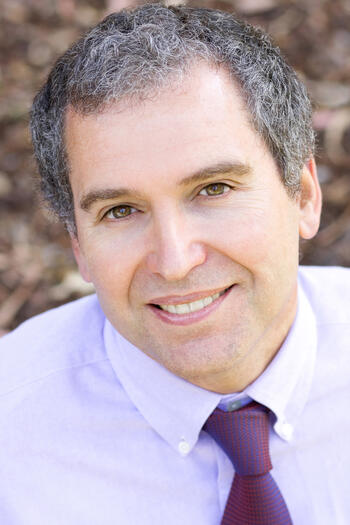
Ivo Daalder

Ivo Daalder has been president of the Chicago Council on Global Affairs since July 2013. Prior to joining the Council, Daalder served as the Ambassador to the North Atlantic Treaty Organization for more than four years. Daalder also served on the National Security Council staff as director for European Affairs from 1995-97.
 
Ambassador Daalder is a widely-published author. His most recent books include In the Shadow of the Oval Office: Profiles of the National Security Advisers and the Presidents they Served—From JFK to George W. Bush (with I. M. Destler) and the award-winning America Unbound: The Bush Revolution in Foreign Policy (with James M. Lindsay). Other books include Beyond Preemption: Force and Legitimacy in a Changing World (2007); Crescent of Crisis: US-European Strategy for the Greater Middle East (2006); and Winning Ugly: NATO’s War to Save Kosovo (2000). Daalder is a frequent contributor to the opinion pages of the world’s leading newspapers, and a regular commentator on international affairs on television and radio.
 
Before his appointment as ambassador to NATO by President Obama in 2009, Daalder was a senior fellow in foreign policy studies at the Brookings Institution, specializing in American foreign policy, European security and transatlantic relations, and national security affairs. Prior to joining Brookings in 1998, he was an associate professor at the University of Maryland’s School of Public Policy and director of research at its Center for International and Security Studies.
 
Ambassador Daalder serves on the board of UI LABS, on the leadership board of the chancellor of the University of Illinois at Chicago, and on the Advisory Committee of the Secretary of State's Strategic Dialogue with Civil Society, for which he also cochairs the Global Cities Working Group.
 
Ambassador Daalder was educated at Oxford and Georgetown Universities, and received his PhD in political science from the Massachusetts Institute of Technology. He is married to Elisa D. Harris, and they have two sons.


Ivo Daalder Former U.S. Permanent Representative to NATO
Lectures
-

[[{"fid":"225746","view_mode":"crop_870xauto","fields":{"format":"crop_870xauto","field_file_image_description[und][0][value]":"","field_file_image_alt_text[und][0][value]":false,"field_file_image_title_text[und][0][value]":false,"field_credit[und][0][value]":"","field_caption[und][0][value]":"","thumbnails":"crop_870xauto"},"type":"media","field_deltas":{"2":{"format":"crop_870xauto","field_file_image_description[und][0][value]":"","field_file_image_alt_text[und][0][value]":false,"field_file_image_title_text[und][0][value]":false,"field_credit[und][0][value]":"","field_caption[und][0][value]":"","thumbnails":"crop_870xauto"}},"link_text":null,"attributes":{"style":"font-size: 13.008px; height: 450px; width: 300px; float: left;margin-right: 15px;","class":"media-element file-crop-870xauto","data-delta":"2"}}]]

A wave of far-right populism is sweeping across Europe. Euroskeptic, nationalist, populist parties, once on the fringes of European politics, are poised to enter the mainstream. The rise of the far right is first and foremost a cultural backlash against the rapid economic and political integration of the E.U. over the last 25 years. But while far-right parties are nothing new in Europe, their explicit pro-Russian turn is. Far right parties are not simply puppets of the Kremlin, but they are undoubtedly allies. They act as agents of influence in Europe’s institutions by supporting pro-Russian views, praising Mr. Putin’s foreign policy in Ukraine and Syria, and advocating against EU policies that would hurt Russian interests, such as sanctions. Increasing electoral support for the far right populists is no doubt domestically driven, but by supporting Putin, far-right leaders conveniently play into the Kremlin’s geo-political agenda.


Alina Polyakova, PhD, is the Director of Research for Europe and Eurasia at the Atlantic Council. She is the author of  the book, The Dark Side of European Integration (2015), which examines the rise of far-right populism in Europe. Dr. Polyakova is a term member of the Council on Foreign Relations and a frequent media commentator on developments in Ukraine, Russia, and Europe. Her writings have appeared in major publications such as The New York Times, Wall Street Journal, Foreign Affairs, Foreign Policy, The American Interest, Newsweek, and academic journals. Concurrently, Dr. Polyakova is a Swiss National Science Foundation Senior Research Fellow and coinvestigator on a multi-year project examining the rise of far-right political parties in the European Union. She has been a fellow at the Eurasia Foundation, the Woodrow Wilson International Center for Scholars, the Fulbright Foundation, the National Science Foundation, the Social Science Research Council, the International Research and Exchanges Board (IREX), and a Senior Research Fellow and Lecturer at the University of Bern. Dr. Polyakova has taught courses on European politics, foreign policy, and Russia at the University of California, Berkeley and the University of Bern, Switzerland. She holds a PhD and MA in Sociology from the University of California, Berkeley, and a BA in Economics and Sociology with highest honors from Emory University.


THIS EVENT HAS REACHED FULL CAPACITY. PLEASE CONTACT MAGDALENA magdafb@stanford.edu TO GET ON THE WAITLIST. 

Alina Polyakova
Lectures
-

Due to the overwhelming interest in this event, we are now booked to full capacity and unable to take further reservations.

Please contact khaley@stanford.edu if you would like to be placed on the wait list.


This is a watershed French presidential election marked by the collapse of the main political leaders and established political parties as well as the amplification of corruption scandals by social networks.  The French electorate is torn between disengagement from politics, anger and confusion.  In the first ballot on April 23rd, voters are likely to reject the traditional Right/Left divide and stage the run-off campaign as a stark choice between far-Right populist leader Marine Le Pen and 39 year old pro-European centrist Emmanuel Macron.  These candidates and their ideas are the most emblematic incarnation of the clash that increasingly defines Western politics, pitting anti-immigrant and anti-trade nationalists against the more cosmopolitan elites.  Will France vote more like the Dutch or the British and Americans?  With what consequences for herself, Europe and the transatlantic relationship?

Image
Image of Patrick Chamorel, Senior Resident Scholar at the Stanford University Center in Washington DC.

Patrick Chamorel
is Senior Resident Scholar at the Stanford University Center in Washington DC. He teaches Political Science, with an emphasis on comparative American and European politics, public policy and political economy, as well as transatlantic relations. He has taught Transatlantic Relations on Stanford’s California campus as well as French Politics at the Stanford in Paris campus. Over the last few years, he has been teaching a semester course and an intensive seminar at the Reims Euro-American campus of Sciences-Po Paris. In addition to Stanford, he has taught at the University of California (Berkeley and Santa Cruz), George Washington University, and Claremont McKenna College where he was the Crown Visiting professor of Government. He was a Fellow of the Institute for Governmental Studies at UC Berkeley, the Woodrow Wilson Center in Washington DC and the Hoover Institution at Stanford, as well as a Congressional Fellow of the American Political Science Association (Offices of Harry Reid in the U.S. Senate and Norman Mineta in the House of Representatives).

Patrick Chamorel has written and lectured extensively on US and European politics. His research has focused recently on US strategic, political and economic relations with Europe and the EU, American and European political and business elites, the impact of globalization on governments, business and civil society, Euro-skepticism in America, and US and French presidential elections. He regularly contributes to the media, including the Wall Street Journal, Die Welt, Les Echos, Atlantico.fr, the Canadian Broadcasting Corporation, and CNN International.

In the 1990s, Patrick Chamorel was a Senior Advisor to the Minister of Industry and in the Policy Planning Office of the Prime Minister in Paris. He is a graduate of Sciences-Po in Paris where he also earned his Ph.D. in Political Science after doing research at UC Berkeley and Stanford University. In addition, he holds a Master in Public Law from the University of Paris.

Patrick Chamorel Senior Resident Scholar and Professor of Political Science Speaker Stanford University Center in Washington, DC
Seminars

This event has reached full capacity and we are no longer able to accept RSVPs.

We will be livestreaming this talk on April 4th at https://livestream.com/accounts/1973198/events/7109075  beginning at 12:00pm.

Scotland’s First Minister Nicola Sturgeon will discuss key international issues affecting Scottish, UK and international politics.  She will touch on a range of areas including Brexit, climate change, refugees and Syria and the relationship between the US and Scotland. This will be followed by a Q&A.

Image
Image of Nicola Sturgeon, First Minister of Scotland


Nicola Sturgeon: Voted into the Scottish Parliament in 1999, Nicola Sturgeon became the First Minister of Scotland in 2014 – the first female to hold the position. She led her party to success in the Westminster and Holyrood elections, with the SNP becoming the first party in Scotland to secure a third term in government. Following the Brexit vote in the UK, the First Minister has been a leading voice arguing for a continuing relationship between Scotland and the EU and an open and welcoming approach to immigration. She was ranked as the 50th most powerful woman in the world in 2016 and 2nd in the United Kingdom by Forbes magazine.
 
 
Nicola Sturgeon First Minister of Scotland
Lectures
-
 
If you thought that world politics is boring, think again. 2016 was potentially as important as 1945 and 1989. The end of WWII marked the beginning of our current global institutions and a bipolar world. The end of the Cold War kicked off an unprecedented era of liberal democracy, social market economics, and globalization. Last year arguably marked an end of that era, as demonstrated by Brexit and the election of Donald Trump. Was Brexit and the election of Donald Trump the beginning of the end or the end of the beginning? Come and find out. As a former Prime, Finance, and Foreign Minister of Finland, Alex will give you a practical answer with a theoretical twist and a blend of humour.


Image
Alexander Stubb image


Alexander Stubb has served as Prime Minister, Finance Minister, Foreign Minister, Trade and Europe Minister of Finland. He was a Member of the European Parliament from 2004-2008 and in the national government from 2008-16. He was the Chairman of the National Coalition Party from 2014-16 and is currently a Member of the Finnish Parliament.

Stubb's background is in academia and civil service. He has published 16 books, tens of academic articles and hundreds of columns. He holds a Ph.D. From the London School of Economics and Political Science, a Master's degree from the College of Europe in Bruges, and a B.A. from Furman University in South Carolina. He also studied at the Sorbonne in Paris. He worked as an expert adviser at the Finnish Ministry for Foreign Affairs in Helsinki and in Brussels, and in President Romano Prodi's team at the European Commission. He has been a visiting Professor at the College of Europe in Bruges.

His expertise includes European and International Affairs, Foreign and Security Policy, the Euro and the Global Economy. His current interests are Brexit, global affairs, the Fourth Industrial Revolution (digitalisation, robotisation and artificial intelligence) and health and exercise science. Stubb is a sought after speaker and a frequent commentator on international affairs for many global news channels. He writes a regular column for the Financial Times and Dagens Industri, the Swedish business journal.

Stubb speaks Finnish, Swedish, English, French and German. He is an avid sportsman, having played ice-hockey, handball, and national team golf in his youth. His current passions are cycling and triathlon. He participated in the Ironman World Championships in Hawaii in October 2016.

Alexander Stubb Speaker former Prime Minister of Finland and current member of the Finnish Parliament
Lectures
-
 
The event is a joint sponsorship between CISAC, the Freeman Spogli Institute for International Studies, the European Security Initiative (in The Europe Center) and the Center for Russian, East European and Eurasian Studies (CREEES).

About the Event: Toomas Hendrik Ilves, Bernard and Susan Liautaud Distinguished Visiting Fellow, FSI, Visiting Scholar at CISAC, and former President of Republic of Estonia (2006 - 2016), will be interviewed by Michael McFaul, Director of the Freeman Spogli Institute for International Studies (FSI), FSI Senior Fellow, Peter and Helen Bing Senior Fellow at the Hoover Institution, and Professor of Political Science. Audience members will have an opportunity to ask questions after the interview. 

About the Guest Speaker: Toomas Hendrik Ilves was born to an Estonian family living in Stockholm, Sweden. He was educated in the United States, receiving a degree from Columbia University in 1976 and a master's degree in psychology from the University of Pennsylvania in 1978.

In 1984 he moved to Munich, Germany, to work at the office of Radio Free Europe, first as a researcher and foreign policy analyst and later as the head of the Estonian Desk.

From 1993 to 1996 Ilves served in Washington as the ambassador of the Republic of Estonia to the United States and Canada. During this time, he launched the Tiger Leap Initiative to computerize and connect all Estonian schools online with Education Minister Jaak Aaviksoo. He then served as minister of foreign affairs from 1996 to 1998. After a brief period as chairman of the North Atlantic Institute in 1998, he was again appointed minister of foreign affairs, serving until 2002.

From 2002 to 2004, Ilves was a member of the Estonian Parliament and in 2004 he was elected a member of the European Parliament, where he was vice-president of the Foreign Affairs Committee. As a MEP, he initiated the Baltic Sea Strategy that was later implemented as official regional policy of the European Union.

Ilves was elected president of the Republic of Estonia in 2006. He was re-elected for a second term in office in 2011.

During his presidency, Ilves has been appointed to serve in several high positions in the field of ICT in the European Union. He served as chairman of the EU Task Force on eHealth from 2011 to 2012 and was chairman of the European Cloud Partnership Steering Board at the invitation of the European Commission from 2012 to 2014. In 2013 he chaired the High-Level Panel on Global Internet Cooperation and Governance Mechanisms convened by ICANN. From 2014 to 2015 Ilves was the co-chair of the advisory panel of the World Bank's World Development Report 2016 "Digital Dividends" and was also the chair of World Economic Forum's Global Agenda Council on Cyber Security beginning in June 2014.

Starting from 2016, Ilves co-chaired The World Economic Forum working group The Global Futures Council on Blockchain Technology. In 2017 he joined Stanford University as a Bernard and Susan Liautaud Visiting Fellow at the Center for International Security and Cooperation in the Freeman Spogli Institute for International Studies.

President Ilves has published many essays and articles in Estonian and English on numerous topics ranging from Estonian language, history, and literature to global foreign and security policy and cyber security. His books include essay collections in Estonian, Finnish, Latvian, Hungarian, and Russian.

His international awards and honorary degrees include Knight of Freedom Award by the Casimir Pulaski Foundation (2016), the Aspen Prague Award by the Aspen Institute (2015), the Freedom Award by the Atlantic Council (2014) and the NDI Democracy Award by the National Democratic Institute (2013). His Honorary Degrees include an Honorary Degree from St. Olaf College, US (2014), an Honorary Degree from the John Paul II Catholic University of Lublin, Poland (2010), and an Honorary Degree from Tbilisi University, Georgia (2007).


Encina Hall, 2nd floor

Republic of Estonia, Stanford University
Panel Discussions
-

- This event is co-sponsored by Stanford Global Studies, The Europe Center, and the History Department - 

Abstract: By 1914, exploiting colonies was a well-established practice of even the most ‘liberal’ empires. Treating areas of Europe like colonies was not, except on the more remote peripheries. However, when the Central Powers occupied substantial parts of Europe during World War One, they applied harsh economic regimes while the British and French intensified the use of their empires. This paper will consider the comparisons – and the links - between these two forms of exploitation. It will suggest that both became ‘laboratories of autarky’ for kinds of economic regime (especially with regard to manpower) that were still not possible domestically for the nation-states fighting the war. The argument will be general but focus empirically on French North Africa and German-occupied France and Belgium. 

About the Speaker: John Horne is Leverhulme Visiting Professor at Oxford University (2016-17) and Emeritus Fellow and former Professor of Modern European History at Trinity College Dublin, where he founded the Centre for War Studies. He is a Fellow of the Royal Irish Academy and a board member of the Research Centre at the Historial de la Grande Guerre, Péronne (France). He is the author and editor of a number of books and over ninety chapters and articles, many relating to the history of the Great War. Among his latest publications are (ed.) A Companion to World War One (Oxford, Blackwell-Wiley, 2010); (ed.) Vers la guerre totale: le tournant de 1914-1915 (Paris, Tallandier, 2010); and with Robert Gerwarth (ed.) War in Peace: Paramilitary Violence in Europe after the Great War (Oxford University Press, 2012). He is currently working on a history of the French experiences of the First World War.

Encina Hall, 2nd floor

John Horne Leverhulme Visiting Professor Oxford University Oxford University and Trinity College Dublin
Seminars
Paragraphs

Modern Russian identity and historical experience has been largely shaped by Russia's imperial past: an empire that was founded in the early modern era and endures in large part today. The Russian Empire 1450-1801 surveys how the areas that made up the empire were conquered and how they were governed. It considers the Russian empire a 'Eurasian empire', characterized by a 'politics of difference': the rulers and their elites at the center defined the state's needs minimally - with control over defense, criminal law, taxation, and mobilization of resources - and otherwise tolerated local religions, languages, cultures, elites, and institutions. The center related to communities and religions vertically, according each a modicum of rights and autonomies, but didn't allow horizontal connections across nobilities, townsmen, or other groups potentially with common interests to coalesce. Thus, the Russian empire was multi-ethnic and multi-religious; Nancy Kollmann gives detailed attention to the major ethnic and religious groups, and surveys the government's strategies of governance - centralized bureaucracy, military reform, and a changed judicial system. The volume pays particular attention to the dissemination of a supranational ideology of political legitimacy in a variety of media - written sources and primarily public ritual, painting, and particularly architecture. Beginning with foundational features, such as geography, climate, demography, and geopolitical situation, The Russian Empire 1450-1801 explores the empire's primarily agrarian economy, serfdom, towns and trade, as well as the many religious groups - primarily Orthodoxy, Islam, and Buddhism. It tracks the emergence of an 'Imperial nobility' and a national self-consciousness that was, by the end of the eighteenth century, distinctly imperial, embracing the diversity of the empire's many peoples and cultures.

All Publications button
1
Publication Type
Books
Publication Date
Journal Publisher
Oxford University Press
Authors
Nancy Kollmann
-

Although the post-1989 world is the world that America and Europe made, it has now become the world that America and Europe have started to fear and sometimes even hate. Looking back across the turbulent decades since 1989, we are astounded by the speed with which yesterday's euphoric victory has turned into today's anxiety and distress. Explaining why and how it happened in the different parts of Europe, Russia, Turkey, Eastern Europe is the principal ambition of this lecture.


[[{"fid":"225445","view_mode":"crop_870xauto","fields":{"format":"crop_870xauto","field_file_image_description[und][0][value]":"","field_file_image_alt_text[und][0][value]":false,"field_file_image_title_text[und][0][value]":false,"field_credit[und][0][value]":"","field_caption[und][0][value]":"","thumbnails":"crop_870xauto"},"type":"media","field_deltas":{"1":{"format":"crop_870xauto","field_file_image_description[und][0][value]":"","field_file_image_alt_text[und][0][value]":false,"field_file_image_title_text[und][0][value]":false,"field_credit[und][0][value]":"","field_caption[und][0][value]":"","thumbnails":"crop_870xauto"}},"link_text":null,"attributes":{"style":"font-size: 13.008px; height: 320px; width: 320px; float: left; margin-right: 15px;","class":"media-element file-crop-870xauto","data-delta":"1"}}]]Ivan Krastev is the Chairman of the Centre for Liberal Strategies in Sofia and Permanent fellow at the Institute for Human Sciences, Vienna. He is a founding board member of the European Council on Foreign Relations, a member of the Board of Trustees of The International Crisis Group and is a Contributing Opinion Writer of The New York Times. His latest books in English are “Democracy Disrupted. The Global Politics on Protest” (UPenn Press, May 2014); “In Mistrust We Trust: Can Democracy Survive When We Don't Trust Our Leaders?” (TED Books, 2013). He is a co-author with Stephen Holmes of a forthcoming book on Russian politics.  His book “After Europe” is forthcoming in English (Penn Press, 2017) and in German (Suhrkamp, 2017).


THIS EVENT HAS REACHED FULL CAPACITY. PLEASE CONTACT MAGDALENA magdafb@stanford.edu TO GET ON THE WAITLIST. 

Ivan Krastev Chairman of the Center for Liberal Strategies Speaker
Lectures

Damian Collins MP is a member of the House of Commons, and Chairman of the Parliamentary Select Committee for Cuture, Media and Sport. He graduated in modern history from the University of Oxford, and 'Charmed Life, the phenomenal world of Philip Sassoon'Damian Collins MP is a member of the House of Commons, and Chairman of the Parliamentary Select Committee for Culture, Media and Sport. He graduated in modern history from the University of Oxford, and Charmed Life, the Phenomenal World of Philip Sassoon is his first book.


No RSVP required.  For more information, please contact jewishstudies.stanford.edu.

This event is co-sponsored by The Taube Center for Jewish Studies, the Department of History, and The Europe Center.


Lane History Corner (Building 200)
Room 302


Damian Collins Member of Parliament, UK
Lectures
Subscribe to Governance