Governance

FSI's research on the origins, character and consequences of government institutions spans continents and academic disciplines. The institute’s senior fellows and their colleagues across Stanford examine the principles of public administration and implementation. Their work focuses on how maternal health care is delivered in rural China, how public action can create wealth and eliminate poverty, and why U.S. immigration reform keeps stalling. 

FSI’s work includes comparative studies of how institutions help resolve policy and societal issues. Scholars aim to clearly define and make sense of the rule of law, examining how it is invoked and applied around the world. 

FSI researchers also investigate government services – trying to understand and measure how they work, whom they serve and how good they are. They assess energy services aimed at helping the poorest people around the world and explore public opinion on torture policies. The Children in Crisis project addresses how child health interventions interact with political reform. Specific research on governance, organizations and security capitalizes on FSI's longstanding interests and looks at how governance and organizational issues affect a nation’s ability to address security and international cooperation.

-

TEC will be canceling all public events and seminars until at least April 15th due to ongoing developments associated with COVID-19.


How do we explain that the European Union gained so much authority, especially in economic areas? Most explanations of the EU usually start off by misdescribing how much authority it exerts over its member-states. Classic IR theorists in realist or liberal traditions describe the EU as a strong international regime, allowing them to explain it simply as a response to especially-strong regional versions of the exogenously-given conditions that ostensibly favor international cooperation elsewhere. Even more endogenously-inclined theorists who explain the EU as an ideational or institutionally path-dependent project tend to describe it as a quasi-federation that still falls well short of a “United States of Europe.” But if the EU certainly lacks some important powers of federal states, in some core areas it has surpassed them. Employing a comparison of the EU to three Anglo-Saxon federations (United States, Canada, Australia), we show that today’s EU actively exercises authority over states’ market openness and fiscal discipline that these federations have never claimed. This re-description of the EU outcome displays just how far Europe has departed from the expectations of classic IR theories, and highlights the kind of strongly endogenous ideational and institutional explanation it requires. Co-author: Craig Parsons, University of Oregon.


Image
Matthias Matthijs

Matthias Matthijs is associate professor of international political economy. His research focuses on the politics of economic crises, the role of economic ideas in economic policymaking, the politics of inequality, and the democratic limits of regional integration. He was one of the inaugural recipients in 2015 of a Johns Hopkins Catalyst Award, in recognition of his work as a promising early-career investigator. He teaches courses in international relations, comparative politics, and international economics, and was twice awarded the Max M. Fisher Prize for Excellence in Teaching, in 2011 and 2015.

Since the summer of 2019, he is also a Senior Fellow for Europe at the Council on Foreign Relations (CFR). He also currently serves as the Chair of the Executive Committee of the European Union Studies Association (EUSA).

Matthijs is the editor (with Mark Blyth) of the book The Future of the Euro published by Oxford University Press in 2015, and author of Ideas and Economic Crises in Britain from Attlee to Blair (1945-2005), published by Routledge in 2011. The latter is based on his doctoral dissertation, which received the Samuel H. Beer Prize for Best Dissertation in British Politics by a North American scholar, awarded by the British Politics Group of the American Political Science Association (APSA) in 2010.

In 2018, he won the Best Paper Award from APSA’s European Politics and Society section for “When Is It Rational to Learn the Wrong Lessons?” (co-authored with Mark Blyth). Among various other research and writing projects, he is currently working on a book-length manuscript that delves into the collapse of national elite consensus around European integration.

Dr. Matthijs received his BSc in applied economics with magna cum laude from the University of Antwerp in Belgium, and his MA and PhD in international relations from Johns Hopkins University.

Matthias Matthijs Speaker School of Advanced International Studies, Johns Hopkins University
Lectures
-


Brexit will forever change the way we understand the European Union. But the farewell of the United Kingdom hides a more complex reality. It is not an isolated malaise. In many states, the rise of authoritarianism and the consequences of the economic crisis are generating important tensions.  In some cases —as in France or Catalonia— those tensions have joined the wave of protests that the world has seen in the second half of 2019.


Vicent Partal is a Catalan journalist, director of VilaWeb, the foremost online newspaper in Catalonia and the oldest one. It was stablished in 1995. 
 
He is also the Chairman of the Board of Directors of the European Journalism Center (EJC.net). Based in Maastricht (The Netherlands), EJC is a professional organization of continental scope that works for the promotion of quality journalism in Europe and to assimilate the great technological and cultural changes that accompany the digitalization of the media.
 
As a reporter and correspondent, he covered events for several TV and newspapers around the world, including the collapse of the Berlin Wall, the coup d'état in the USSR and the independence process of the Baltic countries, the Balkan war, the revolt of Beijing students, the end of Apartheid in South Africa, the beginning of Palestinian autonomy, the conflict in Kurdistan, the democratic movement in Hong Kong and several elections in the United States.
 
Partal has won a number of awards, including Premi Ciutat de Barcelona of Journalism 1999, Catalonia's National Internet Prize in 2000, and the National Journalism Prize in 2004. He has published several books about Europe, Catalonia, and journalism.
Vicent Partal Speaker Catalan journalist, VilaWeb
Paragraphs

Poland and Hungary are two European countries where populist parties govern without coalition partners. Such undiluted power has meant they could target the formal institutions of accountability—courts, news media, and oversight agencies—and the informal norms of democracy, including tolerance and forbearance, by attacking the opposition, dividing societies, and reconfiguring national memories to justify their policies. The result is the authoritarian backsliding of these post-communist democratic pioneers. Yet the populist parties remain relatively popular, largely thanks to generous, if selective, social policies.

All Publications button
1
Publication Type
Journal Articles
Publication Date
Journal Publisher
Polity
Authors
Anna Grzymała-Busse
-

This event is now full and we are unable to take any further reservations. However, if you would like to be added to the waitlist, please email us at sj1874@stanford.edu.

Image
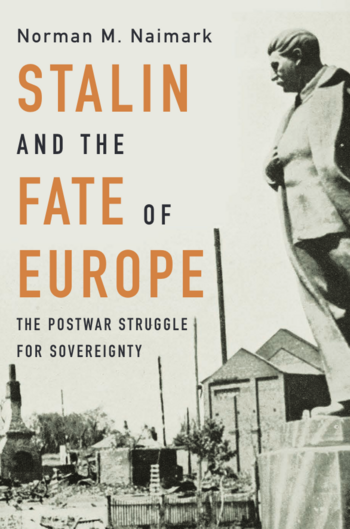
Norman M. Naimark book cover


The Cold War division of Europe was not inevitable―the acclaimed author of Stalin’s Genocides shows how postwar Europeans fought to determine their own destinies.

Was the division of Europe after World War II inevitable? In this powerful reassessment of the postwar order in Europe, Norman Naimark suggests that Joseph Stalin was far more open to a settlement on the continent than we have thought. Through revealing case studies from Poland and Yugoslavia to Denmark and Albania, Naimark recasts the early Cold War by focusing on Europeans’ fight to determine their future.

As nations devastated by war began rebuilding, Soviet intentions loomed large. Stalin’s armies controlled most of the eastern half of the continent, and in France and Italy, communist parties were serious political forces. Yet Naimark reveals a surprisingly flexible Stalin, who initially had no intention of dividing Europe. During a window of opportunity from 1945 to 1948, leaders across the political spectrum, including Juho Kusti Paasikivi of Finland, Wladyslaw Gomulka of Poland, and Karl Renner of Austria, pushed back against outside pressures. For some, this meant struggling against Soviet dominance. For others, it meant enlisting the Americans to support their aims.

The first frost of Cold War could be felt in the tense patrolling of zones of occupation in Germany, but not until 1948, with the coup in Czechoslovakia and the Berlin Blockade, did the familiar polarization set in. The split did not become irreversible until the formal division of Germany and establishment of NATO in 1949. In illuminating how European leaders deftly managed national interests in the face of dominating powers, Stalin and the Fate of Europe reveals the real potential of an alternative trajectory for the continent.


Norman Naimark


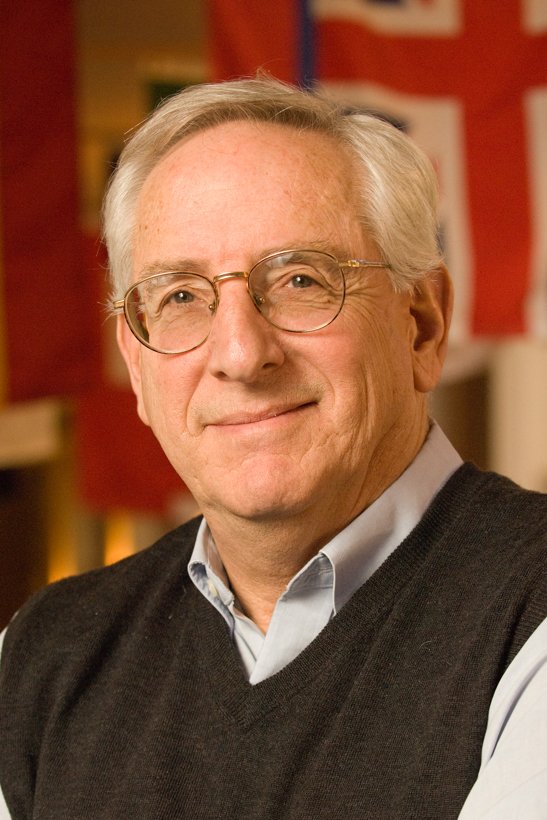
Norman M. Naimark received his A.B., M.A. and Ph.D (1972) from Stanford University. He spent fifteen years as Professor at Boston University and Research Fellow at the Russian Research Center at Harvard before returning to Stanford in 1988. He is presently Robert and Florence McDonnell Professor of East European Studies in the History Department at Stanford University, and is Senior Fellow at the Hoover Institution and the Freeman-Spogli Institute. Earlier he served as Chair of the Department of History, Burke Family Director of the Bing Overseas Studies Program, and Fisher Director of Stanford Global Studies.

A selection of his books include The Russians in Germany: A History of the Soviet Zone of Germany (Harvard 1995); Fires of Hatred; Ethnic Cleansing in 20th Century Europe (Harvard 2001); Stalin’s Genocides (Princeton 2010), Genocide: A World History (Oxford 2017), and, most recently Stalin and the Fate of Europe: The Struggle for Sovereignty (Harvard 2019).

Naimark has been awarded the Officer’s Cross First Class of the German Federal Republic. He twice received the Dean’s Award for Outstanding Teaching at Stanford. He also received the Award for Distinguished Contributions to Slavic, East European, and Eurasian Studies from ASEEES in 2011-12.


Discussants:

David Holloway is the Raymond A. Spruance Professor in International History, Professor of Political Science, and Senior Fellow at FSI, Emeritus. He received his BA, MA, and PhD from the University of Cambridge. He has been co-director of CISAC (1991-1997) and director of FSI (1998-2003). He is the author of Stalin and the Bomb: the Soviet Union and Atomic Energy, 1939-1956 (Yale U. P., 1994) among other works.

Robert Rakove is Lecturer in International Relations. He received his PhD from the University of Virginia and is the author of Kennedy, Johnson, and the Nonaligned World.  Rakove studies U.S. foreign policy, particularly in the Cold War era.

Amir Weiner is Associate Professor of Soviet History and the director of the Center for Russian, East European and Eurasian Studies.


Co-sponsored by the Center for Russian, East European and Eurasian Studies, and the Center for International Security and Cooperation.

CISAC
Stanford University
Encina Hall, C235
Stanford, CA 94305-6165

(650) 723-6927 (650) 725-0597
0
Senior Fellow, by courtesy, at the Freeman Spogli Institute for International Studies
Robert & Florence McDonnell Professor of East European Studies
Professor of History
Professor, by courtesy, of German Studies
Senior Fellow at the Hoover Institution
Naimark,_Norman.jpg MS, PhD

Norman M. Naimark is the Robert and Florence McDonnell Professor of East European Studies, a Professor of History and (by courtesy) of German Studies, and Senior Fellow of the Hoover Institution and (by courtesy) of the Freeman-Spogli Institute for International Studies. Norman formerly served as the Sakurako and William Fisher Family Director of the Stanford Global Studies Division, the Burke Family Director of the Bing Overseas Studies Program, the Convener of the European Forum (predecessor to The Europe Center), Chair of the History Department, and the Director of Stanford’s Center for Russian, East European, and Eurasian Studies.

Norman earned his Ph.D. in History from Stanford University in 1972 and before returning to join the faculty in 1988, he was a professor of history at Boston University and a fellow of the Russian Research Center at Harvard. He also held the visiting Catherine Wasserman Davis Chair of Slavic Studies at Wellesley College. He has been awarded the Officer's Cross of the Order of Merit of the Federal Republic of Germany (1996), the Richard W. Lyman Award for outstanding faculty volunteer service (1995), and the Dean's Teaching Award from Stanford University for 1991-92 and 2002-3.

Norman is interested in modern Eastern European and Russian history and his research focuses on Soviet policies and actions in Europe after World War II and on genocide and ethnic cleansing in the twentieth century. His published monographs on these topics include The History of the "Proletariat": The Emergence of Marxism in the Kingdom of Poland, 1870–1887 (1979, Columbia University Press), Terrorists and Social Democrats: The Russian Revolutionary Movement under Alexander III (1983, Harvard University Press), The Russians in Germany: The History of The Soviet Zone of Occupation, 1945–1949 (1995, Harvard University Press), The Establishment of Communist Regimes in Eastern Europe (1998, Westview Press), Fires of Hatred: Ethnic Cleansing In 20th Century Europe (2001, Harvard University Press), Stalin's Genocides (2010, Princeton University Press), and Genocide: A World History (2016, Oxford University Press). Naimark’s latest book, Stalin and the Fate of Europe: The Postwar Struggle for Sovereignty (Harvard 2019), explores seven case studies that illuminate Soviet policy in Europe and European attempts to build new, independent countries after World War II.


Affiliated faculty at The Europe Center
Affiliated faculty at the Center on Democracy, Development and the Rule of Law

CISAC
Stanford University
Encina Hall, E214
Stanford, CA 94305-6165

(650) 723-1737 (650) 723-0089
0
Senior Fellow Emeritus at the Freeman Spogli Institute of International Studies
Raymond A. Spruance Professor of International History
0820stanford-davidholloway-238-edit.jpg PhD

David Holloway is the Raymond A. Spruance Professor of International History, a professor of political science, and an FSI senior fellow. He was co-director of CISAC from 1991 to 1997, and director of FSI from 1998 to 2003. His research focuses on the international history of nuclear weapons, on science and technology in the Soviet Union, and on the relationship between international history and international relations theory. His book Stalin and the Bomb: The Soviet Union and Atomic Energy, 1939-1956 (Yale University Press, 1994) was chosen by the New York Times Book Review as one of the 11 best books of 1994, and it won the Vucinich and Shulman prizes of the American Association for the Advancement of Slavic Studies. It has been translated into seven languages, most recently into Chinese. The Chinese translation is due to be published later in 2018. Holloway also wrote The Soviet Union and the Arms Race (1983) and co-authored The Reagan Strategic Defense Initiative: Technical, Political and Arms Control Assessment (1984). He has contributed to the Bulletin of the Atomic Scientists, Foreign Affairs, and other scholarly journals.

Since joining the Stanford faculty in 1986 -- first as a professor of political science and later (in 1996) as a professor of history as well -- Holloway has served as chair and co-chair of the International Relations Program (1989-1991), and as associate dean in the School of Humanities and Sciences (1997-1998). Before coming to Stanford, he taught at the University of Lancaster (1967-1970) and the University of Edinburgh (1970-1986). Born in Dublin, Ireland, he received his undergraduate degree in modern languages and literature, and his PhD in social and political sciences, both from Cambridge University.

Faculty member at the Center for International Security and Cooperation
Affiliated faculty at the Center on Democracy, Development, and the Rule of Law
Affiliated faculty at The Europe Center
CV
Date Label
Discussant
Robert Rakove Discussant

Building 200, Room 336
Stanford, CA 94305-2024

(650) 723-3527 (650) 725-0597
0
Associate Professor of History
amir_weiner.jpg PhD

Amir Weiner's research concerns Soviet history with an emphasis on the interaction between totalitarian politics, ideology, nationality, and society. He is the author of Making Sense of War, Landscaping the Human Garden and numerous articles and edited volumes on the impact of World War II on the Soviet polity, the social history of WWII and Soviet frontier politics. His forthcoming book, The KGB: Ruthless Sword, Imperfect Shield, will be published by Yale University Press in 2021. He is currently working on a collective autobiography of KGB officers titled Coffee with the KGB: Conversations with Soviet Security Officers. Professor Weiner has taught courses on modern Russian history; the Second World War; Totalitarianism; War and Society in Modern Europe; Modern Ukrainian History; and History and Memory.


Affiliated faculty at The Europe Center
CV
Discussant
Panel Discussions
Paragraphs

The failure of mainstream political-party competition fueled the rise of populism in Europe. Popular anxieties about immigration, economics, or cultural change are not sufficient to explain the surge in populist support. Mainstream parties on both the center-left and the center-right have failed to represent constituencies, to articulate their needs, and to propose distinct policy solutions. The center-left has abandoned its traditional social-policy commitments, and the center-right has often failed to contain xenophobes and nativists. For voters, these failures validated populist claims that the political status quo amounted to rule by a corrupt, self-serving elite cartel and that only radical solutions could ensure real representation of “the people.”

All Publications button
1
Publication Type
Journal Articles
Publication Date
Journal Publisher
Journal of Democracy
Authors
Anna Grzymała-Busse

Encina Hall
616 Serra Street
Stanford, CA  94305


0
2019.tepe_.sultan28_4x6-768x1056.jpg
Visiting Scholar at The Europe Center, 2019-2020
Associate Professor of Political Science, University of Illinois at Chicago
-


This event is now full and we are unable to take any further reservations. However, if you would like to be added to the waitlist, please email us at sj1874@stanford.edu.

Human capital is fleeing Russia. Since President Vladimir Putin’s ascent to the presidency, between 1.6 and 2 million Russians – out of a total population of 145 million – have left for Western democracies. This emigration sped up with Putin’s return as president in 2012, followed by a weakening economy and growing repressions. It soon began to look like a politically driven brain drain, causing increasing concern among Russian and international observers. In this pioneering study, the Council’s Eurasia Center offers a comprehensive analysis of the Putin Exodus and its implications for Russia and the West. Based on the findings from focus groups and surveys in four key locations in the United States and Europe, it also examines the cultural and political values and attitudes of the new Russian émigrés.


Sergei Erofeev
Sergei Erofeev
is currently a lecturer at Rutgers University and the Principal Investigator of the project Tectonic Value Shifts in Post-Soviet Societies (Narxoz University, Almaty). He has been involved in the internationalization of universities in Russia since the early 1990s. Previously, Dr. Erofeev served as a vice president for international affairs at the Higher School of Economics in Moscow, the dean of international programs at the European University at Saint Petersburg, and the director of the Center for Sociology of Culture at Kazan Federal University in Russia. He has also been a Hubert H. Humphrey fellow at the University of Washington. Prior to his career in academia, Dr. Erofeev was a concert pianist, and has worked in the area of the sociology of the arts.


Co-sponsored by the Freeman Spogli Institute for International Studies, the Center for Russian, East European, and Eurasian Studies and the:

Image
Atlantic Council logo

Sergei Erofeev Rutgers University
Lectures
Authors
Steven Pifer
News Type
Commentary
Date
Paragraphs

This article originally appeared in the Ukrainian journal Novoye Vremya.

President Volodymyr Zelenskyy may meet President Donald Trump this weekend in Warsaw and is expected to travel to the United States later in the fall.  This gives Mr. Zelenskyy the opportunity to reinforce Kyiv’s relationship with the United States.  It also offers the opportunity to try to establish a connection to Mr. Trump, something that has proven elusive for most foreign leaders.  Here are a few suggestions for Mr. Zelenskyy on dealing with the American president.

Mr. Zelenskyy should bear in mind that Mr. Trump lacks a strong grasp of the U.S. interest in and what is at stake with regard to Ukraine and the conflict that Russia wages against it.  His administration has pursued sensible policies in supporting Kyiv, strengthening NATO and sustaining sanctions on Moscow.  By all appearances, however, Mr. Trump does not instinctively agree with the necessity of his administration’s own policies.  Witness his recent suggestion about inviting Vladimir Putin to join with other G7 leaders when he hosts the G7 summit next year.

Mr. Trump is not detail-oriented.  He reportedly reads little, leading White House staff to resort to graphs and pictures to capture his attention.  The smart way to approach Mr. Trump is to avoid detail, sticking instead with a few clear and easily understood themes.

Flattering the American president would not hurt.  North Korean leader Kim Jong-un appears to have mastered that.  North Korea has reduced none of its nuclear or ballistic missile capabilities—in fact, they have increased—but Mr. Trump swoons over Mr. Kim’s letters and professes not to be bothered by Pyongyang’s shorter range ballistic missile tests.

That said, keep expectations for flattery modest.  No European leader invested more heavily in flattering Mr. Trump than former British Prime Minister Theresa May.  She gave him a state visit in June with all the bells and whistles.  Yet Mr. Trump could not resist sending a series of tweets denigrating her handling of the Brexit conundrum and all but welcoming her replacement.

This underscores the point that, in many foreign policy relationships, Mr. Trump is transactional.  He will be asking what can America get, or what can he get.

Mr. Zelenskyy thus should consider whether there is a topic on which he could offer Mr. Trump a win-win.  Progress toward resolving the Russia-Ukraine conflict in Donbas could provide such an issue.  Real movement toward peace would be a major win for Kyiv, but it could offer Mr. Trump a win as well.  He has repeatedly made clear his desire for improved U.S.-Russia relations, and a genuine settlement in Donbas could lift the biggest obstacle to his goal.

The question is how to shape a proposal to accomplish this.  Bringing Mr. Trump into the current Normandy negotiating format in a way that made it appear as if Mr. Trump sparked a breakthrough would appeal to the Nobel Prize-hungry American president.

However, the key to peace in Donbas lies in Moscow.  The Kremlin seems interested in sustaining a simmering conflict as a means to pressure the government in Kyiv.  Still, aligning interests with Mr. Trump on pressing for peace would be a plus for Mr. Zelenskyy.

While in the United States, the Ukrainian president should not neglect the Congressional leadership.  Both Democrats and Republicans on Capitol Hill support Ukraine and display considerable skepticism toward Russia.  Congress could serve as a check on Mr. Trump should he choose to pursue his less well-thought-out ideas on Russia.

Mr. Zelenskyy’s American interlocutors in Congress want Ukraine to succeed, with success measured by its progress in becoming a normal democratic, market-oriented and prosperous European state.  In the past, developments in Ukraine have disappointed both Ukrainians and the country’s friends in the West.  To the extent that Mr. Zelenskyy can make a persuasive case that this time it is different—that he and the new parliament will take the tough steps to achieve success—he will return home having forged a stronger basis for the U.S.-Ukrainian relationship.  He can bolster his case by coming to Washington with one or two signature reforms under his belt, such as an end to the moratorium on sales of private agricultural land.

One last piece of advice.  Mr. Zelenskyy and his team should be wary of former New York mayor Rudy Giuliani’s efforts to drag Ukraine into U.S. domestic politics.  That would risk making Ukraine a partisan political issue in America, which could undermine the bipartisan support that Ukraine has enjoyed since regaining independence in 1991.

* * * * *

Steven Pifer is a William Perry fellow at Stanford University and a former U.S. ambassador to Ukraine.


Hero Image
steven pifer 0
All News button
1
Paragraphs

The Digital Transformation (DX) is a broad term describing the changes and innovations brought about by the introduction of information and communication technologies into all aspects of society. One such innovation is to empower bottom-up, self-governing socio-technical systems for a range of applications. Such systems can be based on Ostrom’s design principles for self-governing institutions for sustainable common-pool resource management. However, two of these principles, both focusing on self-determination, are vulnerable to distortion: either from within, as a narrow clique take control and run the system in their own, rather than the collective, interest; or from without, as an external authority constrains opportunities for self-organisation. In this chapter, we propose that one approach to maintaining ‘good’, ‘democratic’ self-governance is to appeal to the transparent and inclusive knowledge management processes that were critical to the successful and sustained period of classical Athenian democracy, and reproduce those in computational form. We review a number of emerging technologies which could provide the building blocks for democratic self-governance in socio-technical systems. However, the reproduction of analogue social processes in digital form is not seamless and not without impact on, or consequences for, society, and we also consider a number of open issues which could disrupt this proposal. We conclude with the observation that ‘democracy’ is not an end-state, and emphasise that self-governing socio-technical systems need responsible design and deployment of technologies that allow for continuous re-design and self-organisation.

All Publications button
1
Publication Type
Journal Articles
Publication Date
Journal Publisher
Springer, Cham
Authors
Josiah Ober
Paragraphs

Edited by Samuel Cogolati and Jan Wouters

Given the new-found importance of the commons in current political discourse, it has become increasingly necessary to explore the democratic, institutional, and legal implications of the commons for global governance today. This book analyses and explores the ground-breaking model of the commons and its relation to these debates.
 
All Publications button
1
Publication Type
Books
Publication Date
Journal Publisher
Leuven Global Governance series
Authors
Christophe Crombez
Subscribe to Governance