Homeland Security
Authors
News Type
News
Date
Paragraphs

The coordinated suicide bombings that killed more than 30 people and wounded 250 more at an international airport and downtown subway station in Brussels on Tuesday were “shocking but not surprising” and shared many of the hallmarks of previous European terror attacks, according to Stanford terrorism experts.

“My research shows that in general, terrorist plots in Europe involve larger numbers of conspirators than do plots in the United States,” said Martha Crenshaw, a senior fellow at Stanford’s Center for International Security and Cooperation (CISAC).

Belgian authorities said that as many as five people may have been directly involved in the bombings, including two Belgian-born brothers with violent criminal records, and that several suspects were linked to the same terrorist network that carried out the deadly Paris attacks last November.

“It is common for terrorist conspiracies anywhere to be formed from prior social groupings – friends and relatives,” said Crenshaw.

“The bonds that link individuals are not entirely ideological by any means. Criminal backgrounds are also not surprising. Indeed prison radicalization is a well-known phenomenon.”

A Notorious Neighborhood

Many of the suspects in the Brussels bombings had ties to the inner-city neighborhood of Molenbeek, a majority Muslim enclave of mostly Moroccan descent with a long history as a logistical base for jihadists.

[[{"fid":"222520","view_mode":"crop_870xauto","fields":{"format":"crop_870xauto","field_file_image_description[und][0][value]":"Belgian police stand guard in the Molenbeek district in Brussels during an operation to arrest Paris attacks suspect Salah Abdeslam on March 18, 2016.","field_file_image_alt_text[und][0][value]":"Belgian police stand guard in the Molenbeek district in Brussels during an operation to arrest Paris attacks suspect Salah Abdeslam on March 18, 2016.","field_file_image_title_text[und][0][value]":"Belgian police stand guard in the Molenbeek district in Brussels during an operation to arrest Paris attacks suspect Salah Abdeslam on March 18, 2016.","field_credit[und][0][value]":"John Thys/AFP/Getty Images","field_caption[und][0][value]":"Belgian police stand guard in the Molenbeek district in Brussels during an operation to arrest Paris attacks suspect Salah Abdeslam on March 18, 2016.","field_related_image_aspect[und][0][value]":"","thumbnails":"crop_870xauto"},"type":"media","attributes":{"alt":"Belgian police stand guard in the Molenbeek district in Brussels during an operation to arrest Paris attacks suspect Salah Abdeslam on March 18, 2016.","title":"Belgian police stand guard in the Molenbeek district in Brussels during an operation to arrest Paris attacks suspect Salah Abdeslam on March 18, 2016.","width":"870","style":"width: 550px; float: right; height: 366px; margin-left: 15px;","class":"media-element file-crop-870xauto"}}]]French and Belgian police arrested Salah Abdesalam, who had been identified as the last surviving member of the ten-man team responsible for the Paris attacks and an apparent associate of the Brussels bombers, near his family home in Molenbeek just four days before the Brussels attacks.

“Brussels and particularly Molenbeek is one of those places that comes up a lot when you’re talking about counter terrorism,” said Terrence Peterson, a postdoctoral fellow at CISAC.

“You do have terrorism networks that use these areas, in the same way that organized crime does, to thrive…It seems to be the place where all the networks are locating in part because Belgian security hasn’t been very effective in fighting terrorism.”

Foreign Fighters Bring the War Home

Belgium is a small nation, with a population of around 11 million people, but it has the highest per capita percentage of any Western country of foreign fighters who have joined the battle in Iraq and Syria, according to a recent report, which estimated the total number at 440.

“People were even saying it was not a matter of if, but when Belgium was attacked,” said Joe Felter, a CISAC senior research scholar and former Colonel in the U.S. Army Special Forces.

“You’ve got a high concentration of radicalized individuals in that neighborhood of Brussels, so logistically it was easier for them to recruit, plan and coordinate the execution of these attacks. Local residents loading up explosive packed suitcases in a cab and driving across town to the airport exposes them to much less risk of compromise than would a plot requiring cross border preparation and movement by foreign citizens.”

Felter said he was concerned that the Brussels bombings, for which the Islamic State group has claimed responsibility, would inspire copycat attacks in other countries.

“The real risk now is these home-grown, self-directed terrorist attacks,” he said.

“A successful attack like this, with all its media attention and publicity, is only going to inspire and motivate more attempts going forward.”

Former U.S. Secretary of State and presidential candidate Hillary Clinton delivers a foreign policy address at Stanford's Freeman Spogli Institute for International Studies on March 23, 2016. Former U.S. Secretary of State and presidential candidate Hillary Clinton delivers a foreign policy address at Stanford's Freeman Spogli Institute for International Studies on March 23, 2016.
Former U.S. Secretary of State and presidential candidate Hillary Clinton said European nations needed to do a better job of sharing intelligence to track foreign fighters as they returned home, during a foreign policy speech at Stanford’s Freeman Spogli Institute for International Studies on Wednesday.

“The most urgent task is stopping the flow of foreign fighters to and from the Middle East,” Clinton said.

“Thousands of young recruits have flocked to Syria from France, Germany, Belgium and the United Kingdom. Their European passports make it easier for them to cross borders and eventually return home, radicalized and battle-hardened. We need to know the identities of every fighter who makes that trip and start revoking their passports and visas.”

Turkey’s president announced at a press conference on Wednesday that his country had deported one of the suspected Brussels bombers back to the Netherlands last year with a clear warning that he was a jihadi.

Identifying Hot Spots

Clinton said authorities also needed to work to improve social conditions in problem areas such as Molenbeek.

“There…has to be a special emphasis on identifying and investing in the hot spots, the specific neighborhoods, prisons and schools where recruitment happens in clusters as we’ve seen in Brussels,” Clinton said.

Other European countries such as Denmark, which has also been struggling to deal with a high percentage of foreign fighters, are trying to proactively to discourage citizens from travelling to Syria to fight, said Anja Dalgaard-Nielsen, former executive director of the Danish Security and Intelligence Service and a CISAC affiliate.

“Politicians are likely to talk about tougher legislation, but there are also measured voices, calling for a strong, long term preventive effort against radicalization to prevent problems from growing out of hand,” said Dalgaard-Nielsen.
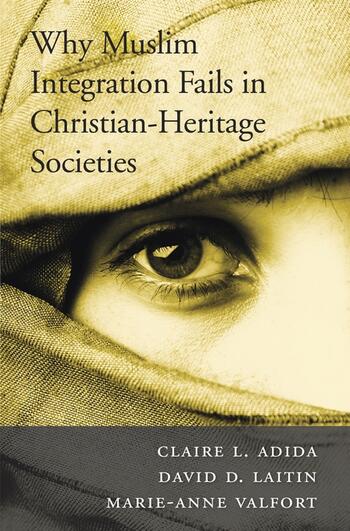
Cover of the book "Why Muslim Integration Fails in Christian-Heritage Societies" co-authored by Stanford Political Science professor David Laitin. Cover of the book "Why Muslim Integration Fails in Christian-Heritage Societies" co-authored by Stanford Political Science professor David Laitin.
“Police need to prioritize community outreach and long term trust building to try to ensure the collaboration of minority groups and socioeconomically disadvantaged communities in the effort against terrorism.”

Stanford political science professor David Laitin, who recently published the book “Why Muslim Integration Fails in Christian-Heritage Societies,” in collaboration with Claire Adida and Marie-Anne Valfort, said his research found that Muslims faced higher discrimination in the economy, in society and in the political process compared to Christians from similar immigrant backgrounds.

“But there is no evidence that higher degrees of discrimination lead Muslims into the unspeakable acts that members of an inhuman cult are performing in the name of Islam,” said Laitin, who is the James T. Watkins IV and Elise V. Watkins professor in the School of Humanities and Sciences.

“From what we have tragically seen, the attractiveness of the present murderous cult does not derive from everyday discrimination," he said. "Research has shown that it is not the poor and downtrodden who are radicalized in this way; but rather reasonably educated second-generation immigrants from largely secular backgrounds.”

Europe Divided

Laitin said he expected to see many European countries tighten their border controls in response to the Brussels attacks, as well as greater support in the United Kingdom for the movement to leave the European Union in the upcoming referendum.

“The biggest short-term effect, in my judgment, will be the erosion of one of the great achievements of European integration, namely Schengen, which promised open borders throughout the continent,” Laitin said.

“I foresee greater security walls that will come to divide European countries.”

Fighting a Hostile Ideology

Felter said that while it was undoubtedly important to improve intelligence sharing and invest in greater security measures as part of concerted efforts to target ISIS and interdict future terrorist plots, the key to undermining support for and defeating ISIS was combating its perverted version of Islam.

And, he said, that effort would have to come largely from within the Islamic community itself.

“The symptoms may be suicide bombers in airports, but the root cause is this hostile ideology that’s being pushed on these at-risk individuals through aggressive radicalization and recruitment efforts carried out largely via the internet that then inspires them to carry out these self-directed, ISIS-inspired attacks,” Felter said.

“There’s got to be a longer-term effort to address the root causes of this, to discredit and delegitimize the appeal of this ideology that they’re promulgating online and through social media that’s inspiring these young men and women to go off and commit these horrible acts in the misguided belief that it is their religious obligation to do so.”


Hero Image
A woman arrives with flowers at a cordoned-off area near Maelbeek subway station in Brussels on March 23, 2016, a day after bomb attacks in the Belgian capital killed about 35 people and left more than 200 people wounded.
Kenzo Tribouillard/AFP/Getty Images
All News button
1
News Type
Q&As
Date
Paragraphs

For 14 years, Mariano-Florentino Cuéllar has been a tireless Stanford professor who has strengthened the fabric of university’s interdisciplinary nature. Joining the faculty at Stanford Law School in 2001, Cuéllar soon found a second home for himself at the Freeman Spogli for International Studies. He held various leadership roles throughout the institute for several years – including serving as co-director of the Center for International Security and Cooperation. He took the helm of FSI as the institute’s director in 2013, and oversaw a tremendous expansion of faculty, research activity and student engagement. 

An expert in administrative law, criminal law, international law, and executive power and legislation, Cuéllar is now taking on a new role. He leaves Stanford this month to serve as justice of the California Supreme Court and will be succeeded at FSI by Michael McFaul on Jan. 5.

 As the academic quarter comes to a close, Cuéllar took some time to discuss his achievements at FSI and the institute’s role on campus. And his 2014 Annual Letter and Report can be read here.

You’ve had an active 20 months as FSI’s director. But what do you feel are your major accomplishments? 

We started with a superb faculty and made it even stronger. We hired six new faculty members in areas ranging from health and drug policy to nuclear security to governance. We also strengthened our capacity to generate rigorous research on key global issues, including nuclear security, global poverty, cybersecurity, and health policy. Second, we developed our focus on teaching and education. Our new International Policy Implementation Lab brings faculty and students together to work on applied projects, like reducing air pollution in Bangladesh, and improving opportunities for rural schoolchildren in China.  We renewed FSI's focus on the Ford Dorsey Program in International Policy Studies, adding faculty and fellowships, and launched a new Stanford Global Student Fellows program to give Stanford students global experiences through research opportunities.   Third, we bolstered FSI's core infrastructure to support research and education, by improving the Institute's financial position and moving forward with plans to enhance the Encina complex that houses FSI.

Finally, we forged strong partnerships with critical allies across campus. The Graduate School of Business is our partner on a campus-wide Global Development and Poverty Initiative supporting new research to mitigate global poverty.  We've also worked with the Law School and the School of Engineering to help launch the new Stanford Cyber Initiative with $15 million in funding from the Hewlett Foundation. We are engaging more faculty with new health policy working groups launched with the School of Medicine and an international and comparative education venture with the Graduate School of Education. 

Those partnerships speak very strongly to the interdisciplinary nature of Stanford and FSI. How do these relationships reflect FSI's goals?

The genius of Stanford has been its investment in interdisciplinary institutions. FSI is one of the largest. We should be judged not only by what we do within our four walls, but by what activity we catalyze and support across campus. With the business school, we've launched the initiative to support research on global poverty across the university. This is a part of the SEED initiative of the business school and it is very complementary to our priorities on researching and understanding global poverty and how to alleviate. It's brought together researchers from the business school, from FSI, from the medical school, and from the economics department.  

Another example would be our health policy working groups with the School of Medicine. Here, we're leveraging FSI’s Center for Health Policy, which is a great joint venture and allows us to convene people who are interested in the implementation of healthcare reforms and compare the perspective and on why lifesaving interventions are not implemented in developing countries and how we can better manage biosecurity risks. These working groups are a forum for people to understand each other's research agendas, to collaborate on seeking funding and to engage students. 

I could tell a similar story about our Mexico Initiative.  We organize these groups so that they cut across generations of scholars so that they engage people who are experienced researchers but also new fellows, who are developing their own agenda for their careers. Sometimes it takes resources, sometimes it takes the engagement of people, but often what we've found at FSI is that by working together with some of our partners across the university, we have a more lasting impact.

Looking at a growing spectrum of global challenges, where would you like to see FSI increase its attention? 

FSI's faculty, students, staff, and space represent a unique resource to engage Stanford in taking on challenges like global hunger, infectious disease, forced migration, and weak institutions.  The  key breakthrough for FSI has been growing from its roots in international relations, geopolitics, and security to focusing on shared global challenges, of which four are at the core of our work: security, governance, international development, and  health. 

These issues cross borders. They are not the concern of any one country. 

Geopolitics remain important to the institute, and some critical and important work is going on at the Center for International Security and Cooperation to help us manage the threat of nuclear proliferation, for example. But even nuclear proliferation is an example of how the transnational issues cut across the international divide. Norms about law, the capacity of transnational criminal networks, smuggling rings, the use of information technology, cybersecurity threats – all of these factors can affect even a traditional geopolitical issue like nuclear proliferation. 

So I can see a research and education agenda focused on evolving transnational pressures that will affect humanity in years to come. How a child fares when she is growing up in Africa will depend at least as much on these shared global challenges involving hunger and poverty, health, security, the role of information technology and humanity as they will on traditional relations between governments, for instance. 

What are some concrete achievements that demonstrate how FSI has helped create an environment for policy decisions to be better understood and implemented?

We forged a productive collaboration with the U.N. High Commissioner for Refugees through a project on refugee settlements that convened architects, Stanford researchers, students and experienced humanitarian responders to improve the design of settlements that house refugees and are supposed to meet their human needs. That is now an ongoing effort at the UN Refugee Agency, which has also benefited from collaboration with us on data visualization and internship for Stanford students. 

Our faculty and fellows continue the Institute's longstanding research to improve security and educate policymakers. We sometimes play a role in Track II diplomacy on sensitive issues involving global security – including in South Asia and Northeast Asia.  Together with Hoover, We convened a first-ever cyber bootcamp to help legislative staff understand the Internet and its vulnerabilities. We have researchers who are in regular contact with policymakers working on understanding how governance failures can affect the world's ability to meet pressing health challenges, including infectious diseases, such as Ebola.

On issues of economic policy and development, our faculty convened a summit of Japanese prefectural officials work with the private sector to understand strategies to develop the Japanese economy.  

And we continued educating the next generation of leaders on global issues through the Draper Hills summer fellows program and our honors programs in security and in democracy and the rule of law. 

How do you see FSI’s role as one of Stanford’s independent laboratories?

It's important to recognize that FSI's growth comes at particularly interesting time in the history of higher education – where universities are under pressure, where the question of how best to advance human knowledge is a very hotly debated question, where universities are diverging from each other in some ways and where we all have to ask ourselves how best to be faithful to our mission but to innovate. And in that respect, FSI is a laboratory. It is an experimental venture that can help us to understand how a university like Stanford can organize itself to advance the mission of many units, that's the partnership point, but to do so in a somewhat different way with a deep engagement to practicality and to the current challenges facing the world without abandoning a similarly deep commitment to theory, empirical investigation, and rigorous scholarship.

What have you learned from your time at Stanford and as director of FSI that will inform and influence how you approach your role on the state’s highest court?

Universities play an essential role in human wellbeing because they help us advance knowledge and prepare leaders for a difficult world. To do this, universities need to be islands of integrity, they need to be engaged enough with the outside world to understand it but removed enough from it to keep to the special rules that are necessary to advance the university's mission. 

Some of these challenges are also reflected in the role of courts. They also need to be islands of integrity in a tumultuous world, and they require fidelity to high standards to protect the rights of the public and to implement laws fairly and equally.  

This takes constant vigilance, commitment to principle, and a practical understanding of how the world works. It takes a combination of humility and determination. It requires listening carefully, it requires being decisive and it requires understanding that when it's part of a journey that allows for discovery but also requires deep understanding of the past.

Hero Image
tino mug
All News button
1
-

On December 1, 2009 the Treaty of Lisbon entered into force, bringing to an end eight years of discussions on treaty reforms in the European Union (EU). It included many of the institutional reforms that were originally part of the proposed EU Constitution, voted down by voters in France and the Netherlands in 2005. The Treaty of Lisbon could potentially be one of the most important EU treaties, depending on whether, for example, the newly created permanent European Council Presidency will manage to assert its authority and whether the Parliament will succeed at imposing its interpretation of the treaties. The objectives of this seminar are twofold. First, it will present an overview of the most important political and institutional reforms of the Treaty of Lisbon, and discuss its implications. Second, it will focus on EU trade policy and study how the Treaty of Lisbon will affect it. Trade policy is a good policy area to analyze, because it is one of the areas in which the EU’s powers are most extensive, and because the Parliament acquired new powers in this area, as it did in many other policy domains. Procedurally trade policy differs significantly from other EU policies: the Commission negotiates trade agreements based on mandates it receives from the Council. Agreements need final approval from the Council and, since December, the Parliament. The seminar will present a political-economic analysis of EU trade policy, analyze the role of the mandate, and study the implications of the increased role of the Parliament.  

Christophe Crombez is a specialist of European Union (EU) politics and business-government relations in Europe. His research focuses on EU institutions, the institutions' impact on EU policies under alternative procedural arrangements, EU institutional reform, lobbying in the EU, and electoral laws and their consequences for voter representation, party politics and government formation.

Crombez has been at the Forum on Contemporary Europe (FCE) at the Freeman Spogli Institute for International Studies at Stanford University as a visiting professor since 1999. At FCE he organizes seminars and other events on European Union politics and economics and European political systems. Crombez is also visiting professor at Stanford's Graduate School of Business, where he teaches a course on Politics and Business in Europe. He also teaches in the International Relations Program.

Furthermore, Crombez is professor of political economy and strategy at the University of Leuven in Belgium. He has been teaching in Leuven's business and economics department since 1994. His teaching responsibilities include political business strategy and applied game theory.

Christophe Crombez obtained a B.A. (Licentiaat) in Applied Economics from the University of Leuven in 1989, and a Ph.D. in Business, Political Economics, from Stanford University in 1994.


Audio Synopsis:

Professor Crombez first highlights key characteristics of the EU treaty system: each iteration of the treaty increases European integration; the growth of majority voting promotes smoother decision making; and every new treaty requires compromise between member states, and between political factions within the EU. Crombez then outlines changes in the Lisbon Treaty, including new policy areas for cooperation such as climate change, space policy, sports, judicial and police cooperation, and homeland security. The treaty establishes the European External Action Service, a kind of European diplomatic corps. Majority voting has been implemented in 68 new policy areas, including transport policy, immigration policy, and social security for migrant workers. The treaty grants significant new power to Parliament in multiple policy areas, and creates a permanent EU presidency. Progress has not been smooth, however: the Lisbon Treaty was voted down by Ireland in 2008 (before later being ratified), and much progress on actual policy is slowed by the reluctance of member state representatives to vote against the views of their constituents. Areas for optimism, Crombez explains, include two clauses that enable progress without a change to the treaty:

1.     Passerelle Clause: 8 articles outlining new policy areas previously requiring unanimous decisions which can now be decided through majority voting, except on defense-related issues.

2.     Flexibility Clause: decisions can now be made on issues where the EU lacks explicit authority if those issues promote the goals of the treaty. Unanimity is required, but not a formal change of the treaty.

Professor Crombez then turns his focus to trade policy under the Lisbon Treaty. An important change is that Parliament now has the option of codecision, in addition to the existing procedure of consultation (where the Council approves the Commission's proposal by unanimous decision). Codecision, in contrast, allows for qualified majority voting - leading the Commission to propose policies it may not think are ideal but which will more likely pass. In this way, Crombez feels codecision has made EU trade policy resemble US trade policy, wherein the executive branch may desire more liberal policies than what the legislature will accept. Crombez predicts this system may "lower the bar" and lead to more protectionist trade policies.

Encina Ground Floor Conference Room

Encina Hall
Stanford University
Stanford, CA 94305

(650) 723-0249 (650) 723-0089
0
Senior Research Scholar at The Europe Center
cc3.jpg PhD

Christophe Crombez is a political economist who specializes in European Union (EU) politics and business-government relations in Europe. His research focuses on EU institutions and their impact on policies, EU institutional reform, lobbying, party politics, and parliamentary government.

Crombez is Senior Research Scholar at The Europe Center at the Freeman Spogli Institute for International Studies at Stanford University (since 1999). He teaches Introduction to European Studies and The Future of the EU in Stanford’s International Relations Program, and is responsible for the Minor in European Studies and the Undergraduate Internship Program in Europe.

Furthermore, Crombez is Professor of Political Economy at the Faculty of Economics and Business at KU Leuven in Belgium (since 1994). His teaching responsibilities in Leuven include Political Business Strategy and Applied Game Theory. He is Vice-Chair for Research at the Department for Managerial Economics, Strategy and Innovation.

Crombez has also held visiting positions at the following universities and research institutes: the Istituto Italiano di Scienze Umane, in Florence, Italy, in Spring 2008; the Department of Political Science at the University of Florence, Italy, in Spring 2004; the Department of Political Science at the University of Michigan, in Winter 2003; the Kellogg Graduate School of Management at Northwestern University, Illinois, in Spring 1998; the Department of Political Science at the University of Illinois at Urbana-Champaign in Summer 1998; the European University Institute in Florence, Italy, in Spring 1997; the University of Antwerp, Belgium, in Spring 1996; and Leti University in St. Petersburg, Russia, in Fall 1995.

Crombez obtained a B.A. in Applied Economics, Finance, from KU Leuven in 1989, and a Ph.D. in Business, Political Economics, from Stanford University in 1994.

Christophe Crombez Speaker
Seminars
Authors
Christophe Crombez
News Type
News
Date
Paragraphs

The European Forum at the Freeman Spogli Institute for International Studies at Stanford University had an eventful and exciting 2005-06 academic year. We organized almost thirty seminars, workshops and other events on cultural, economic and political issues affecting Europe, its relations with the United States and its role in the world.

We hosted several prominent politicians and diplomats during the academic year. In October John Bruton, European Union Ambassador to the United States and former Prime Minister of Ireland (1994-97), presented his views on Europe and the United States as global partners. Earlier during the Fall we were honored to welcome Latvian Foreign Affairs Minister Artis Pabriks. He gave a lecture on Latvia's current challenges in foreign policy and homeland security.

During the Winter term Estonian President Arnold Rüütel visited Stanford. In his talk he addressed such issues as Estonia's relations with the United States, the European Union and Russia. Andras Simonyi, Hungarian Ambassador to the United States, also visited the European Forum. He presented a fascinating lecture on the political and economic situation in Hungary two years into its EU membership. Three more diplomats gave talks during the Winter Quarter. Kurt Volker, Principal Deputy Assistant Secretary of State for European and Eurasian Affairs, spoke about the United States, Europe and the broader Middle East. Dominic Martin, Counsellor at the British Embassy in Washington, talked about the United Kingdom and its current challenges and opportunities in world politics. Richard Morningstar, former United States Ambassador to the European Union, Lecturer at the Stanford Law School and European Forum Research Affiliate, presented his insights into the cooperation between the United States and the European Union in counter-terrorism. This last seminar was part of a series of events the European Forum organized on the manners in which European countries and institutions are dealing with the threat of terrorism, following the attacks in Madrid and London.

The War on Terror was also among the issues addressed by Joschka Fischer, former German Foreign Minister (1998-2005). He visited the Freeman Spogli Institute for International Studies in April and gave a 2006 Frank E. and Arthur W. Payne Distinguished Lecture for a standing room only crowd at the Bechtel Conference Center at Encina Hall. He talked about Europe's prospects in a globalized world and the future of transatlantic relations. British Ambassador Sir David Manning gave an equally well-attended and equally impressive 2006 Frank E. and Arthur W. Payne Distinguished Lecture on energy as a burning issue in foreign policy.

Other events organized on the topic of counter-terrorism included a round-table discussion on anti-terrorism finance, by Jacob Shapiro, Laura Donohue and Khalid Medani, all affiliated to Stanford University, and a lecture on the French experience of counter-terrorism by Jeremy Shapiro from the Brookings Institution. The series of events culminated with a lecture and a seminar by prolific author and columnist Christopher Hitchens. During a visit to the European Forum in May he presented his fascinating and thought-provoking views on the war on terror, and the situation in Iraq and Iran. The series of events on terrorism is to continue during the next academic year and will culminate with a Thinking Terrorism conference in late 2007.

Furthermore, we organized a number of events on other political issues. German sociologist Heinz Bude, from the University of Kassel, presented his views on the most recent German elections from a broad, societal and historical perspective, paying attention to the 1968 student uprisings and their long-term impact on German society. Christian Deubner, from the CEPII research center in Paris, shared his opinions on current developments in French politics, with a focus on the French rejection of the EU Constitution earlier this year and its impact on France's position in the EU. German author Peter Schneider offered his reflections on the cultural differences between Europe and the United States. He compared the relationship between the two continents to a marriage that has its ups and downs, but endures. Josef Joffe, Editor of the German newspaper Die Zeit, pointed at cultural, demographic, political and economic reasons to argue that the European Union is not about to become a new superpower.

Ken Kollman, from the University of Michigan, presented a political-economic model of leadership in federations and applied it to the EU. Bert Martens, an economist at the EU Commission in Brussels, presented an analysis of the EU's export of political and economic institutions to its neighboring countries, and the incentives it provides for regime change. Markus Hadler, a sociologist at the University of Graz and visiting professor at the European Forum during the past academic year, offered an appraisal of democracy in Europe.

Simon Hug, from the University of Zürich, presented a political-economic model of the negotiations for an EU constitution. Yaron Deckel, from the European Broadcasting Service, talked about the most recent Israeli Elections. Cas Mudde, from the University of Antwerp, presented a talk on immigration and the success of populist parties in the Low Countries. Piet Jan Slot, from Leiden University, gave a seminar on the EU's plans for an internal market for services.

We also organized a number of seminars dealing with various aspects of World War II and its aftermath. There was a talk on the effects of the Europeanization of the holocaust on the attitudes toward Jews, by Werner Bergmann from the Technische Universität Berlin. Monica Siegel, from California State University, Sacramento, gave a presentation on memory and reconciliation in France and Germany. Richard Evans, from Cambridge University, talked about coercion and consent in Nazi Germany. Wolfgang Eichwede, from the University of Bremen, gave a seminar on the dissident movement and Samizdat culture in Eastern Europe. Holocaust survivor Leopold Engleitner and his biographer Bernhard Rammerstorfer talked about surviving Buchenwald as a Jehova's Witness. Martina Pottek, from Bonn University, gave a presentation about artistic concepts to commemorate the holocaust.

Andreas Dorschel, Professor at the University of Graz, and Visiting Austrian Chair Professor at the European Forum during the past academic year, presented a lecture on Bruckner and the 19th century fates of origin.

As the next academic year draws near, we anticipate many more prominent speakers to visit the European Forum. Included in our schedule is the Europe Now lecture featuring Daniel Cohn-Bendit in November 2006.

All News button
1
Authors
Christophe Crombez
News Type
News
Date
Paragraphs

The 2005-06 Academic Year got off to an exciting start for the European Forum. Following the recent terror attacks in Madrid and London, the Forum plans to be organizing a variety of events on the manners in which European countries and institutions are facing the threat of terrorism. In the first weeks of the Fall Quarter the European Forum hosted several European politicians, academics and authors. On October 12 John Bruton, European Union Ambassador to the United States and former Prime Minister of Ireland (1994-97), presented his views on Europe and the United States as global partners in a fascinating lecture for a crowd of about 100 faculty and researchers.

Earlier during the Fall term the European Forum was honored to welcome Latvian Foreign Affairs Minister Artis Pabriks. On September 21 he gave a lecture on Latvia's current challenges in foreign policy and homeland security, and answered questions on Latvia's relations with the United States and its position within the European Union.

During a visit to Stanford on October 4 German sociologist Heinz Bude, from the University of Kassel, presented his views on the most recent German elections from a broad, societal and historical perspective, paying attention to the 1968 student uprisings and their long-term impact on German society. Later on in October Christian Deubner, from the CEPII research center in Paris, shared his opinions on current developments in French politics, with a focus on the French rejection of the EU Constitution earlier this year and its impact on France's position in the EU.

On October 26 German author Peter Schneider offered his reflections on the cultural differences between Europe and the United States. He compared the relationship between the two continents to a marriage that has its ups and downs, but endures. In a seminar on November 3 Josef Joffe, Editor of the German newspaper Die Zeit, pointed at cultural, demographic, political and economic reasons to argue that the European Union is not about to become a new superpower. Both events drew much attention and a large audience from the Stanford community.

Later on in November there will be talks on the effects of the Europeanization of the holocaust on the attitudes toward Jews (November 16), by Werner Bergmann from the Technische Universität Berlin; and on Poland's current economic dilemma's (November 17), by Wojciech Bienkowski, from the Warsaw School of Economics.

All News button
1
Subscribe to Homeland Security