Diplomacy
Paragraphs

"Ethnicity, Insurgency, and Civil War" is chapter 25 of the book The Contemporary Conflict Resolution Reader, edited by Hugh Miall, Tom Woodhouse, Oliver Ramsbotham, and Christopher Mitchell and published by Polity.

Armed conflict may appear to be in long term decline, but the intractability and destructiveness of contemporary conflicts make conflict resolution as urgent and necessary as ever. The Contemporary Conflict Resolution Reader is the first comprehensive survey of the field as it has evolved over the last fifty years, bringing together the seminal writings of its founders with the cutting-edge interventions of today’s leading exponents and practitioners.

All Publications button
1
Publication Type
Books
Publication Date
Journal Publisher
The Contemporary Conflict Resolution Reader, edited by Hugh Miall, Tom Woodhouse, Oliver Ramsbotham, and Christopher Mitchell
Authors
David Laitin
Number
978-0745686769
Authors
News Type
News
Date
Paragraphs


NATO must bolster its presence in Europe as a way to counter Russian aggression in the region.

That was the message from General PHILIP M. BREEDLOVE, the supreme allied commander of the North Atlantic Treaty Organization (NATO), when he visited Stanford on Monday.

“Europe is clearly at a crossroads,” he said.

Breedlove addressed the need for a strong NATO amid the evolving geopolitical climate in Europe. Of great concern are Moscow’s intrusions into Ukraine, Crimea and Georgia in Eastern Europe in recent years.

“We have to recalibrate what we’re thinking,” he said. NATO is building up its troop rotations to deal with hostile moves in the region, for example.

Breedlove spoke to a couple hundred people at the Koret Taube Conference room in the Gunn Building. Breedlove’s speech was sponsored by The Europe Center in the Freeman Spogli Institute for International Studies (FSI).

“Highly dynamic” is how Breedlove described Europe’s security situation as a resurgent Russia seeks to “rewrite” the rules of international order. “They have been aggressive and coercive in their use of diplomatic, military and economic tools,” he said.

Lies and distortions characterize Russia’s attempt to change borders and bully its neighbors, Breedlove added. Russian President Vladimir Putin’s greater goal is to destabilize NATO and chip away at the alliance. Russia is acting in the east, south and north of Europe, including forays into the Arctic Circle and near Japan.

“This is all about extending Russian control” over its neighbors, Breedlove said.

Massive, seemingly endless migration coming from the Middle East into Europe poses a monumental crisis, he added. “The situation is creating serious political problems for political leaders” in European countries, he said. On top of this, possible terrorists and foreign fighters within the sheer numbers of migrants are extremely difficult to track, he added.

These European and NATO challenges intersect in the case of Syria and Russia’s involvement there, Breedlove said. “Russia’s striving to project [itself] as a world power.”

Syria is an opportunity for Putin to shift the world’s attention from his country’s aggressions in the Ukraine to the Middle East, he said. Breedlove disputed Putin’s rationale – fighting ISIS and terrorism – for intervening in Syria. “There’s a clear gap between his words and actions.”

Time will tell if Russia overextends itself in its adventurism, Breedlove said. For NATO, it must “rebuild its capacity” to address such threats. “Defend territory, people and values” is how he defined NATO’s mission.

A free, peaceful and prosperous Europe is much more attractive to the world than a menacing Russia that lacks similar values and attributes, he noted.

The security of Europe is Breedlove’s “daily business,” said MICHAEL MCFAUL, director of FSI. “You could not have a more well informed person speak about European security.”

McFaul noted that a new initiative series on European security, sponsored by the Europe Center, will bring other speakers and events to campus.

Breedlove, a distinguished graduate of Georgia Tech’s ROTC program, has flown combat missions, mostly in the F-16 jet, and has served as vice chief of staff for the U.S. Air Force and commander of the U.S. Air Force in Europe and Africa.

“I feel right at home, because this is the type of weather we have in Belgium,” he quipped on a rainy day at Stanford.


This article was originally published in The Stanford Report on November 9, 2015.

Hero Image
Photo of General Philip M. Breedlove
All News button
1
-

This event is now full, and we are unable to accept any further RSVPs.  Please email khaley@stanford.edu if you would like to be added to a wait list.


Russia's aggressive foreign policy is backed by Putin's domestic popularity ratings and his strong grip on Russia's political system. But in reality, how firmly does Putin control Russian politics? Can the ongoing economic crisis in Russia pose challenges to his system and the upcoming federal elections of 2016-2018? What impact will Russian domestic politics play in Russia's international behavior?


Vladimir Milov is a Russian opposition politician, publicist, economist & energy expert. He was the Deputy Minister of Energy of Russia (2002), adviser to the Minister of Energy (2001-2002), and head of strategy department at the Federal Energy Commission, the natural monopoly regulator (1999-2001). Milov is the author of major energy reform concepts, including the concept of market restructuring and unbundling of Gazprom, which was banned from implementation by President Vladimir Putin. He is the founder and president of the Institute of Energy Policy, a leading independent Russian energy policy think tank (since 2003). Milov is a columnist of major Russian political and business publications, including Forbes Russia, and a frequent commentator on Russian political and economic affairs in major Western media outlets (The New York Times, The Financial Times, The Washington Post, The Economist, etc.). Since leaving the Russian Government in 2002, Milov has became a vocal public critic of Vladimir Putin’s dirigiste and authoritarian course. Milov is also active in the Russian opposition politics, serving as Chairman of the “Democratic Choice” opposition party (www.en.demvybor.ru), and is also known as co-author of the critical public report on Vladimir Putin’s Presidential legacy called “Putin. The Results”, written together with Boris Nemtsov (several editions published since 2008).

Vladimir Milov former Russian Deputy Minister of Energy Speaker
Lectures

Encina Hall
616 Serra Street
Stanford, CA  94305
 

0
Post-doctoral Fellow at The Europe Center, 2015-2016
p1020604.jpg

Sarah Cormack-Patton received her Ph.D. in Political Science from the University of Pittsburgh in August 2015. She is a political economist working at the nexus of comparative politics and international relations with a focus on European politics. Sarah is interested in how the cross-border movement of goods, capital, and people impacts the domestic policy-making process, and how domestic politics affect these cross-border flows. In her current research, Sarah examines these questions through the lens of international migration. Sarah's doctoral dissertation examined the ways in which varying bundles of migrant rights affect domestic preferences over immigration, the effect of these rights on the policy-making coalitions that form over immigration, and how these preferences aggregate in various institutional environments. In addition to her Ph.D., Sarah holds a BS in International Affairs and Modern Languages (French) and MS in International Affairs from the Georgia Institute of Technology and a MA in Political Science from the University of Pittsburgh.

 
News Type
News
Date
Paragraphs

The recent discovery of at least 50 dead migrants aboard a boat off the shores of Libya sparked a discussion on KQED Radio’s “forum with Michael Krasny" about the escalating crisis (Thurs., Aug. 27, 2015). Cécile Alduy, Stanford associate professor of French literature and affiliated faculty at The Europe Center was one of those asked to weigh in on Europe’s migration policy struggle.

Also joining the discussion was Gregory Maniatis, senior European Policy Fellow at the Migration Policy Institute and Tom Nuttall, Charlemagne columnist for The Economist.

Visit KQED Radio's Forum web article “More Migrants Found Dead as Hundreds of Thousands Flee to Europe” to download a recording of this interview.


Hero Image
Shutterstock photo of immigrants at the border between Greece and Macedonia.
Idomeni, Greece - August 19 , 2015: Hundreds of immigrants at the border between Greece and Macedonia.
Ververidis Vasilis / Shutterstock.com
All News button
1
Paragraphs

As the Greek national referendum on the proposed austerity package draws near, Stanford political scientist Jens Hainmueller and co-author Yotam Margalit (Tel Aviv and Columbia Universities) share the surprising results of a survey conducted on a national sample of 2,000 Greek voters in the June 30, 2015 edition of The New York Times.  


All Publications button
1
Publication Type
Commentary
Publication Date
Journal Publisher
The New York Times
Authors
Jens Hainmueller
-


Image
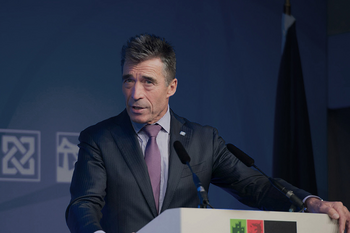
Anders Fogh Rasmussen


Anders Fogh Rasmussen has been at the centre of European and global politics for three decades as Secretary General of NATO, Prime Minister of Denmark, Danish Minister of Economic Affairs, and a leading Danish parliamentarian.

In 1998, Mr. Rasmussen became chairman of the Danish Liberal Party and leader of the Danish opposition. In the parliamentary elections 2001, his party won a landslide victory and became the biggest party in the Danish parliament. He formed his first government, and became Prime Minister of a coalition consisting of the Liberal Party and the Conservative People’s Party. His government was re-elected in 2005 and 2007 respectively, and he held the position as Prime Minister until he was elected as future NATO Secretary General at the Strasbourg-Kehl Summit in April 2009.

Anders Fogh Rasmussen took office as the North Atlantic Treaty Organization’s 12th Secretary General on August 1, 2009 and held that position until September 30, 2014. His tenure marked a fundamental transformation of the Alliance. Mr. Rasmussen oversaw the Alliance’s operational peak with six operations on three continents including Afghanistan, Kosovo and Libya, as well as counter-piracy along the Somali coast, a training mission in Iraq and a counter-terrorism operation in the Mediterranean.

He developed a new Strategic Concept, which sets the Alliance’s core priorities for the future. In the midst of the most serious economic crisis in recent time, he launched “Smart Defence” to help nations make more efficient use of their resources through more multinational cooperation. And in response to Russia’s aggression against Ukraine, he initiated a “Readiness Action Plan” adopted by Heads of State at a historic summit in Wales to strengthen the collective defence to an unprecedented level since the end of the Cold War. A reformer who made the Alliance leaner and more efficient, Mr. Rasmussen also extended and strengthened NATO’s partnerships with nations around the world, making it the hub of a network of international security partnerships.

Upon leaving NATO, Mr. Rasmussen founded Rasmussen Global, which provides geopolitical and strategic consulting services and advises clients on a wide range of issues such as international security, transatlantic relations, the European Union, and emerging markets.

Born in 1953, Mr. Rasmussen earned an M.Sc. in Economics from the University of Aarhus in 1978.


Anders Fogh Rasmussen Founder and Chairman of Rasmussen Global and former Secretary-General of NATO Speaker
Seminars
-

Due to the high interest in this event, we have moved it to a larger room.  It is now in the Oksenberg Conference Room, Encina Hall, 3rd floor.


The February Minsk II agreement introduced a fragile ceasefire in eastern Ukraine, following a year of crisis and conflict between Kyiv and Moscow.  Ukrainian President Poroshenko needs to grapple with a daunting list of critical economic and political reforms.  Russian President Putin, however, appears intent on destabilizing the Ukrainian government and has the means, including military force, to do so.  What can we expect next in the Ukraine-Russia stand-off, and how should the West respond?

Image
Steven Pifer


Steven Pifer is a senior fellow at the Brookings Institution, where his work focuses on arms control, Ukraine and Russia. A retired Foreign Service officer, his more than 25 years with the State Department included assignments as deputy assistant secretary of state with responsibilities for Russia and Ukraine (2001-2004), ambassador to Ukraine (1998-2000), and special assistant to the president and senior director for Russia, Ukraine and Eurasia on the National Security Council (1996-1997).


Co-sponsored by the Freeman Spogli Institute for International Studies and The Europe Center.

Steven Pifer Senior Fellow Speaker the Brookings Institution
Lectures
-

At the NATO Summit in Wales in September 2014, NATO leaders were clear about the security challenges on the Alliance’s borders. In the East, Russia’s actions threaten our vision of a Europe that is whole, free and at peace.  On the Alliance’s southeastern border, ISIL’s campaign of terror poses a threat to the stability of the Middle East and beyond.  To the south, across the Mediterranean, Libya is becoming increasingly unstable. As the Alliance continues to confront theses current and emerging threats, one thing is clear as we prepare for the 2016 Summit in Warsaw: NATO will adapt, just as it has throughout its 65-year history.

Image
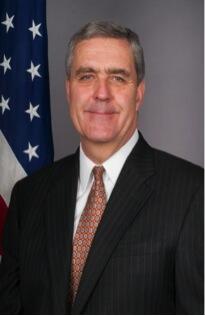
Douglas Lute, Ambassador of the United States to NATO


In August 2013, Douglas E. Lute was sworn-in as the Ambassador of the United States to the North Atlantic Treaty Organization (NATO).  From 2007 to 2013, Lute served at the White House under Presidents Bush and Obama, first as the Assistant to the President and Deputy National Security Advisor for Iraq and Afghanistan, and more recently as the Deputy Assistant to the President focusing on Afghanistan, Pakistan and India.  In 2010, AMB Lute retired from the U.S. Army as a Lieutenant General after 35 years on active duty.  Prior to the White House, he served as the Director of Operations on the Joint Staff, overseeing U.S. military operations worldwide. He served multiple tours in NATO commands including duty in Germany during the Cold War and commanding U.S. forces in Kosovo.  He holds degrees from the United States Military Academy and Harvard University.

A light lunch will be provided.  Please plan to arrive by 11:30am to allow time to check in at the registration desk, pick up your lunch and be seated by 12:00 noon.

Co-sponsored by The Europe Center, the Freeman Spogli Institute for International Studies, the Center for International Security and Cooperation and the Center for Russian, East European and Eurasian Studies.


Douglas Lute United States Ambassador to NATO Speaker
Lectures
Subscribe to Diplomacy