


Why France and the European Union Still Matter for the United States
-
Is Europe "elderly and haggard", and could France become "the crucible of Europe" (Jan. 10, 2015 NYTimes op-ed)?
On the one hand, Europe is warned by the US about an Asian "pivot", and is perceived here as less relevant and effective. Significantly, certainly as a wake up call, Pope Francis recently compared Europe to a "grandmother, no longer fertile and vibrant, increasingly a bystander in a world that has apparently become less and less Eurocentric”. France had been previously presented here as an eminent representative of an "Old Europe".
On the other hand, the US has been constantly, during the last decade, advocating for a stronger Europe and stressing a special French role in this endeavour. A few days ago, after the terrorist attacks in Paris, President Obama publicly stated that "France was the US oldest Ally".
At a time when we have to face common challenges in the Middle East and in Africa, to adapt to new emerged actors and a more assertive Russia, to deal with direct threats including in the field of proliferation and the cyber space, to define a multipolar world and organize our economic relation (TTIP), what can be the EU contribution? What can also be a special intellectual and diplomatic French input to this global realignment?
Co-sponsored by The Europe Center, the Center for International Security and Cooperation and the France-Stanford Center.
Image

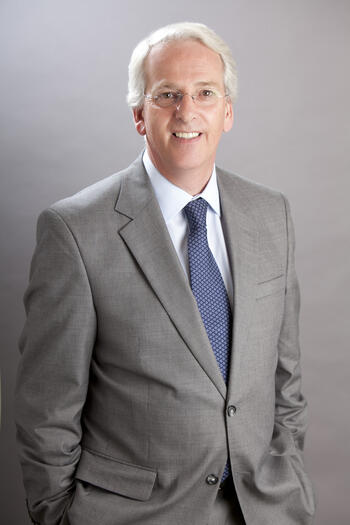
Ambassador Eric Lebédel is a French diplomat, former ambassador to the OSCE and to Finland, with a deep experience in Transatlantic relationship (twice as Minister's advisor; in the French embassy in Washington DC) and in European affairs. He is also involved in crisis management (PMs office), international security (embassy in Moscow, consul general in Istanbul) and multilateral diplomacy ( NATO's Director for crisis management, OSCE). Presently working on Strategic Partnerships for the French MFA and interested in e.diplomacy, he also regularly lectures at Sciences-po and ENA (Ecole Nationale d'Administration) on crisis management and Europe.
Ambassador Eric Lebédel
French Diplomat
Speaker
Seminars
Towards a Post-9/11 Foreign Policy
-
Image
Before his appointment as Ambassador to NATO by President Obama in 2009, Daalder was a senior fellow in foreign policy studies at the Brookings Institution, specializing in American foreign policy, European security and transatlantic relations, and national security affairs. Prior to joining Brookings in 1998, he was an Associate Professor at the University of Maryland’s School of Public Policy and director of research at its Center for International and Security Studies. Ambassador Daalder was educated at Oxford and Georgetown Universities, and received his PhD in political science from the Massachusetts Institute of Technology.
Ivo Daalder
Speaker
President of the Chicago Council on Global Affairs and former US Ambassador to NATO
Lectures
Europe-Russia Relations: The Impact of EU Expansion
-
Please click on the image below to view the video recording of this event.
Co-sponsored by The Europe Center and the Center for Russian, East European and Eurasian Studies.
Barnes/McDowell/Cranston Room
Fisher Conference Center at the Arrillaga Alumni Center
Miroslav Lajcak
Deputy Prime Minister and Foreign Minister
Speaker
Slovak Republic
Michael A. McFaul
Encina Hall
616 Jane Stanford Way
Stanford, CA 94305-6055
0
Senior Fellow, Freeman Spogli Institute for International Studies
Ken Olivier and Angela Nomellini Professor of International Studies, Department of Political Science
Peter and Helen Bing Senior Fellow, Hoover Institution
Michael McFaul is the Ken Olivier and Angela Nomellini Professor of International Studies in Political Science, Senior Fellow at the Freeman Spogli Institute for International Studies, and the Peter and Helen Bing Senior Fellow at the Hoover Institution, all at Stanford University. He joined the Stanford faculty in 1995 and served as FSI Director from 2015 to 2025. He is also an international affairs analyst for MSNOW.
McFaul served for five years in the Obama administration, first as Special Assistant to the President and Senior Director for Russian and Eurasian Affairs at the National Security Council at the White House (2009-2012), and then as U.S. Ambassador to the Russian Federation (2012-2014).
McFaul has authored ten books and edited several others, including, most recently, Autocrats vs. Democrats: China, Russia, America, and the New Global Disorder, as well as From Cold War to Hot Peace: An American Ambassador in Putin’s Russia, (a New York Times bestseller) Advancing Democracy Abroad: Why We Should, How We Can; and Russia’s Unfinished Revolution: Political Change from Gorbachev to Putin.
He is a recipient of numerous awards, including an honorary PhD from Montana State University; the Order for Merits to Lithuania from President Gitanas Nausea of Lithuania; Order of Merit of Third Degree from President Volodymyr Zelenskyy of Ukraine, and the Dean’s Award for Distinguished Teaching at Stanford University. In 2015, he was the Distinguished Mingde Faculty Fellow at the Stanford Center at Peking University.
McFaul was born and raised in Montana. He received his B.A. in International Relations and Slavic Languages and his M.A. in Soviet and East European Studies from Stanford University in 1986. As a Rhodes Scholar, he completed his D. Phil. in International Relations at Oxford University in 1991.
International Working Group on Russian Sanctions
The International Working Group on Russian Sanctions aims to provide expertise and experience to governments and companies around the world by assisting with the formulation of sanctions proposals that will increase the cost to Russia of invading Ukraine, and support democratic Ukraine in the defense of its territorial integrity and national sovereignty.
Read more
Global Populisms
A new project examining the global surge in populist movements and what it means for established democratic rules and institutions.
Read More
CV
Document
mcfaul-cv-1-25-2026.pdf
(473.05 KB)
Hide publication sections
Off
Norman M. Naimark
CISAC
Stanford University
Encina Hall, C235
Stanford, CA 94305-6165
0
naimark@stanford.edu
Senior Fellow, by courtesy, at the Freeman Spogli Institute for International Studies
Robert & Florence McDonnell Professor of East European Studies
Professor of History
Professor, by courtesy, of German Studies
Senior Fellow at the Hoover Institution
Norman M. Naimark is the Robert and Florence McDonnell Professor of East European Studies, a Professor of History and (by courtesy) of German Studies, and Senior Fellow of the Hoover Institution and (by courtesy) of the Freeman-Spogli Institute for International Studies. Norman formerly served as the Sakurako and William Fisher Family Director of the Stanford Global Studies Division, the Burke Family Director of the Bing Overseas Studies Program, the Convener of the European Forum (predecessor to The Europe Center), Chair of the History Department, and the Director of Stanford’s Center for Russian, East European, and Eurasian Studies.
Norman earned his Ph.D. in History from Stanford University in 1972 and before returning to join the faculty in 1988, he was a professor of history at Boston University and a fellow of the Russian Research Center at Harvard. He also held the visiting Catherine Wasserman Davis Chair of Slavic Studies at Wellesley College. He has been awarded the Officer's Cross of the Order of Merit of the Federal Republic of Germany (1996), the Richard W. Lyman Award for outstanding faculty volunteer service (1995), and the Dean's Teaching Award from Stanford University for 1991-92 and 2002-3.
Norman is interested in modern Eastern European and Russian history and his research focuses on Soviet policies and actions in Europe after World War II and on genocide and ethnic cleansing in the twentieth century. His published monographs on these topics include The History of the "Proletariat": The Emergence of Marxism in the Kingdom of Poland, 1870–1887 (1979, Columbia University Press), Terrorists and Social Democrats: The Russian Revolutionary Movement under Alexander III (1983, Harvard University Press), The Russians in Germany: The History of The Soviet Zone of Occupation, 1945–1949 (1995, Harvard University Press), The Establishment of Communist Regimes in Eastern Europe (1998, Westview Press), Fires of Hatred: Ethnic Cleansing In 20th Century Europe (2001, Harvard University Press), Stalin's Genocides (2010, Princeton University Press), and Genocide: A World History (2016, Oxford University Press). Naimark’s latest book, Stalin and the Fate of Europe: The Postwar Struggle for Sovereignty (Harvard 2019), explores seven case studies that illuminate Soviet policy in Europe and European attempts to build new, independent countries after World War II.
Affiliated faculty at The Europe Center
Affiliated faculty at the Center on Democracy, Development and the Rule of Law
Hide publication sections
Off
Kathryn Stoner
Faculty Director, Susan Ford Dorsey Program in International Policy Studies and Senior Fellow, Freeman Spogli Institute
Speaker
Stanford University
The Contemporary
This project examines the “contemporary” with a focus on defining moments such as: 1945, 1973, 1989, and 2001. In recent years the concept of the contemporary has been taken up within limited disciplinary discourses and in the context of distinct geographical settings. The horizon of this project, however, is the global. We employ a comparative and interdisciplinary approach to the hybrid term “contemporary” as it intersects various fields and serves as a heuristic device to understand phenomena in politics, culture, and the arts.
European Union can overcome extremism vote, Stanford faculty say
News Type
News
Date
Paragraphs
Appeared in Stanford Report, May 29, 2014
By Clifton B. Parker
The electoral eruption of anti-European Union populism is a reflection of structural flaws in that body but does not represent a fatal political blow, according to Stanford scholars.
In the May 25 elections for the European Parliament, anti-immigration parties won 140 of the 751 seats, well short of control, but enough to rattle supporters of the EU, which has 28 member nations. In Britain, Denmark, France and Greece, the political fringe vote totals stunned the political establishments.
Stanford political scientist Francis Fukuyama said the rise of extremism and anti-elitism is not surprising in the wake of the 2008 economic downturn and subsequent high levels of unemployment throughout Europe. In one sense, the EU elites have themselves to blame, he said.
"The elites who designed the EU and the eurozone failed in a major way," he said. "There was a structural flaw in the design of the euro (monetary union absent fiscal union, and the method of disciplining countries once in the zone)," said Fukuyama, the Olivier Nomellini Senior Fellow at Stanford's Freeman Spogli Institute for International Studies and the Center for Democracy, Development and the Rule of Law, and Research Afflilate at The Europe Center.
Some have argued that the European Union should adopt a form of fiscal union because without one, decisions about taxes and spending remain at the national level.
As Fukuyama points out, this becomes a problem, as in the case of a debt-ridden Greece, which he believes should not have qualified for EU membership in the first place. In fact, he said, it would have been better for Greece itself to leave the euro at the outset of the 2008 crisis.
Still, Fukuyama said the big picture behind the recent election is clear – it was a confluence of issues and timing.
"It is a bit like an off-year election in the U.S., where activists are more likely to vote than ordinary citizens," he said.
Fukuyama believes the EU will survive this electoral crisis. "I think the EU will be resilient. It has weathered other rejections in the past. The costs of really exiting the EU are too high in the end, and the elites will adjust, having been given this message," he said.
Meanwhile, the populist parties in the different countries are not unified or intent on building coalitions with each other.
"Other than being anti-EU, most of them have little in common," Fukuyama said. "They differ with regard to specific positions on immigration, economic policy, and they respond to different social bases."
Ongoing anger
Dan Edelstein, a professor of French, said the largest factor for success by extremist candidates was "ongoing anger toward the austerity policy imposed by the EU," primarily by Germany.
Edelstein estimates that a large majority of French voters are still generally supportive of the EU. For the time being, the anti-EU faction does not have a majority, though they now have much more representation in the European Parliament.
Edelstein noted existing strains among the anti-EU parties – for example, the UK Independence Party in Britain has stated that it would not form an alliance with the National Front party in France.
Immigration remains a thorny issue for some Europeans, Edelstein said.
"'Immigration' in most European political debates, tends to be a synonym for 'Islam.' While there are some countries, such as Britain, that are primarily worried about the economic costs of immigration, in most continental European countries, the fears are cultural," he said.
As Edelstein put it, Muslims are perceived as a "demographic threat" to white or Christian Europe. However, he is optimistic in the long run.
"It seems a little early to be writing the obituary of the EU. Should economic conditions improve over the next few years, as they are predicted to, we will likely see this high-water mark of populist anger recede," said Edelstein.
Cécile Alduy, an associate professor of French, writes in the May 28 issue of The Nation about how the ultra-right-wing National Front came in first place in France's election.
"This outcome was also the logical conclusion of a string of political betrayals, scandals and mismanagement that were only compounded by the persistent economic and social morass that has plunged France into perpetual gloom," she wrote.
Historian J.P. Daughton said that like elsewhere in the world, immigration often becomes a contentious issue in Europe in times of economic difficulties.
"High unemployment and painful austerity measures in many parts of Europe have led extremist parties to blame immigrants for taking jobs and sapping already limited social programs," he said.
Anti-immigration rhetoric plays particularly well in EU elections, Daughton said. "Extremist parties portray European integration as a threat not only to national sovereignty, but also to national identity.
Edelstein, Alduy and Daughton are all Faculty Affiliates of The Europe Center.
Wake-up call
Russell A. Berman, a professor of German studies and comparative literature, said many Europeans perceive the EU as "somehow impenetrable, far from the civic politics of the nation states."
As a result, people resent regulations issued by an "intangible bureaucracy," and have come to believe that the European Parliament has not grappled with major issues such as mustering a coherent foreign policy voice, he said.
"The EU can be great on details but pretty weak on the big picture," said Berman, who is the Walter A. Haas Professor in the Humanities, Senior Fellow at the Hoover Institution, and Faculty Affiliate of The Europe Center. "It is this discrepancy that feeds the dissatisfaction."
Yet he points out that the extremist vote surged in only 14 nations of the EU – in the other 14, there was "negligible extremism," as he describes it.
"We're a long way from talking about a fatal blow, but the vote is indeed a wake-up call to the centrists that they have to make a better case for Europe," Berman said.
Hero Image

All News button
1
Ukraine: A Roundtable Discussion (note time change)
-
Mark von Hagen teaches the history of Eastern Europe and Russia, with a focus on Ukrainian-Russian relations, at Arizona State University, after teaching 24 years at Columbia University, where he also chaired the history department and directed the Harriman Institute. At the Harriman Institute, he developed Ukrainian studies in the humanities and social sciences. He was elected President of the International Association for Ukrainian Studies in 2002 and presided over the Congress in Donetsk in 2005. He also served as President of the Association for Slavic, East European and Eurasian Studies (2009). During his New York years, he was a member of the Council on Foreign Relations, and remains a member of the Advisory Board for Europe and Asia at Human Rights Watch. He has worked with historians, archivists, and educators in independent Ukraine and with diaspora institutions. He has served on the advisory board of the European University in Minsk (in exile in Vilnius, Lithuania), to the Open Society Institute; on the Board of Directors of the National Council for Eurasian and East European Research, and the International Fellowship Committee of the Social Science Research Council.
Ambassador Vlad Lupan has been the Ambassador, Permanent Representative of the Republic of Moldova to the United Nations, in New York, since January 2012, where he is focusing on development issues, rule of law and human rights, and conflict resolution. He has held a variety of diplomatic posts since 1996 till 2008, last one being Head of Political-Military Cooperation Department and was a negotiator on Transnistrian conflict settlement. He also worked with OSCE field Missions in in Georgia, Albania and Croatia. In 2008 Mr. Lupan joined the civil society, and became a member of the advisory board to the Ministry of Defense. During this time he was also the host of the “Euro-Atlantic Dictionary” radio talk show. In 2010 he became the Foreign Policy Advisor to the Acting President of the Republic of Moldova, and was later elected as a Member of the Parliament.
Educated at the State University of Moldova and at the National School of Political Science and Public Administration in Bucharest, Romania, Ambassador Lupan earned his international relations degree, and later a master’s degree in journalism and public communications from the Free Independent Moldovan University in Chisinau. Ambassador Lupan has published mainly in Romanian, though he also published in Russian or English, on foreign and domestic politics issues, including international security matters, Security Sector Reform, Transnistrian conflict settlement and European Union Eastern Partnership.
Dr. Yaroslav Prytula is an Associate Professor at the Department of International Economic Analysis and Finance at Lviv Ivan Franko National University (LIFNU) and a Professor at the Lviv Business School of the Ukrainian Catholic University in Lviv, Ukraine. Previously he served as an Academic Secretary of LIFNU and a Vice-Dean of the Faculty of International Relations at LIFNU. He is a member of the Supervisory Board of Lviv Ivan Franko National University. His scholarly interests are in macroeconomic modelling, quantitative methods in social science and higher education in transitional societies. His current research is related to socio-economic regional development in Ukraine. During 2001 he spent a semester in The George Washington University Elliott School of International Affairs under William and Helen Petrach scholarship and continued his research during 2003-04 in The George Washington University Research Program in Social and Organizational Learning under the U.S. Department of State funded Junior Faculty Development Program. During 2004-07 he was a fellow of the Open Society Institute Academic Fellowship Program. During 2007-09 Yaroslav was a fellow of the Global Policy Fellowship Program of the Institute for Higher Education Policy (Washington, DC). In 2011 Dr. Prytula was a visiting scholar at the George Mason University under the University Administration Support Program funded by the Carnegie Corporation of New York and administered by the International Research and Exchanges Board (IREX). Currently Dr. Prytula is a Fulbright Research Scholar at the George Washington University School of Business. Dr. Prytula was awarded his PhD in Mathematical Analysis from LIFNU in 2000. He graduated from the Faculty of Mechanics and Mathematics of LIFNU. Yaroslav Prytula has received numerous awards and scholarships.
Presented by the Center for Russian, East European and Eurasian Studies, and co-sponsored by The Europe Center and the Stanford Humanities Center.
Levinthal Hall
Mark von Hagen
Professor of History
Speaker
Arizona State University
Ambassador Vlad Lupan
Permanent Representative of the Republic of Moldova to the UN
Speaker
Yaroslav Prytula
Associate Professor
Speaker
Lviv Ivan Franko National University
Robert Crews
Associate Professor of History
Moderator
Stanford University
Panel Discussions
2014 TEC Lectureship on Europe and the World with Adam Tooze, Yale University
The Europe Center invites you to the inaugural annual lectures of this series by Adam Tooze, Barton M. Briggs Professor of History, Yale University. On the centenary of the outbreak of the First World War, Adam Tooze will deliver three lectures about the history of the transformation of the global power structure that followed from Imperial Germany’s decision to provoke America’s declaration of war in 1917. Tooze advances a powerful explanation of why the First World War rearranged political and economic structures across Eurasia and the British Empire, sowed the seeds of revolution in Russia and China, and laid the foundations of a new global order that began to revolve around the United States and the Pacific. These lectures will present an argument for why the fate of effectively the whole of civilization changed in 1917, and why the First World War’s legacy continues to shape our world today.
Titles and venues are listed below.
Wednesday, Apr 30, 2014, 4:00 pm - 5:30 pm
Location: Koret Taube Room, Gunn-SIEPR
“Making Peace in Europe 1917-1919: Brest-Litovsk and Versailles”
Recent events in Ukraine pose the question, is a comprehensive peace for Europe, both East and West, possible? This lecture will address the first moment in which that question was posed, during and after World War I. In light of current events the lecture will focus on the influence of Russian power and powerlessness in shaping both the abortive effort to make peace in the East between Imperial Germany and Soviet Russia at Brest Litovsk - the first treaty to recognize the existence of an independent Ukraine - and the efforts to make peace in the West at Versailles and after. Returning to the period 1917-1923 suggests sobering conclusions about the stability of the order that we have taken for granted since 1991.
Thursday, May 1, 2014, 4:00 pm - 5:30 pm
Location: Koret Taube Room, Gunn-SIEPR
“Hegemony: Europe, America and the Problem of Financial Reconstruction, 1916-1933”
Having established itself in the 19th century as the financial center of the world, Europe's sudden impoverishment by World War I came as a dramatic shock. The ensuing trans-Atlantic crises of the 1920s and early 1930s were not only the most severe but the most consequential in the history of Europe and the wider world. But, to this day there is substantial disagreement amongst both social scientists and historians as to the causes of the disaster. Was it American leadership or a failure of cooperation that was to blame? This lecture will argue the case for a revised and historicized version of the hegemonic failure thesis. The absence presence of American influence was crucial in determining Europe's fate.
Friday, May 2, 2014, 4:00 pm - 5:30 pm
Location: Bechtel Conference Center
Followed by a reeception, 5:30 pm - 6:15 pm
“Unsettled Lands: The Interwar Crisis of Agrarian Europe”
Until the middle of the twentieth century Europe, like the rest of the world, was majority agrarian. And yet the most influential accounts of the interwar crisis, framed as they were by the industrial and urban world of the later twentieth-century Europe, tended to ignore this evident fact, focusing instead on workers and business-men, politicians and soldiers. This lecture will illustrate how brining the peasantry back in has the potential not only to throw new light on Europe's great epoch of crisis, but to open that history, beyond the Bloodlands to the wider world.
Tooze is the author of The Wages of Destruction: The Making and Breaking of the Nazi Economy (2006) and Statistics and the German State 1900-1945: The Making of Modern Economic Knowledge (2001), among numerous other scholarly articles on modern European history.
April 30th and May 1st: Koret-Taube Conference Center in the Gunn–SIEPR Building (366 Galvez Street).
May 2nd: Bechtel Conference Center in Encina Hall (616 Serra Street).
Adam Tooze
Barton M. Briggs Professor of History
Speaker
Yale University
Lectures
Making and Breaking Territorial Agreements: Explaining European Exceptionalism
-
ABOUT THE TOPIC: While the overall record of compliance with interstate territorial agreement since 1815 is quite high, Europe experienced a disproportionate share of treaty failures compared to other regions of the world. In Europe, treaties were frequently made and frequently broken; everywhere else, the dominant pattern has been for treaties to be rarely made and rarely broken. I argue that this pattern arose due to multilateral and hierarchical nature of border settlements in Europe, which was heavily influenced by the region’s great powers. Although great powers often imposed treaty terms on other states, enforcement was, at best, inconsistent and, at worst, actively undermined by their own actions. Using a new data set on interstate territorial conflicts and agreements, I show that the fates of border settlements in Europe were highly interdependent and vulnerable to contagion, either failing or succeeding en masse. By contrast, in other regions, where border settlements tended to be bilaterally determined, treaty failures were less likely to cluster in time. In addition to their implications for the study of treaty compliance and conflict contagion, these results speak to the promise and dangers of externally-imposed peace agreements.
ABOUT THE SPEAKER: Kenneth A. Schultz is professor of political science at Stanford University and an affiliated faculty member at CISAC. His research examines international conflict and conflict resolution, with a particular focus on the domestic political influences on foreign policy choices. His most recent work deals with the origins and resolution of territorial conflicts between states. He is the author of Democracy and Coercive Diplomacy (Cambridge University Press, 2001), World Politics: Interests, Interactions, and Institutions (with David Lake and Jeffry Frieden, Norton, 2013), as well as numerous articles in peer-reviewed scholarly journals. He was the recipient the 2003 Karl Deutsch Award, given by the International Studies Association, and a Dean’s Award for Excellence in Teaching, given by Stanford’s School of Humanities and Sciences.
CISAC Conference Room
Kenneth Schultz
Professor of Political Science, Stanford; CISAC Affiliated Faculty Member
Speaker
Seminars
Jozef Bátora
Encina Hall
616 Serra Street
Stanford, CA 94305
0
batora3@uniba.sk
Visiting Professor, The Europe Center
Jozef Bátora is full professor at the Department of Political Science, Comenius University in Bratislava. He holds a PhD in political science from the University of Oslo (2006). His work experience includes positions as associate professor and director at the Institute of European Studies and International Relations at Comenius University (2009 – 2015), visiting professor at The Europe Center, FSI, Stanford University (2013), research fellow at the Institute for European Integration Research at the Austrian Academy of Sciences in Vienna (2006 – 2009), senior researcher at ARENA – Centre of European Studies at the University of Oslo (2006), and visiting scholar at Scancor, Stanford University (2003 – 2004). His research interests encompass international institutions and their change, organization theory, diplomacy, EU foreign policy, EU governance and security. He has published in a number of leading peer reviewed journals including Journal of European Public Policy, Journal of Common Market Studies, West European Politics, International Relations, The Hague Journal of Diplomacy and Cambridge Review of International Affairs. In the period 2012-2015, he served as coordinating editor of Journal of International Relations and Development (www.palgrave-journals.com/jird). His latest book is The European External Action Service: European Diplomacy Post-Westphalia? (Palgrave 2015).
Hide publication sections
Off