Policy Analysis
News Type
News
Date
Paragraphs

Special Event:  Pascal Lamy Lecture

“World Trade and Global Governance”

 
The Europe Center invites you to a special lecture by Pascal Lamy, the former Director-General of the World Trade Organization.
 
Image
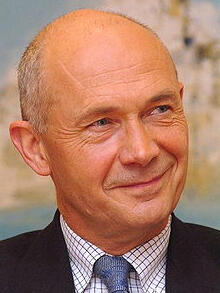
Image of Pascal Lamy
Date: February 10, 2014 
Time: 4:00 - 5:30 p.m.
Venue: Bechtel Conference Center, Encina Hall
RSVP by February 5, 2014                       
  
Mr. Lamy will speak on the necessary mix of economic, social, and political policies that will determine the efficacy of free trade as an engine of global economic growth. In particular, he will outline a statement of his own thinking about the future of global governance and international trade, and describe what remains to be done in addressing the challenges of globalization. Additionally, Mr. Lamy will reflect on the features of modern politics that create governance gridlock and thwart global oversight, and will identify how progress can be made in overcoming impediments to policy action at the international level. 
 
My Lamy served as the Director-General of the World Trade Organization from 2005-2013. He is currently the Honorary President of the Paris-based think tank, Notre Europe.


Meet our Visiting Scholars:  Bjørn Høyland 

 
In each newsletter, The Europe Center would like to introduce you to a visiting scholar or collaborator at the Center. We welcome you to visit the Center and get to know our guests.
 
Bjør
Image
Image of Bjorn Hoyland
n Høyland (PhD, London School of Economics, 2005) is Professor of Political Science at the University of Oslo, Norway. He is currently visiting Professor and Anna Lindh Fellow at The Europe Center, Freeman Spogli Institute for International Studies and Stanford Global. The focus of his research is European Union politics and comparative legislative politics. Professor Høyland’s list of journal publications includes the American Political Science Review, Annual Review of Political Science, British Journal of Political Science, and European Union Politics. His textbook (with Simon Hix) The Political System of the European Union (3rd ed) is the standard text for advanced courses on the European Union.

Workshop Schedules  

 
The Europe Center invites you to attend the talks of speakers in the following workshop series: 
 

Europe and the Global Economy

 
January 23, 2014
David Dreyer Lassen, Professor of Economics, University of Copenhagen
RSVP by Jan 20, 2014 
 
February 20, 2014
Alan Deardorff, John W. Sweetland Professor of International Economics & Prof. of Economics and Public Policy, University of Michigan
RSVP by Feb 17, 2014
 
Mar 6, 2014
Sophie Meunier, Research Scholar, Woodrow Wilson School and Co-Director, EU Program at Princeton, Princeton University
RSVP by Mar 3, 2014
 
Mar 13, 2014
Randy Stone, Professor of Political Science, University of Rochester
RSVP by Mar 10, 2014
 
Apr 3, 2014
Kåre Vernby, Associate Professor, Department of Government, Uppsala University
RSVP by Mar 31, 2014
 
Apr 17, 2014
Mark Hallerberg, Professor of Public Management and Political Economy, Hertie School of Governance 
RSVP by Apr 4, 2014
 
May 15, 2014
Christina Davis, Prof. of Politics and International Affairs, Princeton University
RSVP by May 12, 2014

European Governance

 
February 6, 2014
Matthew Gabel, Professor of Political Science, Washington University at St. Louis
RSVP by Feb 3, 2014
 
May 22, 2014
Wolfgang Ischinger, Former German Ambassador to the U.S.; Chairman, Munich Security Conference
RSVP by May 19, 2014
 
May 29, 2014
Simon Hug, Professor of Political Science, University of Geneva
RSVP by May 26, 2014

Other Events

 
The Europe Center also invites you to attend the following events of interest:
 
January 27, 2014
Vassil Terziev, Co-founder & CEO, Telerik (BG); and Japec Jakopin, Co-founder & CEO, Seaway (SI)
“Worldclass Enterprise Software and Design Firms in SouthEast and Balkans Europe” 
Sponsor: European Entrepreneurship & Innovation Thought Leaders Seminar
 
January 30, 2014
Ken Schultz, Professor of Political Science, Stanford University
“Making and Breaking Territorial Agreements: Explaining European Exceptionalism”
Sponsor: CISAC Social Science Seminar; co-sponsored by The Europe Center
 
 
All News button
1
-

Mark von Hagen teaches the history of Eastern Europe and Russia, with a focus on Ukrainian-Russian relations, at Arizona State University, after teaching 24 years at Columbia University, where he also chaired the history department and directed the Harriman Institute.  At the Harriman Institute, he developed Ukrainian studies in the humanities and social sciences.  He was elected President of the International Association for Ukrainian Studies in 2002 and presided over the Congress in Donetsk in 2005.  He also served as President of the Association for Slavic, East European and Eurasian Studies (2009).  During his New York years, he was a member of the Council on Foreign Relations, and remains a member of the Advisory Board for Europe and Asia at Human Rights Watch.  He has worked with historians, archivists, and educators in independent Ukraine and with diaspora institutions.  He has served on the advisory board of the European University in Minsk (in exile in Vilnius, Lithuania), to the Open Society Institute; on the Board of Directors of the National Council for Eurasian and East European Research, and the International Fellowship Committee of the Social Science Research Council.
 

Ambassador Vlad Lupan has been the Ambassador, Permanent Representative of the Republic of Moldova to the United Nations, in New York, since January 2012, where he is focusing on development issues, rule of law and human rights, and conflict resolution. He has held a variety of diplomatic posts since 1996 till 2008, last one being Head of Political-Military Cooperation Department and was a negotiator on Transnistrian conflict settlement. He also worked with OSCE field Missions in in Georgia, Albania and Croatia. In 2008 Mr. Lupan joined the civil society, and became a member of the advisory board to the Ministry of Defense. During this time he was also the host of the “Euro-Atlantic Dictionary” radio talk show. In 2010 he became the Foreign Policy Advisor to the Acting President of the Republic of Moldova, and was later elected as a Member of the Parliament. 

Educated at the State University of Moldova and at the National School of Political Science and Public Administration in Bucharest, Romania, Ambassador Lupan earned his international relations degree, and later a master’s degree in journalism and public communications from the Free Independent Moldovan University in Chisinau.  Ambassador Lupan has published mainly in Romanian, though he also published in Russian or English, on foreign and domestic politics issues, including international security matters, Security Sector Reform, Transnistrian conflict settlement and European Union Eastern Partnership.
 

Dr. Yaroslav Prytula is an Associate Professor at the Department of International Economic Analysis and Finance at Lviv Ivan Franko National University (LIFNU) and a Professor at the Lviv Business School of the Ukrainian Catholic University in Lviv, Ukraine. Previously he served as an Academic Secretary of LIFNU and a Vice-Dean of the Faculty of International Relations at LIFNU. He is a member of the Supervisory Board of Lviv Ivan Franko National University. His scholarly interests are in macroeconomic modelling, quantitative methods in social science and higher education in transitional societies. His current research is related to socio-economic regional development in Ukraine. During 2001 he spent a semester in The George Washington University Elliott School of International Affairs under William and Helen Petrach scholarship and continued his research during 2003-04 in The George Washington University Research Program in Social and Organizational Learning under the U.S. Department of State funded Junior Faculty Development Program. During 2004-07 he was a fellow of the Open Society Institute Academic Fellowship Program. During 2007-09 Yaroslav was a fellow of the Global Policy Fellowship Program of the Institute for Higher Education Policy (Washington, DC). In 2011 Dr. Prytula was a visiting scholar at the George Mason University under the University Administration Support Program funded by the Carnegie Corporation of New York and administered by the International Research and Exchanges Board (IREX). Currently Dr. Prytula is a Fulbright Research Scholar at the George Washington University School of Business. Dr. Prytula was awarded his PhD in Mathematical Analysis from LIFNU in 2000. He graduated from the Faculty of Mechanics and Mathematics of LIFNU.  Yaroslav Prytula has received numerous awards and scholarships.


Presented by the Center for Russian, East European and Eurasian Studies, and co-sponsored by The Europe Center and the Stanford Humanities Center.

Levinthal Hall

Mark von Hagen Professor of History Speaker Arizona State University
Ambassador Vlad Lupan Permanent Representative of the Republic of Moldova to the UN Speaker
Yaroslav Prytula Associate Professor Speaker Lviv Ivan Franko National University
Robert Crews Associate Professor of History Moderator Stanford University
Panel Discussions
-
 
Mr. Lamy spoke on the necessary mix of economic, social, and political policies that will determine the efficacy of free trade as an engine of global economic growth. In particular, he outlined a statement of his own thinking about the future of global governance and international trade, and describe what remains to be done in addressing the challenges of globalization. Additionally, Mr. Lamy reflected on the features of modern politics that create governance gridlock and thwart global oversight, and identified how progress can be made in overcoming impediments to policy action at the international level. 
 
Mr. Lamy served as the Director-General of the World Trade Organization from 2005-2013. He is currently the Honorary President of the Paris-based think tank, Notre Europe.


Bechtel Conference Center

Pascal Lamy former Director-General of the World Trade Organization, and current Honorary President of Notre Europe Speaker
Conferences
-

The United States spends hundreds of billions of dollars on transforming the international landscape through military force in order to enhance America’s national security. But is there any other way? This lecture explores America`s Cold War experience in dealing with the communist states of Eastern Europe in an effort to make them less tyrannical and less hostile to the Western world. The focus will be on economic and psychological warfare, cultural and economic border penetration, and diplomacy as a tool of coercion in particular. The presentation also analyzes these policies in the light of the ideology, goals, strategies and tactics employed by the other side, while also considering the difficulties U.S. policy faces in adequately responding to external challenges. The discussion touches on the changing goals and strategies of U.S. foreign policy in Eastern Europe within the national independence/stability paradigm.

Co-sponsored by the History Department

Building 200 (History Corner)
Room 307

Laszlo Borhi Fulbright Visiting Professor at Indiana University, Bloomington and Senior Research Fellow Speaker the Institute of History, Hungarian Academy of Sciences
Seminars
Authors
News Type
Commentary
Date
Paragraphs

In his blog posting SORT vs. New START: Why the Administration is Leery of a Treaty, Steven Pifer continues with his previous posting Presidents, Nuclear Reductions and the Senate.  He points to the ratification experience between George W. Bush's 2002 Strategic Offensive Reductions Treaty (SORT) and Burak Obama's 2010 New Strategic Arms Reduction Treaty (New START) as the basis for the Obama administration fear that the Republican majority Senate would not consider a treaty for further nuclear reductions on its merits.

All News button
1
Authors
News Type
Commentary
Date
Paragraphs

President Barack Obama desires to further reduce nuclear arsenals below the levels set in the 2010 New Strategic Arms Reduction Treaty (New START) and Republicans and former officials of the George W. Bush administration assert that this can only be done through a new treaty.  Steven Pifer, director of the Brookings Arms Control Initiative, in his blog posting Presidents, Nuclear Reductions and the Senate, points out that nuclear reduction efforts have not always been accomplished through treaties requiring ratification by the senate.  History shows that past presidents, including Republicans, have used alternative methods that did not require a 2/3 majority vote by the Senate. 

All News button
1
Authors
Christian Bayer Tygesen
News Type
Commentary
Date
Paragraphs

The Afghan National Police (ANP) is critical to Afghanistan’s ability to shoulder the security burden increasingly thrust upon them as the international military presence draws down. For Afghanistan to stay on an even keel and advance and sustain overall stability, the ANP, alongside the Afghan military, must be marginally better than the armed non-state groups that threaten the current political order. But the ANP is very ineffective, hamstrung by widespread corruption, attrition, illiteracy and public distrust. Progress is being made, albeit slow and uneven, but this is unlikely to significantly alter the bottom line by 2014, when the international military combat mission in Afghanistan formally draws to a close.

Training the ANP has been the centerpiece of the EUs engagement in Afghanistan since 2007. What began as a German-led police training mission in 2002 became an EU-led mission in February 2007, christened EUPOL. The German effort was found wanting or, in the words of then-SACEUR James Jones, “very disappointing”. Today, after six years, the conventional wisdom of EUPOL and its results generally echo Jones’ verdict. This will undoubtedly cloud the EUs legacy in Afghanistan. But the conventions should not overshadow EUPOLs strengths, for herein lies a lesson can be leveraged in future statebuilding missions.

The EU was widely seen as the ideal candidate to lead the police training mission in February 2007. The EU had extensive experience and expertise from police training missions in Bosnia, Kosovo, Georgia and elsewhere. In European capitals many saw the mission as an excellent opportunity to demonstrate the EUs capabilities in a war that still enjoyed broad public support in most European countries. Finally, there were few serious alternatives to the EU. President Bush had recently announced a military surge in Iraq to enable a dramatic shift in strategy, effectively rendering a larger US role in Afghanistan unfeasible at that time.

As stipulated and adopted by the European Council, EUPOLs mandate was ambitious in scope – although also somewhat ambiguous – explicitly emphasizing the need to link the mission of training the Afghan National Police to a broader undertaking of strengthening rule of law in Afghanistan. Since its inception, however, EUPOL has severely struggled to fulfill this ambition. It hit the ground stumbling, not running. The means were never commensurate to the ends. Results were meager. In recognition of the ill state of the Afghan police and army, and their centrality to Afghanistan’s future and a viable international withdrawal,  the US led a push in late 2009 to form the NATO Training Mission-Afghanistan (NTM-A). Eventually it came to dominate the entire training effort and symbolize the ineffectiveness of the EUs parallel effort.

What when wrong? EUPOL has suffered from ineffective leadership, dysfunctional internal procedures and political and bureaucratic in-fighting since 2007. The first EUPOL-chief resigned after just three months at the helm. Since then, the quality of leadership has varied greatly, but regardless of the person, they have all been hampered by consecutive battles to secure and retain institutional autonomy. This was a fight on several fronts. In Brussels, a strong EU bureaucracy and the contributing member states were reluctant to delegate authority. In Kabul, the EUPOL-chief had a rocky relationship with the EU Special Envoy, who, acting on behalf of the EU, would insist on being the EUPOL-chiefs in-country principal. This was ostensibly a cause of the first EUPOL-chief’s quick resignation. Even withinEUPOL infighting was common. Seconded staff had national agendas, methods and interests specific to their preferences and domestic political context. This further weakened the EUPOL-chiefs authority as well as EUPOLs autonomy and decision-making process.

Moreover, EUPOL has been dramatically and consistently under-staffed since 2007. The mission never had sufficient means at its disposal to achieve its objectives. EUPOL was planned to have 400 police trainers, but for most of its existence the mission has hovered between 200 and 300 trainers. Even if the staffing threshold had been met, it would still have been incommensurate with the task at hand. It paled in comparison to the thousands of trainers NTM-A devoted to build the Afghan national security forces since 2009. This severely limited EUPOLs capacity to drive the ANP forward. Leaving quality aside for now, the output was simply too slow and too little.

EUPOLs mandate also was also constrained by restrictive and risk-averse caveats, preventing it from taking on roles in unstable areas such as in the South and Southeast, where a concerted EU training and advisory mission could have made a difference to the counterinsurgency campaign. Instead, EUPOL operated in relatively secure areas on the outskirts of Kabul and in Bamiyan province in central Afghanistan. That EUPOL could only operate in on the war’s periphery is a stark reminder of the limits of the EUs footprint and impact. Moreover, to the dismay of its critics in Kabul, EUPOL trainers were allowed to drink alcohol, were often not allowed to work on weekends, and had considerably more time off than their international counterparts at NTM-A and elsewhere. Tellingly, in the international community in Kabul – an environment were scathing sarcasm admittedly is a common refuge – EUPOL was an easy and popular target.

Much can and should be learned from these mistakes and shortcomings before the EU takes on a similar task. But given the politics and mechanisms of the EU, it is highly unlikely that these issues will ever be sufficiently resolved. Future EU police training missions will also suffer from lack of delegated discretion, in-fighting across national staff, limited resources and restrictive caveats. Instead, it its worthwhile to consider the strengths of EUPOL in order to gain a realistic understanding of how and for what specific objectives the EU can make a serious contribution to future, similar missions. EUPOLs flaws should not lead to a neglect of its special assets that, if leveraged with a narrow mandate, could make a valuable impact.

One of EUPOLs unparalleled strengths in Afghanistan was that its training effort was conducted by active policemen and –women with a wealth of professional experience from home and in post-conflict settings. This is in stark contrast to NTM-As effort, which is predominantly led by military personnel and contractors. The lack of civilian police trainers has reinforced the ANPs heavily militarized nature. The training, mindset and operational activities of the ANP is more green than blue. This is a significant obstacle to the ANPs long-term normalization from a war-fighting force advancing stability to a constabulary force advancing the rule of law. Most of the ANP today lack the skills to perform even the most basic police functions beyond preventing and deterring malign actors by the use or threat of force. Officers trained by EUPOL at the ANP Staff College near Kabul are educated and socialized as a truly blue police force. As the ANPs future leaders, they have the capacity to act as agents of reform (though it is unclear if they have the incentives to do so). 

In Bamiyan province EUPOLs training effort has had a tangible impact, providing a visible benefit for the local population in that their police units are more effective and trusted. Being heavily dominated by the ethnic Hazara minority – the minority most exposed to repression under the Taliban’s brutal rule – the insurgency will likely never attain a strong foothold in the province. Nevertheless, EUPOLs effort may have hardened the security against pressures from criminal networks and potential spill-over effects from less stable neighboring provinces. Moreover, while Bamiyan is relatively unimportant to the outcome of the counterinsurgency effort, EUPOLs presence there has somewhat counteracted what many Afghans point to as a morally hazardous incentive structure inherent in the international community’s strategy: the logic of counterinsurgency prevails upon ISAF countries to devote the lion’s share of their development resources in areas that are contested by insurgents in order to shore up fragile security gains. To many Afghans outside these unstable areas – such as in the orderly Bamiyan province – ISAF is essentially rewarding bad behavior.

The story of EUPOL is a testament to the limits of the EUs capacity to shoulder large, strategic burdens in the “hard” end of the spectrum of counterinsurgency tasks. EUPOL was never designed, resourced or able to build a sufficiently effective ANP – at least by 2014. Its results have fallen dramatically behind the goal envisioned when the EU took on the responsibility in 2007. As such, EUPOL will cast a cloud over the EUs legacy in Afghanistan. It has not been a success. But the silver lining sheds light on an important lesson: The EUs capacity to produce a high-quality, although incremental, training output is an asset that should not be forgone in future missions. In nascent security institutions, where professionalism is weak and internal cohesion low, effective leaders can make a truly decisive difference. Well-trained leaders have an amplifier effect. They can prove the difference between an ANP unit that stands its ground, builds rapport with the local community and prevails and a unit that preys upon the local citizens, colludes with malign actors or simply falls apart. The EU cannot supplant US-led actors like the NTM-A in large scale training efforts, but it can complement it in ways that, if leveraged effectively, can make a substantial contribution.


Christian Bayer Tygesen was an Anna Lindh Fellow at The Europe Center at Stanford University from September 2012 to January 2013. He was in Kabul from February to June 2011 and from May to June 2012 to conduct field research and other assignments.

All News button
1
Paragraphs

The policy brief examines two obstacles to effective security sector reform in an unstable and fragile state and outlines steps to address them. The brief begins by introducing the concept and purposes of security sector reform and the poor track record of efforts to conduct security sector reform in post-conflict and conflict environments. This leads to an examination of two crucial challenges to security sector reform in unstable, fragile state environments such as Afghanistan and Iraq: the gap between the progress of civilian and military institutions in the fragile state, and the politicization of the military. It concludes by outlining
measures to address both challenges in order to advance a more effective approach to security sector reform in an unstable, fragile state.

All Publications button
1
Publication Type
Policy Briefs
Publication Date
Journal Publisher
Royal Danish Defence College
Authors
Christian Bayer Tygesen
Paragraphs


The policy brief presents a crucial lesson on the dynamics of statebuilding in an unstable, fragile state environment: the impact of international actions and resources on the statebuilding outcome is secondary to, and highly dependent upon, the impact of the preferences and capacity of national actors. The brief begins by situating this lesson in the debate on the future of statebuilding. This leads to a presentation of two national factors that have a significant impact on the statebuilding outcome. Finally, the brief draws two strategic implications of this lesson for statebuilding in unstable, fragile state environments.

All Publications button
1
Publication Type
Policy Briefs
Publication Date
Journal Publisher
Royal Danish Defense College
Authors
Christian Bayer Tygesen
Subscribe to Policy Analysis