@KConnellWriter

0
Visiting Scholar at The Europe Center, 2022
kieran_connell_image_3.jpg

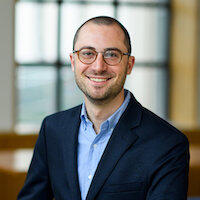
I am a social and cultural historian of modern Britain with particular interests in race, immigration and the politics of multiculturalism.  I hold degrees from the Universities of Bristol and Birmingham, and currently teach at Queen's University Belfast.  I have previously been a visiting fellow at Queensland University and a Fulbright Scholar at New York University.

My first monograph, Black Handsworth: Race in 1980s Britain was published by the University of California Press in 2019.  It's a study of the socio-political cultures of diaspora among a particular African-Caribbean community in Birmingham, England, and was shortlisted for the Royal Historical Society's Whitfield Prize. I have also co-edited a book on the history of cultural studies, and published widely in various academic journals.  While at Stanford I will be finishing my current monograph, Multicultural Britain: a Modern History, a book that explores the everyday experience of increasing ethnic diversity in four different cities across the second half of the twentieth century.

0
Visiting Scholar at The Europe Center, 2022
johanna.schenner.jpeg

Johanna Schenner is a senior post-doctoral researcher at the Institute of Sociology at the University of Vienna, Austria. In her research she is investigating employment conditions of farmworkers.

Authors
News Type
News
Date
Paragraphs
“Only when we put the facts into this framework do we see why Brexit seems so compelling to some, so appalling to others and where it might lead next.”
Ian Morris, in "Geography is Destiny"

Image
Geography Is Destiny: Britain and the World: A 10,000-Year History
Many reasons have been advanced to explain why Britain voted to leave the European Union, but the fundamental reason has been overlooked, according to Ian Morris, a historian and archaeologist at Stanford’s School of Humanities and Sciences.

That reason is geography.

More precisely, what Britain’s geography means to residents of the island nation – officially known as the United Kingdom of Great Britain and Northern Ireland – is the key to understanding why, in 2016, they made the decision they did, and what that choice augurs for their future, Morris writes in his new book, Geography Is Destiny (Farrar, Straus, and Giroux, 2022).

“Brexit was just the latest round in an ancient argument about what Britain’s geography means,” he asserts. How that meaning has changed is what the book is about.

Morris, who holds the Jean and Rebecca Willard Endowed Professorship in Classics, argues that the meaning of a region’s geography depends on two things: technology, especially the kinds connected with travel and communication, and organization, particularly the kinds that allow technology to be effectively deployed. His new book is divided into three parts, each represented by a map depicting how these forces have shaped Britain’s relationship with Europe and the world.

Hero Image
Ian Morris
Ian Morris (Image credit: Do Pham)
All News button
1
Subtitle

What Britain’s geography means to the British people is key to understanding why they voted to leave the European Union, Stanford classics Professor Ian Morris asserts.

News Type
News
Date
Paragraphs
Zac Stoor

Majoring in Political Science, Minoring in European Studies and International Relations

My minor in European studies helped me cement the fact that studying the European Union and working in European politics is the path for me. While politics at large interests me too, European politics has been deeply fascinating to me ever since high school," he said. "Through the European Studies minor, I was able to explore this interest more deeply in an academic setting as well as get to know other students, faculty, staff, and visiting scholars interested in Europe and working on related projects. I was also able to participate in an internship with a policy think tank in Europe through TEC, something I never would have thought possible before. My minor prepared me to be a culturally competent and informed policymaker and diplomat moving forward and showed me that the path I want to be on runs through Europe.

Tell us your favorite major/minor-related story or experience.

The Europe Center (TEC) hosted a few different lunches with their visiting scholars throughout this year and invited European Studies minors and TEC internship participants to attend. Getting to know the scholars from all across Europe and hearing their perspectives on issues in a small group setting like that was very fun every single time!

As you reflect on your time at Stanford, what are you most proud of?

I was able to be a part of a group of students who started the Stanford Rural Engagement Network (SREN), which is the first student organization dedicated to students from rural communities on campus and one of the first nationwide. As a rural student who struggled at first adjusting to Stanford, it means a lot to help build an organization that will help other students feel more at home on the Farm.

What are your plans after graduation?

I am pursuing a master's in European Studies at Georgetown University for the next two years. After that, I hope to work in European politics or transatlantic relations either in the government or in civil society.

All News button
1
Subtitle

Zac Stoor is graduating this year with a degree in political science and minors in global studies (with a specialization in European studies) and international relations.

News Type
News
Date
Paragraphs

Majoring in Earth Systems, Minoring in European Studies

I chose earth systems because I have always loved being outside and wanted to study the environmental system and how humans are both impacted by and impacting it," she shared. "In addition, my minor in global studies has helped me better understand the global system and prepared me to understand and identify complex global interconnections in my future job and life in general.

Tell us your favorite major/minor-related story or experience.

I went to Brussels in the summer of 2019 with one of The Europe Center directors, Christophe Crombez. We spent the week meeting with European Union leaders, learning about how the EU works, and the challenges they were facing. It was an incredible experience getting to talk directly with policy makers!

As you reflect on your time at Stanford, what are you most proud of?

I am most proud of how I have embraced new opportunities to learn about new subjects in new ways, from my biology field research classes to my internship when studying in Madrid, to my summer seminar in Brussels to learn about the EU.

What are your plans after graduation?

I am moving to LA to work in consulting.

Hero Image
Amelia O'Donohue '22
All News button
1
Subtitle

Amelia O'Donohue is graduating this year with a degree in earth systems and a minor in global studies (with a specialization in European studies).

As part of the Stanford Global Studies Summer Film Festival, The Europe Center will hold a virtual Q&A discussion around the 2022 Swedish film, "Black Crab," with Dr. Christophe Crombez (Stanford University, University of Leuven).

Please watch the movie, available on Netflix, before attending the discussion. Please email questions for the Q&A discussion to the_europe_center@stanford.edu.

Description from Netflix: To end an apocalyptic war and save her daughter, a reluctant soldier embarks on a desperate mission to cross a frozen sea carrying a top-secret cargo.

Registration: https://stanford.zoom.us/webinar/register/WN_1G7GbVelTNudxXT6VTyksg

*If you need any disability-related accommodation, please contact Shannon Johnson at sj1874@stanford.edu. Requests should be made by July 6, 2022

Christophe Crombez

Online via Zoom

When the European Peace Project started – 72 years ago – WWII had just ended. It took the great vision and foresight of the “European founding fathers“ – Konrad Adenauer, Robert Schuman, Jean Monnet, and Alcide De Gasperi and others – to bring about the most important change the European continent has ever seen. From a closer economic cooperation (coal and steel) to the founding of the European Communities (treaties of Rome 1957) to the creation of the European Union with its Single Market and the Schengen Area, Europe has experienced an era of peace, stability and prosperity like never before. Preserving these epochal achievements within European borders and extending to Europe’s immediate neighbors lies at the very heart of the Foreign and Security policy of the EU.

Now a brutal war has started, putting at risk lives and livelihoods of many, putting our economies under strain and  demanding quick and resolute political answers. The attacks in Ukraine mark a turning point (in the words of Chancellor Olaf Scholz: “Zeitenwende”) for the German, French and Common Foreign and Security Policy(CFSP). As highlighted by French President Emmanuel Macron at the EU summit in Versailles in March 2022, “As a force of peace, we cannot rely on others to defend ourselves, be it on land, sea, air, space or cyberspace […]. Our European defense must take a new step.” This panel will discuss what a realigned CFSP could possibly look like, what role NATO could play in that context, and how Germany and France could contribute to this new order.

Co-sponsors:

Consulate General of France logoConsulate General of Germany logo

Image
IFA logo

Christophe Crombez

Online via Zoom

Gisela Müller-Brandeck-Bocquet, University of Würzburg
Pierre Haroche, Institute for Strategic Research (IRSEM, Paris)

Join the French Culture Workshop for a conversation with Jérôme Clément on the history of the Alliance Française network, past and present, and of Arte, in person on Wednesday, May 4th from noon to 1:30pm in Lane History Corner (building 200) room 302. Marie-Pierre Ulloa (DLCL) will moderate our conversation in French. Lunch will be served. Description is below:


From Arte to Alliance : the Trajectory of a French civil servant


2022 marks the 30th anniversary of the launch of the French-German TV channel ARTE, upon the leadership of Jérôme Clément, a French figure of the European cultural world for forty years.


Born in 1945, Jérôme Clément came of age during the Algerian War of Independence, the rise of his political engagement on the Left. After graduating from the Institut d’Etudes Politiques de Paris and the Ecole Nationale d’Administration (ENA), Clément began his career at the Architecture division of the French Ministry for Culture in 1974. In 1981, he became the advisor for culture, international cultural relations and communication to the socialist Prime Minister, Pierre Mauroy. In 1984, Clément was named General director of the Centre National de la Cinématographie (CNC).


In 1991, he took part in the negotiations with the Germans which led to the creation of the French-German channel ARTE, of which he became president in 1992 for twenty years. Under his leadership, ARTE became a powerhouse, both in terms of producing groundbreaking works such as Corpus Christi (Gérard Mordillat & Jérôme Prieur), S21, la machine de mort Khmer rouge (Rithy Panh), CIA guerres secrètes (William Karel), Massoud l'Afghan (Christophe de Ponfilly), and in developing a cinema unit supporting francophone and world cinema. In June 2014, he was elected Chairman of the Fondation Alliance Française. There are more than 120 Alliances françaises in North America today.

Clément is the author of several books published by Grasset: Un homme en quête de vertu (1992), Plus tard, tu comprendras (2005), Le choix d’Arte (2011), L’Urgence Culturelle (2016), Brèves histoires de la culture (2018), and La Culture expliquée à ma fille (2012, Seuil). He is also a radio producer for France-Culture.

Part of the French Culture Workshop.

Lane History Corner (building 200) Room 302
Jérôme Clément
Workshops
0
Short-Term Research Fellow at the Stanford University Library, 2022
photo_piret_ehin_-_piret_ehin.jpg

Piret Ehin is Professor of Comparative Politics and Deputy Head for Research at the Johan Skytte Institute of Political Studies, University of Tartu. Her main research interests include democracy, elections and voting behavior, legitimacy and political support, as well as European integration and Europeanization. Her work has appeared in the European Journal of Political Research, Journal of Common Market Studies, Cooperation and Conflict, Politics, Journal of Elections, Public Opinion and Parties, and the Journal of Baltic Studies.

Prof Ehin has been awarded the 2022 Short-Term Research Fellowship at Stanford University for Estonian Scholars, hosted by Stanford University Libraries’ Baltic Studies Program and co-hosted by the Europe Center/Stanford Global Studies.

This is event is Stanford-only; please use your Stanford email to register.

The rise of right-wing populism has emerged as one of the most significant threats to democracy and liberal values worldwide. While populism is increasingly viewed as a global phenomenon, it takes on many forms and has different causes and consequences in diverse contexts. This presentation addresses the potential of populist civilizationalism to transform political cleavage structures in the Baltic states, notably by downplaying and transcending deeply entrenched post-Soviet political cleavages (geopolitical, mnemopolitical and ethnic ones). Construing ‘self’ and ‘other’ in civilizational, as opposed to narrowly national or ethnic terms, expands the notion of ‘self’ to include various internal others, notably Russian-speaking minorities, and shifts the focus from historical grievances, the Russian threat and the demographic legacies of Soviet occupation to alleged current threats to the European civilization, such as immigration, Islam, and global liberalism.

This transformation of cleavages entails a significant shift in the position assigned to the European Union: instead of being seen as the guarantor of the (post-Soviet) national ‘self,’ the EU is construed as a liberal globalist threat to the civilizational ‘self’. These claims are supported with examples of rhetoric used by the Conservative People’s Party of Estonia (EKRE). This analysis leads to the conclusion that, paradoxically, the rise of right-wing populism has rendered Estonian politics more global and less post-Soviet.

Image
Piret Ehin

Piret Ehin is Professor of Comparative Politics and Deputy Head for Research at the Johan Skytte Institute of Political Studies, University of Tartu. Her main research interests include democracy, elections and voting behavior, legitimacy and political support, as well as European integration and Europeanization. Her work has appeared in the European Journal of Political Research, Journal of Common Market Studies, Cooperation and Conflict, Politics, Journal of Elections, Public Opinion and Parties, and the Journal of Baltic Studies. Prof Ehin has been awarded the 2022 Short-Term Research Fellowship at Stanford University for Estonian Scholars, hosted by Stanford University Libraries’ Baltic Studies Program and co-hosted by the Europe Center/Stanford Global Studies.

*If you need any disability-related accommodation, please contact: Shannon Johnson (sj1874@stanford.edu) by May 19, 2022.

Co-sponsored by  

Image
Stanford Libraries logo

This event is part of Global Conversations, a new series of talks, lectures, and seminars focusing on the benefits and fragility of freedom. The series is co-sponsored by Stanford Libraries and Vabamu.

Image
CREEES logo


Piret Ehin, University of Tartu in Estonia Professor of Comparative Politics speaker University of Tartu in Estonia
Workshops
Subscribe to Europe