Governance

FSI's research on the origins, character and consequences of government institutions spans continents and academic disciplines. The institute’s senior fellows and their colleagues across Stanford examine the principles of public administration and implementation. Their work focuses on how maternal health care is delivered in rural China, how public action can create wealth and eliminate poverty, and why U.S. immigration reform keeps stalling. 

FSI’s work includes comparative studies of how institutions help resolve policy and societal issues. Scholars aim to clearly define and make sense of the rule of law, examining how it is invoked and applied around the world. 

FSI researchers also investigate government services – trying to understand and measure how they work, whom they serve and how good they are. They assess energy services aimed at helping the poorest people around the world and explore public opinion on torture policies. The Children in Crisis project addresses how child health interventions interact with political reform. Specific research on governance, organizations and security capitalizes on FSI's longstanding interests and looks at how governance and organizational issues affect a nation’s ability to address security and international cooperation.

To listen to the audio recording of this talk, please visit our multimedia page.

 
Brexit, the migrant crisis, the rise of authoritarian regimes, and the eurozone’s calamities have called into question the EU’s very existence. Thinking about the EU in comparative historical terms, however, shows that such challenges are nothing new when governing power is centralized. Examining the role of war, markets, and culture in the rise of nation-states provides a useful, and surprising, analysis for teasing out the key factors that might determine the EU's future.


Image
Kathleen R. McNamara
Kathleen R. McNamara is Professor of Government and Vice Dean of Faculty & Graduate Affairs in the School of Foreign Service at Georgetown University.  Her work focuses on markets, culture, and politics in the European Union and the United States, and her books include The Politics of Everyday Europe: Constructing Authority in the European Union, and The Currency of Ideas: Monetary Politics in the European Union. McNamara has served as Director of the Mortara Center for International Studies at Georgetown, and taught at Princeton University and Sciences Po (Paris).  She has been a visiting scholar at the Russell Sage Foundation, a German Marshall Fund Fellow, a Fulbright Fellow, and is the International Studies Association’s 2018 Distinguished Scholar in International Political Economy. Her public engagement includes work with the National Intelligence Council, writing for Foreign Affairs, Foreign Policy, the Washington Post, appearances on a variety of media outlets, and on Twitter @ProfKMcNamara. McNamara received her PhD from Columbia University and her BA from McGill University. 

 
Kathleen R. McNamara Georgetown University
Lectures
-

To listen to the audio recording of this talk, please visit our multimedia page.


The European Union (EU) is facing one of the rockiest periods in its existence. Not often in its history has it looked so economically fragile, so unsecure about how to protect its borders, so divided over how to tackle the crisis of legitimacy facing its institutions, and so under assault of Eurosceptic parties. The unprecedented levels of integration in recent decades have led to increased public contestation, yet at the same the EU is more reliant on public support for its continued legitimacy than ever before. Eurosceptic parties are expected to increase their vote share in the upcoming European Parliamentary elections, and the outcome of the Brexit vote provides glimpse of what could happen when Euroscepticism hardens.

In this talk, I discuss the role of public opinion in the European integration process. Based on my 2018 book Euroscepticism and the Future of European Integration, I outline a novel theory of public opinion that stresses the deep interconnectedness between people’s views about European and national politics. It suggests that public opinion cannot simply be characterized as either Eurosceptic or not, but rather consists of different types. This is important because these types coincide with fundamentally different views about the way the EU should be reformed and which policy priorities should be pursued. These types also have very different consequences for behaviour in elections and referenda. Euroscepticism is such a diverse phenomenon because the Eurozone crisis has exacerbated the structural imbalances within the EU. As the economic and political fates of member states diverged, people’s experiences with and evaluations of the EU and national political systems also grew further apart. The heterogeneity in public preferences has implications for the European project, as it makes a one-size-fits-all approach to addressing Euroscepticism unlikely to be successful.


Image
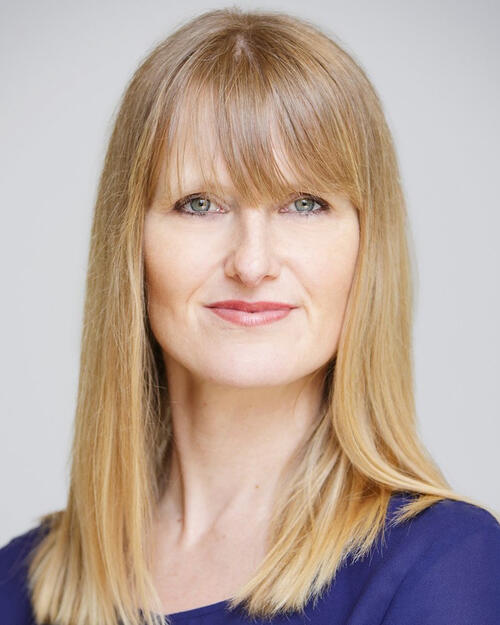
Catherine de Vries photo

Catherine E. De Vries is a Westendijk Chair and Professor of Political Behaviour in Europe at the Vrije Universiteit Amsterdam, where she also acts as the Director of the VU Interdisciplinary Center for European Studies. In addition, she is an Associate Member of Nuffield College, University of Oxford and an affiliated Professor of Political Science at the University of Essex. Finally, she serves a scientific advisor the eupinions project of the Bertelsmann Foundation and as a board member of the European Institute at the London School of Economics and Hertie School of Governance in Berlin.


Co-sponsored by the Hoover Institution


Catherine De Vries Professor of Political Behaviour in Europe, Vrije Universiteit Amsterdam Speaker Vrije Universiteit Amsterdam
Seminars
-

Recent experimental evidence finds that the decision maker in a collective decision making entity with proposal power attracts a disproportionate amount of the blame or reward by those materially affected by these decisions. In the case of coalition governments evidence suggests that voters have heuristics for assigning responsibility for economic outcomes to individual parties and that they tend to disproportionately direct the economic vote toward the Prime Minister party. This essay demonstrates that voters also identify the Finance Minister party as an agenda setter on economic issues depending on whether the coalition context exaggerates or mutes its perceived agenda power. We define cabinet context as the extent to which coalition parties take issue ownership for particular policy areas. We find that when decision making is compartmentalized, voters perceive the finance minister as having agenda power and hence it receives a relatively larger economic vote; in more “diffuse” cabinet contexts it is the PM Party that is attributed responsibility for the economy.

Image
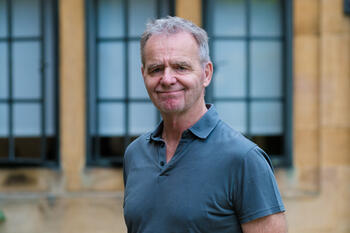
Ray Duch

Raymond Duch is an Official Fellow at Nuffield College, University of Oxford, and the Director of the Nuffield Centre for Experimental Social Sciences (CESS), which currently has centres in Oxford (UK), Santiago (Chile), Tianjin (China) and Pune (India). Prior to assuming these positions, he was the Senator Don Henderson Scholar in Political Science at the University of Houston. He received his BA (Honours) from the University of Manitoba in Canada and his MA and PhD from the University of Rochester. In addition, he has held visiting appointments at the Universitat Pompeu Fabra, Barcelona; the Hoover Institute and the Graduate School of Management, Stanford University; the Institute for Social Research Oslo; the Université de Montréal; and the Wissenschaftszentrum Berlin für Sozialforschung. He is currently the Long Term Visiting Professor at the Institute for Advanced Studies at the Toulouse School of Economics.

He draws on theory, experiments and public opinion analysis to understand how citizens solve decision-making challenges. This includes looking at how citizens use information shortcuts to make decisions. For example in ‘Context and Economic Expectations: When Do Voters get it Right?’ (British Journal of Political Science, 2010), he demonstrates how information shortcuts result in quite accurate expectations regarding price fluctuations in 12 European countries. One of his current areas of interest is the micro-foundations of cheating and unethical behaviour. He has run real effort tax compliance experiments designed to understand who cheats at taxes, the results of which are summarized in ‘Why We Cheat?’ (currently under review). An extension of this project examines tax compliance in different tax regimes.

Ray has served as Associate Editor of the American Journal of Political Science and the Journal of Experimental Political Science. He is one of the founders of the European Political Science Association and the International Meeting on Behavioural Science (IMESBESS), and he is currently Vice President of the Midwest Political Science Association. In 2015, Ray was selected as a member of the UK Cabinet Office Cross-Whitehall Trial Advice Panel to offer Whitehall departments technical support in designing and implementing controlled experiments to assess policy effectiveness. He was recently nominated to the Evidence in Governance and Politics network.

This event is co-sponsored by the Hoover Institution.


Raymond Duch speaker Nuffield College, University of Oxford
Lectures
-


Image
Matteo Renzi, former Prime Minister of Italy


Matteo Renzi was born in Florence in January 1975. In 2004 he was elected president of the province of Florence; five years later, in 2009, he was elected Mayor of Florence. In 2012 he ran in the primary elections for the centre-left, losing in the run-off. In 2013 he stood once again in the primaries, this time for leader of the Italian Democratic Party (Partito Democratico, PD), winning with 67.5% of the vote.

On February 22, 2014, following the resignation of Enrico Letta and after a vote by a large majority within the PD, he became President of the Council of Ministers (Prime Minister of Italy), the youngest in the history of Italy. After the negative result of the constitutional referendum on December 4, 2016, Matteo Renzi resigned as Prime Minister. 
 
In April 2017, almost two million voters took part in the primary elections for Secretary of the PD. Renzi was re-elected with 69% of the votes cast. Following the results of the Italian parliamentary election, in March 2018 he resigned as Leader of the PD.
 
Matteo Renzi is currently Senator for the Electoral College of Florence, Scandicci, Signa, Lastra a Signa and Impruneta. His activity as a politician has been accompanied by his writing, which includes the books Fuori! (2011), Stilnovo (2012), Oltre la rottamazione (2013), and Avanti! Perché l’Italia non si ferma (2017). He has also taught at Stanford's Florence campus in recent years. 
Matteo Renzi, former Prime Minister of Italy speaker
Lectures
Paragraphs

This paper examines the Trio Presidency and its impact on voting behavior in the Council of the European Union. Trios of Member States cooperate for 18-month periods, with each member holding the Presidency for six months. We study whether belonging to the Trio increases the probability that a Member State votes in favor of a measure. We analyze roll call votes on 1038 legislative acts from January 2007 till June 2014. Conducting probit analyses we present evidence that Member States are indeed more likely to vote in favor during their participation in Trios. We show that this results mainly from the Trio’s agenda-setting powers. Moreover, holding the Presidency itself does not further increase the probability of voting in favor.

All Publications button
1
Publication Date
Journal Publisher
Political Science Research and Methods
Authors
Christophe Crombez

Annual Stanford Primary Source Symposium


For further information, including the speakers and talk titles, please visit https://cmems.stanford.edu/primary-source-symposium


Co-sponsored by the Europe Center, the Department of Religious Studies, the Department of History, the Division of Literatures, Cultures, and Languages, the Department of Art & Art History, the Stanford Humanities Center, and Stanford University Libraries.

Stanford Humanities Center
424 Santa Teresa St.

Symposiums

Annual Stanford Primary Source Symposium


For further information, including the speakers and talk titles, please visit https://cmems.stanford.edu/primary-source-symposium


Co-sponsored by the Europe Center, the Department of Religious Studies, the Department of History, the Division of Literatures, Cultures, and Languages, the Department of Art & Art History, the Stanford Humanities Center, and Stanford University Libraries.

Stanford Humanities Center
424 Santa Teresa St.

Symposiums
Authors
News Type
News
Date
Paragraphs

Like a lot of people, Colin Kahl long thought of Washington, D.C. as the place to be when it comes to matters of international security. Today, Kahl, who served as national security adviser to former Vice President Joseph Biden, has a different opinion.

"A lot of the most cutting-edge policy questions and international security challenges of this century are, in a strange way, west coast issues," said Kahl, who took over as co-director of social sciences for Stanford's Center for International Security and Cooperation (CISAC) in early September. He points to the role of technology in reshaping the global balance of power, the increasing importance of the Asia-Pacific region to the U.S. economy and security, and the country's changing demographics.

Kahl is one of three new directors at research centers run by The Freeman Spogli Institute for International Studies (FSI). Also in September, Anna Grzymala-Busse took over as director of The Europe Center (TEC) and David Lobell became the Gloria and Richard Kushel Director of the Center on Food Security and the Environment (FSE).

In separate interviews, the incoming directors outlined goals that differed in substance, but had similar objectives: to focus on issues that have historically been important to their centers while advancing work on new and emerging challenges. All three also talked about further leveraging Stanford's interdisciplinary approach to education and research.

"The centers within FSI all address research and policy challenges that are constantly changing," said Lobell, a professor of earth system science who joined FSE in 2008, three years after it was formed. "As part of FSI, we have unique opportunities to better understand the interplay of our specific area within the broader context of international security."

Michael McFaul, FSI's director, said the new leaders take over at an exciting time for their respective centers — and for FSI.

"Coming into a new academic year, I am excited about the tremendous momentum within FSI and its six research centers," said McFaul, who is also the Ken Olivier and Angela Nomellini Professor of International Studies. "Our ability to generate interdisciplinary, policy-oriented research, to teach and train tomorrow's leaders, and to engage policymakers has never been stronger."

Big Data & Food

As FSE's director and a researcher himself, Lobell says he's excited about the potential for technology to solve longstanding questions surrounding food security and world hunger. Satellite imagery of small-scale farming around the globe, for instance, is rapidly advancing efforts to improve crop productivity. "Historically it's been really hard to get good data," said Lobell, whose recent projects include using machine learning to identify poverty zones in rural Africa and map yields of smallholder farms in Kenya. 

"The measurement possibilities from new and different data technologies are going to be really important going forward," said Lobell, who is also looking to add expertise in water management and micronutrients, either by funding new graduate fellowships or hiring new faculty.

Europe and Beyond

For her part, Grzymala-Busse's primary goals at The Europe Center are to develop its international intellectual networks and strengthen its long-term institutional footing. "I am excited to build on our existing strengths and bring together even more historians, anthropologists, economists, and sociologists," said Grzymala-Busse, who joined Stanford faculty in 2016 and teaches political science and international studies. "Europe is ground zero for a lot of what's happening in the world, whether the rise of populism or the economic crises, and you can’t understand these developments without understanding the history, cultures, and economics of the region."

A Third Nuclear Revolution

For CISAC, international security is no longer just about nuclear security, says Kahl, who is one of two co-directors at the center; Rodney Ewing serves as the center's co-director of science and engineering, while Kahl oversees the social sciences.

Kahl says that nuclear weapons will remain a key focus for the center as North Korea, Iran, Russia, and China move to build or modernize arsenals. But, the center will also look at emerging technologies that are becoming serious threats. He cites as examples the rapid rise of cyberattacks, pandemics and biological weapons, and artificial intelligence and machine learning.

"My plan is to ensure that Stanford continues to play a profound leadership role in the most critical security issues facing the world today," said Kahl, who came to Stanford last year as the inaugural Steven C. Házy Senior Fellow, an endowed faculty chair at FSI.

Said McFaul, "We welcome three remarkable individuals with the skills and vision to guide their respective centers into the future."

All News button
1
0
rsd25_073_0249a.jpg

Steven Pifer is an affiliate of the Center for International Security and Cooperation as well as a non-resident senior fellow with the Brookings Institution.  He was a William J. Perry Fellow at the center from 2018-2022 and a fellow at the Robert Bosch Academy in Berlin from January-May 2021.

Pifer’s research focuses on nuclear arms control, Ukraine, Russia and European security. He has offered commentary on these issues on National Public Radio, PBS NewsHour, CNN and BBC, and his articles have been published in a wide variety of outlets.  He is the author of The Eagle and the Trident: U.S.-Ukraine Relations in Turbulent Times (Brookings Institution Press, 2017), and co-author of The Opportunity: Next Steps in Reducing Nuclear Arms (Brookings Institution Press, 2012).

A retired Foreign Service officer, Pifer’s more than 25 years with the State Department focused on U.S. relations with the former Soviet Union and Europe, as well as arms control and security issues.  He served as deputy assistant secretary of state in the Bureau of European and Eurasian Affairs with responsibilities for Russia and Ukraine, ambassador to Ukraine, and special assistant to the president and senior director for Russia, Ukraine and Eurasia on the National Security Council.  In addition to Ukraine, he served at the U.S. embassies in Warsaw, Moscow and London as well as with the U.S. delegation to the negotiation on intermediate-range nuclear forces in Geneva.  From 2000 to 2001, he was a visiting scholar at Stanford’s Institute for International Studies, and he was a resident scholar at the Brookings Institution from 2008 to 2017.

Pifer is a 1976 graduate of Stanford University with a bachelor’s in economics.


Affiliate, CISAC
Affiliate, The Europe Center
Date Label

How do populism and nationalism challenge democracy? Can they instead help to sustain it? This panel explores the causes of the global populist upsurge, from popular discontent to economic shocks. Nationalism and populism are powerful, compatible, and resonant ideologies. As a result, they can legitimate leaders and mobilize citizens – and pose dramatic challenges to liberal democracy.

Panel discussion featuring 2018-19 CASBS fellows Eva Anduiza, Bart Bonikowski, and Maya Tudor.


Guest moderator: Anna Grzymala-Busse, Director, Global Populisms Project, The Europe Center, Freeman Spogli Institute for International Studies, Stanford University


Sign up for The Europe Center's mailing list to hear about our upcoming events.

 Center for Advanced Study in the Behavioral Sciences (CASBS)75 Alta Road
Stanford CA
Eva Anduiza Panelist Universitat Autònoma de Barcelona
Bart Bonikowski Panelist Harvard University
Maya Tudor Panelist Oxford University

Encina Hall
616 Jane Stanford Way
Stanford, CA  94305


(650) 723-4270
0
Senior Fellow at the Freeman Spogli Institute for International Studies
Michelle and Kevin Douglas Professor of International Studies
Professor of Political Science
Senior Fellow, Hoover Institution
anna_gb_4_2022.jpg

Anna Grzymała-Busse is a professor in the Department of Political Science, the Michelle and Kevin Douglas Professor of International Studies, senior fellow at the Freeman Spogli Institute for International Studies and the director of The Europe Center. Her research interests include political parties, state development and transformation, informal political institutions, religion and politics, and post-communist politics.

In her first book, Redeeming the Communist Past, she examined the paradox of the communist successor parties in East Central Europe: incompetent as authoritarian rulers of the communist party-state, several then succeeded as democratic competitors after the collapse of these communist regimes in 1989.

Rebuilding Leviathan, her second book project, investigated the role of political parties and party competition in the reconstruction of the post-communist state. Unless checked by a robust competition, democratic governing parties simultaneously rebuilt the state and ensured their own survival by building in enormous discretion into new state institutions.

Anna's third book, Nations Under God, examines why some churches have been able to wield enormous policy influence. Others have failed to do so, even in very religious countries. Where religious and national identities have historically fused, churches gained great moral authority, and subsequently covert and direct access to state institutions. It was this institutional access, rather than either partisan coalitions or electoral mobilization, that allowed some churches to become so powerful.

Anna's most recent book, Sacred Foundations: The Religious and Medieval Roots of the European State argues that the medieval church was a fundamental force in European state formation.

Other areas of interest include informal institutions, the impact of European Union membership on politics in newer member countries, and the role of temporality and causal mechanisms in social science explanations.

Director of The Europe Center
Moderator
Panel Discussions
Subscribe to Governance