Governance

FSI's research on the origins, character and consequences of government institutions spans continents and academic disciplines. The institute’s senior fellows and their colleagues across Stanford examine the principles of public administration and implementation. Their work focuses on how maternal health care is delivered in rural China, how public action can create wealth and eliminate poverty, and why U.S. immigration reform keeps stalling. 

FSI’s work includes comparative studies of how institutions help resolve policy and societal issues. Scholars aim to clearly define and make sense of the rule of law, examining how it is invoked and applied around the world. 

FSI researchers also investigate government services – trying to understand and measure how they work, whom they serve and how good they are. They assess energy services aimed at helping the poorest people around the world and explore public opinion on torture policies. The Children in Crisis project addresses how child health interventions interact with political reform. Specific research on governance, organizations and security capitalizes on FSI's longstanding interests and looks at how governance and organizational issues affect a nation’s ability to address security and international cooperation.

-

At the NATO Summit in Wales in September 2014, NATO leaders were clear about the security challenges on the Alliance’s borders. In the East, Russia’s actions threaten our vision of a Europe that is whole, free and at peace.  On the Alliance’s southeastern border, ISIL’s campaign of terror poses a threat to the stability of the Middle East and beyond.  To the south, across the Mediterranean, Libya is becoming increasingly unstable. As the Alliance continues to confront theses current and emerging threats, one thing is clear as we prepare for the 2016 Summit in Warsaw: NATO will adapt, just as it has throughout its 65-year history.

Image
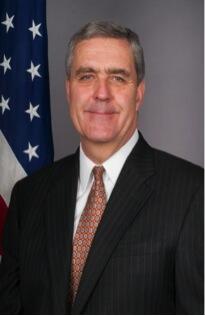
Douglas Lute, Ambassador of the United States to NATO


In August 2013, Douglas E. Lute was sworn-in as the Ambassador of the United States to the North Atlantic Treaty Organization (NATO).  From 2007 to 2013, Lute served at the White House under Presidents Bush and Obama, first as the Assistant to the President and Deputy National Security Advisor for Iraq and Afghanistan, and more recently as the Deputy Assistant to the President focusing on Afghanistan, Pakistan and India.  In 2010, AMB Lute retired from the U.S. Army as a Lieutenant General after 35 years on active duty.  Prior to the White House, he served as the Director of Operations on the Joint Staff, overseeing U.S. military operations worldwide. He served multiple tours in NATO commands including duty in Germany during the Cold War and commanding U.S. forces in Kosovo.  He holds degrees from the United States Military Academy and Harvard University.

A light lunch will be provided.  Please plan to arrive by 11:30am to allow time to check in at the registration desk, pick up your lunch and be seated by 12:00 noon.

Co-sponsored by The Europe Center, the Freeman Spogli Institute for International Studies, the Center for International Security and Cooperation and the Center for Russian, East European and Eurasian Studies.


Douglas Lute United States Ambassador to NATO Speaker
Lectures
-

Karen Dawisha is the author of Putin’s Kleptocracy. Who Owns Russia? and the Walter E. Havighurst Professor of Political Science and Director of the Havighurst Center at Miami University in Oxford, Ohio.

Co-sponsored by the Center for Russian, East European and Eurasian Studies, The Europe Center, and the Center on Democracy, Development and the Rule of Law.

Encina Hall 3rd Floor
616 Serra Street

Karen Daiwisha Walter E. Havighurst Professor of Political Science Speaker Miami University
Lectures
News Type
News
Date
Paragraphs


The Europe Center Graduate Student Grant Competition Winners

The Europe Center is pleased to announce the winners of the Fall 2014 Graduate Student Grant Competition. These grants support Ph.D. candidates from across a wide range of disciplines in the humanities and social sciences to prepare for dissertation research, as well as professional students who are interested in conducting Europe-focused internships or research projects. Please join us in congratulating our Fall 2014 winners:
 
  • Leonardo Barleta, History, “Reading Faraway Domains: Central Authority and Administrative Imagination in Portuguese Empire”
  • Ian Beacock, History, “The Head & the Heart: Liberal Emotions in Weimar Germany, 1918-1933”
  • Nicola Bianchi, Economics, "The Promotion of STEM Education and Its Effect on Innovation" and "The Transmission of Innovation Across Countries and Firms"
  • Adriane Fresh, Political Science, “Essays on Elites, Institutions and Economic Development”
  • Eric Min, Political Science, “A Twitter Evolution? Identifying First-Movers in a Political Uprising”
  • Agustina Paglayan, Political Science, “Comparative Political Economy of Education and Human Capital”
  • Suddhaseel Sen, Musicology, “Intimate Strangers: Cross-Cultural Exchanges between Indian and Western Musicians 1880-1940”
  • Alexander Statman, History, “A Global Enlightenment: History, Science and Sinology in the Late 18th Century”
  • Giulia Vittori, Theater and Performance Studies, “Commedia and Tragedia”
  • Jason Weinreb, Political Science, “Colonialism and Credibility: Revisiting the ‘Empire Effect’”

Please stay attuned for information about the Spring 2015 Grant Competition. Additional details will be advertised on our website.


Open Call:  2015 Undergraduate Internship Program

A key priority of The Europe Center is to provide Stanford’s undergraduate student community with opportunities to develop a deep understanding of contemporary European society and affairs.  By promoting knowledge about the opportunities and challenges facing one of the world’s most economically and politically integrated regions, the Center strives to equip our future leaders with the tools necessary to tackle complex problems related to governance and economic interdependence both in Europe and in the world more broadly.

The Center is sponsoring internships in Brussels this summer where selected students will work for one of two leading international think tanks on European public policy issues – the Centre for European Policy Studies (CEPS) and Bruegel – or the Alliance of Liberals and Democrats for Europe (ALDE) in the European Parliament. Applications for the internships are currently being accepted through February 19, 2015. For additional details about the grant program, please visit our website.


Meet our Visiting Scholars:  Irmgard Marboe

In each newsletter, The Europe Center would like to introduce you to a visiting scholar or collaborator at the Center. We welcome you to visit the Center and get to know our guests.

Image

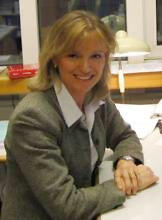
Irmgard Marboe is a visiting scholar at The Europe Center and an Associate Professor of International Law at the University of Vienna. She is the head of the Austrian National Point of Contact for Space Law (NPOC) of the European Centre for Space Law (ECSL). She was previously the chair of the working group on national space legislation of the Legal Subcommittee of the UN Committee for the Peaceful Uses of Outer Space which drafted the most recent UN General Assembly resolution relating to outer space activities. Another research focus is international investment law, where Marboe specializes on the issue of compensation and damages. A second edition of her book Calculation of Compensation and Damages in International Investment Law (Oxford University Press, 2009) is currently in preparation. In addition, she works on Islamic law in the context of international law. She has been the director of the bi-annual Vienna International Christian-Islamic Summer University since 2008. At Stanford, Marboe is working on a research project comparing US and European policies and legislation on data collected by Earth observation satellites.


Featured Research:  Christophe Crombez

The Europe Center serves as a research hub bringing together Stanford faculty members, students, and researchers conducting cutting-edge research on topics related to Europe.  Our faculty affiliates draw from the humanities, social sciences, and business and legal traditions, and are at the forefront of scholarly debates on Europe-focused themes.  The Center regularly highlights new research by faculty affiliates that is of interest to the broader community.  
 
Image

Christophe Crombez is a Consulting Professor at The Europe Center and a specialist of European Union politics and business-government relations. Crombez was recently awarded a four year grant for his project, “The Political Economy of the Fiscal and Budgetary Policies of the European Union and its Member States.” The project presents game theoretical models of (1) the EU’s budgetary process, (2) the EU’s monitoring of the member states’ budgetary policies, and (3) the functioning of the recently created stability funds. It then tests the models’ conclusions empirically. The project shows how the procedures in the EU budgetary process, the preferences of the players involved, and the status quo explain the size and make-up of the EU budget. It also analyzes how procedural changes and institutional reform affect the budget. Furthermore, the project studies how the EU’s monitoring of the budgetary policies of its member states affects these policies, and how the procedures used to grant aid affect whether and how much aid is granted.


Meet our Post-Doctoral Fellow:  Duncan Lawrence

The Europe Center recently introduced a new research project entitled, “Immigration and Integration in Europe:  A Public Policy Perspective,” led by Professors David Laitin and Jens Hainmueller. The project is part of the new Policy Implementation Lab at the Freeman Spogli Institute for International Studies. Duncan Lawrence has recently joined Stanford University to help direct the project. 
 
Image
lawrence bio photo
Duncan Lawrence holds a PhD in Political Science from the University of Colorado Boulder. His research focuses on immigration, comparative political behavior, political economy and Latin America. His early interest in immigration and immigrant integration developed out of his work as a medical interpreter for a non-profit serving Spanish speaking immigrants in Wyoming. He is a two-time Fulbright recipient, first serving as a Fulbright English Teaching Assistant in Argentina in 2005 and then more recently as a Fulbright Scholar in Chile investigating how connections to emigrants impact perceptions of immigration. Duncan is the co-founder of the Telluride Research Group, LLC, an innovative data analysis and research firm that assists businesses and organizations in using social science research methods to understand problems and policy, and make better decisions.

Workshop Schedules

The Europe Center invites you to attend the talks of speakers in the following workshop series:


Europe and the Global Economy

Feb 26, 2015 
Gerald Schneider, Universität Konstanz, Germany 
“In Draghi We Trust: The Euro Crisis, Social Unrest and the European Central Bank” 
RSVP by Feb 23, 2015 

Apr 23, 2015 
Christina Schneider, University of California, San Diego 
“The Domestic Politics of International Cooperation During the European Debt Crisis” 
RSVP by Apr 20, 2015
 

European Governance 


Mar 12, 2015 
Cliff Carrubba, Emory University 
“Does Judicial Independence Matter for Judicial Influence?” 
RSVP by Mar 9, 2015 

Apr 9, 2015 
Michael Becher, Graduate School of Decision Sciences and the Department of Politics and Public Administration, University of Konstanz 
“Endogenous Credible Commitment and Party Competition Over Redistribution Under Alternative Electoral Institutions 
RSVP by Apr 6, 2015 

Apr 16, 2015 
Massimiliano Onorato, Institute for Advanced Studies, Lucca 
Title to be announced 
RSVP by Apr 13, 2015

The Europe Center Sponsored Events

Feb 19, 2015 
Ambassador Eric Lebédel 
“Why France and the European Union Still Matter for the United States” 
CISAC Central Conference Room, Encina Hall, 2nd Floor 
RSVP by Feb 16, 2015 

Feb 19, 2015 
Musical Dialogue with Jordi Savall 
Bechtel Conference Room 
Additional Details


Mar 3, 2015 
Edgar Illas, Indiana University 
“Survival, or, the War Logic of Global Capitalism” 
Pigott Hall (Bldg. 260), Room 252 
Additional Details


Mar 30, 2015 
Andrea Vindigni, IMT, Lucca Institute for Advanced Studies 
Title to be announced 
Encina Hall West, Room 400 
Additional Details


Apr 8, 2015 
Nicholas Crafts, University of Warwick, UK 
“A Vision of the Growth Process in a Technologically progressive Economy: the United States, 1899-1941” 
Landau Economics Building, Room 351 
RSVP by Apr 7, 2015 

Apr 22, 2015 
Sascha Becker, University of Warwick, UK 
“Religion, Division of Labour and Conflict: Anti-Semitism in German Regions over 700 Years” 
Landau Economics Building, Room 351 
RSVP by Apr 21, 2015 
 

Save the Date

April 10-11, 2015 
Conference on Human Rights Education (Title TBA) 
A collaborative effort between the International Human Rights and Conflict Resolution Clinic at Stanford Law School, the Research Center for Human Rights at Vienna University, and The Europe Center. The conference will focus on the pedagogy and practice of human rights.


May 11, 2015 
Public Lecture with Ambassador Ivo Daalder 
Ivo Daalder, The Chicago Council on Global Affairs


May 20-22, 2015 
TEC Lectureship on Europe and the World 
Joel Mokyr 
Robert H. Strotz Professor of Arts and Sciences, and Professor of Economics and History, Northwestern University


We welcome you to visit our website for additional details. 
 
All News button
1

This conference, organized by The Europe Center, Mills Legal Clinic at the Stanford Law School and the Research Center for Human Rights at the University of Vienna, will focus on practice-based human rights education in Europe and the United States.  Please see the attached agenda for the session topics, times and speakers.

Co-sponsored by the Stanford Human Rights Center, the Haas Center for Public Service, the John and Terry Levin Center for Public Service and Public Interest Law, and the WSD HANDA Center for Human Rights and International Justice.

"2015 Stanford-University of Vienna Conference on Innovative Experiential Pedagogy" Agenda
Download pdf

Crown Room 301
Stanford Law School
559 Nathan Abbott Way


Conferences
-

This event has been cancelled. We will update our website once the new date has been determined.

Encina Hall, C148
616 Jane Stanford Way
Stanford, CA 94305

0
Olivier Nomellini Senior Fellow at the Freeman Spogli Institute for International Studies
Director of the Ford Dorsey Master's in International Policy
Research Affiliate at The Europe Center
Professor by Courtesy, Department of Political Science
yff-2021-14290_6500x4500_square.jpg

Francis Fukuyama is the Olivier Nomellini Senior Fellow at Stanford University's Freeman Spogli Institute for International Studies (FSI), and a faculty member of FSI's Center on Democracy, Development and the Rule of Law (CDDRL). He is also Director of Stanford's Ford Dorsey Master's in International Policy, and a professor (by courtesy) of Political Science.

Dr. Fukuyama has written widely on issues in development and international politics. His 1992 book, The End of History and the Last Man, has appeared in over twenty foreign editions. His book In the Realm of the Last Man: A Memoir will be published in fall 2026.

Francis Fukuyama received his B.A. from Cornell University in classics, and his Ph.D. from Harvard in Political Science. He was a member of the Political Science Department of the RAND Corporation, and of the Policy Planning Staff of the US Department of State. From 1996-2000 he was Omer L. and Nancy Hirst Professor of Public Policy at the School of Public Policy at George Mason University, and from 2001-2010 he was Bernard L. Schwartz Professor of International Political Economy at the Paul H. Nitze School of Advanced International Studies, Johns Hopkins University. He served as a member of the President’s Council on Bioethics from 2001-2004. He is editor-in-chief of American Purpose, an online journal.

Dr. Fukuyama holds honorary doctorates from Connecticut College, Doane College, Doshisha University (Japan), Kansai University (Japan), Aarhus University (Denmark), the Pardee Rand Graduate School, and Adam Mickiewicz University (Poland). He is a non-resident fellow at the Carnegie Endowment for International Peace. He is a member of the Board of Trustees of the Rand Corporation, the Board of Trustees of Freedom House, and the Board of the Volcker Alliance. He is a fellow of the National Academy for Public Administration, a member of the American Political Science Association, and of the Council on Foreign Relations. He is married to Laura Holmgren and has three children.

(October 2025)

CV
Date Label
Olivier Nomellini Senior Fellow at the Freeman Spogli Institute for International Studies (FSI); Resident in FSI's Center on Democracy, Development, and the Rule of Law; Professor, by courtesy, of Political Science Speaker Stanford University
Seminars
-

Is Europe "elderly and haggard", and could France become "the crucible of  Europe" (Jan. 10, 2015 NYTimes op-ed)?

On the one hand, Europe is warned by the US about an Asian "pivot", and is perceived here as less relevant and effective. Significantly, certainly as a wake up call, Pope Francis recently compared Europe to  a "grandmother, no longer fertile and vibrant, increasingly a bystander in a world that has apparently become less and less Eurocentric”. France had been previously presented here as an eminent representative of an "Old Europe".

On the other hand,  the US has been constantly, during the last decade, advocating for a stronger Europe  and stressing a special French role in this endeavour. A few days ago, after the terrorist attacks in Paris, President Obama publicly stated that "France was the US oldest Ally". 

At a time when we have to face common challenges in the Middle East and in Africa, to adapt to new emerged actors and a more assertive Russia, to deal with direct threats including in the field of proliferation and the cyber space, to define a multipolar world and organize our economic relation (TTIP), what can be the EU contribution? What can also be a special intellectual and diplomatic French input to this global realignment?

Co-sponsored by The Europe Center, the Center for International Security and Cooperation and the France-Stanford Center.

Image
Ambassador Eric Lebédel of France


Ambassador Eric Lebédel is a French diplomat, former ambassador to the OSCE and to Finland, with a deep experience in Transatlantic relationship (twice as Minister's advisor;  in the French embassy in Washington DC) and in European affairs. He is also involved in crisis management (PMs office), international security (embassy in Moscow, consul general in Istanbul) and multilateral diplomacy ( NATO's Director for crisis management, OSCE). Presently working on Strategic Partnerships for the French MFA and interested in e.diplomacy, he also regularly lectures  at Sciences-po and ENA (Ecole Nationale d'Administration) on crisis management and Europe.


Ambassador Eric Lebédel French Diplomat Speaker
Seminars
Paragraphs

The politics of economic crises bring distributive economic conflict to the fore of national political debates. How policy should be used to transfer resources between citizens becomes a central political question and the answers chosen often influence the trajectory of policy for a generation. This context provides an ideal setting for evaluating the importance of self-interest and other-regarding preferences in shaping public opinion about economic policy. This paper investigates whether self-centered inequity aversion along with self-interest influences individual tax policy opinions. We conduct original survey experiments in France and the United States and provide evidence that individuals care both about how policy alternatives affect their own interests and how they influence the welfare of others relative to themselves. Our estimates suggest that in France both disadvantageous inequality aversion---utility losses when others have better economic outcomes---and advantageous inequality aversion---utility losses when others have worse economic outcomes---are important determinants of tax policy preferences. In the United States, we find strong evidence of disadvantageous inequality aversion but not advantageous inequality aversion. The results for both countries suggest that self-interest and other-regarding preferences influence tax policy preferences and the findings in France are strongly consistent with self-centered inequity aversion.

All Publications button
1
Publication Type
Working Papers
Publication Date
Authors
News Type
Q&As
Date
Paragraphs

For 14 years, Mariano-Florentino Cuéllar has been a tireless Stanford professor who has strengthened the fabric of university’s interdisciplinary nature. Joining the faculty at Stanford Law School in 2001, Cuéllar soon found a second home for himself at the Freeman Spogli for International Studies. He held various leadership roles throughout the institute for several years – including serving as co-director of the Center for International Security and Cooperation. He took the helm of FSI as the institute’s director in 2013, and oversaw a tremendous expansion of faculty, research activity and student engagement. 

An expert in administrative law, criminal law, international law, and executive power and legislation, Cuéllar is now taking on a new role. He leaves Stanford this month to serve as justice of the California Supreme Court and will be succeeded at FSI by Michael McFaul on Jan. 5.

 As the academic quarter comes to a close, Cuéllar took some time to discuss his achievements at FSI and the institute’s role on campus. And his 2014 Annual Letter and Report can be read here.

You’ve had an active 20 months as FSI’s director. But what do you feel are your major accomplishments? 

We started with a superb faculty and made it even stronger. We hired six new faculty members in areas ranging from health and drug policy to nuclear security to governance. We also strengthened our capacity to generate rigorous research on key global issues, including nuclear security, global poverty, cybersecurity, and health policy. Second, we developed our focus on teaching and education. Our new International Policy Implementation Lab brings faculty and students together to work on applied projects, like reducing air pollution in Bangladesh, and improving opportunities for rural schoolchildren in China.  We renewed FSI's focus on the Ford Dorsey Program in International Policy Studies, adding faculty and fellowships, and launched a new Stanford Global Student Fellows program to give Stanford students global experiences through research opportunities.   Third, we bolstered FSI's core infrastructure to support research and education, by improving the Institute's financial position and moving forward with plans to enhance the Encina complex that houses FSI.

Finally, we forged strong partnerships with critical allies across campus. The Graduate School of Business is our partner on a campus-wide Global Development and Poverty Initiative supporting new research to mitigate global poverty.  We've also worked with the Law School and the School of Engineering to help launch the new Stanford Cyber Initiative with $15 million in funding from the Hewlett Foundation. We are engaging more faculty with new health policy working groups launched with the School of Medicine and an international and comparative education venture with the Graduate School of Education. 

Those partnerships speak very strongly to the interdisciplinary nature of Stanford and FSI. How do these relationships reflect FSI's goals?

The genius of Stanford has been its investment in interdisciplinary institutions. FSI is one of the largest. We should be judged not only by what we do within our four walls, but by what activity we catalyze and support across campus. With the business school, we've launched the initiative to support research on global poverty across the university. This is a part of the SEED initiative of the business school and it is very complementary to our priorities on researching and understanding global poverty and how to alleviate. It's brought together researchers from the business school, from FSI, from the medical school, and from the economics department.  

Another example would be our health policy working groups with the School of Medicine. Here, we're leveraging FSI’s Center for Health Policy, which is a great joint venture and allows us to convene people who are interested in the implementation of healthcare reforms and compare the perspective and on why lifesaving interventions are not implemented in developing countries and how we can better manage biosecurity risks. These working groups are a forum for people to understand each other's research agendas, to collaborate on seeking funding and to engage students. 

I could tell a similar story about our Mexico Initiative.  We organize these groups so that they cut across generations of scholars so that they engage people who are experienced researchers but also new fellows, who are developing their own agenda for their careers. Sometimes it takes resources, sometimes it takes the engagement of people, but often what we've found at FSI is that by working together with some of our partners across the university, we have a more lasting impact.

Looking at a growing spectrum of global challenges, where would you like to see FSI increase its attention? 

FSI's faculty, students, staff, and space represent a unique resource to engage Stanford in taking on challenges like global hunger, infectious disease, forced migration, and weak institutions.  The  key breakthrough for FSI has been growing from its roots in international relations, geopolitics, and security to focusing on shared global challenges, of which four are at the core of our work: security, governance, international development, and  health. 

These issues cross borders. They are not the concern of any one country. 

Geopolitics remain important to the institute, and some critical and important work is going on at the Center for International Security and Cooperation to help us manage the threat of nuclear proliferation, for example. But even nuclear proliferation is an example of how the transnational issues cut across the international divide. Norms about law, the capacity of transnational criminal networks, smuggling rings, the use of information technology, cybersecurity threats – all of these factors can affect even a traditional geopolitical issue like nuclear proliferation. 

So I can see a research and education agenda focused on evolving transnational pressures that will affect humanity in years to come. How a child fares when she is growing up in Africa will depend at least as much on these shared global challenges involving hunger and poverty, health, security, the role of information technology and humanity as they will on traditional relations between governments, for instance. 

What are some concrete achievements that demonstrate how FSI has helped create an environment for policy decisions to be better understood and implemented?

We forged a productive collaboration with the U.N. High Commissioner for Refugees through a project on refugee settlements that convened architects, Stanford researchers, students and experienced humanitarian responders to improve the design of settlements that house refugees and are supposed to meet their human needs. That is now an ongoing effort at the UN Refugee Agency, which has also benefited from collaboration with us on data visualization and internship for Stanford students. 

Our faculty and fellows continue the Institute's longstanding research to improve security and educate policymakers. We sometimes play a role in Track II diplomacy on sensitive issues involving global security – including in South Asia and Northeast Asia.  Together with Hoover, We convened a first-ever cyber bootcamp to help legislative staff understand the Internet and its vulnerabilities. We have researchers who are in regular contact with policymakers working on understanding how governance failures can affect the world's ability to meet pressing health challenges, including infectious diseases, such as Ebola.

On issues of economic policy and development, our faculty convened a summit of Japanese prefectural officials work with the private sector to understand strategies to develop the Japanese economy.  

And we continued educating the next generation of leaders on global issues through the Draper Hills summer fellows program and our honors programs in security and in democracy and the rule of law. 

How do you see FSI’s role as one of Stanford’s independent laboratories?

It's important to recognize that FSI's growth comes at particularly interesting time in the history of higher education – where universities are under pressure, where the question of how best to advance human knowledge is a very hotly debated question, where universities are diverging from each other in some ways and where we all have to ask ourselves how best to be faithful to our mission but to innovate. And in that respect, FSI is a laboratory. It is an experimental venture that can help us to understand how a university like Stanford can organize itself to advance the mission of many units, that's the partnership point, but to do so in a somewhat different way with a deep engagement to practicality and to the current challenges facing the world without abandoning a similarly deep commitment to theory, empirical investigation, and rigorous scholarship.

What have you learned from your time at Stanford and as director of FSI that will inform and influence how you approach your role on the state’s highest court?

Universities play an essential role in human wellbeing because they help us advance knowledge and prepare leaders for a difficult world. To do this, universities need to be islands of integrity, they need to be engaged enough with the outside world to understand it but removed enough from it to keep to the special rules that are necessary to advance the university's mission. 

Some of these challenges are also reflected in the role of courts. They also need to be islands of integrity in a tumultuous world, and they require fidelity to high standards to protect the rights of the public and to implement laws fairly and equally.  

This takes constant vigilance, commitment to principle, and a practical understanding of how the world works. It takes a combination of humility and determination. It requires listening carefully, it requires being decisive and it requires understanding that when it's part of a journey that allows for discovery but also requires deep understanding of the past.

Hero Image
tino mug
All News button
1
Subscribe to Governance