-

This colloquium is the final event of the year-long working group on 'The Contemporary." The workshop examines the  “contemporary” with a focus on defining moments such as: 1945, 1973, 1989, and 2001. In recent years the concept of the contemporary has been taken up within limited disciplinary discourses and in the context of distinct geographical settings. The horizon of this workshop, however, is the global. We employ a comparative and interdisciplinary approach to the hybrid term “contemporary” as it intersects various fields and serves as a heuristic device to understand phenomena in politics, culture, and the arts. In this spirit, our colloquium brings together scholars from various fields and disciplines that all are grappling with questions such as 1. what is this thing we call "the contemporary," and how do traditional disciplinary methods need to adapt to new challenges faced by the unique cultural objects of the contemporary moment?

For more information on this colloqium and to view videos of the presentations, please visit The Contemporary website

Co-sponsored by the Department of Literatures, Cultures and Language, Department of Literatures, Cultures and Language Research Units, The Europe Center, Stanford Humanities Center and Center for Comparative Studies in Race and Ethnicity.

Stanford Humanities Center

Pedro Erber Assistant Professor of Romance Studies Speaker Cornell University
Amy Elias Professor of English Speaker University of Tennessee, Knoxville
Phillip Wegner Professor of English Speaker University of Florida
Keren Omry Assistant Professor of English Speaker University of Haifa

Department of Comparative Literature
Stanford University
Building 260, Room 201
Stanford, CA 94305-2030

(650) 723-1069 (650) 725-8421
0
Senior Fellow at the Freeman Spogli Institute, by courtesy
Walter A. Haas Professor in the Humanities
Professor of Comparative Literature
Professor of German Studies
Senior Fellow at The Hoover Institution
Faculty affiliate at The Europe Center
110501-7227rb.jpg PhD

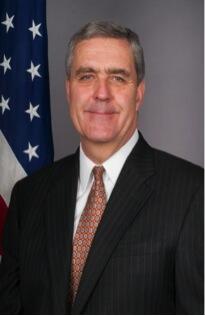
Russell Berman is the Walter A. Haas Professor in the Humanities at Stanford and Senior Fellow at the Hoover Institution where he co-directs the Working Group on Islamism and the International Order. He holds a courtesy appointment at the Freeman Spogli Institute. He formerly served as Senior Advisor on the Policy Planning Staff of the United States Department of State and has been awarded a Mellon Faculty Fellowship at Harvard and an Alexander von Humboldt Fellowship for research in Berlin; he has also been honored with the Bundesverdienstkreuz of the Federal Republic of Germany.

His books include The Rise of the Modern German Novel: Crisis and Charisma (1988) and Enlightenment or Empire: Colonial Discourse in German Culture (1998), both of which won the Outstanding Book Award of the German Studies Association. Some of his other books include Anti-Americanism in Europe: A Cultural Problem (2004), Fiction Sets You Free: Literature, Liberty and Western Culture (2007) and Freedom or Terror: Europe Faces Jihad (2010). In his books and many articles Berman has written widely on the cultural history of the nineteenth and twentieth centuries, critical theory, and cultural dimensions of trans-Atlantic relations, as well as on topics between Europe and the Middle East. His commentary on current events has appeared in The New Republic, the Wall Street Journal, the Washington Times Internationale Politik, Telos, Daily Beast, the Los Angeles Review Books, die Welt, die Neue Zuercher Zeitung, die Weltwoche,  and American Greatness and elsewhere.

Faculty affiliate at The Europe Center
Date Label
Walter A. Hass Professor in the Humanities, Professor of Comparative Literature and German Studies Speaker Stanford University
Paul Rabinow Professor of Anthropology Speaker UC Berkeley
Workshops
News Type
News
Date
Paragraphs


The Europe Center Graduate Student Grant Competition Winners

The Europe Center is pleased to announce the winners of the Fall 2014 Graduate Student Grant Competition. These grants support Ph.D. candidates from across a wide range of disciplines in the humanities and social sciences to prepare for dissertation research, as well as professional students who are interested in conducting Europe-focused internships or research projects. Please join us in congratulating our Fall 2014 winners:
 
  • Leonardo Barleta, History, “Reading Faraway Domains: Central Authority and Administrative Imagination in Portuguese Empire”
  • Ian Beacock, History, “The Head & the Heart: Liberal Emotions in Weimar Germany, 1918-1933”
  • Nicola Bianchi, Economics, "The Promotion of STEM Education and Its Effect on Innovation" and "The Transmission of Innovation Across Countries and Firms"
  • Adriane Fresh, Political Science, “Essays on Elites, Institutions and Economic Development”
  • Eric Min, Political Science, “A Twitter Evolution? Identifying First-Movers in a Political Uprising”
  • Agustina Paglayan, Political Science, “Comparative Political Economy of Education and Human Capital”
  • Suddhaseel Sen, Musicology, “Intimate Strangers: Cross-Cultural Exchanges between Indian and Western Musicians 1880-1940”
  • Alexander Statman, History, “A Global Enlightenment: History, Science and Sinology in the Late 18th Century”
  • Giulia Vittori, Theater and Performance Studies, “Commedia and Tragedia”
  • Jason Weinreb, Political Science, “Colonialism and Credibility: Revisiting the ‘Empire Effect’”

Please stay attuned for information about the Spring 2015 Grant Competition. Additional details will be advertised on our website.


Open Call:  2015 Undergraduate Internship Program

A key priority of The Europe Center is to provide Stanford’s undergraduate student community with opportunities to develop a deep understanding of contemporary European society and affairs.  By promoting knowledge about the opportunities and challenges facing one of the world’s most economically and politically integrated regions, the Center strives to equip our future leaders with the tools necessary to tackle complex problems related to governance and economic interdependence both in Europe and in the world more broadly.

The Center is sponsoring internships in Brussels this summer where selected students will work for one of two leading international think tanks on European public policy issues – the Centre for European Policy Studies (CEPS) and Bruegel – or the Alliance of Liberals and Democrats for Europe (ALDE) in the European Parliament. Applications for the internships are currently being accepted through February 19, 2015. For additional details about the grant program, please visit our website.


Meet our Visiting Scholars:  Irmgard Marboe

In each newsletter, The Europe Center would like to introduce you to a visiting scholar or collaborator at the Center. We welcome you to visit the Center and get to know our guests.

Image

Irmgard Marboe is a visiting scholar at The Europe Center and an Associate Professor of International Law at the University of Vienna. She is the head of the Austrian National Point of Contact for Space Law (NPOC) of the European Centre for Space Law (ECSL). She was previously the chair of the working group on national space legislation of the Legal Subcommittee of the UN Committee for the Peaceful Uses of Outer Space which drafted the most recent UN General Assembly resolution relating to outer space activities. Another research focus is international investment law, where Marboe specializes on the issue of compensation and damages. A second edition of her book Calculation of Compensation and Damages in International Investment Law (Oxford University Press, 2009) is currently in preparation. In addition, she works on Islamic law in the context of international law. She has been the director of the bi-annual Vienna International Christian-Islamic Summer University since 2008. At Stanford, Marboe is working on a research project comparing US and European policies and legislation on data collected by Earth observation satellites.


Featured Research:  Christophe Crombez

The Europe Center serves as a research hub bringing together Stanford faculty members, students, and researchers conducting cutting-edge research on topics related to Europe.  Our faculty affiliates draw from the humanities, social sciences, and business and legal traditions, and are at the forefront of scholarly debates on Europe-focused themes.  The Center regularly highlights new research by faculty affiliates that is of interest to the broader community.  
 
Image

Christophe Crombez is a Consulting Professor at The Europe Center and a specialist of European Union politics and business-government relations. Crombez was recently awarded a four year grant for his project, “The Political Economy of the Fiscal and Budgetary Policies of the European Union and its Member States.” The project presents game theoretical models of (1) the EU’s budgetary process, (2) the EU’s monitoring of the member states’ budgetary policies, and (3) the functioning of the recently created stability funds. It then tests the models’ conclusions empirically. The project shows how the procedures in the EU budgetary process, the preferences of the players involved, and the status quo explain the size and make-up of the EU budget. It also analyzes how procedural changes and institutional reform affect the budget. Furthermore, the project studies how the EU’s monitoring of the budgetary policies of its member states affects these policies, and how the procedures used to grant aid affect whether and how much aid is granted.


Meet our Post-Doctoral Fellow:  Duncan Lawrence

The Europe Center recently introduced a new research project entitled, “Immigration and Integration in Europe:  A Public Policy Perspective,” led by Professors David Laitin and Jens Hainmueller. The project is part of the new Policy Implementation Lab at the Freeman Spogli Institute for International Studies. Duncan Lawrence has recently joined Stanford University to help direct the project. 
 
Image
lawrence bio photo
Duncan Lawrence holds a PhD in Political Science from the University of Colorado Boulder. His research focuses on immigration, comparative political behavior, political economy and Latin America. His early interest in immigration and immigrant integration developed out of his work as a medical interpreter for a non-profit serving Spanish speaking immigrants in Wyoming. He is a two-time Fulbright recipient, first serving as a Fulbright English Teaching Assistant in Argentina in 2005 and then more recently as a Fulbright Scholar in Chile investigating how connections to emigrants impact perceptions of immigration. Duncan is the co-founder of the Telluride Research Group, LLC, an innovative data analysis and research firm that assists businesses and organizations in using social science research methods to understand problems and policy, and make better decisions.

Workshop Schedules

The Europe Center invites you to attend the talks of speakers in the following workshop series:


Europe and the Global Economy

Feb 26, 2015 
Gerald Schneider, Universität Konstanz, Germany 
“In Draghi We Trust: The Euro Crisis, Social Unrest and the European Central Bank” 
RSVP by Feb 23, 2015 

Apr 23, 2015 
Christina Schneider, University of California, San Diego 
“The Domestic Politics of International Cooperation During the European Debt Crisis” 
RSVP by Apr 20, 2015
 

European Governance 


Mar 12, 2015 
Cliff Carrubba, Emory University 
“Does Judicial Independence Matter for Judicial Influence?” 
RSVP by Mar 9, 2015 

Apr 9, 2015 
Michael Becher, Graduate School of Decision Sciences and the Department of Politics and Public Administration, University of Konstanz 
“Endogenous Credible Commitment and Party Competition Over Redistribution Under Alternative Electoral Institutions 
RSVP by Apr 6, 2015 

Apr 16, 2015 
Massimiliano Onorato, Institute for Advanced Studies, Lucca 
Title to be announced 
RSVP by Apr 13, 2015

The Europe Center Sponsored Events

Feb 19, 2015 
Ambassador Eric Lebédel 
“Why France and the European Union Still Matter for the United States” 
CISAC Central Conference Room, Encina Hall, 2nd Floor 
RSVP by Feb 16, 2015 

Feb 19, 2015 
Musical Dialogue with Jordi Savall 
Bechtel Conference Room 
Additional Details


Mar 3, 2015 
Edgar Illas, Indiana University 
“Survival, or, the War Logic of Global Capitalism” 
Pigott Hall (Bldg. 260), Room 252 
Additional Details


Mar 30, 2015 
Andrea Vindigni, IMT, Lucca Institute for Advanced Studies 
Title to be announced 
Encina Hall West, Room 400 
Additional Details


Apr 8, 2015 
Nicholas Crafts, University of Warwick, UK 
“A Vision of the Growth Process in a Technologically progressive Economy: the United States, 1899-1941” 
Landau Economics Building, Room 351 
RSVP by Apr 7, 2015 

Apr 22, 2015 
Sascha Becker, University of Warwick, UK 
“Religion, Division of Labour and Conflict: Anti-Semitism in German Regions over 700 Years” 
Landau Economics Building, Room 351 
RSVP by Apr 21, 2015 
 

Save the Date

April 10-11, 2015 
Conference on Human Rights Education (Title TBA) 
A collaborative effort between the International Human Rights and Conflict Resolution Clinic at Stanford Law School, the Research Center for Human Rights at Vienna University, and The Europe Center. The conference will focus on the pedagogy and practice of human rights.


May 11, 2015 
Public Lecture with Ambassador Ivo Daalder 
Ivo Daalder, The Chicago Council on Global Affairs


May 20-22, 2015 
TEC Lectureship on Europe and the World 
Joel Mokyr 
Robert H. Strotz Professor of Arts and Sciences, and Professor of Economics and History, Northwestern University


We welcome you to visit our website for additional details. 
 
All News button
1
-

This event has been cancelled. We will update our website once the new date has been determined.

Encina Hall, C148
616 Jane Stanford Way
Stanford, CA 94305

0
Olivier Nomellini Senior Fellow at the Freeman Spogli Institute for International Studies
Director of the Ford Dorsey Master's in International Policy
Research Affiliate at The Europe Center
Professor by Courtesy, Department of Political Science
yff-2021-14290_6500x4500_square.jpg

Francis Fukuyama is the Olivier Nomellini Senior Fellow at Stanford University's Freeman Spogli Institute for International Studies (FSI), and a faculty member of FSI's Center on Democracy, Development and the Rule of Law (CDDRL). He is also Director of Stanford's Ford Dorsey Master's in International Policy, and a professor (by courtesy) of Political Science.

Dr. Fukuyama has written widely on issues in development and international politics. His 1992 book, The End of History and the Last Man, has appeared in over twenty foreign editions. His book In the Realm of the Last Man: A Memoir will be published in fall 2026.

Francis Fukuyama received his B.A. from Cornell University in classics, and his Ph.D. from Harvard in Political Science. He was a member of the Political Science Department of the RAND Corporation, and of the Policy Planning Staff of the US Department of State. From 1996-2000 he was Omer L. and Nancy Hirst Professor of Public Policy at the School of Public Policy at George Mason University, and from 2001-2010 he was Bernard L. Schwartz Professor of International Political Economy at the Paul H. Nitze School of Advanced International Studies, Johns Hopkins University. He served as a member of the President’s Council on Bioethics from 2001-2004. He is editor-in-chief of American Purpose, an online journal.

Dr. Fukuyama holds honorary doctorates from Connecticut College, Doane College, Doshisha University (Japan), Kansai University (Japan), Aarhus University (Denmark), the Pardee Rand Graduate School, and Adam Mickiewicz University (Poland). He is a non-resident fellow at the Carnegie Endowment for International Peace. He is a member of the Board of Trustees of the Rand Corporation, the Board of Trustees of Freedom House, and the Board of the Volcker Alliance. He is a fellow of the National Academy for Public Administration, a member of the American Political Science Association, and of the Council on Foreign Relations. He is married to Laura Holmgren and has three children.

(October 2025)

CV
Date Label
Olivier Nomellini Senior Fellow at the Freeman Spogli Institute for International Studies (FSI); Resident in FSI's Center on Democracy, Development, and the Rule of Law; Professor, by courtesy, of Political Science Speaker Stanford University
Seminars
-

Many ethnically divided societies are ridden with inter-ethnic conflicts which inhibit their economic development. Many scholars have advocated the adoption of “consensual” political institutions to facilitate the peaceful resolutions of ethnic conflicts in relatively mature democracies. In this paper, we argue instead that achieving social peace may require, in weakly institutional political environments, the transfer of de facto political power to opposition groups, for example, through their co-optation into the military. If the military is divided (i.e. formed by a plurality of ethnic groups) rather than unified (i.e. comprised by the same ethnic group that controls the government), the state can credibly commit to implement fiscal policies in line with the interests of a broad spectrum of social groups. This is because the groups whose interests are not served, but who have some de facto power generated by being part of the army, can pose a credible coup threat to the government. This credible threat induces the government to implement consensual policies, and therefore allows to smooth the underlying ethnic conflicts, preventing not only ethnic coups but also secessions and civil wars. Nevertheless, the strategy of ethnic balancing of the army is potentially risky, since it may induce the soldiers to attempt a preemptive coup in order to block the reform, as a reorganization of the military will reduce the rents of incumbent soldiers. One important message of our paper is that there may not be silver-bullet solutions to the problems caused by ethnic conflicts in weakly politicized societies, as it may prove difficult to reconcile the goal of preventing civil wars and secessions with the goal of preventing coups.

Image
Andrea Vindigni, Professor of Economics at IMT, Lucca Institute for Advanced Studies
Andrea Vindigni is a Professor of Economics at IMT, Lucca Institute for Advanced Studies. He was previously an Assistant Professor of Economics at the Institute of International Economic (IIES) at Stockholm University and Assistant Professor of Politics at Princeton University. He holds a Ph.D. in Economics from Toulouse School of Economics (TSE), and was a post-doctoral fellow at MIT, where he is a regular visitor.

Professor Vindigni's research interests focus on the political economy of a broad class of institutions. In particular, he has written on the political determinants of job protection legislation, the political economy of democratic constitutional choice, the effects of wars on political institutions and democratic transitions, and more recently on the political and economic origins of state power, military dictatorships and of religious beliefs and ideologies, in both analytic and comparative-historical perspective.


This talk is part of the Comparative Politics Workshop series, co-sponsored by The Europe Center.

Encina Hall West, Room 400 (Graham Stuart Lounge)

Andrea Vindigni Professor of Economics Speaker IMT, Lucca Institute for Advanced Studies
Workshops
-

Is Europe "elderly and haggard", and could France become "the crucible of  Europe" (Jan. 10, 2015 NYTimes op-ed)?

On the one hand, Europe is warned by the US about an Asian "pivot", and is perceived here as less relevant and effective. Significantly, certainly as a wake up call, Pope Francis recently compared Europe to  a "grandmother, no longer fertile and vibrant, increasingly a bystander in a world that has apparently become less and less Eurocentric”. France had been previously presented here as an eminent representative of an "Old Europe".

On the other hand,  the US has been constantly, during the last decade, advocating for a stronger Europe  and stressing a special French role in this endeavour. A few days ago, after the terrorist attacks in Paris, President Obama publicly stated that "France was the US oldest Ally". 

At a time when we have to face common challenges in the Middle East and in Africa, to adapt to new emerged actors and a more assertive Russia, to deal with direct threats including in the field of proliferation and the cyber space, to define a multipolar world and organize our economic relation (TTIP), what can be the EU contribution? What can also be a special intellectual and diplomatic French input to this global realignment?

Co-sponsored by The Europe Center, the Center for International Security and Cooperation and the France-Stanford Center.

Image
Ambassador Eric Lebédel of France


Ambassador Eric Lebédel is a French diplomat, former ambassador to the OSCE and to Finland, with a deep experience in Transatlantic relationship (twice as Minister's advisor;  in the French embassy in Washington DC) and in European affairs. He is also involved in crisis management (PMs office), international security (embassy in Moscow, consul general in Istanbul) and multilateral diplomacy ( NATO's Director for crisis management, OSCE). Presently working on Strategic Partnerships for the French MFA and interested in e.diplomacy, he also regularly lectures  at Sciences-po and ENA (Ecole Nationale d'Administration) on crisis management and Europe.


Ambassador Eric Lebédel French Diplomat Speaker
Seminars
Authors
News Type
Q&As
Date
Paragraphs

The terrorist shootings in Paris have brought a new round of attention to issues of immigration, political polarization, religious discrimination and threats to global security. Scholars at Stanford’s Freeman Spogli Institute for International Studies are following the developments and talking about the attacks.

Cécile Alduy, is an associate professor of French literature writing a book on France’s far-right National Front political party and is an affiliated faculty member of FSI’s Europe Center. She is in Paris, where she wrote an opinion piece for Al Jazeera America and spoke with KQED’s Forum

David Laitin is a professor of political science and also an affiliated faculty member of The Europe Center as well as FSI’s Center for International Security and Cooperation. His co-authored book, Why Muslim Integration Fails: An Inquiry in Christian-Heritage Societies, examines Muslim disadvantages and discrimination in Europe.

Christophe Crombez is a consulting professor at TEC specializing in European Union politics. And Martha Crenshaw, a senior fellow at FSI and CISAC, is an expert on political terrorism.

How are Parisians reacting to the tragedy?

Alduy: The mood here is of grief, disgust, anger, and fear. We were all in a state of shock: a sense of disbelief and horror, as if we had entered a surreal time-space where what we hear from the news happening in far away places—Iraq, Afghanistan, Pakistan, Nigeria—had been suddenly catapulted here, on our streets, in our everyday. The shock has given way to mourning. Lots of crying, swallowed tears and heavy hearts. But there’s also revolt and determination to not let that get to us and to not let it succeed in reviving internal wounds.

I was surprised by the spontaneous quiet demonstrations and collective mourning happening all over France: that people would go out rather than hide in spite of the fact that two heavy armed gunmen were on the loose. It was such a naturally humane, human, compassionate response. It was a real consolation to witness this getting together, this flame of humanity and solidarity braving the fear and silencing the silencers.  

What can we say about the brothers who allegedly carried out the attack?

Crenshaw: Apparently they are French citizens of Algerian immigrant origin, who had moved into the orbit of French jihadist networks some years ago. They were both known to French and American authorities, just as the 7/7 London bombers were known to the British police.  One had spent time in a French prison for his association with a jihadist network that sent young men to fight in Iraq, and the other is said to have recently trained in Yemen.  In that case, he would almost certainly have come into contact with operatives of Al Qaeda in the Arabian Peninsula (known as AQAP).  AQAP is an extremely dangerous organization in Yemen and abroad.  The U.S. has regarded it as a number one threat for some time – this is the group that sent the infamous Christmas or underwear bomber on a flight to Detroit in 2009.  Its chief ideologue, the American Anwar al-Awlaki, was killed in an American drone strike in 2012. The fact that the terrorists were two brothers also brings to mind the case of the Tsarnaev brothers and the Boston Marathon bombing.  

What are the cultural and societal implications of the shooting?

Alduy: The event highlights a menace that had been rampant, and duly acknowledged by the French government: that of French-born radicalized Muslims going to Syria, Afghanistan or Iraq to be trained as jihadist and then coming back to conduct terrorist attacks on French soil (this was already the case for Mohammed Merah, but he was not part of an Al-Qaeda cell and acted all alone, as did the man who attacked the Jewish Museum in Bruxells). The cultural and societal implication is that we are now talking of being a country at war, with al-Qaida recruiting among us our potential enemies. In other words, France has to come to terms with the fact that its own values, its own political system, and its own people have been shot execution style in the name of the jihad by our own children.

Explain the extent to which Muslims are disenfranchised and discriminated against in France.

Laitin: Our book documents that Muslims, just for being Muslims, face rather significant discrimination in the French labor market. We sent out CVs to employers, comparing two identically qualified applicants, one named Khadija Diouf and the other Marie Diouf. Both were from Senegalese backgrounds but were French citizens and well educated. Marie received a significantly larger number of “call backs.” From a survey, we know that controlling for race, for gender, and for education, Muslims from one of the two Senegalese language communities we study have much lower household income than matched Christians. We connect this finding to that of the discrimination in the labor market. In our book, we search for the reasons that sustain discrimination against Muslims in France. Here we find that the rooted French population prefers not to have Muslims in their midst, and not to have a lot of Muslims in their midst. Tokens are O.K.

Meanwhile, Muslims exhibit norms concerning gender and concerning public displays of religious devotion that are threatening to the norms of the rooted French. We therefore see a joint responsibility of both the French and the immigrant Muslim communities in sustaining what we call a “discriminatory equilibrium”.

Can these shootings be attributed to those inherent tensions?

Laitin: There is no evidence that this discriminatory equilibrium is in any way responsible for the horrendous criminal behavior exhibited in the offices of Charlie Hebdo. There is a viral cult that is attractive to a small minority of young Muslims inducing them to behavior that is inhuman. The sources of this cult are manifold, but it would be outrageous to attribute it to the difficulties that Muslims face in fully integrating into France.

How will the shootings affect the standing of right-leaning political parties that have been gaining traction?

Crombez: I think the shootings in Paris will provide a further boost to the electoral prospects of France's extreme-right, anti-immigrant party, the National Front. Opinion polls in recent months already showed that it could emerge as France's largest political party at the departmental elections in March – as far as vote share is concerned – and that the Front's candidate for the Presidency in 2017 is likely to make it into, but lose, the second round run-off with the candidate of the moderate right, as was the case in 2002. The shootings will only have improved the Front's chances. Even if the election results are consistent with the polls taken prior to the shootings, and the Front doesn't do even better than the polls predicted, the dramatic results are likely to be attributed to the shootings.

And the long-term political fallout?

Crombez: The effects will reverberate throughout Europe. But as time passes and the shootings become but a distant memory, the effects will disappear. I would draw a parallel here with what happened after the Fukushima nuclear plant disaster in Japan in 2011. In the following months Green parties did very well in elections in Europe at various levels, but after a year or so that effect seems to have dissipated. I would expect this to be the case with the shootings also, except if there are more such incidents to follow.


Hero Image
rtr4kfyk
All News button
1
Paragraphs

The politics of economic crises bring distributive economic conflict to the fore of national political debates. How policy should be used to transfer resources between citizens becomes a central political question and the answers chosen often influence the trajectory of policy for a generation. This context provides an ideal setting for evaluating the importance of self-interest and other-regarding preferences in shaping public opinion about economic policy. This paper investigates whether self-centered inequity aversion along with self-interest influences individual tax policy opinions. We conduct original survey experiments in France and the United States and provide evidence that individuals care both about how policy alternatives affect their own interests and how they influence the welfare of others relative to themselves. Our estimates suggest that in France both disadvantageous inequality aversion---utility losses when others have better economic outcomes---and advantageous inequality aversion---utility losses when others have worse economic outcomes---are important determinants of tax policy preferences. In the United States, we find strong evidence of disadvantageous inequality aversion but not advantageous inequality aversion. The results for both countries suggest that self-interest and other-regarding preferences influence tax policy preferences and the findings in France are strongly consistent with self-centered inequity aversion.

All Publications button
1
Publication Type
Working Papers
Publication Date
Authors
-

Professor Dincecco will present research which shows that the long-run consequences of historical warfare are different for Sub-Saharan Africa than for the rest of the Old World. Identifying the locations of over 1,750 conflicts in Africa, Asia, and Europe from 1400 to 1799, they find that historical warfare predicts greater state capacity today across the Old World, including in Sub-Saharan Africa. There is no significant correlation between historical warfare and current civil conflicts across the rest of the Old World. However, this correlation is strong and positive in Sub-Saharan Africa. Thus, while a history of conflict predicts higher per capita GDP for the rest of the Old World, this positive consequence is overturned for Sub-Saharan Africa.

This talk is part of the Comparative Politics Workshop in the Department of Political Science and is co-sponsored by The Europe Center.

Image
Mark Dincecco, assistant professor in the Department of Political Science and a faculty affiliate of the Program in International and Comparative Studies at the University of Michigan.

Mark Dincecco is an assistant professor in the Department of Political Science and a faculty affiliate of the Program in International and Comparative Studies. His research and teaching interests include political economy, economic and political history, comparative politics, and public finance. His book, Political Transformations and Public Finances: Europe, 1650-1913, was published by Cambridge University Press. His current research tests the long-run relationships between military conflicts, state formation and capacity, and economic and political development.

Graham Stuart Lounge
Encina Hall West, Room 400


Mark Dincecco Assistant professor of political science Speaker University of Michigan
Workshops
Paragraphs

In the course of the nineteenth century, four-hand piano playing emerged across Europe as a popular pastime of the well-heeled classes and of those looking to join them. Nary a canonic work of classical music that was not set for piano duo, nary a house that could afford not to invest in them. Duets echoed from the student bedsit to Buckingham Palace, resounded in schools and in hundreds of thousands of bourgeois parlors. Like no other musical phenomenon, it could cross national, social, and economic boundaries, bringing together poor students with the daughters of the bourgeoisie, crowned heads with penniless virtuosi, and the nineteenth century often regarded it with extreme suspicion for that very reason.

Four-hand piano playing was often understood as a socially acceptable way of flirting, a flurry of hands that made touching, often of men and women, not just acceptable but necessary. But it also became something far more serious than that, a central institution of the home, mediating between inside and outside, family and society, labor and leisure, nature and nurture. And writers, composers, musicians, philosophers, journalists, pamphleteers and painters took note: in the art, literature, and philosophy of the age, four-hand playing emerged as a common motif, something that allowed them to interrogate the very nature of the self, the family, the community and the state. In the four hands rushing up and down the same keyboard the nineteenth century espied, or thought to espy, an astonishing array of things. Four-Handed Monsters tells not only the story of that practice, but also the story of the astonishing array of things the nineteenth century read into it.

All Publications button
1
Publication Type
Books
Publication Date
Journal Publisher
Oxford University Press
Authors
Adrian Daub
Number
978-0199981779
Subscribe to Europe